The Smallest Creature of God

by: Shirley Satterfield

The Smallest Creature of God 🐿

There’s a chorus of insects and birds
Singing at me this morning,
As a squirrel does a little whirly dance up a tree.
Quickly, quickly he moves
As the things of nature set me free.
Free to rejoice.
Free to give voice
To the smallest creatures of God.
And don’t you see
That smallness is the key?

I am the smallest creature of God.
I am a nurturing she.

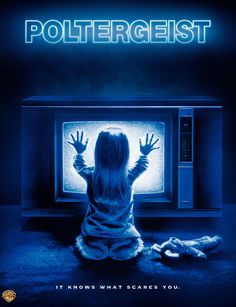
Spielberg’s ‘Poltergeist’ the Great American Ghost Story: Halloween Month Horror Series Part IV

Spielberg’s ‘Poltergeist’ the Great American Ghost Story: Halloween Month Horror Series Part IV

Now, you know you’ve got problems when a hostile ghost uses the family TV as a medium to communicate with your youngest daughter. And then with the earth shaking declaration by the child that “They are here,” your perceptions of life are forever changed. And that’s exactly what happened to the Freely family, an average family of five, when they moved into their brand new house in the brand new planned community of Cuesta Verde, California.

A poltergeist is defined as a malevolent ghost with an ax to grind with the living, and the host of angry ghosts who haunted the Freely family home had plenty to complain, when according to the paranormal experts that the family hired, their house was built over top their cemetery home. In short, the family of one son and two daughters were trespassing. So to get revenge, the highly irritated spirits play mind games with the family by moving furniture around and bending forks. Finally the spirits get the ultimate revenge by kidnapping the youngest daughter eight year old Carol Anne by pulling her through a portal in her bedroom closet to the spirit world. So now the child is speaking to the family through the TV. Now, her brave Mom has to rescue the child by having a rope tied to her ankle and entering the portal herself to retrieve the child, and she succeeds, entering back into the house through a second portal in the living room ceiling, But the family has no choice but to move away and leave the house as a haunt for the pesky ghosts. They won. This is a brief plot summary of the movie entitled “Poltergeist” the 1982 movie written and produced by Steven Spielberg, which became the eighth highest grossing film of the year.

Steven Allen Spielberg, born on December 18, 1946, is one of the major directors/screenwriters of the horror entertainment and science fiction movie industry of the late twentieth century, and high grossing movies such as “Close Encounters of the Third Kind,” “Raiders of the Lost Ark, “ET, the Extraterrestrial,” and “Jurassic Park.” he certainly is a big name in films, and his screenplays are considered to be among the classics. But he raised his film making to the level of fine art when he made movies such as “The Color Purple,” and “Schindler’s List” dealing with such serious topics of racism, sexism, and the holocaust.

“Poltergeist in particular” affected the public in such a way that real estate laws in the four states of New York, New Jersey, Massachusetts, and Minnesota have made it a breach of contract to knowingly sell a haunted house without disclosing the fact to the buyers. The public was actually led to believe, now that’s what you call influence.

The War of Art

by: Shirley Satterfield

The War of Art
I’m fighting the war of art.
Pressing through the weary mind,
The spent heart,
The tired bones.
I’m fighting through the war of art.
Every morning, everyday is a brand new start.
I’m pressing through the war of art.
It puts a fire in my bones
As lovely words I hone.
I’m fighting through the war of art.
And it may be a sin,
But I will surely win.
Onward though the war of art.

Faded Glory

by: Shirley Satterfield

Faded Glory

Faded glory of a flower as it dies.
Releases her colors to the sky.
Fall comes and nips her in the bud.
Family holding hands.
Family giving hugs.
Colors in the sky recreated by the dawn.
Soon winter grays will come.
Spring will bring the rebirth
Of colors on the lawn.

Agatha Christie the Dame of Mystery: Halloween Horror Month Part III

Agatha Christie the Dame of Mystery: Halloween Horror Month Part III

Ah, Agatha Christie, Her wildly popular murder mysteries have kept readers gleefully occupied on cold winter nights for decades. They kept me gleefully occupied for hours on end for decades with her eccentric, sometimes comical, fatally flawed characters and her logical, slightly ironic plot lines.

Agatha Christie, born Agatha Mary Clarissa Miller on September 15, 1890 in the quaint town of Torguay, England was one of the most important authors in the English speaking world, second only to Shakespeare himself in book sales. She sold upwards of 100 million books which were translated into 100 languages, and she had the longest running play in history. “The Mousetrap” was performed in London from 1952 to 2020 and was only halted in this present year due to the Covid 19 virus.
But Agatha Christie did have a rough spot in the road when her first 9 novels were rejected by the publishers However, with her breakthrough novel “The Mysterious Affair of Styles,” also came the advent of her two most endearing serial characters Hercules Poirot, the little fat detective with the huge mustache and the giant ego, and the busybody spinster sleuth, Miss Marple that soon followed. Her career then took off.

Christie herself got hands on experience with poisons and potions while working in a dispensary during WWI, thereby gaining the knowledge she needed to write her detective novels. And during her second marriage to her archaeologist husband Max Mallowan she went on the digs handling the ancient artifacts which gave her the inspiration for her stories set in the exotic countries of the Middle East. So, Agatha Christie was able transport her readers visually from the spooky Gothic manner houses of England in her book “And Then There Were None” to a fatal train ride through the exotica of the Oriental badlands in her book “Murder on the Orient Express”.

All in all, her entire body of work consisted of 66 detective books, 44 short story collections, and one play. She also wrote several romantic novels under the pen name Mary Westmacott, and she was declared to be a Dame of the British Empire in 1971.

As a side note: Agatha Christie created her own little personal mystery when she disappeared for two weeks prompted by her divorce from her first husband Archibald Christie, and rumor had it that she committed suicide when her abandoned car was found with no Agatha in it. But actually she was found vacationing in a luxury hotel in Yorkshire under the name of her ex-husband’s new bride.

This grand dame of detective novels died in 1976 at age 85 and now lies at rest at the Church of St. Mary in Cholsey, Oxfordshire, England.

J.K. Rowling and Her ‘Otherworldly’ Success: Halloween Horror Month Part II

J.K. Rowling and Her ‘Otherworldly’ Success: Halloween Horror Month Part II

Her marriage was over. She was jobless; on welfare. And she was so broke that she had to type 12 copies of her first book “Harry Potter and the Sorcerer’s Stone” on a manual typewriter to send to each publisher because she could not afford a computer. J. K. Rowling of ‘Harry Potter’ fame was really down on her luck, but then, almost like the magical world that she wrote about, her first book Harry Potter and The Sorcerer’s Stone just flew off the shelves as if by an act of witchcraft itself.

But was it magic; or was it a certain genius in Rowling that had its roots deep in her intuition that led to her success? Actually the idea for this book about the exploits of a boy wizard was birthed out of deep out of her imagination while she was delayed on a train to London. And it surfaced into her mind as if out of nowhere.

Born on July 31, 1965 in Yate, Gloucester, England, she proved to be a bright student both in high school and college, howbeit she was not outstanding, for she admittedly did not work hard. She began writing ‘Harry Potter’ upon graduation while being employed as a bilingual secretary by Amnesty International. But unfortunately, her much beloved mother died before she knew Rowling was writing her book, and with that tragedy, and with the collapse of her marriage to a physically abusive husband in the early 1990s, whom she met while working her second job as a teacher in Portugal, she became depressed and contemplated suicide.

But she went on to move to Edinburgh, Scotland and complete her first novel, writing in cursive, while hanging out in cafes with her newborn infant daughter by her side. But her “luck” seemingly changed suddenly when her book Harry Potter and The Sorcerer’s Stone was finally accepted (after being rejected by 11 other publishers) by Barry Cunningham from Bloomsbury Publishing in London. An 8 year old girl associated with the company had gotten all excited about the book. Apparently, Rowling knew her young audience.

Then she was caught up in a whirlwind of success that seemed to have had a supernatural life all its own. A whole series of “Harry Potter” books evolved, after which the book sold upwards of 500 million copies, and then numerous movies followed making Rowling the wealthiest writer that ever lived, according to Forbes magazine.

But was this phenomenal success actually supernatural. As if the result of an act of witchcraft itself; or did Rowling just know the heartbeat of her adolescent audience and what peeks their curiosity about the occult of these older children in middle school? I think the real secret to Rowling’s success was her marketing genius and her keen intuition in knowing what her audience wanted to read. In short, it was no accident that Harry Potter, the amazing wizard, was their own age.

The Human Soul Magnificent!

by: Shirley Satterfield

The Human Soul Magnificent!

When I see a special needs adult,
A homeless person,
I get the urge to feed them.
To look into their eyes
And see them.
To make them feel the significance
Of a human soul magnificent.

The human soul magnificent
Is the scent of God’s own breathlessness.
Who can measure the breadth
And the width of it?

The human soul magnificent.

Stephen King The Master of Dark Fiction: Halloween Horror Month Part I

Stephen Edwin King is the wildly popular horror fiction writer that started life working a regular jobs like the average American working stiff. But he has a twisted imagination and a penchant for writing dark suspenseful fiction that has set him apart. Born on September 21, 1947 in Portland, Maine, to a working class family, and with his mother becoming a single parent when his merchant seaman father, Donald Edwin King, left the family, Stephen King has known his share of financial struggles, and he had to work his way through college doing menial jobs. King worked as a janitor, gas station attendant, and finally as a high school teacher after graduation from the University of Maine in 1970.

But after he began to prosper by selling macabre short stories to men’s magazines, gradually morphed into a full time writer. And with the acceptance by Doubleday of his first bestselling novel entitled “Carrie”, he was finally able to pay the bill his turned-off phone and buy a brand new Ford Pinto with his $2,500 advance on royalties. And latter “Carrie” was made into blockbuster movie. “Carrie” is the story of a troubled, and bullied teenage girl with supernatural powers who was abused by her crazy, religious fanatic mother until a showdown between the pair ended in mutual murder. Mom, you see, could “Not suffer the witch to live,” according to her understanding of the Bible. King then went on to write many more bestselling books, such as “The Shining”, “The Stand”, “Misery” and many more books featuring the dark side of human nature that were made into famous movies. All in all, King has written 61 novels, 200 short stories , and 5 nonfiction books which include his memoir “On Writing.” Stephen King has actually sold over 350 million copies worldwide. His books all touch fored on the dark side of human nature such as the obsession of a dry writer turned family annihilator in “The Shining” and the the psychopathy of a twisted woman who kidnaps a writer in “Misery”. King has basically defined the horror story for a whole post-modern generation.

It is thought that the impetus for his dark imagination was witnessing a friend being killed by a train, although he himself does not remember it in his conscious mind, But he revealed that the seminal inspiration for his stories was a collection of horror stories by H. P. Lovecraft entitled “The Lurker in the Shadows”. And according to King in an interview, he knew he was home upon reading the book.
But King, unfortunately, has lived out his own horror story when he was hit by a car and suffered the catastrophic injuries of broken ribs, a broken hip, and a shattered leg, which put him at great risk of losing his leg, and left him in a chronic pain condition.

Stephen King is the winner of the Medal for Distinguished Letters award, and the Medal of Arts from the U.S. Endowment for the Arts, among many other awards, and currently lives in a stately Victorian mansion in Bangor, Maine.

The Song of a Soul in Raptured Wonder

by: Shirley Satterfield

The Song of A Soul in Raptured Wonder

I’m a Christian Transcendentalist poet.
Can rhyme the words because I know it.
I can beat it. I can flow it.
I’m a Transcendentalist Christian poet.
Man is good and nature is fine.
No one can take away the shine
Of a soul in raptured wonder.
No one can put this mind asunder.
I’m a Transcendentalist poet.
Can rhyme the words because I know it.
I can beat it. I can flow it.
Write the songs of a Christian Transcendentalist poet.

e e cummings: The Experimental Poet

Today’s prevailing wisdom in literary circles is that language is fluid and the rules of grammar can be bent, as long as the skilled author intuitively knows it works. And it was most likely the influence of the innovative poet e e cummings that led to this kind of thinking because he broke the rules of grammar, syntax, and spelling in his highly experimental form of modernist free form poetry. He used small case letters, changed the spelling of words, invented his own words by combining existing words, and even assigned private meanings to words, setting the precedent for the poetic license we all enjoy today.

[i carry your heart with me(i carry it in]
BY E. E. CUMMINGS
i carry your heart with me(i carry it in
my heart)i am never without it(anywhere
i go you go,my dear;and whatever is done
by only me is your doing,my darling)
i fear
no fate(for you are my fate,my sweet)i want
no world(for beautiful you are my world,my true)
and it’s you are whatever a moon has always meant
and whatever a sun will always sing is you

here is the deepest secret nobody knows
(here is the root of the root and the bud of the bud
and the sky of the sky of a tree called life;which grows
higher than soul can hope or mind can hide)
and this is the wonder that’s keeping the stars apart

i carry your heart(i carry it in my heart)

In this particular poem we see the characteristic small case letter, the bending of the rules of grammar pertaining to punctuation and the expert use of parenthesis to express deep feeling.

Edward Estlin Cummings was born on October 14, 1894 in Cambridge, Massachusetts and was one of Harvard’s native son poets with his father Edward Cummings being a professor at the university and a nationally renown Unitarian minister. E E Cummings had a good attentive mother who played games with him, gave him a lot of attention , and fostered his creative bent for art and literature, as Cunnings was an artist as well as a prolific writer. He was only a child of about eight years old when he knew he wanted to be a poet, and he wrote on average one poem a day until he produced a vast body of work of approximately 2,900 poems. The first volume of poems to be published was entitled “Tulips and Chimneys”, published in 1923, but many of his more innovative poems were cut out of the book by the publisher, So Cummings followed up by publishing a second volume containing the missing poems entitled “XLI”: two years later.

Cummings was himself a Unitarian and a Transcendentalist who believed in the goodness of man and nature and having an close intimate “I Thou” relationship with God, and the themes for his writing included this relationship with God, the high ideals of romantic love and nature. But Cummings was a rebel of the pen, and this rebellion became self evident during WWI. in 1917. when he, as a conscientious objector, volunteered to drive an ambulance in lieu of serving as a soldier and was arrested and jailed , along with a writing buddy, for flagrantly expressing anti war sentiment in his letters. despite knowing he was being monitored by the military censures. And upon his release, which was orchestrated by his influential father, after three months of imprisonment, he wrote the first of his two autobiographical novels “The Enormous Room” about lessons he learned in prison life.

However, Cummings” spiritual Transcendentalist writings about love began to become much more erotic when he fell in love with Elaine Orr, another man’s wife, who he impregnated and later married after she divorced her first husband. But then she in turn betrayed Cummings by running away with yet another man whom she met while sailing on a ship to France,

Cummings would eventually make a trip to the Soviet Union believing that he would find a compassionate utopia there, but was instead very deeply disillusioned by the totalitarian government there and the group-think of the Sate. Individualism and personal creativity was very important to the man.

e e cummings died on September 3, 1962 from bleeding on the brain. The man led a long prolific life.

Emma Lazarus Wants “Your Tired and Your Poor

The Iconic poem ‘The New Colossus” was one sonnet all American children had to read in school, at least those of us in the Baby Boom generation. And the words immortalized on a plaque hanging inside the the base of the Statue of Liberty are as follows:

Not like the brazen giant of Greek fame,
With conquering limbs astride from land to land;
Here at our sea-washed, sunset gates shall stand
A mighty woman with a torch, whose flame
Is the imprisoned lightning, and her name
Mother of Exiles. From her beacon-hand
Glows world-wide welcome; her mild eyes command
The air-bridged harbor that twin cities frame.
“Keep, ancient lands, your storied pomp!” cries she
With silent lips. “Give me your tired, your poor,
Your huddled masses yearning to breathe free,
The wretched refuse of your teeming shore.
Send these, the homeless, tempest-tost to me,
I lift my lamp beside the golden door!”

It was originally written by poet Emma Lazarus in 1883 to be cast on a copper plaque and sold in a fundraiser to raise money to fund the construction of the monument’s elaborate base. But it was not used as a part of the monument until the poem was published in the New York Times and lauded by Joseph Pulitzer, the owner of the newspaper and himself an immigrant. Then the venerable sonnet took on a special significance to America’s inwardly bound immigrants

The statue itself was a gift to the United States from the people of France in 1886 to simply represent the new republic in the New World, but the poem made the monument to take on the special significance of being a beacon of hope for the immigrants who were sailing into the harbor and seeing it for the first time. So instead of the giant statue being like the Greek conquering Colossus warrior of ancient times, she was more like a welcoming mother figure with the “imprisoned lightning” of the torch being indicative of the new technology of electricity with the the dawning of a new day. Hence the statue made America the symbol of being the melting pot for the peoples of the world.

Emma Lazarus was born on July 22, 1849, and in addition to being a writer and a poet, she was an activist for Jewish rights and was the descendant of of the original 24 Jewish settlers in New York who fled the Spanish Inquisition in Portugal and South America since before the American Revolution. The original manuscript for the poem id being preserved by the American Jewish Historical Society .

A Personal Response to Shelley (England’s Anarchist Poet)

by: Shirley Satterfield

A Personal Response to Shelley
(England’s Anarchist Poet) 🤒

No, Percy, we cannot do without the State.
But the Fate of the State is always up for debate.
So, Vote.
Keep our choppy boat afloat,
The State is good to keep us in line,
To direct the Barque of a Wayward Mankind,
For not everyone is fine.
WE ARE THE LIGHT OF THE STATE,
So vote,
To always lead the criminal Mind.
They’re blind.

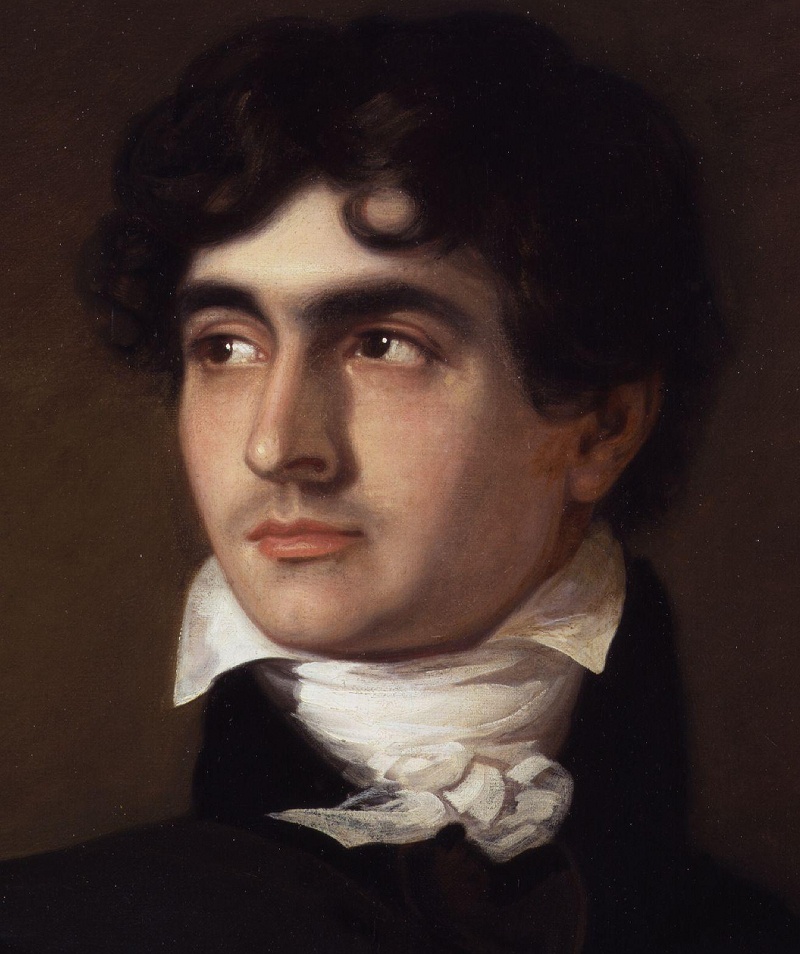
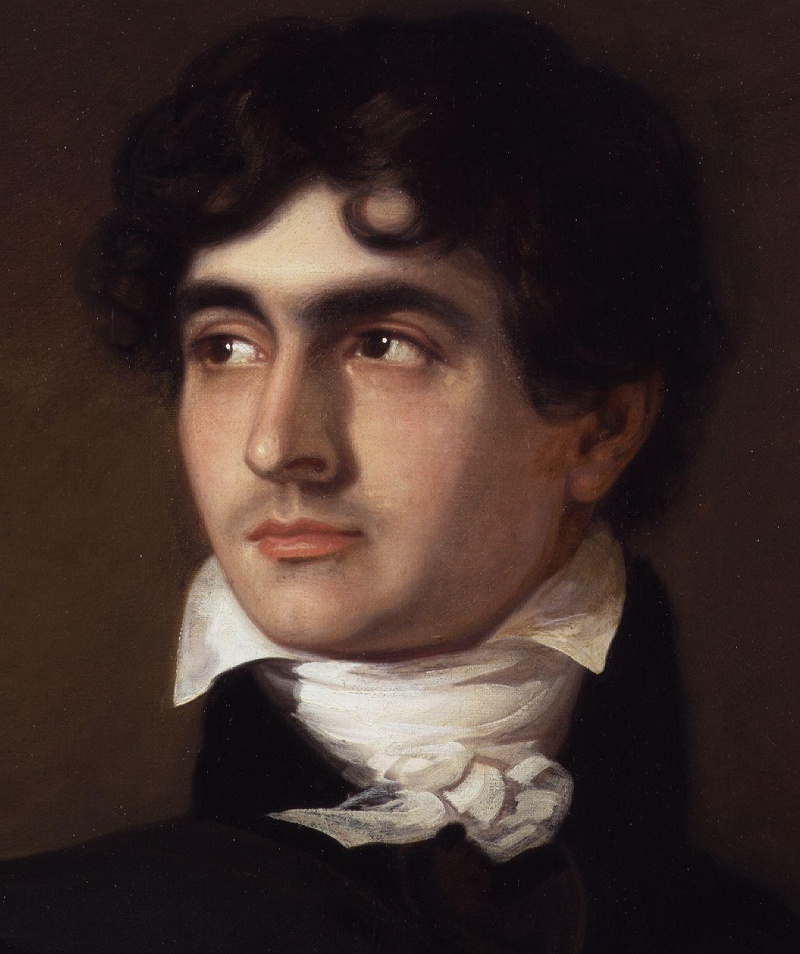
Percy Bysshe Shelley: The Radical English Poet of Social Change

Percy Bysshe Shelley was born on August 4, 1792 in Sussex, England to a well heeled noble family and enjoyed a pleasant rural childhood. And although his father Timothy Shelley was a conservative member of the Whig party in Parliament, Percy himself grew up to be a politically radical writer and poet and a firebrand for equality between the classes. Thus, he would later be a seminal influence for such controversial historical figures as Karl MPercy Bysshe Shelley was born on August 4, 1792 in Sussex, England to a well heeled noble family and enjoyed a pleasant rural childhood. And although his father Timothy Shelley was a conservative member of the Whig party in Parliament, Percy himself grew up to be a politically radical writer and poet and a firebrand for equality between the classes. Thus, he would later be a seminal influence for such controversial historical figures as Karl Marx and Leo Tolstoy. And shockingly for his day and time Shelley was also an atheist who became a disciple of William Godwin, his anarchist future father-in-law with his second wife, who also espoused equality and atheism.

So, although Shelley became a member of the Romantic poetry elite crowd, along with such greats as Byron, Keats, and Wordsworth. and wrote such classic poems as “Ozymandias”, “Ode to the West Wind”, “The Masque of Anarchy”, and “Queen Mab”, the nations publishers would avoid him for fear of being charged with the crimes of sedition and heresy themselves, Shelly was such a loose canon to them.

Shelley as a youth did not have it easy in school. As a child he was home schooled with a private tutor, but went on to Eton College in 1804 where he was relentlessly bullied by his peers for having socially backward ways. However, the young poet had a mischievous side himself and was an avid science buff so he found a way to get back on his tormentors by using his knowledge of science. He would use a frictional electric machine to charge the handle of his door in order to give an electric shock to any intruders. So both his pranks and his social awkwardness earned him the nickname of Mad Shelley among his peers, He had officially become the schools proverbial nerd.

Upon graduation from Eton, Shelley then matriculated at Oxford University, but was later expelled for allegedly writing a pamphlet espousing atheism, something he never admitted as being true. But it was also while he was at Oxford when his first Gothic novel was published expressing his atheistic leanings. arx and Leo Tolstoy. And shockingly for his day and time Shelley was also an atheist who became a disciple of progressive philosopher William Godwin, his anarchist future father-in-law with his second wife, who also espoused equality and atheism.

So, although Shelley became a member of the Romantic poetry elite crowd, along with such greats as Byron, Keats, and Wordsworth. and wrote such classic poems as “Ozymandias”, “Ode to the West Wind”, “The Masque of Anarchy”, and “Queen Mab”, the nations publishers would avoid him for fear of being charged with the crimes of sedition and heresy themselves, Shelly was such a loose canon to them.

Shelley as a youth did not have it easy in school. As a child he was home schooled with a private tutor, but went on to Eton College in 1804 where he was relentlessly bullied by his peers for having socially backward ways. However, the young poet had a mischievous side himself and was an avid science buff so he found a way to get back on his tormentors by using his knowledge of science. He would use a frictional electric machine to charge the handle of his door in order to give an electric shock to any intruders. So both his pranks and his social awkwardness earned him the nickname of Mad Shelley among his peers, He had officially become the schools proverbial nerd.

Upon graduation from Eton, Shelley then matriculated at Oxford University, but was later expelled for allegedly writing a pamphlet espousing atheism, something he never admitted as being true. But it was also while he was at Oxford when his first Gothic novel was published expressing his atheistic leanings.

Needless to say. Timothy Shelley was not happy with his rebellious son. And the estrangement became complete when Percy eloped and married a tavern owner’s daughter, a 16 year old by the name of Harriet Westbrook. The elder Shelley deemed the marriage into the family of a mere tavern keeper to be beneath the his station in life. But later, after the birth of two children, Shelly would divorce his first wife over friction between himself and his much older sister-in-law to marry Mary Godwin, a woman he considered more intelligent than Harriet, and an accomplished author in her own right. Mary Godwin would become the author of the world famous story of “Frankenstein”.

Shelley would later experience an untimely death as the result of a boating accident in the sinking of an un-seaworthy sailing vessel in Italy’s Gulf of La Spezia on July 8,1822.But his life and his works had a lasting effect on the world. His legacy touched off a movement in England to give suffrage to working class men called the Chartist movement and influenced such modern day luminaries as Mahatma Gandhi and Marin Luther King Jr.. And his views on tyranny were aptly expressed in the third versa of his famous poem entitled “Ode to Liberty”.

III.

Man, the imperial shape, then multiplied
His generations under the pavilion
Of Sun-s throne; palace and pyramid,
Temple and prison, to many a swarming
million
Were, as as to mountain-wolves their ragged
caves.
The human living multitude
Was savage, cunning, blind and rude.
For thou wert not; but o-er the populous
solitude
Like one fierce cloud over a waste of waves,
Hung Tyranny, sate deified
The sister-pest, congregator of slaves;
into the shadow of her pinions wide
Anarchs and priests, who feed on gold and
blood
Till with the stain their inmost souls are dyed,
Drove the astonished herds of men from
every side

I believe that the metaphor of “the sister-pest” is a reference to his first wife’s older sister whom he detested and shows the depth of his disdain over the condition of man under the tyranny of religion and governments.


The Omnipresent Home

by: Shirley Satterfield

The Omnipresent Home

There is a sweet smell
Residing in the rain,
And the sound of music
in the rain’s sweet refrain.
A lonely bird stretches one wing
To catch a droplet from his perch.
Sometimes nature provides him
With a real good church.
Stained windows can’t contain
God’s fragrance and His song,
For here, there, and everywhere
Is God’s omnipresent home.
“Foxes have holes
And birds have nests,
But Jesus has nowhere {and everywhere}
To lay His head.”
So He sleeps outside instead.

Johnathan Edwards Preached the American House Down

Tucked deep in the annals of classic American literature you will find a recorded sermon entitled “Sinners in the Hands of an Angry God” that literally brought the Thirteen Colonies to it’s knees. This iconic sermon touched off a highly emotional and intense spiritual movement called the Great Awakening that is still legendary in America’s Protestant churches today, with stories of people crying and quaking and holding onto the pillars of the church building at the sound of Edward’s voice lest they faint faint and fall onto the floor.This amazing:”hell fire and damnation” sermon proved to be quite the phenomena that was felt all the way across the sea in England.

So Johnathan Edwards is the man who was credited with being the father of the Revivalist Movement whose lasting effects were still being felt in America well into the 20th century with the rise of such evangelists as Billy Sunday, Dwight L.Moody and Billy Graham, men who emphasized the personal religious fervor of the individual rather than a congregational group think and accepting a personal Christ rather than finding him through the traditional rite of the Eucharist alone. In fact, the outwardly emotional Pentecostal movement with its outward manifestation of the speaking in tongues was also profoundly influenced by this Great Awakening revival.

Edwards was quoted as saying “human beings have done nothing to appease God” and that they will be “burning forever over a fiery pit” unless they experience a “change of heart and accept Christ,” And Edwards artfully used the metaphor of a spider being held over a fire to illustrate how close a living human being is to hell.

Needless to say, this fiery preacher was ultimately rejected by the staid Puritan religious establishment of the day and was finally fired from his pastorate at his church in Northhampton, Massachusetts for his zeal and his strict stance on holy living and his a strict form of church of church discipline that stepped on many toes. So this dedicated and resilient minister went onto become a missionary to the Mohican Native American Indian Tribe, touching off another great spiritual movement in America, the missionary movement. It seems that they just could not keep the down down!

Edwards was born in East Windsor, Massachusetts on October 5, 1668 to his minister father Timothy Edwards and his mother Esther Stoddard, a woman known for her uncanny intelligence and a hardy independence of a woman before her time. But Edwards was actually home schooled by his father and his older sisters and was admitted to Yale University at the tender age of thirteen proving to be quite the child prodigy.In doctrine he was a Calvinist rather than an Arminianism meaning that he believed that God predetermined who would be saved rather than being strictly as matter of man’s free will. He died on March 22, 1758 as the result of an infection stemming from a bad small pox vaccine.

H.I.E. Dhlomo: The Literary Luminary of South African Apartheid

HIE Dhlomo: The Literary Luminary of South African Apartheid

South Africa is a land rich in history and literature which can boast of up to eleven official languages, including English. And although the Black Africaan people were suppressed and their literature not published during the colonial period, they were still prolific in the oral tradition and the written word under the tutelage of the Christian missionaries. However, Herbert Isaac Ernest Dhlomo was South Africa’s first rising star in literature in the early post colonial age of the nation.

Born in 1903 to a prominent Black family during the early years of the Africaan struggle for freedom, Herbert Dhlomo was the son of a revolutionary and descendant of the Zulu royal family and the younger brother to R.R. Dhlomo, a famous artist of the time. And early in his career, Herbert Dhlomo aligned himself with the White Progressives in the hopes that through them, he could he could gain equality for his people over time. But as he grew older he became disillusioned because they proved to still be to conservative in their views and moved the country much too slowly toward true equality, so he began to take a more radical stance later in life.

As a child born and educated in the Natal Province of South Africa, Dholomo proved to be bright and got further training as a teacher at Adams College and landed a teaching job in Johannesburg where he worked for several years, and in his latter years he was a librarian. But in the long run, he regarded his life as a creative writer as being more important when he wrote, “ My creative life life is the greatest thing give to my people, to Africa. I am determined to die writing and writing and writing.”

This level of enthusiast led him to a diverse career in literature as a newspaper writer for Bantu World, a playwright for the Bantu Dramatic Society and a published poet, usually published by his successful artist brother. And he strove to combine
“traditional tribal ways of solving modern problems” with the decidedly English romantic styles of Keats and Shelly. Thus was his a blending of two unique and equal cultures Aricaan and English. . But Dhlomo’s more radical and angry views are aptly expressed in this passage from the long poem On Munro Bridge, Johannesburg, when the Progressive Movement proved to not be working for him.

Jerusalem can boast no better sight,
For here the veld with glorious scenes is dight.
O sweet miniature Edens of the north!
O glorious homes! Is gold but all your worth?
Shall Belial rule forever in your towers,
Polluting all this beauty, all your hours?
How can you rest content so near the hells
Of poverty where Moloch fiercely dwells;
Where children die of hunger and neglect.
While city Fathers boast suburbs select;
Where minds diseased and dead to Love make gains
Through drunkards, widows, waifs and worker’s pains 

Unfortunately, Dhlomo died prematurely during heart surgery in 1956 at the tender age of 53, and “the South African literary firmament lost one of it’s brightest stars when he seemed to have had the whole world at his feet,” according the publication New Frame.

Keep Me in a Starry Awe

by: Shirley Satterfield

Keep Me in a Starry Awe 🌟

The sky is big, and I am small,
And the worlds will be here when I am gone,
No longer gazing up from my front lawn.

But You didn’t live
And die for planets, Lord,
So keep me safe in one accord
With universe and Spirit, Lord,
And divide my Flesh from bone
With Your Mighty Sword,
And make my soul
Your child, an eternal ward.

The sky is big and I am small.
Keep me, God, in a starry awe.

The Good Shepherd

by: Shirley Satterfield

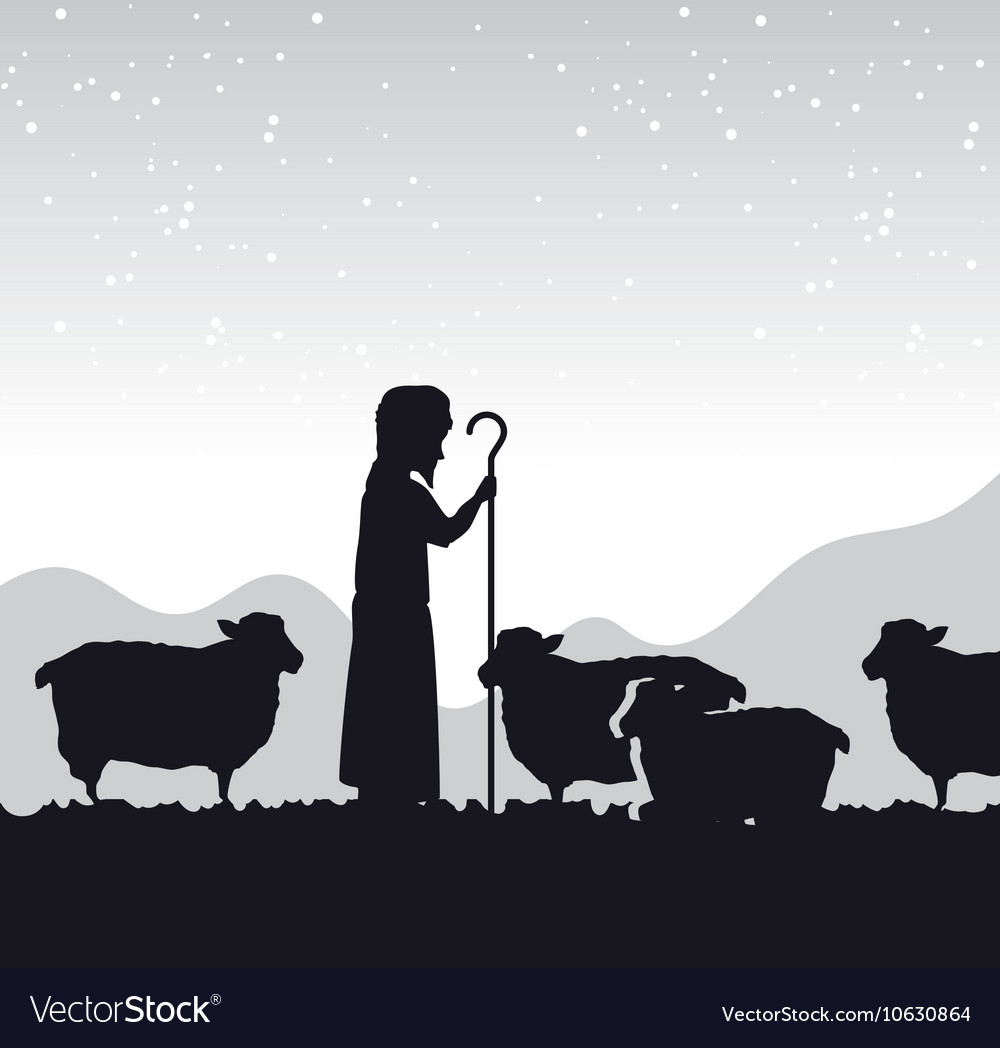
The Good Shepherd 🐑

The Good Shepherd corrals the sheep.
Keeps them safe from ferocious teeth.
“Makes them lie beside still waters.”
Receives them into His inner quarters.
“Good and mercy will follow my life.”
Treats me like His precious wife.
Will quell the fight,
Will still the strife.
Will guide by his inner light.

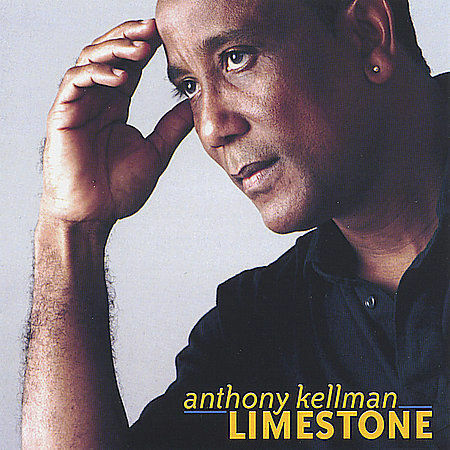
Anthony Kellman: A Wise Poet with a Caribbean Beat

Anthony Kellman: A Wise Poet with a Caribbean Beat

No lengthy discussion of poetry in the English speaking world would be complete without recognizing a great poet of present day Barbados, Anthony Kellman.

Kellman is a poet and singer/songwriter who was born on the island of Barbados on April 24, 1955. He is an innovative poet who successfully combined the English language with the West African rhythms of former slaves to create a new form of poetry called Tuk. Tuk is actually the original form of folk music that combined the melodies of England with the rhythms of West Africa in order to form a hybrid form of indigenous island music that would be acceptable to the slave masters that were holding the people captive during colonial times. The Caribbean islands were made up of giant plantations where thousands of African slaves were being held, and the slave masters placed restrictions on any expressions of African culture, so the people had to adapt. But eventually, the African decedents of the slaves became the predominant people and culture of the region with their own hybrid language of English and African languages called Creole, a complete language in its own rite.

Kellman finally came along and made his debut in London as a troubadour, after leaving Barbados at the age of 18, where he shared his music and his beat to become quite successful as a musician. He wrote several poetry chapbooks and his first full length book of poetry entitled Watercourse was published by the Peepal Tree Press in London. And he became an active member of the Poetry Society where he shared his work with other poets, and he went on to write four more books of poetry including his epic poem entitled Limestone, a long poem which spans four hundred years of Barbados history. It is his masterpiece and is currently available at amazon.com in a paperback format. He has also written three novels and recorded four CD collections of his music. His inspirational influences include the spectacular coral reefs and the limestone caves that grace the island, the history of his people, and of course romantic love “under the banyan trees….. a love that has to wait for freedom,” in his song We Love. His music can be found on YouTube under the link https://www.youtube.com/watch?v=IMNybyCN1wA&list=PLAo6EjQmjioPYq5liFvzOYbtBrN5BBbm4 and is reminiscent of a big band sound with many musical instruments being used combined with that unique African sounds of the bongo drums.

Kellman was awarded a Poetry Fellowship by the US Endowment for the Arts for his English language anthology of collected Caribbean poems entitled Crossingwater and is currently serving as a professor of English and Creative writing at Augusta University.

The Invisible Writer: A Lesson Learned in Simplicity

Writers are sometimes temperamental creatures, as artists go, and I was sometimes temperamental and a little over confident in my skills, since it takes a fairly strong ego to think that that you can write something that someone else is going to want to read what you have written. It takes a lot of nerve to be a writer and to withstand all the rejection that we ARE going to get. But I personally had a little lesson in humility in the classroom early in my ongoing quest to gain these skills.

It was the first day of school at Honolulu Community College when my first college level English teacher gave us an assignment to go out and look for something interesting to describe, and then write an essay about it. This kind of lesson is always the first standard lesson of any entry level English class in America, and the teacher read us an example out of a textbook from a writer who described a shade of blue as being “as blue as the blue butt of the blue butted orangutan.” I thought to myself “Wow, that must really be blue and I’ve got this. I know I can write at least that well, and I am going to really impress that English teacher with my first essay. Easy A. Wrong!

Well off I went on a walk on a local beach looking for something interesting to describe. And surly I can find something interesting to write about in Hawaii I thought, and then I spotted it: a magnificent Navy air craft carrier off in the distance docked at nearby Pearl Harbor, So I wrote my essay, and boy did I lavish on the adjectives as I was writing to impress. I described the ship as being like a queen and the aircraft as being like the jewels on her robe. What I didn’t realize was that I was actually overwriting the thing. I didn’t yet know that Mark Twain advised young writers to be sparing with the adjectives.

So on the morning when we were to receive our critiques and grade, the teacher called me up to her desk first and with a slight smirk on her face, asked me who I thought I was and wrote a big red C on my paper. Well, in retrospect, I am just grateful that she didn’t completely destroy me by giving me an F, and the lesson here is that that writers should by and large be invisible to the reader in deference to the subject he is writing about. In other words, if you are writing about the leaf on a tree, you should be specific about the shape, color, size etc. but be careful not to overwrite your work because you want your reader to be impressed with the leaf, not your writing style. Keep it simple. Keep it elegant.

Mark Twain also said at the end of his life, “I have only been a writer for twenty years of my life, I was an asshole for the first fifty.” So there is always room for improvement regardless of how good you are,

Ugly Plant So Pretty

by: Shirley Satterfield

Ugly Plant So Pretty

Someone caring
clipped the dead in me,
watered my dry hungry roots.
Now my flowers are opened wide
to reveal my purple flutes.
A purple song is where women belong
in that Eternal Royal We.
And agape is the everlasting key
to our lovely purple shoots.