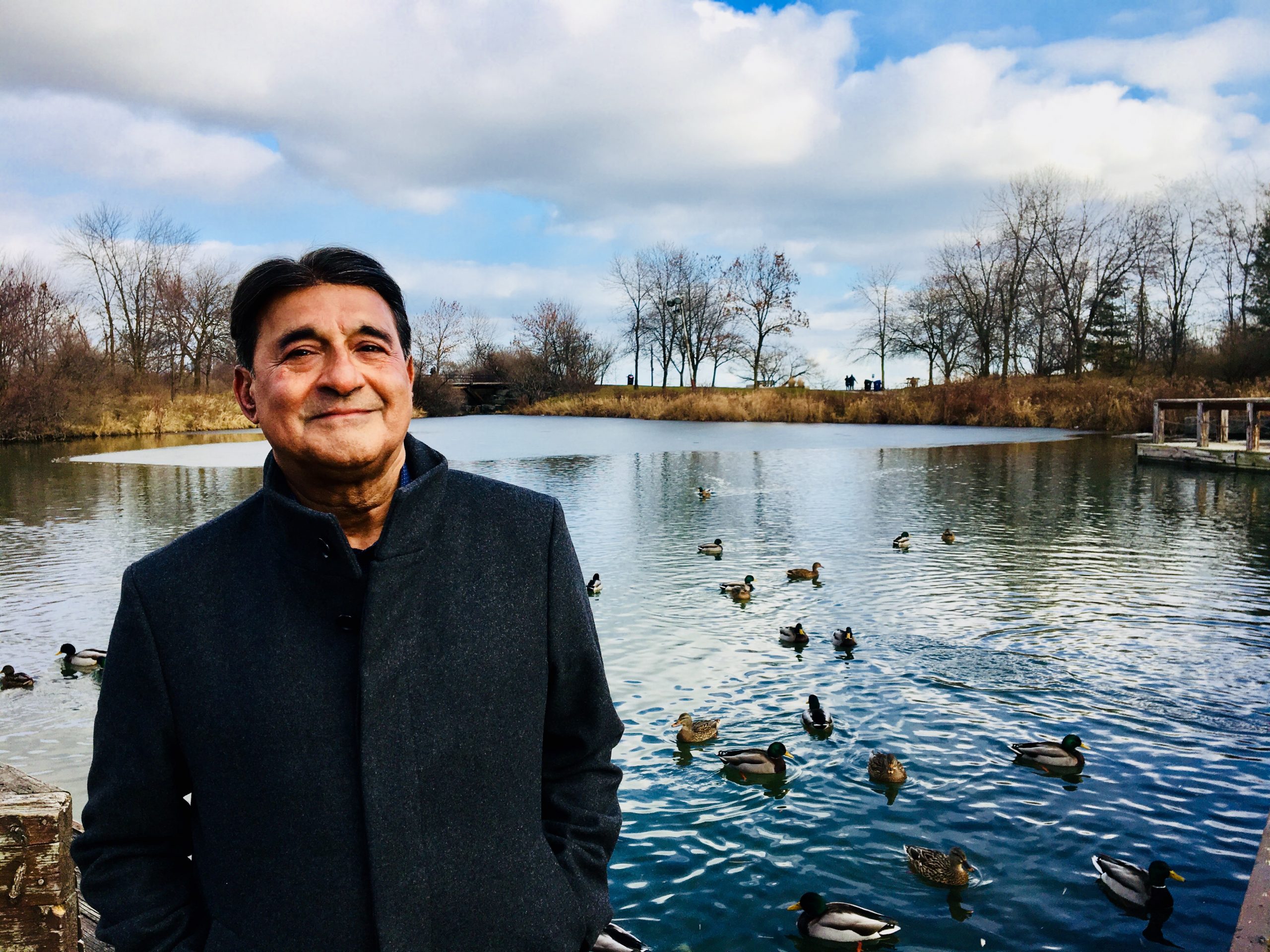
A Farewell from Wise Poet Shirley Mandel Satterfield

The Hebrew scriptures teach that there is a season for everything and a new season is dawning in my life, retirement. I have a milestone birthday coming up and I simply want to spend more time with my husband, my local friends and to write poetry for my local newspaper, the Gazette Virginian. However, I will still be contributing to Community Corner as long as dailywisdomwords.com exists and Samantha is willing.

I would like to thank Samantha for all her hard work on this amazing website, for giving me a space here to express myself, and for just being my friend.  I hope that she will call me from time to time. I also want to thank Neel for his kind support.  And also I want to thank all the amazing authors that I have had the privilege to interview in person for this site; you all always made my day! Lastly, I want to wish Monday well in his career as social media director and podcaster.

I will be praying for you all.


How Wise Reader’s Interpret Poetry

How Wise Reader’s Interpret Poetry

We are moving a bit from the biographies of great poets and authors to the interpretation of their works, although the stories of today’s great authors have yet to be fully written and yet to come. Today we are going to look at the basics of the interpretation of poetry from a simple checklist that I have found on Google, which I will expound upon of course from my own experience reading poetry. Then we will take a look at a poem by our very own Alexis Karpouzos for a brief interpretation following this outline.

     1. Read the poem over in it’s entirety to get the feel and overall meaning of the poem. Often to get the full “feel” and meaning of a poem, you must read it two times silently and once out loud to hear the sound of it.

     2. Look for the imagery and give some thought the meaning of it to get the full meaning of the poem. And that’s the thing about poetry, it requires some thought (and you may even want to look up a term or two to get understanding), but although you don’t have to be a genus to understand, it does takes a little work to “suck that marrow from the bone” (Walt Whitman).

      3. Look for the symbols. A symbol is a person, place or thing that stands for something bigger than itself. For instance, an egg could be a symbol fertility, but I personally use it as a symbol of the self, or more specifically a fragile boundary of self, with the self being closed in and not free inside the egg.

     4. Look at the poets choice of words. Look at not only their on the surface definitions, but look in depth at what the particular word is associated with, IT’S CONNOTATIONS. For instance I ran across a rather humorous poem once that highlighted the difference between the two interchangeable words of “naked” and “nude”. In other words, “naked” is more to be ashamed while nude is itself quite bold! Keep in mind though that some post-modern poets selfishly use their own private vocabularies and don’t give a flip if you understand it or not, so you just have to read into it your own thoughts just as you would look ar an abstract painting.

  1. Determine the voice, and how does it make you feel on an emotional level. Are you happy, sad, inspired or angry when you read it? Is the poem a narrative story with conflict and a plot line? Then just read it as you would a good novel and enjoy.


  1. Determine the poem’s type. Is it wild and crazy free verse such as an e e cummings, then you are probably reading a poet who is more liberal in his or her views, or is it a more traditional form with meter and rhyme such as a real Shakespeare fan, then perhaps you have a more traditional writer behind the pen. However, all poetry writing and reading is entirely subjective to the individual.

………………………………………………………………………………………………………………………………………………

Using the above outline, I will interpret the following poem by alexis karpouzos.


The Shuddering of the Heavens


Listen, if stars are still lit it means there is someone who needs them. It means someone wants to love,
Why then do we feel so much pain and heaviness of heart?
are we waiting for something, regretting anything?
To whom I can strech out my hand in the somber desert ? Who will accompany me on the empty night?
Who will give me a fiery day?
Who will bring back the sea that left?
No hope here. Torment is certain.
Without sacredness in the emptiness of this world of ours, the heart of man fades like a flower.
Suddenly, the shuddering of the heavens penetrating my soul, Oh never let the parting sun, no star is ever lost we once have seen. the long rains will continue to fall.

This is a poem about the destruction and desecration of nature by mankind and a man’s own soul and his regrets about the things he’s lost. So the overall feel of this poem is one of sadness and foreboding. I know this poet and the respect that he has for nature and the repeated warnings he has given us in his writings regarding mankind’s poor stewardship of the planet that even heaven shudders at the sight of it, In his imagery and his specific choice of words he likens the world to “a somber desert” and life on earth to “an empty night” in the wake of mankind’s failure to hold nature sacred in a world where man’s hope “fades like a flower”.

I think this particular images denotes the relative temporary estate of the human race in creation compared with the stars that are never lost and the “long rains that continue to fall”. However, I think the poet is also saying that although there are people like himself in the world who still desire to love, he does not hold out much hope to see another “fiery day” or that the sea that has left is ever coming back. In short, mankind has pushed his own creation on earth to the point of no return and that he has basically lost not only his hope, but his spirituality as well, he has lost all sense of sacredness.

Hopes and Dreams: The Pulitzer Prize Guidelines

It always helps an author in his or her quest to market books to earn credentials and win accolades since reputation and creditability for a writer is important And the Pulitzer :Prize for American writers is about top of the line and seems like only a remote possibility for most of us. However, what most “ordinary” writers don’t know is that the competition is open to all American citizens, including indie authors who self publish on platforms such as lulu.com and Amazon KDP. So, all you really risk when you enter your little masterpiece is your $75.00 entry fee and a few minutes of disappointment if you don’t win. But like the proverb goes “Nothing ventured, nothing gained.” So go for it, indie poet or author, if you think you wrote a masterpiece, because you never know, for I personally had an “ordinary” English teacher at community college once who won the coveted prize.

All the categories and guidelines are simple. There are five main categories; Journalism, excellence in community service, Drama, Music and Letters. Most of us as poets and indie authors would have an interest in entering a submission under the category of Letters which is divided in the categories of Fiction, Non-Fiction, Biography, and Poetry. Poetry must be submitted as a collection in a book length manuscript. The book must be submitted on or after January 1 in the same year that it is published. Their preferred deadline for submission is June 4, but they accept submissions on up to October 1 of the same year in which it is published. The website address for your book submissions is https://bdmentrysite.org, and be prepared to write three essays when you log in; a short biography about yourself, a detailed description of your book, and the objectives you were trying to achieve by writing your book. Finally, your book must be published by an American publisher or a foreign publisher that has an American editorial presence. The prize for the winners in the Letters category is $15,000. So, go for it indie authors, and lets put our indelible mark on history. The 2021 winners are going to be announced on June 11 this year, and I will be blogging about the poetry winner.

The Pulitzer Prize was instituted in 1917 by Joseph Pulitzer who was the publisher of the New York World and who was himself a naturalized citizen of the United States from Hungary. The prizes are administered at Columbia University by 20 juries of 5 people for each category to choose the finalists, and 17 people make up the board who choose the final winners.  The names of the finalists who did not win the prize are also announced publicly which is also a great honor for any writer. Now keep in mind that this is a long term goal, so be patient, and I am going to tell you exactly what I told myself regarding realizing such a lofty dream, ‘Lottsa luck old girl!’ It’s a long shot I know, but great things can be done by people who are willing to take long shots such as my lowly community college English teacher. She was such an inspiration!

Poets and writers don’t forget to enter our own DailyWisdomWords Spring poetry contest today and be honored by us, your friends and poetry peers.

Rudyard Kipling: The Empire’s Anglo-Indian Writer

Rudyard Kipling: The Empire’s Anglo-Indian Writer

Indian born, British citizen Rudyard Kipling was an imperialist leaning writer which makes him controversial in our own post colonial times, but he was a wildly popular writer in his own time, For he wrote such endearing stories as “The Jungle Book” about a boy raised by wolves in the wild and charming poems about India such as” Mandalay” revealing the exotic Far East through the wide, beholding eyes of a British soldier in love with an oriental woman.Kipling was such an accomplished writer in his season that he was the first European to win the Nobel Prize for literature in 1907 and was the youngest man at the age of 41 to do so to date.

Kipling was born in Bombay, India on December 30, 1865 to an upper middle class family that had certain important connections that would later help him in his writing career, His father was John Lockwood Kipling. a renown artist in India who curated the Lahore Museum. Rudyard Kipling spent his early childhood in India, but at age 6 he and his younger sister were taken by their parents to England and placed in a foster home in order to be educated there, But unfortunately young Kipling was abused and neglected in that home, so his childhood cannot be described as anything less than wretched. Upon being freed from this abusive home by a kind, discerning great aunt, Kipling went onto finish his education in a rather second rate boarding school called United Services College in Devon, thus because of his lagging grades he was not accepted on a scholarship to attend Oxford, and his parents could not afford to pay his education there. So Kipling’s father pulled some strings to land his young son a job as an assistant editor on a local newspaper in Lahore, and thus young Kipling set sail for India on October 20, 1882 and his professional writing career commenced with India being his primary inspiration.

During his seven years of tenure at the newspaper, Kipling kept a journal. wrote short stories, novels and poems and became a prolific well rounded writer, and in 1889 he returned to England to live in London, the literary hub of the English speaking world where he was a success with his most famous novel entitled “Kim”. However he became more and more controversial among qriters having written a poem entitled “The White Man’s Burden” to encourage America’s imperialism during the Philippine/American War and as British imperialism began to diminish around the world. Kipling felt that the Anglo culture was the superior culture of the world with certain custodial responsibilities for the rest pf humanity as expressed in the following poem.

The White Man’s Burden

Take up the White Man’s burden—

Send forth the best ye breed—

Go send your sons to exile

To serve your captives’ need

To wait in heavy harness

On fluttered folk and wild—

Your new-caught, sullen peoples,

Half devil and half child

Take up the White Man’s burden

In patience to abide

To veil the threat of terror

And check the show of pride;

By open speech and simple

An hundred times made plain

To seek another’s profit

And work another’s gain

Take up the White Man’s burden—

And reap his old reward:

The blame of those ye better

The hate of those ye guard—

The cry of hosts ye humour

(Ah slowly) to the light:

“Why brought ye us from bondage,

Our loved Egyptian night?”

Take up the White Man’s burden-

Have done with childish days-

The lightly proffered laurel,

The easy, ungrudged praise.

Comes now, to search your manhood

Through all the thankless years,

Cold-edged with dear-bought wisdom,

The judgment of your peers!

……………………………………………………………..

The sentiments in this poem show Kipling as to have been a man who was destined to be left behind by time, and he died on January 18, 1936 ar age 70.

Be sure and sign-up for your membership at DailyWisdomWords and link your content to all major social media platforms. Only ten dollars for lifetime membership.


Characterization in Wise Books

There are two main factors in the making of a good book; plot (which has already been dealt with in this column) and characterization. Characterization can be defined as the development of a character’s personality traits, their motives, their thoughts, and how he or she interacts with others in the story.

A character can be defined as the person, animal or thing that populates a story and provides the action for the reader, for they are the actors in the author’s own original “play”. So as stated, a character does not necessarily have to be a person, but a thing like some overwhelming obstacle  such as a disability or a “waste howling” wilderness in a jungle full of man-eating snakes to survive.  In one of C.S, Lewis’s most famous stories, for instance we have all three types, a Lion (an animal), a Witch (person), and even a Wardrobe which is an inanimate material object.

Generally speaking, there are two types of main characters in the story, the protagonist or the hero of the story who is either trying to pursue some kind of a quest, reach a goal, or overcome an obstacle of some sort and an antagonist who throws up the obstacles and provides the conflict for the story. But you do want to make sure that your characters are three dimensional and round, with more than one side to their personality, such as the Hitler villain type who has a slight good side in his personality in that he dearly loves his trained attack dog or the saintly hero type who has a thorn in his flesh and a penchant for chocolate cake that make him fat and greedy at the dinner table for instance.

You also want your primary characters to be dynamic in that at the conclusion of the story some sort of a change for the better is effected in them, especially in your protagonist, your villain however can emerge more evil and depraved as ever, especially if he or she has been thwarted or if your antagonist is a pure psychopath such as the Joker in the Batman movies. However, as in the case of a sad ending your hero can actually also emerge more frail or with more obstacles than at the beginning such as a brave Jane Eyre who now has to care for a blind and disabled husband at the end of the book and her real hard work and trials begin.

And avoid those flat one-sided stock characters if you can, such as the good guys in the old standard Western movies who always wear white hats, unless you, of course, you are writing strictly to entertain an audience and not shooting for creating fine art. A lot of what goes into characterization depends on the objectives and the imagination of the individual writer.

Be sure and sign up for DailyWisdomWords today. Only $10.00 for a lifetime membership! Book reviews available for your marketing convenience.

FORGIVENESS “HAPPY EASTER”


HAPPY EASTER, DAILY WISDOM WORD MEMBERS AND FRIENDS!  I COULDN’T THINK OF A BETTER DAILY DAILY WISDOM WORD TO CHOOSE THAN FORGIVENESS.  IT IS VERY DIFFICULT TO FORGIVE SOMETIMES.  WE FIND IT ESPECIALLY DIFFICULT WHEN WE ARE THOUGHT OF OR ACCUSED OF SOMETHING WE HAVEN’T DONE OR AN EMPTY ACCUSATION.  ON THE OTHER HAND, WE ARE SUPPOSED TO FORGIVE THOSE WHO MISTREAT US OR HAVE HURT US IN SOME WAY, SOMETIMES WITH EVENTS THEY CAUSED THAT ARE UNFORGIVABLE.  THERE IS AN OLD SAYING WHEN I FIND MYSELF ANGRY INSTEAD OF FORGIVING.  “THEY KNOW NOT WHAT THEY DO”.  I DON’T EVEN REMEMBER SPECIFICALLY WHERE I HEARD THIS FROM BUT KNOW I HAVE SAID IT MANY TIMES TO MYSELF.  I ALSO DO MY BEST TO DRAW LINES IN THE SAND OF WHAT I AM ACCOUNTABLE FOR AND ASK FOR FORGIVENESS FROM OTHERS FOR THESE MISTAKES THAT HURT THEM.  

HONESTLY, I WOULD BE LYING IF I SAID IT WAS EASY FOR ME TO FORGIVE.  IF ANYTHING I FIND MYSELF FILLED WITH ANGER AND ANGST AND ILL THOUGHTS TOWARDS THE ONES WHO HURT ME.  I THEN SAY A PRAYER ASKING FOR THEIR HEALING OR SOMEHOW MINE.  WHAT MOST OF US DON’T REALIZE IS WHAT HAPPENS WHEN WE HURT INSIDE OVER SOMEONE WHO HAS IN SOME WAY HURT US.  WE  ARE ANGRY BECAUSE WE DON’T UNDERSTAND.  WHAT WE OFTEN DON’T REALIZE IS THIS ANGER, AND YES, SOMETIMES HATRED IF THE INDISCRETION IS A VERY DIFFICULT ONE TO FORGIVE INSIDE IF WE DO NOT EXERCISE THE POWER OF FORGIVENESS.  THAT IS RIGHT, IT HURTS US MORE INSIDE THATN IT HURTS THEM.  SOMETIMES WE HAVE TO FORGIVE ACTIONS SUCH AS HARMING US PHYSICALLY, PSYCHOLOGICALLY, OR MENTALLY.  WHAT HAPPENS IS WE BEGIN TO FILL OURSELVES WITH HATRED AND ANGER, SPITE AND HURT? THIS LEAVES WITHIN US A BLACK SCAR THAT WE FEEL ALWAYS BY NOT LETTING GO OF WHATEVER THEY HAVE DONE.  

I OFTEN HEAR THINGS LIKE “THERE IS NO WAY SAMANTHA EVEN FOR MYSELF I COULD EVER FORGIVE WHO HAS HURT ME IN WAYS CLOSE TO MY HEART.”  HOWEVER,  WHEN WE FILL UP WITH ANGER, HURT, OR RESENTMENT WE LEAVE LESS ROOM FOR THE LOVE AND BEAUTY WE DESERVE BUT DON’T HAVE ROOM FOR.  BY FORGIVING THEIR ACTIONS,  THESE KINDS OF FEELINGS EVENTUALLY DISSIPATE.  I AM NOT SUGGESTING IF SOMEONE WHO CONTINUES TO HURT US OVER AND OVER WE STAY CONNECTED WITH THEM.  WHAT I AM SUGGESTING IS MOVING FORWARD WITH OUR LIFE AND FORGIVING THEM WITH EACH FORWARD STEP AWAY FROM THEM.  WE ONLY HURT OURSELVES.

FOR THOSE OF US WHO DO BELIEVE THAT JESUS ROSE ON EASTER AFTER HE WAS MURDERED IN A HORRIFIC WAY, REMEMBER THIS:  HE FORGAVE HIS TRUSPASSORS. A PRAYER I OFTEN SAY HAS A PASSAGE WITHIN IT, ASKING THE LORD TO “FORGIVE US FOR OUR OWN TRESPASSES AS WE FORGIVE THOSE WHO TRESPASS AGAINST US.”.   I FIND THIS ESPECIALLY COMFORTING, AND WHEN I’M FEELING HORRIDLY ANGRY, I REMEMBER THIS AND SAY THE FULL PRAYER OF FORGIVENESS TO MYSELF.  WHEN LOVE IN OUR HEARTS, AND BEING SOMEONE WHO IS CAPABLE OF UNDERSTANDING HUMAN NATURE. WHEN A MISTAKE TURNS TO DELIBERATE ACTION DONE OVER ANDD OVER ON A TRANSGRESSORS END. ESPECIALLY HABIT PATTERNS REPETITIVE, DONE OVER AND OVER AGAIN, WE MUST REALIZE THEY ARE NOT GOING TO CHANGE AND WE CANNOT CHANGE THEM!

ACCEPTANCE  IS ONE STEP TO HELP US LET GO AND MOVE TOWARDS ACCEPTANCE. THIS WOULD BE A GREAT STEP.  OF COURSE IN SITUATIONS LIKE THIS, WE ARE SAD, THEN ANGRY.  SOME OF US ARE SO ANGRY IT ABSORBS THEIR MIND AND HEART.  HOW CAN WE HAVE ANY PEACE AND FORGIVENESS IF WE ARE FULL OF HATE?  I HAVE FOUND IT  HELPFUL WHEN WE END ANY RELATIONSHIP DYSFUNCTIONAL, WE RELY  ON THINKING OF THEM AS IF THEY HAD TERMINAL CANCER “THEY ARE SICK” AND AGAIN WE MUST FORGIVE TO LET GO AND MOVE FORWARD TOWARDS A BRIGHT FUTURE.  WE DO NOT LEARN ANYTHING WHEN WE ARE TRYING TO APPEAR PERFECT.  IT IS THROUGH HONESTY WITH OURSELVES AND LEARNING THE LESSONS LEFT BEHIND FROM THESE EXPERIENCES.

PERHAPS THEY BULLY, HURT, AND KICK US WHEN WE ARE DOWN.  WE NEED TO OBVIOUSLY FORGIVE BUT MORE IMPORTANTLY, GET WAY FROM THIS  UNACCEPTABLE SITUATION EVEN IF LOVE IN OUR HEARTS STILL EXISTS. THERE WOULD, OF COURSE, BE SADNESS, BUT ANGER IS NEXT.  NOT ONLY MUST WE FORGIVE THEM, WE MUST LET GO.  WE ALSO NEED TO ACCEPT WE DID PLAY SOME ROLE IN THIS BY ALLOWING THIS TO HAPPEN MORE THAN ONCE BEFORE WE LEFT.

WE MUST MOVE TO A HIGHER GROUND REMINDING OURSELVES WE ARE A PART OF THE PROBLEM BY STAYING NEAR THIS PERSON.  WE WANT TO BE FOCUSED ON MOVING FORWARD AS I MENTIONED AND FINDING SOLUTIONS.  THIS BENEFITS US FOR THE HIGHER GOOD OF MANKIND ITSELF AND YES, OUR OWN HEART.  REMEMBER, IF YOU DON’T FORGIVE ANOTHER, THERE MAY COME A TIME YOUR HURT  BY ANOTHER PERSON AND HOPE THAT THEY FIND IT IN THEIR HEART TO FORGIVE US. 

I DO BELIEVE WHEN WE FORGIVE WE HAVE ROOM FOR ALL THE LIGHT AND LOVE IN THIS WORLD WE THEN CAN EXPERIENCE.  WE ALLOW OURSELVES TO LIVE IN TRUTH  FEELING THIS PAIN BUT PROCESSING IT WITH A PROFESSIONAL AND THE TRAUMA LEFT BEHIND. ULTIMATELY WE THEN CAN MOVE FORWARD.    IT MAY BE HARDER TO FIND LIGHT, LOVE & BEAUTY SOMETIMES MORE THAN OTHERS, IF WE ARE PERSISTENT AND LEAVE TRANSGRESSIONS BEHIND, WE FIND IT MUCH EASIER TO SEE IT IN TIMES OF DARKNESS.  I WISH YOU ALL A VERY SPECIAL EASTER FILLED WITH LOVE, LIGHT BLESSINGS, AND YES, FORGIVENESS. ONE LAST THING MOST IMPORTANT THAN ALL OF THE ABOVE, “FOR GOD SO LOVED THE WORLD HE GAVE UP HIS SON SO WE COULD BE FORGIVEN.  YES, IT MAY REQUIRE GREAT SACRIFICE TO FORGIVE, ESPECIALLY IF WE HAVE HAVE BEEN HURT BY HORRID TRANSGRESSION(S) BUT IT IS ABOUT HEALING AND OUR CHOICES. 

WE DO IT FOR THE GREATER GOOD FOR OURSELVES, HUMANITY, AND GOD.  I WAS THINKING ABOUT ONE WHO HAS REMINDED ME FORGIVENESS DOES BRING LIGHT, LOVE, AND SOMETIMES BEAUTY MANIFESTING ITSELF INTO LOVE BY FORGIVING.  I HAVE A FRIEND WHO I TREASURE VERY CLOSE TO MY HEART.  OVER THE THREE YEARS OF OUR FRIENDSHIP, SHE HAS HURT ME SEVERAL TIMES WHICH I HAVE FORGIVEN.  NOW, SHE IS MUCH MORE HUMBLE, ACCOUNTABLE AND KIND, AND I KNOW FORGIVING HER HAS BROUGHT ME A LOVELY GARDEN FROM DEAD DIRT WITH NO SEEDS.  THERE IS HOPE IN THIS WORLD,  THANK YOU SO VERY MUCH FOR READING AND MUCH LOVE TO YOU ALL TODAY, ESPECIALLY.  HAPPY EASTER, SAMANTHA……

Rebirth and Resurrection in Western Literature

We are in the season of Easter when we turn our minds to the rebirth of Spring and the resurrection of Jesus Christ from the dead. And both of these compelling themes can be found commonly is Western literature and the Bible.

For instance Walt Whitman wrote extensively about the physical rebirth of all things dead through both nature and chemistry. In the poem “Song of Self” Whitman tells the reader that after he dies you will find him “under your bootstraps” living in the grasses and the flowers of the field. In the poem entitled “Compost” he writes about the how the actual physical substances of the dead can be found in a lifegiving soil that should make you sick for all the bodies throughout the ages buried in it. He wrote;

Behold this compost! behold it well!

Perhaps every mite has once form’d part of a sick person-

Behold!

The grass of spring covers the prairies…

The resurrection of wheat appears with pale visage out of it’s graves.

And Whitman goes on to declare, “What chemistry!” marking this as a strictly physical rebirth  through the forces of nature and not a spiritual one.

However, there was also the death and rebirth brought about by epiphany as described in the ancient literature of Bible, and it was Jesus that spoke of a spiritual rebirth by being born again “by the Spirit”. This is also a rebirth that follows a kind of a death to oneself when you “deny yourself and take up your cross (an instrument of death} and follow” him. In other words the devotee of Jesus Christ turns away from his old life and is born again through the epiphany of having a sudden change of heart led by the Spirit outside himself, and which is greater than himself. Thus the rebirth for the Christian adherent is a spiritual one and not the physical one which is brought about by natural means which Whitman wrote about, and the actually physical resurrection of the body at the end of the age, according to the teachings of the Bible, is also caused by supernatural means rather than by the natural processes of nature as described by Whitman. Thus, I think Walt Whitman was something akin to a modern day scientist. who only believes in the forces of nature, in that respect.

Happy Easter and be sure to sign up for your membership to dailywisdomwords,com to post and comment here, Only ten dollars for your lifetime membership.


Mahatma Gandhi: The Wise-man from the East and His Writings

Mahatma Gandhi: The Wise-man from the East and His Writings

Mohandas Karamchald Gandhi. born on October 2, 1869 in Guiarat, India was not only an anti-colonial activist and the liberator of his country from Great Britain, but he also left behind some important writings that have greatly influenced civil rights leaders in modern times. “The Story of My Experiments with Truth” is an auto-biography that chronicles the events of his amazing life with his experimental experience of living like an English gentleman in London to his return to his own Indian cultural roots after suffering the violent effects of apartheid and racism while living in South Africa.

Another book entitled “Selected Writings of Mahatma Gandhi” is an exhaustive collection of his important writings collected and compiled by Ronald Duncan which is divided into nine long parts and is available as a free download online. But the first part only entitled “The Gospel of Selfless Action” will be discussed here as it perfectly embodies the essence of this modern political saint, for Gandhi said “My life is my message.” And a selfless life he led indeed.

Born to a modest Hindu family in the varna of Viashya (or the working class), Gandhi was given in a marriage arranged by his parents at the young age of 13 to a 14 year old girl named Kasturbai Kapadia, but both children were allowed to continue to live with their parents at that young age. But upon graduation from high school, Gandhi decided to continue his education as a law student in Great Britain much to the consternation of his nervous family who feared that the young man might be corrupted by Western culture. However, a devout Hindu, young Gandhi took vow of chastity and made a promise to not drink alcohol or eat meat, a vow that the pious young man dutifully kept.

Upon graduation from law school the young man was called to the bar at age 22, and he moved back to India to practice law but was not very successful there. So he moved himself and his young family to South Africa where he was called upon to represent a Muslim Indian merchant who lived there, and it was in South Africa where he experienced the worst racial discrimination, often involving beatings and violence because of the color of his skin, and it was there in South Africa where he became a political activist for change.

In the year 1915 he moved back to India where he galvanized the common people to seek independence for his country from colonial Great Britain through non-violent non-cooperation with the British government. Thus he led his people in protest though fasting (“fasting unto death”) refusing to participate in British culture by the wearing of traditional hand woven Indian garments and the absolute boycott on buying Western goods. In 1921 Gandhi assumed the leadership of the Indian National Congress and on August 15, 1947 India was granted it’s independence, but was, much to the sorrow of Gandhi divided into two nations, Hindu India and Muslim Pakistan after serious religious violence broke out between the two groups.

In the “Selected Writings of Mahatma Gandhi” Gandhi makes a commentary in the section entitled “On the Gospel of a Selfless Life” about the writings of the Gita, a book that uses warfare as a metaphor for the interior struggles that play out in the hearts of men and Gandhi wrote concerning it, “ In this great work the Gita is the crown. Its second chapter instead of teaching the rules of physical warfare, tells us how a perfected man is to be known,” He also described the Gita as a book about “the duel that perpetually went on in the hearts of mankind,” between good and evil. Having had a devoutly religious mother, Gandhi, being a very deeply sensitive and spiritual human-being himself, was greatly influenced by the Vedic texts, the Quran, the Bible, and the teachings of Jesus Christ. Thus was Gandhi a nonviolent protester of racial and political injustice, but unfortunately was himself shot to death by a fellow countryman, who was a much more radical protester in his beliefs, on January 30, 1948. So ironically this gentle man of peace and justice died a violent death and Prime Minister Nehru said of him in his speech afterwards, “Friends and comrades, the light has gone out of our live and there is darkness everywhere…Our beloved leader Bapu as we called him, the father of the nation is no more,,,” but we can clearly see that his thoughts lived on generations later through the work of such leaders as Martin Luther King in America and Nelson Mandela in South Africa and will continue to live on through his writings and the writings of others about him. He left a living legacy.

Become a member today at DailyWisdomWords to post comments and content here. Only $10.00 one time membership fee for a lifetime.


Basic Plot Development for Wise Writers

We all love our stories; don’t we? But each story, whether it be in a novel, an epic poem, a play or a film, has one thing in common and that is a plot. Webster defines a plot in two ways, first definition is that it plan made in secret by one or more persons to do something evil. And the second definition states that it is the sequence of events in a story as written by an author. But often these two definitions intersect because a story usually has both a hero on a quest for something good and a villain who is planning and plotting to thwart him or hinder him or her in some way.  But sometimes the villain is not a person at all, but a thing, obstacle or an insurmountable problem that the person faces on an internal level. And sometimes our obstacle is often personified by a person that represents the problem.


Plot formation itself, however, follows a specific pattern that takes the shape of a kind of a bell shaped curve with an introduction,  rising action, a climax, falling action, and resolution and conclusion. These are the important working parts of a story. In the introduction, we meet the main characters and find out their agendas and motivations, and with the rising action of the interactions between the characters we have our conflict because without conflict we have no story. In the climax we have the main dramatic event take place which is the turning point of the story. And in falling action we have a gradual winding down of the story in which all the loose ends are tied up and problems are resolved. And in our conclusion we either have a firm ending, happy or sad, or and open ending in which the reader concludes the story in his own mind and which often paves the way for a sequel.

A good example of plot formation would be in Shakespeare’s “Romeo and Juliet” in which you have a conflict between two feuding families to keep two young lovers apart and their quest to stay together. The story climaxes when the pair run away to be together with the help of a clergyman and the whole thing is resolved with the untimely deaths of both lovers by suicide which leads to a pretty firm and final sad ending. The falling action lies in the priest’s internal reflections on the situation and the grim consequences for both the families.

This is just one bare bones example of a plot, but often a story contains one or more subplots with conflict also involving of the minor characters to flesh the story out. For an example, in an old movie called “The Paper” we have a major competition between two major newspapers in New York for survival in the marketplace and to be the first paper to publish the most important crime story of the year. But we also have a subplot playing out at the protagonist newspaper with the conflict between two editors for control of the newspaper, one male and one female, which climaxes with a physical fist fight between the pair which ends in bloody noses and the two rivals becoming friends, Also there is an even smaller subplot in the story involving a rooky photographer and her quest to get the perfect photo of the suspect in a crime of the century. This movie had a firm happy ending with all the heroes in the story winning the day.  These subplots give an extra dimension to the story and the reader added insight into the personalities of the characters.

Don’t forget to sign up for your dailywisdomwords.com membership today and blog with us in community corner and link your long content to Twitter.


Ireland: Land of Mossy Mists and Ancient Myth

Ireland: Land of Mossy Mists and Ancient Myth

Similar to Greece, Ireland is also a land of ancient myth and folklore. But the difference between myth and folklore is that folklore has its roots in the popular music, dance and ballads of the culture, but myth involves the stories about the divine and are considered sacred by the ancient peoples. However, these ancient Celtic myths were not actually written down until the advent of Christianity because with Christianity, a written language and an alphabet was introduced to the indigenous people of isle. And until then these stories were handed down by an oral tradition called Bealoideas.

Irish myth is divided into four basic cycles, three being per-Christian and one being medieval. These four cycles are the Mythological cycle, the Ulster cycle, the Fenian cycle and the Historical cycle. The Mythological cycle are the tales of the ancient Celtic gods and goddesses and the godlike peoples that originally invaded the isle called the Tuatha De Danann, who were the supernatural people of the goddess Danu. The Ulster cycle are the legends of the many heroes of eastern Ulster in Northern Ireland, and the Fenian cycle tells of the trials, tribulations, and exploits of one hero Finn and his army called the Fianna. These stories were written in verse form and are also found in Scotland and the Isle of Mann. The Historical cycle is also known as the Cycle of Kings which chronicles the stories of the legendary kings of Ireland in the Middle Ages. And these particular stories were recorded by the court poets serving the kings in those days. And of course they mixed the truth with fictional embellishments in order to please the kings because, no doubt, a king could order “Off with his head.” if the great man was not pleased.

Some more gods and goddesses of the original Mythological cycle include Aine, goddess of love, summer and prosperity, Lir, god of the sea, Brigid, goddess of healing, fertility, and poetry, Dian Cecht, god of healing, and a whole other pantheon of gods whose names I will never be able to pronounce. The ancient people of Ireland have their roots in a polytheistic religion similar to the Greeks and the Romans and other ancient peoples of the world, with the Jews being the only ancient people, barring the Egyptians for a short period of time, who only had one God.

Be sure and sign up for your membership today at DailyWisdomWords to rate comment on this post. Only $10.00 for a lifetime membership in this wonderful writing community!

Narrative Poetry Tells The Story

Narrative Poetry Tells The Story

Aristotle divided poetry into three main categories: narrative, dramatic, such as we see in Shakespeare’s plays in which character development is the the thing rather than plot, and lyric poetry. And, of course, these three basic forms can overlap as in a lyrical poem that is also a narrative.

A narrative poem is defined as a poem that tells a story. It can be really long like a novel or really short like a lyrical poem, but it always tells a story. There are four types of narrative poems and that is the epic, such as we find in Greek mythology about the life of a hero, like Hercules, for instance, ballads, idylls, which are basically pastoral in subject matter, and lays (lyrical poetry) which are by and large autobiographical and written in the first person.

A good example of an English epic poem would be Milton’s “Paradise Lost” which contains a lengthy complicated plot about what was going on in heaven, in hell, and on earth between Adam and Eve, the Devil, and God during the fall of Man. An epic poem always has a plot, and a good example is the epic poem entitled Evangeline by Henry Wadsworth Longfellow, an American poet, in which a young Acadian woman named Evangeline searches for her long lost lover. Gabriel, who was lost during the deportation of the Acadian people by the British from Canada. The poem follows her life as she searches for her lover all through the thirteen American colonies, but in vain, until she finally settles down in Philadelphia and becomes a Sister’s of Mercy nun.

Another kind of a narrative can be found in a ballad which is a poem set to music and sometimes has refrains. This form was first developed by the French and used as dance songs. But this form became very popular in England and Ireland in the latter part of the middle ages and finally in America. A good example of an American ballad would be Johnny Cash’s classic country song “A Boy Named Sue” in which he tells the story of a young boy’s rough upbringing.

Thank you
Well, my daddy left home
When I was three
And he didn’t leave very much to my ma and me
Except this ole guitar and
An empty bottle of booze
Now I don’t blame him
‘Cause he run and hid
But the meanest thing that my daddy ever did
Was before he left he wanted to
Name me Sue
He musta thought
That it was quite a joke
And it got a lot of laughs from lots a folks
Seems I had to fight my whole life through
Some gal would giggle and I’d turn red
And some guy’d laugh and I’d bust his head
I’ll tell ya, life ain’t easy for a boy named Sue
Well, I grew up quick and I grew up mean
My fist got hard and my wits got keen
Roamed from town to town
To hide my shame
But I made me a vow to the moon and stars
I’d search the honky-tonks and bars
And kill that man that gave
Me that awful name
Well, it was Gatlinburg in mid-July
And I’d just hit town and my throat was dry
I thought I’d stop and have myself a brew
At an old saloon on a street of mud
There at a table dealin’ stud
Sat the dirty, mangy dog that named me Sue
Well I knew that snake was my own sweet dad
From a worn out picture that my mother had
Knew that scar on
His cheek and his evil eye
He was big and bent and grey and old
And I looked at him and my
Blood ran cold, and I said
“My name is Sue! How do you do?
Now you gonna die!”
Well, I hit him hard right
Between the eyes
And he went down but to my surprise
Came up with a knife and
Cut off a piece of my ear
Then I busted a chair right across his teeth
And we crashed through
The wall and into the street
Kickin’ and a gougin’ in the mud
And the blood and the beer
Well I tell ya, I’ve fought tougher men
But I really can’t remember when
He kicked like a mule and
He bit like a crocodile
I heard him laugh and
Then I heard him cuss
And he reached for his gun but
I pulled mine first
He stood there lookin’ at me and
I saw him smile
And he said
“Son, this world is rough
And if a man’s gonna make
It he’s gotta be tough
And I know I wouldn’t be
There to help you along
So I gave you that name
And I said goodbye
I knew you’d have to get tough or die
And it’s that name that helped
To make you strong.”
He said, “Now you just fought
One heck of a fight
And I know you hate me
And ya got the right
To kill me now and I wouldn’t
Blame you if you do
But you oughta thank me before I die
For the gravel in your gut
And the spit in the eye
‘Cause I’m the –
That named you Sue.”
Yeah, what could I do?
I got all choked up and threw down my gun
Called him my pa and he called me his son
And I came away with a
Different point of view
And I think about him now and then
Every time I try and every time I win
And if I ever have a boy
I’ll name him
Bill or George or Frank
Anything dam thing but Sue!
Hate that name

The idyllic poem is a narrative that glorifies nature and bucolic scenes in the country, and a lay or a lyrical poem (a short rhymed and metered poem which can be set to music, and is often biographical, had it’s inception in ancient Greece when such poetry was accompanied by the music of the lyre, Robert Frost was America’s great idyllic poet who wrote about all things county, and the elements of both the lyric and the idyllic poem can be found in his popular poem “The Road Not Taken”.

The Road Not Taken 
BY ROBERT FROST
Two roads diverged in a yellow wood,
And sorry I could not travel both
And be one traveler, long I stood
And looked down one as far as I could
To where it bent in the undergrowth;

Then took the other, as just as fair,
And having perhaps the better claim,
Because it was grassy and wanted wear;
Though as for that the passing there
Had worn them really about the same,

And both that morning equally lay
In leaves no step had trodden black.
Oh, I kept the first for another day!
Yet knowing how way leads on to way,
I doubted if I should ever come back.

I shall be telling this with a sigh
Somewhere ages and ages hence:
Two roads diverged in a wood, and I—
I took the one less traveled by,
And that has made all the difference.

This short lyrical poem is the story of a man who has a decision to make that has permanent ramifications set in ther most bucolic of scenes, the woods. But another short idyllic poem that has all the elements of a lyrical poem in that it begins with the word “I” and is a snapshot of a story is as follows:

I watch fields, as nature
Invites pastoral bliss….
Irises and oaks glow
Imbued with morn’s fresh soil;
Igniting rural charm
In mind’s eye – O hometown
Illumines peace- earth’s gift!

These different form of narrative poetry can certainly cross over with the elements of one form being found in another.

………………………………………………………………………………………………………………………………………………..

Writer’s and poets, be sure and sign up to be a member of dailywisdomwords.com to link your longer writings to Twitter and other major social media sites, Only $10.00 for a lifetime membership.

Bulgaria’s Alexandar Tomov Jr.: He Writes About All Things Absurd

Bulgaria’s Alexandar Tomov Jr.: He Writes About All Things Absurd

Alexandar Tomov Jr. was born in Sofia, Bulgaria on June 3. 1982 in the shadow of the Soviet Empire. And, as Bulgaria was embarking on its own experiment in democracy when the Iron Curtain fell in 1989, Tomov Jr, was finding his own literary voice by reading the great authors of his country as a rising student.

Tomov Jr. is an up and coming author and film maker like his father Alexander Tomov was a prominent film maker and writer in his native country of Bulgaria and worked as a an editor at Bulgarian National Radio in Sofia. Tomov Jr. himself is a writer of pithy little short stories and a maker of film shorts in the genre of the Absurd. And he aptly captures the absurdity of such things as the absurdities of a world leader who makes a deal with the Devil to have and orgy in his mansion and another on whom the peace of the whole world depends who is guilty of rape and murder in his story entitled “Beyond The Absurd” (also the title of e-book collection of short stories) and the futility of the dreams of a young girl being controlled by her mother in a totalitarian household (environment) in the story entitled “The Wanderer”. Tomov Jr. has a real flare for political realism and satire in his imagery, and a common motif he uses in his stories is the presence of fire which is a common element in Bulgaria’s history that the people used to banish evil spirits, and more recently, was representative of the terror of nuclear annellation for the people. So perhaps Tomov Jr., with his own unique genius, is banishing the evil spirits and the terror of war from modern society in his stories.

This is his life and literature, and his father in his own words:

1.Tell us, Alexandar, about your life, the literature of your country and what were the seminal influences in literature on your own writing and film making.

About Your question… We have some very typical and original writers deeply connected with the Bulgarian nationality and history, like Ivan Vazov, Aleko Konstantinov, Luben Karavelov. But our most famous poet, who is also national hero in Bulgaria is Hristo Botev–.(1947 – 1876). Genial poet, many critics consider it untranslatable because of the deeply typical Bulgarian features in his poetry

My unique fascination with literature starting at the age of about 11 when I read “The Little Prince” by Antoine de Saint – Exupéry. This book amazes me to this day. It is a simply written story in which there is the whole world. This led to studying the works of some of my favorite authors as Fyodor Dostoevsky – ‘Crime and Punishment’, Franz Kafka – ‘The Metamorphosis’, Edgar Allan Poe – ‘The Black Cat’, ‘Morella’, ‘The Pit and the Pendulum’, Mary Shelley – ‘Frankenstein’, Friedrich Nietzsche – ‘Thus Spoke Zarathustra’ and others. Much of my views of life and art were influenced by my favorites scientists – psychologists – Sigmund Freud and Carl Jung works. As I approached my tenth-grade year in high school, I started to conceive that the emotional creativity one gets from studying literature can be used in generating cinema, especially experimental films that we Bulgarian Filmmakers normally produce. There is more to just a story, but those deep underlying psychosomatic feelings that one gets when studying an excellent choice of literature that is important. I realized that there is an art and a skill of translating those emotions to the audiovisual in cinema. From my studies of literature, I came to the conclusion that there are ten to fifteen-story themes that, if told right, can mesmerize a reader. These themes can certainly be translated to the cinema and also make real-life inexplicably interesting. My personal listing of these eternal subjects are love, death, friendship, betrayal, jealousy, greed, envy, hate, power, sex, violence, fear, revenge, remorse, change.
2. I understand that your father was famous Bulgarian author and film maker Alexandar Tomov; can you tell us about him?

I start answering to Your question. Sorry for my language, maybe answers will need some editing for the interview. My father, Alexandar Tomov – Senior,(R.I.P, 1944 – 2020), was a famous Bulgarian writer and screenwriter with eleven screenplays made in movies in Bulgaria. Some of the most famous Bulgarian films of the 80s and 90s are based on his scripts. Movies like ‘The Insurance (1998), ‘Margarit and Margarita’ (1989), ‘Pantudi’ (1993), ‘Live dangerously’ (1990), ‘Romantic story’ (1985), and some newer films as ‘The Rest Is Ashes’ (2020). He also have more than 40 novels, short stories and poetry. My mother is also writer and playwright. So, I would like to take the credit for being one of those kids that literature and cinema was my life’s calling. My fathers profile in IMDb: https://www.imdb.com/name/nm0866957/?ref_=pro_nm_visitcons

Thank you Alexandar for sharing for fascinating life, literature, and country with us. Living on the edge of the Cold War has made you an especially compelling writer about all things dangerously ridiculous.

Alexander Tomov Jr. currently lives in the bustling, cosmopolitan capital city of Bulgaria, Sofia, home of the Ivan Vazov National Theatre and the National Opera and Ballet of Bulgaria, where he writes and makes short films and book trailers for other writers. Sofia is the prime cultural center of the nation.

Alexandar Tomov’s short films, short stories and links his book “Beyond the Absurd” and to his book trailer business can be found on his Facebook group page at https://www.facebook.com/groups/443545943496891. His book is also available directly from amazon.com. Check him out.

Poetic Imagery: Little Snapshots in the Mind

Poetic Imagery: Little Snapshots in the Mind

As we have seen before in modern and post-modern poetry, the sky’s the limit when it comes to the style of poetry you choose to write, You can write anything from the highly regimented Shakespearean sonnet with it’s hard and set rules of meter and rhyme to Whitman’s free verse without a set meter or rhyme scheme that just flows in the natural rhythms of the poets own mind and still call it poetry. However, imagery is a different matter, and we are hard pressed to call a written expression a poem if it is devoid of imagery.

Without imagery all you really have is a piece of prose organized to look like a poem because it is simply written in columns or verse form, so don’t let looks deceive you. It’s the imagery of a poem that helps the reader to experience the essence of the subject of your sentence or poem. It’s basically the sounds, scents, textures and visuals that both the poet and the reader experience in their heads when experiencing your poem, the mind pictures if you will.

For the intents of this essay, we are going to examine this common types of imagery: simile, metaphor,
and allegory. When you use a simile, you compare apples and oranges, if you will, as they are both perfect spheres. You can say for instance that “She walks in beauty like the night,” or “:She walks in beauty as the night,” and the reader will immediately make a connection between “Her” the subject of your sentence or your poem and the night in your mind’s eye. You may even be able to see a beautiful woman walking outside on a starlit night in your mind’s eye. But then an even stronger connection can be made using a metaphor to say, “She is the beauty of the night.” So, the basic difference between a simile and a metaphor is the use of the word’s “like” or “as” in a simile or the word “is” in a metaphor, thereby you can control the very subtle shades of meaning in your poem.

Allegory on the other hand, is a literary device that gives human traits to animals, ideas or inanimate objects in a narrative that teaches the reader a life lesson such as we would see in a myth. C. S. Lewis, for example, was probably America’s greatest allegorical writer with his fantasy writings of of “The Chronicles of Narnia” in which animals, mythical creatures, and inanimate objects such as “The Lion. The Witch, and the Wardrobe” talk and transport us to worlds unknown. Another good example of a modern allegory is the story of “The Lion King” in which all the animals talk and are oh so human.

But, although these various types of literary devices discussed here are what basically make a poem a poem, they can also be found in prose writing such as the in the highly descriptive purple prose of fiction and creative non-fiction. However this kind of rich imagery is highly discouraged in journalistic writing that depends solely on the facts and interesting little details of a story.

Inaugural Poet Amanda Gorman: From Watts to Front and Center

Inaugural Poet Amanda Gorman: From Watts to Front and Center

Amanda is a young poet who was first to do a lot of things. Born in Los Angeles, California, and raised in the neighborhood of Watts by a single, English teacher Mom named Joan Wicks, she became the first person to be named Youth Poet Laurent of Los Angeles at age 16, and then she became the first person to be named National Youth Poet Laurent for the United States in 2017 at age 19. She then broke a stunning age barrier when she delivered her iconic poem “The Hill We Climb” at President Joe Biden’s
inauguration ceremony. And she was a stunning success reciting these words which were written against the backdrop of the recent Capital building riots.

“Let the globe, if nothing else, if nothing else, say this is true, that even as we grieved, we grew. That even as we hurt, we hoped. That even as we tired, we tried. That we’ll forever be tied together, victorious, not because we will never again know defeat, but because we will never again know division.”

Now Gorman’s two books “The Hill We Climb” and “The One for Whom Food Is Not Enough” have skyrocketed to the top of the New York Times best seller list. But early success notwithstanding, Gorman does have her obstacles in that she is a consummate performing poet who suffers from hearing loss and a speech impediment in which she says she drops some letters from her words such as her Rs and has to practice and practice. She also describes herself as having been a “weird child” who apparently felt more at home with books than with people. But she also enjoys a close relationship with her elder brother Spenser Gorman and her twin sister Gabrielle who is also an activist and a creative like herself who pursues the film-making arts, and it sounds as if Amanda and her sister are close.

Gorman began her poetry career as early as the third grade and now uses historical music such as found the the musical play “Hamilton” as seminal inspiration for her poetry (as in a music prompt) and her subject matter includes feminism, racial equality, and the diaspora of the African people through slavery.

Today this bright young lady is also an activist who currently lives in West LA.

Neil David Chan: Canada’s Own Post-Modern Metaphysical Philosopher

Neil David Chan: Canada’s Own Post-Modern Metaphysical Philosopher

In this article author, poet and philosopher Neil David Chan answers three important interview questions to define his beliefs concerning hid doctrine of metaphysical philosophy, His book “A Higher Conversation: Another Way to be Human” is published by Austin Macauley Publishers with offices in London, Cambridge, New York, and Shariah and is available on Amazon.

Definition of Metaphysics and Metaphysical.. ——————— Physical is what can be seen, touched and heard . Metaphysical is what cannot be seen, touched or heard BUT only felt- Feeling is the language of the metaphysical world. Our body is physical, our mind and soul are metaphysical. We cannot see, touch or hear them. The soul talks to us by feelings only, our mind is a great processor that converts our feelings and messages our body to act and react. Our mind is akin to a computer CPU – where did human beings get the computer idea from? It’s just a copy of our internal structure ———————

How does metaphysics relate to GOD? ————— God is the highest form of a metaphysical being. In JK Rowling’s book Harry Potter Lord Valdemort survived death by fracturing his soul in 7 parts and hiding it in several places. JK Rowling got this idea from the fact that God also fractured his energy into individual souls and enabled life in a physical form to happen. In a soul form there is no physical sense in a physical form there is abundance of physicality but we are made to forget our real metaphysical form because the journey from a physical being to a metaphysical being is a wonderful journey. Our Soul is God in an individualized form, this is what gives life to a human body – like a battery to a machine. It silently stays with every body hoping to see you remember and Re- member with God. When one day we make that connection and understand that you are a soul in a body – what the world calls enlightenment takes place. Jesus did his miracles because he knew who he was and so was enabled with the power to give – remember what he said in John 10:34 – “Ye are Gods” in Aramaic. No one believed in it – God is our soul in a miniature form to help us live life – we never use it – this is my book- Have that conversation with your soul because it’s a higher Conversation.

How does man relate to God and metaphysical? ——— In our ancient times man was used because we did not understand the use of gender neutral language. The term should have been human being – because God does not have a gender – it is an energy with super capacity and capability- power to create and recreate – when this powerful energy being wants to become physical, it takes the shape of a human being to feel physicality in Earth and in many other forms in billions of other planets . All physical life is God in a different shape – we just don’t remember. This loss of memory was purposely done for us to remember in our own way who we are – this way our journey becomes a mystery for us to solve – if we all knew who we were at birth what fun would it be growing up. In Jesus God gave us a demo of who we really are , he did do in the past with Buddha and other avatars . The create part is represented as Man and Woman and the recreate part is represented by the Woman. We do not see it this way . The power to recreate was given to a woman only because she has more loving abilities than a man. A child grows up only with love and this is given by the woman in plenty. But the coming of man and a woman is duality and necessary to sustain life, Till one day we all realize who we really are our earth will continue to be a mess because our struggle as a body form is going to be challenging simply because we don’t use our two metaphysical resources given to all of us in birth- body, mind and Soul… Both man and woman are two souls in two opposites body forms, all of life’s choices are opposites only because we get the opportunity to choose – love and fear , anger and peace- man and woman – instead of using the opposite as an opportunity, we fight it and keep choosing the wrong choice all the time. So life turns into a wrong turn till we get back on the main road.

I hope you got this – May I answer any questions you may have ? —————- We can’t see God, can’t hear God, can’t touch God, only feel God thru our Soul. God is the perfect and primary form of a metaphysical energy and we are the secondary form. GOD can be said to stand for the greater of the denominator , with human beings, animals trees and plants in Earth being the denominator.

Thank you so much Neil for sharing your thoughts with us. I am so looking forward to reading your beautiful book.

We Got Rhythm: The Beat of the Bard

We Got Rhythm: The Beat of the Bard

Good poetry being a close kin to music not only depends on the sounds of words to make it musical, but it also needs to have a certain meter and rhythm to make it akin to a song. And what we have here are the patterns and the measures used in traditional poetry; it is the math inherent in poetry so get out your math thinking caps for this article, word-nerds.

Rhythm is the pattern of stressed and unstressed syllables in a word such as in Duhduh in which the first syllable is stressed or duhDuh when the second syllable is stressed. These little units of stressed and unstressed in a word or group of words the are measures which are called feet, and meter depends on the number of feet which are strung together in a line, as in iambic pentameter which has five feet (five units of sound consisting of one unstressed syllable and a stressed syllable) as used by Shakespeare in his sonnets, “Shall I compare thee to a sum mer”s day” a definite duhDuh duhDuh duhDuh duhDuh duhDuh pattern. And this particular Shakespearean pattern is most common in traditional English poetry.

There are actually five common rhythms in poetry which consist of the following:

1.Anapest: duh-duh-Duh as in “but of course!”
2.Dactyl: Duh-duh-duh as in “honestly”
3.Lamb: duh-Duh as in “collapse”
4.Trochee: Duh-duh as in”pizza”.

And the number repetitions of these feet in a line are named as follows: one foot in a line is called a monometer, two feet is a dimeter, three feet is a trimeter, four feet a tetameter, five feet a pentameter and six feet are a hexameter.

Now I hope your eyes are not too glazed over by now, but fortunately in today’s modern poetry, with poetic poetic license that we enjoy today the hard and fast rule books have been tossed away. But even this free-verse poetry that we write today should have a certain flow which possesses the natural rhythms of contemporary speech today along with room for individual differences in our thought patterns. I have heard it said that traditional iambic pentameter was the natural rhythm of speech in Shakespeare’s day,

Rhyme Schemes for Wise Poets

The English language lends itself so well to rhyme that rhyme is common in English poetry, except for blank verse which has meter and no rhyme and free verse poetry. But even free verse poets can make use of internal rhyme in which two words within a line rhyme, use approximate rhyme, or the poet can end a free verse poem with a rhyming couplet. Poets have great creative license today in regards to rhyme. And basically there there are two major kinds of rhyme, approximate rhyme in which the end words of a line echo similar sounds and exact rhyme in which the exact sounds are repeated in two different words.

There are many rhyme schemes in found in traditional English poetry. but for the purposes of this article I will give you examples of five common types with probably the most common being alternate rhyme ABAB CDCD EGEG with ballades in particular making use of this device with an ABAB CDCD CDCD scheme.

The people along the sand A
All turn and look one way B
They turn their back on the land A
They look at the sea all day A

As long as it takes to pass C
A ship keeps raising its hull D
The wetter ground as glass C
Reflects a standing gull D

Another really common rhyme scheme is the couplet with an AA BB CC pattern.

Twinkle, twinkle little star A
How I wonder what you are A
Up above the world so high B
Like a diamond in the sky B

Another device is mono rhyme in which each line of the poem rhymes in a AAAA pattern.

Lifting her arms to soap her hair. A
Here pretty breasts respond-and there, A
The movement of that buoyant pair A
Is like a spell to make me swear. A

There are other more complex rhyme schemes that the poet can employ such as enclosed rhyme enclosed rhyme ABBA and the limerick which is AABBA.

The truth about poetry is that poetry is like spoken or literary music, so the sounds in poetry are important, and a good poet must have a real good sense of sound whether or not he writes free verse or traditional. Your poem should sound like a song in the head of your reader. At least this is my opinion.

Poet Laureate Georgette LeBlanc: Canada’s Choice Bard

Poet Laureate Georgette LeBlanc: Canada’s Choice Bard

The honor of being named Poet Laureate of Canada is a fairly new post created by the Canadian Parliament. It was created in 2001 and thus far there have been eight poets named to this post by the Speaker of the House of Parliament and the Speaker of the House of Commons, each one serving up to two years each for a stipend of $20,000 per year. The duties of the chosen poet include writing poetry for special occasions of national importance, giving poetry readings, and advising Canada’s national Parliamentary Library which books to acquire. And in order to qualify for the position the poet must have made significant contributions to the literature and culture of the nation that captures the spirit of the Canadian people and be a significant influence on other writers,

Poet Georgette LeBlanc was Canada’s last poet laureate serving from 2018 to 2019. and she captured the spirit of the Canadian people in her award winning book entitled ‘Prudence” which tells the story of the unjust expulsion of the Acadian people from Canada from her main character’s point of view. The poetry in this book is written in French and consist of narrative poems that expertly weave the story, although LeBlanc’s primary form of writing is free verse poetry according to her own words.

LeBlanc says of her own poetry,

My poetry, my way of writing poetry, is trying to tell a story. I’m trying to show you something, or make you feel something. I’m trying to draw you into my world, so it’s important for me to elicit some kinf of response in the reader, positive or negative, but to tell a story.

And “Prudence’ is the story of how the Acadian people were deported from Canada by British soldiers and scattered throughout the Thirteen British colonies to the south of them, the Caribbean, and back to Euope. The Acadian people were descendants of the original French settlers in Canada, many of whom settled in the American state of Louisiana and are known as the Cajun people of today.

Today, LeBlanc is living in the Provence of Nova Scotia is is the busy 43 year old mother of three children ages six, nine, and twelve and works in the archives department of University Sante Anne. She says that it is necessary to make time to write, “We all have bills to pay, we have to get things done. I have kids so it frees up time..”

Leblanc is the winner of the Governor General’s Literary Award for poetry and has written several books including Alma, Amede, and Le Grand Feu. So it sounds like LeBlanc is an ordinary woman with children and a job, but she also possesses an extraordinary talent for literature.

A Now Poetic Voice of the Covid 19 Age

A Now Poetic Voice of the Covid 19 Age

They say history repeats itself, and in 1918, we had a worldwide flu epidemic like the world had never seen before. In that day the virus was spread by the movement of armies during the First World War while today’s pandemic bug is being spread by the massive movement of people through modern aviation for the reasons of commerce and tourism. The Bible itself predicted that people would be “:moving to and fro in the latter days” in an age marked by various plagues. Could these be those latter day? We don’t know. But today’s poetic voices of the pandemic hold for us a certain uncertainty about the future and that we must get this disease under control.

In the following poem we have the poet’s perspective of the isolation, uncertainty, and grief of it all in a poem entitled “Hazmat” by Lorcan Black.

………………………………………………………………………………………………………………………………..

Hazmat

The lungs of this city are burning.
Outside an ambulance expels three medics:

minutes later they move a man between them
like a chess piece.

From our terrace I can see the thin, frail rage of
his chest.
Rising and falling with each step.

I can see the fever glowing-radiation hot-
his chest heaving.

A woman stands by the door crying.
The suits help him tenderly.

Three beekeepers carefully arranging
the contagious fever of a whole hot hive

to be hand deliver, finally,
into a white sterility.

Each night since I have stared at that house.
What if they ban funerals? Then what will she
do, but sit

memorizing every last detail of those men,
eyes under white hoods, escorting him off into
darkness?

Into a night on fire with distance.
The spring trees are restless-

Listen-their branches are breathing and
creaking.

Tonight, and every night,
I can’t help but think

what walls of what houses-
how many thousands-

passing mere time,
caging such grief.

…………………………………………………………………………………………………………………………………..

The poem illustrates a very personification of isolation in the image of the medics moving a Covid patient That were suited up like beekeepers, separated from the world by this suit, and moving him as if he were “a chess piece” (a most dehumanizing experience all by itself). And it was penned an author who is himself isolated on his balcony by the lock-down and is himself partaking in this isolation. So the isolation is a ubiquitous experience very deeply affecting us all, the “whole hot tribe” of us. And then he gives us a poignant picture of the contrast between inhumanity of this surreal scene playing out before his eyes with the very deep humanity, uncertainty and grief of the crying woman standing by the door, and the tenderness of the medics who move him gently to the “white sterility” of the inhumane isolation of the hospital ward where he would probably die alone. And not only does the isolation of the pandemic touch us all, but the grief and the uncertainty of this one woman is also universal also affecting us all. We share her grief in the “many thousands-passing mere time, caging such grief” with all of us also being at risk. “So thus we may be separated from each other by walls, hospitals, and hazmat suits and death itself, but we are all still inextricably connected to one another in spirit by the uncertainty the unprecedented loss of human life of this time in history.

Black himself wrote concerning the inspiration for this poem,

“Over the course of one week in lock-down…I counted five ambulances… The sheer level of that uncertainty for those loved ones left behind struck me as immense, and the grief of the families left behind-especially those for whom that might might be the last they see their loved ones-which inspired this poem.”

Happy New Year #dailywisdomwords #writingcommunity family. And stay safe.

Francis Pharcellus Church: Little Virginia’s Secret Journalism Santa

Francis Pharcellus Church: Little Virginia’s Secret Journalism Santa

A child’s letter to the editor questioning the existence of Santa Claus challenged the imagination of a crusty old, cynical newspaper writer by the name of Francis Pharcellus Church to answer the child in the affirmative. And although he was too ashamed of himself to admit to authorship of this the world’s most famous editorial of all time, translated into twenty languages, reprinted every Christmas for years, and used over and over again in blockbuster movies about Christmas, who can after all, deny a mere child?

Eight year old Virginia O’Hanlon posed this pressing question to her father’s most trusted newspaper The New York Sun after a most compelling debate about the existence of Santa Claus with her classmates.

“Dear Editor I am eight years old. Some of my little friends say there is no Santa Claus, papa says, ‘If you see it in The Sun it’s so,’ Please tell me the truth; is there a Santa Claus?”

And when the letter crossed the desk of Church’s brother, the editor and chief of the newspaper, he just summarily passed the buck onto his wry, jaded brother Francis much to the man’s chagrin, to which this most esteemed editor of skepticism replied:

September 21, 1897
New York, New York

YES VIRGINIA THERE IS A SANTA CLAUS

VIRGINIA, your little friends are wrong. They have been affected by the skepticism of a skeptical age. They do not believe except they see. They think that nothing can be which is not comprehensible by their little minds. All minds, Virginia, whether they be men’s or children’s, are little. In this great universe of ours man is a mere insect, an ant, in his intellect, as compared with the boundless world about him, as measured by the intelligence capable of grasping the whole of truth and knowledge.
Yes, VIRGINIA, there is a Santa Claus. He exists as certainly as love and generosity and devotion exist, and you know that they abound and give to your life its highest beauty and joy. Alas! how dreary would be the world if there were no Santa Claus. It would be as dreary as if there were no VIRGINIAS. There would be no childlike faith then, no poetry, no romance to make tolerable this existence. We should have no enjoyment, except in sense and sight. The eternal light with which childhood fills the world would be extinguished.
Not believe in Santa Claus! You might as well not believe in fairies! You might get your papa to hire men to watch in all the chimneys on Christmas Eve to catch Santa Claus, but even if they did not see Santa Claus coming down, what would that prove? Nobody sees Santa Claus, but that is no sign that there is no Santa Claus. The most real things in the world are those that neither children nor men can see. Did you ever see fairies dancing on the lawn? Of course not, but that’s no proof that they are not there. Nobody can conceive or imagine all the wonders there are unseen and unseeable in the world.
You may tear apart the baby’s rattle and see what makes the noise inside, but there is a veil covering the unseen world which not the strongest man, nor even the united strength of all the strongest men that ever lived, could tear apart. Only faith, fancy, poetry, love, romance, can push aside that curtain and view and picture the supernal beauty and glory beyond. Is it all real? Ah, VIRGINIA, in all this world there is nothing else real and abiding.
No Santa Claus! Thank God! he lives, and he lives forever. A thousand years from now, Virginia, nay, ten times ten thousand years from now, he will continue to make glad the heart of childhood.
……………………………………………………………………………………………………………………………………………..
Thus a ‘Just the facts, maim’ type newspaper reporter made Christmas magic for a child and for all of us for all time (and he put it in writing!).

Kahlil Gibran: America’s Mystical Immigrant

Kahlil Gibran: America’s Mystical Immigrant

Kahlil Gibran, born on January 6, 1883 in a Lebanese village in the exotic Ottoman Empire, is most famous for his best selling book, :”The Prophet. It was a popular book full of philosophical prose poetry and mystical illustrations of nude people which has been translated into 100 languages and over the decades since it was first written in 1923 has sold one million copies.

Gibran was a Lebanese immigrant living in Boston who considered himself to more of an artist than he did a writer, and not a philosopher at all. His father had been a tax collector for the Ottoman Empire but was imprisoned for embezzlement, so his mother moved the now impoverished family to America. She supported her family by working as a seamstress and by selling lace and linens door to door. Gibran went to school in Boston where he was recognized as a creative early in life and was introduced to photographer and publisher F. Holland Day by a teacher. But his mother decided to send him back to Lebanon to attend school at age 15 so he would not lose touch with his culture. The family were members of the Maronite church, the Eastern Orthodox arm of the Roman Catholic Church and is fully recognized by the Pope. But after the death of his mother. And the deaths of his sister and half brother which followed, Gibran returned to Boston where he was supported by his surviving sister who was also a seamstress.

His art was eventually recognized in a showing at Day’s studio in Boston where he met Mary Haskell who would become his financial benefactress and close lifelong friend, although it is unknown whether or not they were also lovers. He wrote his first book in Arabic and a second book entitled “The Madman”, and Mary Haskell sent him to France to study art. However, his art went acclaimed by the art critics of the day. But his last book “The Prophet” would become popular with the masses for both the writing and the illustrations in the book. Religiously, Gibran was not only influenced by Maronite Christianity but also by the Sufism, a highly spiritual form of Islam with a focus on the inner life of a worshiper and asceticism as opposed to the more prosperous and worldly form of Islam that we know today. But later in life he would become a follower of Baha’i-La, a religion that believes all the world’s religions should unify. Gibran believed in reincarnation.

The main character of Gibran’s most famous book, Al Mustafa, had been living in the city of Orphalese for 12 years and was about to leave with the stopped him to hear some parting words of wisdom from him, So “The Prophet” teaches them one more time in a long speech about the human condition and the issues of life such as love, marriage, children, beauty, and death, and is rich in symbolism.

……………………………………………………………………………………………………………………………………….

“When love beckons you to follow him, those his ways are hard and steep. And when his wings enfold you yield to him, though the sword hidden among his pinions may wound you.”

“Beauty is eternity gazing at itself in a mirror. But you are eternity and you are the mirror.”

“Your children are not your children. They are the son’s and daughters of life longing for itself.”

………………………………………………………………………………………………………………………………………….

Gibran died on April 10, 1931 in New York City but was buried in his home village of Bsharri in Lebanon and is considered to be Lebanon’s foremost modern writer.

Kahlil Gibran, born on January 6, 1883 in a Lebanese village in the exotic Ottoman Empire, is most famous for his best selling book, :”The Prophet. It was a popular book full of philosophical prose poetry and mystical illustrations of nude people which has been translated into 100 languages and over the decades since it was first written in 1923 has sold one million copies.

Gibran was a Lebanese immigrant living in Boston who considered himself to more of an artist than he did a writer, and not a philosopher at all. His father had been a tax collector for the Ottoman Empire but was imprisoned for embezzlement, so his mother moved the now impoverished family to America. She supported her family by working as a seamstress and by selling lace and linens door to door. Gibran went to school in Boston where he was recognized as a creative early in life and was introduced to photographer and publisher F. Holland Day by a teacher. But his mother decided to send him back to Lebanon to attend school at age 15 so he would not lose touch with his culture. The family were members of the Maronite church, the Eastern Orthodox arm of the Roman Catholic Church and is fully recognized by the Pope. But after the death of his mother. And the deaths of his sister and half brother which followed, Gibran returned to Boston where he was supported by his surviving sister who was also a seamstress.

His art was eventually recognized in a showing at Day’s studio in Boston where he met Mary Haskell who would become his financial benefactress and close lifelong friend, although it is unknown whether or not they were also lovers. He wrote his first book in Arabic and a second book entitled “The Madman”, and Mary Haskell sent him to France to study art. However, his art went acclaimed by the art critics of the day. But his last book “The Prophet” would become popular with the masses for both the writing and the illustrations in the book. Religiously, Gibran was not only influenced by Maronite Christianity but also by the Sufism, a highly spiritual form of Islam with a focus on the inner life of a worshiper and asceticism as opposed to the more prosperous and worldly form of Islam that we know today. But later in life he would become a follower of Baha’i-La, a religion that believes all the world’s religions should unify. Gibran believed in reincarnation.

The main character of Gibran’s most famous book, Al Mustafa, had been living in the city of Orphalese for 12 years and was about to leave with the stopped him to hear some parting words of wisdom from him, So “The Prophet” teaches them one more time in a long speech about the human condition and the issues of life such as love, marriage, children, beauty, and death, and is rich in symbolism.

……………………………………………………………………………………………………………………………………….

“When love beckons you to follow him, those his ways are hard and steep. And when his wings enfold you yield to him, though the sword hidden among his pinions may wound you.”

“Beauty is eternity gazing at itself in a mirror. But you are eternity and you are the mirror.”

“Your children are not your children. They are the son’s and daughters of life longing for itself.”

………………………………………………………………………………………………………………………………………….

Gibran died on April 10, 1931 in New York City but was buried in his home village of Bsharri in Lebanon and is considered to be Lebanon’s foremost modern writer.