Poet Laureate Georgette LeBlanc: Canada’s Choice Bard

Poet Laureate Georgette LeBlanc: Canada’s Choice Bard

The honor of being named Poet Laureate of Canada is a fairly new post created by the Canadian Parliament. It was created in 2001 and thus far there have been eight poets named to this post by the Speaker of the House of Parliament and the Speaker of the House of Commons, each one serving up to two years each for a stipend of $20,000 per year. The duties of the chosen poet include writing poetry for special occasions of national importance, giving poetry readings, and advising Canada’s national Parliamentary Library which books to acquire. And in order to qualify for the position the poet must have made significant contributions to the literature and culture of the nation that captures the spirit of the Canadian people and be a significant influence on other writers,

Poet Georgette LeBlanc was Canada’s last poet laureate serving from 2018 to 2019. and she captured the spirit of the Canadian people in her award winning book entitled ‘Prudence” which tells the story of the unjust expulsion of the Acadian people from Canada from her main character’s point of view. The poetry in this book is written in French and consist of narrative poems that expertly weave the story, although LeBlanc’s primary form of writing is free verse poetry according to her own words.

LeBlanc says of her own poetry,

My poetry, my way of writing poetry, is trying to tell a story. I’m trying to show you something, or make you feel something. I’m trying to draw you into my world, so it’s important for me to elicit some kinf of response in the reader, positive or negative, but to tell a story.

And “Prudence’ is the story of how the Acadian people were deported from Canada by British soldiers and scattered throughout the Thirteen British colonies to the south of them, the Caribbean, and back to Euope. The Acadian people were descendants of the original French settlers in Canada, many of whom settled in the American state of Louisiana and are known as the Cajun people of today.

Today, LeBlanc is living in the Provence of Nova Scotia is is the busy 43 year old mother of three children ages six, nine, and twelve and works in the archives department of University Sante Anne. She says that it is necessary to make time to write, “We all have bills to pay, we have to get things done. I have kids so it frees up time..”

Leblanc is the winner of the Governor General’s Literary Award for poetry and has written several books including Alma, Amede, and Le Grand Feu. So it sounds like LeBlanc is an ordinary woman with children and a job, but she also possesses an extraordinary talent for literature.

A Now Poetic Voice of the Covid 19 Age

A Now Poetic Voice of the Covid 19 Age

They say history repeats itself, and in 1918, we had a worldwide flu epidemic like the world had never seen before. In that day the virus was spread by the movement of armies during the First World War while today’s pandemic bug is being spread by the massive movement of people through modern aviation for the reasons of commerce and tourism. The Bible itself predicted that people would be “:moving to and fro in the latter days” in an age marked by various plagues. Could these be those latter day? We don’t know. But today’s poetic voices of the pandemic hold for us a certain uncertainty about the future and that we must get this disease under control.

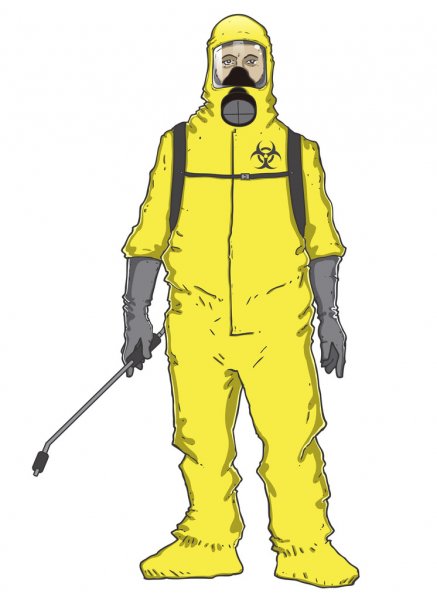
In the following poem we have the poet’s perspective of the isolation, uncertainty, and grief of it all in a poem entitled “Hazmat” by Lorcan Black.

………………………………………………………………………………………………………………………………..

Hazmat

The lungs of this city are burning.
Outside an ambulance expels three medics:

minutes later they move a man between them
like a chess piece.

From our terrace I can see the thin, frail rage of
his chest.
Rising and falling with each step.

I can see the fever glowing-radiation hot-
his chest heaving.

A woman stands by the door crying.
The suits help him tenderly.

Three beekeepers carefully arranging
the contagious fever of a whole hot hive

to be hand deliver, finally,
into a white sterility.

Each night since I have stared at that house.
What if they ban funerals? Then what will she
do, but sit

memorizing every last detail of those men,
eyes under white hoods, escorting him off into
darkness?

Into a night on fire with distance.
The spring trees are restless-

Listen-their branches are breathing and
creaking.

Tonight, and every night,
I can’t help but think

what walls of what houses-
how many thousands-

passing mere time,
caging such grief.

…………………………………………………………………………………………………………………………………..

The poem illustrates a very personification of isolation in the image of the medics moving a Covid patient That were suited up like beekeepers, separated from the world by this suit, and moving him as if he were “a chess piece” (a most dehumanizing experience all by itself). And it was penned an author who is himself isolated on his balcony by the lock-down and is himself partaking in this isolation. So the isolation is a ubiquitous experience very deeply affecting us all, the “whole hot tribe” of us. And then he gives us a poignant picture of the contrast between inhumanity of this surreal scene playing out before his eyes with the very deep humanity, uncertainty and grief of the crying woman standing by the door, and the tenderness of the medics who move him gently to the “white sterility” of the inhumane isolation of the hospital ward where he would probably die alone. And not only does the isolation of the pandemic touch us all, but the grief and the uncertainty of this one woman is also universal also affecting us all. We share her grief in the “many thousands-passing mere time, caging such grief” with all of us also being at risk. “So thus we may be separated from each other by walls, hospitals, and hazmat suits and death itself, but we are all still inextricably connected to one another in spirit by the uncertainty the unprecedented loss of human life of this time in history.

Black himself wrote concerning the inspiration for this poem,

“Over the course of one week in lock-down…I counted five ambulances… The sheer level of that uncertainty for those loved ones left behind struck me as immense, and the grief of the families left behind-especially those for whom that might might be the last they see their loved ones-which inspired this poem.”

Happy New Year #dailywisdomwords #writingcommunity family. And stay safe.

The Hard Places

by: Shirley Satterfield

The Hard Places

Wilderness,
I like wilderness
With rocks and rugged land,
And wide open sky
Where the wild-eyed eagle flys.
Yes, those wide open spaces
Is where the soul can expand;
And God provides
Manna,
And water flows from hard places,
Where He perfects the hard cases
Of a wayward mankind.

In Defense of Borderline: A Prose Poem

by: Shirley Satterfield

It is easy to glide over the Ocean of Good effortlessly. gracefully when the sea is like glass and the path to good is brightly lit by the sun-and there’s love and laughter on the ship. But I was born on a stormy sea, a choppy sea, a virtual whirlpool of dark pain-and was not even invited to board the boat. And thusly was my shattered personality scattered on the ocean floor by a Shark. I think I should at least get credit for surviving this kind of pain, much less thriving in my marriage like I do. For all intents and purposes, I should be dead.

His Holy Wouldness

by: Shirley Satterfield

God breath virtue
Deep into my soul,
The unconscious kind of virtue
That does not boast of itself
Because boasting goodness is
Just the flip side of human pride.
Let my virtue be of God,
And for God.
Let me inhale His holy goodness,
And exhale the works of His holy wouldness.

Let me immerse myself in the completeness
Of the Holy Savior Jesus.

The Sinner’s Now Prayer

by: Shirley Satterfield

The Sinner’s Now Prayer 🙏

Lord,
I have been through the WAR,
Refugee of psychological torture.
Early childhood was pain’s stem.
Workplace sex abuse victim.
Home was a cradle of pain.
But workplace left a crimson stain.
Lord,
This refugee of dada’s hate
May be late
But now seeks the loving favor
Of God, her childhood Savior.

Forgive the sins, Oh Lord,
Of the mentally ill.
Our spirits were ripe for the kill.

Francis Pharcellus Church: Little Virginia’s Secret Journalism Santa

Francis Pharcellus Church: Little Virginia’s Secret Journalism Santa

A child’s letter to the editor questioning the existence of Santa Claus challenged the imagination of a crusty old, cynical newspaper writer by the name of Francis Pharcellus Church to answer the child in the affirmative. And although he was too ashamed of himself to admit to authorship of this the world’s most famous editorial of all time, translated into twenty languages, reprinted every Christmas for years, and used over and over again in blockbuster movies about Christmas, who can after all, deny a mere child?

Eight year old Virginia O’Hanlon posed this pressing question to her father’s most trusted newspaper The New York Sun after a most compelling debate about the existence of Santa Claus with her classmates.

“Dear Editor I am eight years old. Some of my little friends say there is no Santa Claus, papa says, ‘If you see it in The Sun it’s so,’ Please tell me the truth; is there a Santa Claus?”

And when the letter crossed the desk of Church’s brother, the editor and chief of the newspaper, he just summarily passed the buck onto his wry, jaded brother Francis much to the man’s chagrin, to which this most esteemed editor of skepticism replied:

September 21, 1897
New York, New York

YES VIRGINIA THERE IS A SANTA CLAUS

VIRGINIA, your little friends are wrong. They have been affected by the skepticism of a skeptical age. They do not believe except they see. They think that nothing can be which is not comprehensible by their little minds. All minds, Virginia, whether they be men’s or children’s, are little. In this great universe of ours man is a mere insect, an ant, in his intellect, as compared with the boundless world about him, as measured by the intelligence capable of grasping the whole of truth and knowledge.
Yes, VIRGINIA, there is a Santa Claus. He exists as certainly as love and generosity and devotion exist, and you know that they abound and give to your life its highest beauty and joy. Alas! how dreary would be the world if there were no Santa Claus. It would be as dreary as if there were no VIRGINIAS. There would be no childlike faith then, no poetry, no romance to make tolerable this existence. We should have no enjoyment, except in sense and sight. The eternal light with which childhood fills the world would be extinguished.
Not believe in Santa Claus! You might as well not believe in fairies! You might get your papa to hire men to watch in all the chimneys on Christmas Eve to catch Santa Claus, but even if they did not see Santa Claus coming down, what would that prove? Nobody sees Santa Claus, but that is no sign that there is no Santa Claus. The most real things in the world are those that neither children nor men can see. Did you ever see fairies dancing on the lawn? Of course not, but that’s no proof that they are not there. Nobody can conceive or imagine all the wonders there are unseen and unseeable in the world.
You may tear apart the baby’s rattle and see what makes the noise inside, but there is a veil covering the unseen world which not the strongest man, nor even the united strength of all the strongest men that ever lived, could tear apart. Only faith, fancy, poetry, love, romance, can push aside that curtain and view and picture the supernal beauty and glory beyond. Is it all real? Ah, VIRGINIA, in all this world there is nothing else real and abiding.
No Santa Claus! Thank God! he lives, and he lives forever. A thousand years from now, Virginia, nay, ten times ten thousand years from now, he will continue to make glad the heart of childhood.
……………………………………………………………………………………………………………………………………………..
Thus a ‘Just the facts, maim’ type newspaper reporter made Christmas magic for a child and for all of us for all time (and he put it in writing!).

Kahlil Gibran: America’s Mystical Immigrant

Kahlil Gibran: America’s Mystical Immigrant

Kahlil Gibran, born on January 6, 1883 in a Lebanese village in the exotic Ottoman Empire, is most famous for his best selling book, :”The Prophet. It was a popular book full of philosophical prose poetry and mystical illustrations of nude people which has been translated into 100 languages and over the decades since it was first written in 1923 has sold one million copies.

Gibran was a Lebanese immigrant living in Boston who considered himself to more of an artist than he did a writer, and not a philosopher at all. His father had been a tax collector for the Ottoman Empire but was imprisoned for embezzlement, so his mother moved the now impoverished family to America. She supported her family by working as a seamstress and by selling lace and linens door to door. Gibran went to school in Boston where he was recognized as a creative early in life and was introduced to photographer and publisher F. Holland Day by a teacher. But his mother decided to send him back to Lebanon to attend school at age 15 so he would not lose touch with his culture. The family were members of the Maronite church, the Eastern Orthodox arm of the Roman Catholic Church and is fully recognized by the Pope. But after the death of his mother. And the deaths of his sister and half brother which followed, Gibran returned to Boston where he was supported by his surviving sister who was also a seamstress.

His art was eventually recognized in a showing at Day’s studio in Boston where he met Mary Haskell who would become his financial benefactress and close lifelong friend, although it is unknown whether or not they were also lovers. He wrote his first book in Arabic and a second book entitled “The Madman”, and Mary Haskell sent him to France to study art. However, his art went acclaimed by the art critics of the day. But his last book “The Prophet” would become popular with the masses for both the writing and the illustrations in the book. Religiously, Gibran was not only influenced by Maronite Christianity but also by the Sufism, a highly spiritual form of Islam with a focus on the inner life of a worshiper and asceticism as opposed to the more prosperous and worldly form of Islam that we know today. But later in life he would become a follower of Baha’i-La, a religion that believes all the world’s religions should unify. Gibran believed in reincarnation.

The main character of Gibran’s most famous book, Al Mustafa, had been living in the city of Orphalese for 12 years and was about to leave with the stopped him to hear some parting words of wisdom from him, So “The Prophet” teaches them one more time in a long speech about the human condition and the issues of life such as love, marriage, children, beauty, and death, and is rich in symbolism.

……………………………………………………………………………………………………………………………………….

“When love beckons you to follow him, those his ways are hard and steep. And when his wings enfold you yield to him, though the sword hidden among his pinions may wound you.”

“Beauty is eternity gazing at itself in a mirror. But you are eternity and you are the mirror.”

“Your children are not your children. They are the son’s and daughters of life longing for itself.”

………………………………………………………………………………………………………………………………………….

Gibran died on April 10, 1931 in New York City but was buried in his home village of Bsharri in Lebanon and is considered to be Lebanon’s foremost modern writer.

Kahlil Gibran, born on January 6, 1883 in a Lebanese village in the exotic Ottoman Empire, is most famous for his best selling book, :”The Prophet. It was a popular book full of philosophical prose poetry and mystical illustrations of nude people which has been translated into 100 languages and over the decades since it was first written in 1923 has sold one million copies.

Gibran was a Lebanese immigrant living in Boston who considered himself to more of an artist than he did a writer, and not a philosopher at all. His father had been a tax collector for the Ottoman Empire but was imprisoned for embezzlement, so his mother moved the now impoverished family to America. She supported her family by working as a seamstress and by selling lace and linens door to door. Gibran went to school in Boston where he was recognized as a creative early in life and was introduced to photographer and publisher F. Holland Day by a teacher. But his mother decided to send him back to Lebanon to attend school at age 15 so he would not lose touch with his culture. The family were members of the Maronite church, the Eastern Orthodox arm of the Roman Catholic Church and is fully recognized by the Pope. But after the death of his mother. And the deaths of his sister and half brother which followed, Gibran returned to Boston where he was supported by his surviving sister who was also a seamstress.

His art was eventually recognized in a showing at Day’s studio in Boston where he met Mary Haskell who would become his financial benefactress and close lifelong friend, although it is unknown whether or not they were also lovers. He wrote his first book in Arabic and a second book entitled “The Madman”, and Mary Haskell sent him to France to study art. However, his art went acclaimed by the art critics of the day. But his last book “The Prophet” would become popular with the masses for both the writing and the illustrations in the book. Religiously, Gibran was not only influenced by Maronite Christianity but also by the Sufism, a highly spiritual form of Islam with a focus on the inner life of a worshiper and asceticism as opposed to the more prosperous and worldly form of Islam that we know today. But later in life he would become a follower of Baha’i-La, a religion that believes all the world’s religions should unify. Gibran believed in reincarnation.

The main character of Gibran’s most famous book, Al Mustafa, had been living in the city of Orphalese for 12 years and was about to leave with the stopped him to hear some parting words of wisdom from him, So “The Prophet” teaches them one more time in a long speech about the human condition and the issues of life such as love, marriage, children, beauty, and death, and is rich in symbolism.

……………………………………………………………………………………………………………………………………….

“When love beckons you to follow him, those his ways are hard and steep. And when his wings enfold you yield to him, though the sword hidden among his pinions may wound you.”

“Beauty is eternity gazing at itself in a mirror. But you are eternity and you are the mirror.”

“Your children are not your children. They are the son’s and daughters of life longing for itself.”

………………………………………………………………………………………………………………………………………….

Gibran died on April 10, 1931 in New York City but was buried in his home village of Bsharri in Lebanon and is considered to be Lebanon’s foremost modern writer.

Oscar Wilde: Flamboyance Personified

Oscar Wilde: Flamboyance Personified

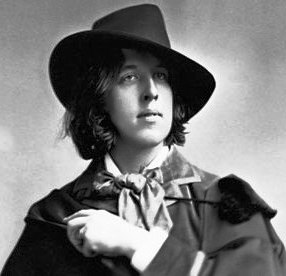
Oscar Fingal O’Flahertie Wills Wilde, born on October 16 in 1854, was not just famous for his long name and writings which were shocking in his Victorian times, he was also known for his fussy attention to his personal appearance and his propensity for the finer things in life, In short, he was a dandy.

A dandy is defined is defined as a man who is extraordinarily fussy about his appearance and who seeks out the finer luxuries of life in the exclusive men’s clubs of London. So, although Wilde was born in Ireland to a noble family of Irish intellectuals, he moved to London shortly after graduation from college to seek out the high life in London’s elite men’s clubs.

And it was in London where he became famous for his plays, his poetry, and his one and only wildly popular Victorian novel “The Picture of Dorian Gray”, a book whose main character was also a dandy. Therefore, the critics cited Wilde as being too decadent and immoral in his writings, but since Wilde was of the Aesthetic Movement in art believing in “art for art’s sake” and the amoral nature of art and beauty, and that the mores of the should have no bearing on art for arts sake, But criticism not withstanding his most famous play “The Importance of Being Earnest, a comedy about the follies of the upper classes, was a long running play in London, and Wilde prospered as a writer.

However his life took a dark turn when he sued the marquess of Queensbury, who was the father of his male lover Lord Alfred Douglas, for criminal libel. But he lost in court and was himself subsequently convicted of performing homosexual acts and sent to prison for a span of two years, And it was there that Wilde discovered his affinity for Jesus and converted to Catholicism and wrote a lengthy letter about his suffering in prison which wasn’t published until after his death. After his release from prison Wilde moved permanently to France where he lived the rest of his life as an ex-patriot. He could speak fluently in both the French and German languages.

He was also an expert in classic, and in addition to his blockbuster plays, his decadence and his famous novel, Wilde was also known for his dry wit as displayed in these famous quotes by him.

………………………………………………………………………………………………….

Be yourself, everyone else is taken.

I can resist everything except temptation.

We are all in the gutter, but some us us are looking at the stars.

The truth is rarely pure and never simple.

To liveis the rarest thing in the world. Most people exist, that is all.

I have nothing to declare but my genius.

………………………………………………………………………………………………………..

Oscar Wilde died at the young age of 46 of meningitis as a complication of aninfection following ear surgery in France, when ironically his own father was an accomplished ear and throat surgeon in Ireland.. He is buried in Pere Lachaise Cemetery in Paris where his gravestone is regularly decorated with lipstick by his still adoring fans.

,

The Human Soul Magnificent!

by: Shirley Satterfield

The Human Soul Magnificent! 👨🏽‍🦯

When I see a special needs adult,
A homeless person,
I get the urge to feed them.
To look into their eyes and see them.
To make them feel the significance
Of a human soul magnificent.

The human soul magnificent
Is the scent of God’s own breathlessness.
Who can measure the breadth
And the width of it,

The human soul magnificent.

The Steadfast Woman and Christ

P

by: Shirley Satterfield

You have to press through
To touch the hem of His garment,
Through the doubts, the fears,
The jeers of a crowd
That is telling you, you’re are no good,
The people people who stand in your way,
Those who would shake
Your steadfast hope and your stay.
You have to press through
To touch the hem of His robe
On this hostile, horrible globe.

Cathy Mellen Our Fall 2020 Contest Winner

Cathy Mellen Our Fall 2020 Contest Winner

I am very pleased to announce that our dailywisdomwords.com Fall poetry contest winner is poet and blogger Cathy Mellen. Congrats Cathy!

1. Where are you from, and please tell us about your life and your home?

️ I am from Lowell, Massachusetts.  Home to Ed McMahon, Bette Davis and Jack Kerouac. I am a mom to three children and a grandma to two beautiful granddaughters.  I left the big city four years ago, moving thirty minutes away to the farm and country scenery. 

2. When did you start writing, and what was the inspiration that sparked your writing career?

️ My first experience in writing was at age fourteen when I wrote a poem about a bird leaving an abusive lifestyle,  I was the bird.  I always knew I wanted to be a writer but shamed by my childhood, I chose to become a cook and caterer for twenty-five years. A car accident on my way home from work in 2015 left me disabled and a lot of free time to put over thirty years of writing into multiple manuscripts ready for publication.  

3. I understand you have quite a back story. Please share with us what you want us to know about your life.

️ Unfortunately between the ages of five and eleven years old, I was a trophy in a child predators sick world and I lived it all while under my birth mothers watch.  I ran at age eleven and went on to live over thirty years believing I was ten years old when I ran. Repressed memories ate age forty-five were of my last year living with my birth family.  Resulting in a walk into my hometown police department and an investigation into multiple unsolved murders in my hometown of Lowell Massachusetts.  

4. You mentioned to me that you write a blog on your own website. Please talk about your blog.

️  I started my blog to bring awareness towards childhood trauma, family secrets and being a statistic of abused children who grew up.  I share the courage, strength and positivity that I used as my stepping stones.  Along with sharing my poetry, Christmas poetry and a side of my comical fiction.   My blog is free to join, read and encourage. 

https://shatter-the-silence.mn.co/landing?space_id=820640

5. What are your plans for the future of your writing career.

️  My plans are to publish my work.  I have a two part Memoir, multiple childhood trauma, poetry and comical fiction manuscripts all ready.  I am currently working on my tenth book called 33 Cases of Karma ( Thirty-three comical short stories of when karma strikes back) 

6, Can you share with us your winning poem?
 
An Open Book 

I write the society of a world gone wrong 
The hate, the crimes and the lives now gone.
I write the reality the whole world reads
The scars, the wounds, the pain that bleeds.
I write the melody the whole world sings
The laughter, the tears, the simple things.
I write the love in a world gone cold
The dreams, the wishes and stories untold.
I write the words I placed in a poem
For all the world we call our home.

I read the society where lies belong
Shame, secrets and a shattered song.
I read the reality this whole world needs
The survivor’s in courage forever now leads. 
I read the melody the whole world brings
The freedom of birds, queens and kings.
I read the love this world does hold
Hidden in cracks, waiting to unfold.
I read the words I placed in this poem
From my heart and straight to your home.

7. What does winning the dailywisdomwords.com poetry contest mean to you?

️  It means a real lot to me.  I was shocked, honored and greatly appreciated hearing I was selected as the Fall 2020 contest winner.  Being recognized for my poetry is definitely an honor I appreciate and will carry for a lifetime.  

Thank you Cathy for your kind participation in our contest!

Modern Prose Poetry Bends the Rules

Modern Prose Poetry Bends the Rules

There are definite difference between poetry and prose. Poetry is written in verse form and relies on picturesque speech, metaphor, imagery, can bend the rules of grammar, and has line breaks in verse form that define it as poetry. Prose on the other hand is always written with regular grammar and punctuation, does not necessarily rely on flowery speech, is written in paragraph form, and has no line breaks in order for it to be defined as prose.

However, there have been through history certain innovative poets who have thrown out the poetry rule book altogether, starting with Japan’s star haiku poet of the 17th Matsuo Basho, He artfully combine the elements of traditional haiku with prose to create a new form of poetry called haibun. This new form of of Japanese poetry also included biographical in formation about the poet himself when ancient poetry was historically written about the myths, heroes and epic stoies of the nation, as exemplified by the Greeks.

In more modern times prose poetry has become a combination of the two forms of writing, prose and poetry and became especially popular in France during the 18th century, as a reaction to all the strict rules of form that was historically employed by French poets. This gave Western poets a new sense of artistic freedom that endures in our free-verse poetry today. In the 19th century Irish Poet Oscar Wilde adopted this form of poetry, however, with the modernist movement cam dissent with such heavy weight poets as T,S, Eliot speaking against it; thus poetry in verse form became apropos again.

In America, Walt Whitman used this during the mid 19th century and is by and large considered to be the American Father of Free-Verse Poetry. And with the advent of the hippy movement of the 20th century prose poetry became popular again in the highly popular coffee houses of the time through the likes of Bob Dylan and Allen Ginsburg,

Today’s prose poetry still uses such literary devices as simile and metaphor, repetition, and loose rhyme and approximate rhyme schemes, they are always written in paragraph form and boast of no line breaks as in this example by prose poet, Amy Lowell.

      Bath

  The day is fresh-washed and fair, and there is a smell of tulips and narcissus in the air.
  The sunshine pours in at the bath-room window and bores through the water in the bath-tub in lathes and planes of greenish-white. It cleaves the water into flaws like a jewel, and cracks it to bright light.
  Little spots of sunshine lie on the surface of the water and dance, dance, and their reflections wobble deliciously over the ceiling; a stir of my finger sets them whirring, reeling. I move a foot, and the planes of light in the water jar. I lie back and laugh, and let the green-white water, the sun-flawed beryl water, flow over me. The day is almost too bright to bear, the green water covers me from the too bright day. I will lie here awhile and play with the water and the sun spots.
  The sky is blue and high. A crow flaps by the window, and there is a whiff of tulips and narcissus in the air.

Next week we will explore the poetry of Oscar Wilde. Sign up for dailywisdomwords,com for poetry prompts, book reviews, and more great content like this.

The Dan River After the Storm

by: Shirley Satterfield

The Dan River After the Storm ☔️

The Bold and Beautiful Dan;
High and mighty after the storm,
Loftier than the norm.

Big water spills over the road;
Blocks the truck that totes the load.
Big water encroaches the pinnacle of the bridge.

God help me now,
I think I need
An overlooking ridge.

Look, It’s Snowing!

by: Shirley Satterfield

Look, It’s Snowing!

Sparkling, spanking feathers
Falling from the sky.
Dervish dancing, dancing down
From fragile wings on high.
Each one a little different,
Each one is quite unique.
Darkly deeply spreading quite,
I dare not try to speak.
Quiet, silence everywhere,
No, I dare not try to speak.
Quiet stillness stems my tongue,
Whites out my busy plans,
As I bow to snow’s command.

Singing Out the Joy

by: Shirley Satterfield

Singing Out the Joy 🦅 🦅 🦅 🎶

Danny dear,
Don’t you hear?
There’s a whole choir of bird outside
Singing out the joy of a new day.
I’ve got to go outside now
For some old folks time
And sing out for joy too,
As a squirrel poises on top
A power pole to listen.
Look,
I’ve never needed drugs.
God and nature fill my empty hole.

Bread Upon The Waters of The Lord

by: Shirley Satterfield

Bread Upon The Waters of the Lord 🥖💦
There’s a dearth in the land,
In this soul sucking emotional quicksand
Afoot on planet Earth.
There’s an encouragement dearth.
So I cast my bread
Upon the waters of the Lord,
On His currents here and there.
Now the Love of God is rare,
The face of children sad,
The soul of man needs fare.
Help me, Lord,
And send out the light.
Penetrate our hungry darkness blight
On the waters of the Lord.

Sarai’s Dream

by: Shirley Satterfield

Sarai’s Dream 👨‍👩‍👦‍👦

Give me the multitude of
hoary stars Abram Lord,
For I cannot count the worlds.
Give me many children from the faith,
This frail framed woman waif.

Make this childless woman
Your happy, homemaking wife
Both in this life and the hereafter.
Let me hear the mirth of angels, Lord,
And laugh.
Let me hear the laughter
of all our daughters and sons.

Reaping stars is fun.

Jericho Brown and His Long Path to Recognition

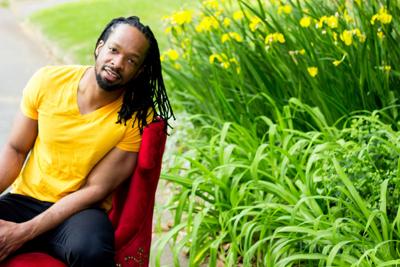
While not all great poets don’t chose big education as their chosen path to success, Pulitzer Prize winning poet Jericho Brown chose that challenging path for himself. Writer Malcolm Gladwell, the author of “Outliers: The Story of success”. asserts that great success comes only by three major things; talent, preparation and practice. And Brown sure did do his time in the classroom, both as student and an educator to achieve success in the very difficult vocation of Poet.

Jericho Brown was born on April 14, 1976 in Shreveport, Louisiana and served at one time as a speech writer for the mayor of New Orleans, Louisiana. He did his undergraduate studies at the University of New Orleans, where he earned an MFA, and the University of Houston where he earned his PhD. He went on to become an accomplished college professor and continued paying his dues by having his poetry published in various publications the New England Review, The New York Times and New Yorker Magazine. He released his first book of poems entitled “Please” in 2008 and his second book “The New Testament”. He then released his third collection of poems “The Tradition” in 2019 to critical acclaim and a Pulitzer Prize for poetry. And it was written of him “His lyrics are memorable, muscular and majestic. His voice in these lines is alive…” “The Tradition” is a book that addresses the systematic evil in society and how it impacts him.

Brown is rather liberal in his views and has recently Tweeted:

I want Biden to win this thing and I want that senate too. And I want it so I can see what they boldly do for the people who put them there. the people who have the power to keep them there. What should those people do if their needs are not met by those they’ve empowered?

This on the cutting edge poet did not succeed to gain a significant voice in the world overnight. It took many years of consistent hard work at his craft. Congratulations on your prize, Mr. Jericho Brown.

Unity Bud

by: Shirley Satterfield

Unity Bud

Thank You, Lord,
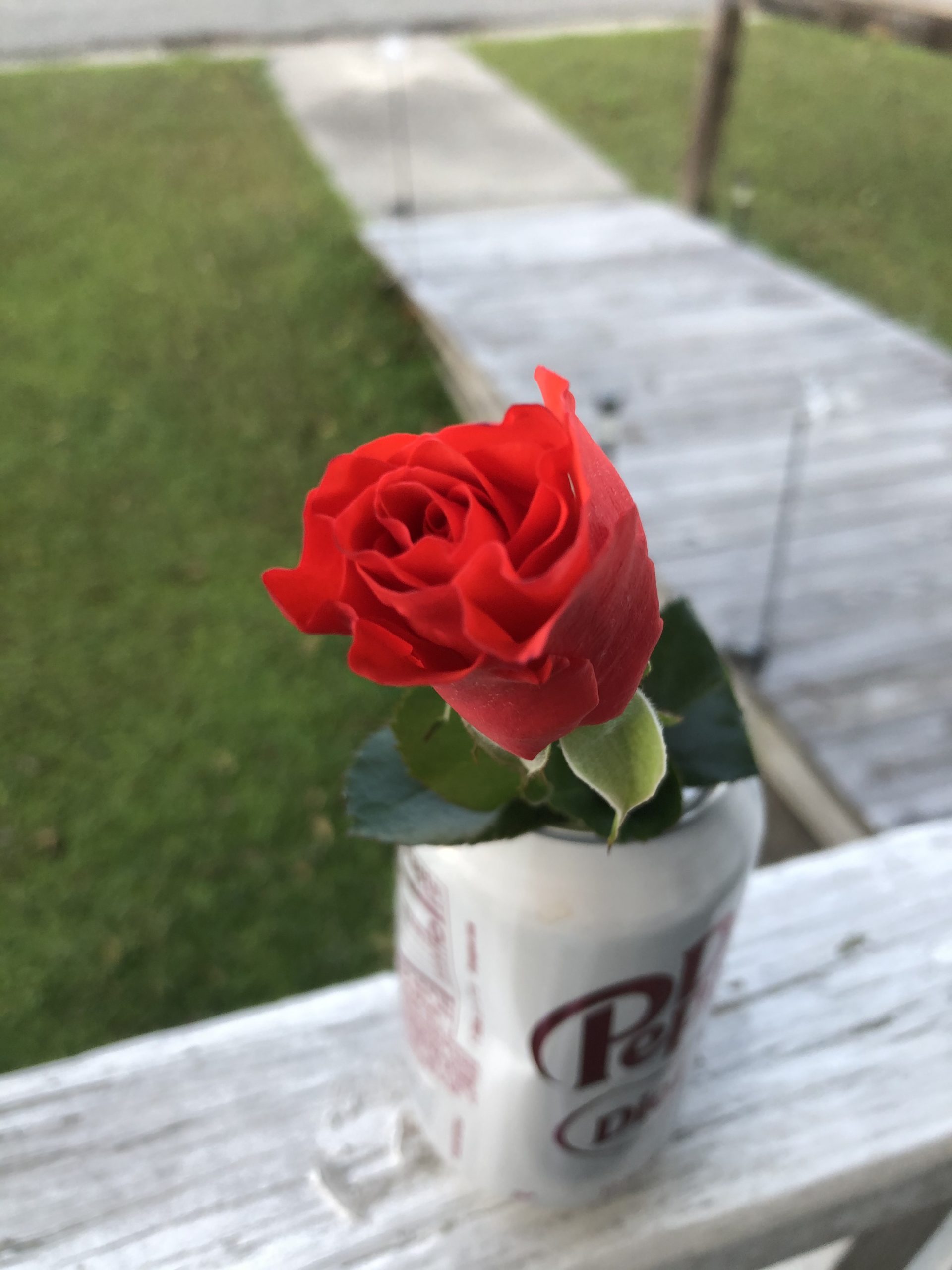
For the gift of a rosebud in the Fall,
Autumn’s bright gift of living silk
Marking winter’s briefest stall.
Splendid scarlet petals
Embracing own tender soul.
Perfect picture of self care fairness,
Tiny parts tending the whole.

Let’s Be Somebody Too

by: Shirley Satterfield

Let’s Be Somebody Too. 👑

Hi. I’m nobody in particular,
But somebody too.
How about you?

Do you reach for a star?
Do you walk very far
To help a brother?
Do you feed the strays?
Are you someone’s loving mother?

Then you sit on the corona of the sun.
You are daylight’s great display.
You are God’s daughter or His precious son.

You are somebody too.
And worthy through and through.