Rudyard Kipling: The Empire’s Anglo-Indian Writer

Rudyard Kipling: The Empire’s Anglo-Indian Writer

Indian born, British citizen Rudyard Kipling was an imperialist leaning writer which makes him controversial in our own post colonial times, but he was a wildly popular writer in his own time, For he wrote such endearing stories as “The Jungle Book” about a boy raised by wolves in the wild and charming poems about India such as” Mandalay” revealing the exotic Far East through the wide, beholding eyes of a British soldier in love with an oriental woman.Kipling was such an accomplished writer in his season that he was the first European to win the Nobel Prize for literature in 1907 and was the youngest man at the age of 41 to do so to date.

Kipling was born in Bombay, India on December 30, 1865 to an upper middle class family that had certain important connections that would later help him in his writing career, His father was John Lockwood Kipling. a renown artist in India who curated the Lahore Museum. Rudyard Kipling spent his early childhood in India, but at age 6 he and his younger sister were taken by their parents to England and placed in a foster home in order to be educated there, But unfortunately young Kipling was abused and neglected in that home, so his childhood cannot be described as anything less than wretched. Upon being freed from this abusive home by a kind, discerning great aunt, Kipling went onto finish his education in a rather second rate boarding school called United Services College in Devon, thus because of his lagging grades he was not accepted on a scholarship to attend Oxford, and his parents could not afford to pay his education there. So Kipling’s father pulled some strings to land his young son a job as an assistant editor on a local newspaper in Lahore, and thus young Kipling set sail for India on October 20, 1882 and his professional writing career commenced with India being his primary inspiration.

During his seven years of tenure at the newspaper, Kipling kept a journal. wrote short stories, novels and poems and became a prolific well rounded writer, and in 1889 he returned to England to live in London, the literary hub of the English speaking world where he was a success with his most famous novel entitled “Kim”. However he became more and more controversial among qriters having written a poem entitled “The White Man’s Burden” to encourage America’s imperialism during the Philippine/American War and as British imperialism began to diminish around the world. Kipling felt that the Anglo culture was the superior culture of the world with certain custodial responsibilities for the rest pf humanity as expressed in the following poem.

The White Man’s Burden

Take up the White Man’s burden—

Send forth the best ye breed—

Go send your sons to exile

To serve your captives’ need

To wait in heavy harness

On fluttered folk and wild—

Your new-caught, sullen peoples,

Half devil and half child

Take up the White Man’s burden

In patience to abide

To veil the threat of terror

And check the show of pride;

By open speech and simple

An hundred times made plain

To seek another’s profit

And work another’s gain

Take up the White Man’s burden—

And reap his old reward:

The blame of those ye better

The hate of those ye guard—

The cry of hosts ye humour

(Ah slowly) to the light:

“Why brought ye us from bondage,

Our loved Egyptian night?”

Take up the White Man’s burden-

Have done with childish days-

The lightly proffered laurel,

The easy, ungrudged praise.

Comes now, to search your manhood

Through all the thankless years,

Cold-edged with dear-bought wisdom,

The judgment of your peers!

……………………………………………………………..

The sentiments in this poem show Kipling as to have been a man who was destined to be left behind by time, and he died on January 18, 1936 ar age 70.

Be sure and sign-up for your membership at DailyWisdomWords and link your content to all major social media platforms. Only ten dollars for lifetime membership.


Rebirth and Resurrection in Western Literature

We are in the season of Easter when we turn our minds to the rebirth of Spring and the resurrection of Jesus Christ from the dead. And both of these compelling themes can be found commonly is Western literature and the Bible.

For instance Walt Whitman wrote extensively about the physical rebirth of all things dead through both nature and chemistry. In the poem “Song of Self” Whitman tells the reader that after he dies you will find him “under your bootstraps” living in the grasses and the flowers of the field. In the poem entitled “Compost” he writes about the how the actual physical substances of the dead can be found in a lifegiving soil that should make you sick for all the bodies throughout the ages buried in it. He wrote;

Behold this compost! behold it well!

Perhaps every mite has once form’d part of a sick person-

Behold!

The grass of spring covers the prairies…

The resurrection of wheat appears with pale visage out of it’s graves.

And Whitman goes on to declare, “What chemistry!” marking this as a strictly physical rebirth  through the forces of nature and not a spiritual one.

However, there was also the death and rebirth brought about by epiphany as described in the ancient literature of Bible, and it was Jesus that spoke of a spiritual rebirth by being born again “by the Spirit”. This is also a rebirth that follows a kind of a death to oneself when you “deny yourself and take up your cross (an instrument of death} and follow” him. In other words the devotee of Jesus Christ turns away from his old life and is born again through the epiphany of having a sudden change of heart led by the Spirit outside himself, and which is greater than himself. Thus the rebirth for the Christian adherent is a spiritual one and not the physical one which is brought about by natural means which Whitman wrote about, and the actually physical resurrection of the body at the end of the age, according to the teachings of the Bible, is also caused by supernatural means rather than by the natural processes of nature as described by Whitman. Thus, I think Walt Whitman was something akin to a modern day scientist. who only believes in the forces of nature, in that respect.

Happy Easter and be sure to sign up for your membership to dailywisdomwords,com to post and comment here, Only ten dollars for your lifetime membership.


Mahatma Gandhi: The Wise-man from the East and His Writings

Mahatma Gandhi: The Wise-man from the East and His Writings

Mohandas Karamchald Gandhi. born on October 2, 1869 in Guiarat, India was not only an anti-colonial activist and the liberator of his country from Great Britain, but he also left behind some important writings that have greatly influenced civil rights leaders in modern times. “The Story of My Experiments with Truth” is an auto-biography that chronicles the events of his amazing life with his experimental experience of living like an English gentleman in London to his return to his own Indian cultural roots after suffering the violent effects of apartheid and racism while living in South Africa.

Another book entitled “Selected Writings of Mahatma Gandhi” is an exhaustive collection of his important writings collected and compiled by Ronald Duncan which is divided into nine long parts and is available as a free download online. But the first part only entitled “The Gospel of Selfless Action” will be discussed here as it perfectly embodies the essence of this modern political saint, for Gandhi said “My life is my message.” And a selfless life he led indeed.

Born to a modest Hindu family in the varna of Viashya (or the working class), Gandhi was given in a marriage arranged by his parents at the young age of 13 to a 14 year old girl named Kasturbai Kapadia, but both children were allowed to continue to live with their parents at that young age. But upon graduation from high school, Gandhi decided to continue his education as a law student in Great Britain much to the consternation of his nervous family who feared that the young man might be corrupted by Western culture. However, a devout Hindu, young Gandhi took vow of chastity and made a promise to not drink alcohol or eat meat, a vow that the pious young man dutifully kept.

Upon graduation from law school the young man was called to the bar at age 22, and he moved back to India to practice law but was not very successful there. So he moved himself and his young family to South Africa where he was called upon to represent a Muslim Indian merchant who lived there, and it was in South Africa where he experienced the worst racial discrimination, often involving beatings and violence because of the color of his skin, and it was there in South Africa where he became a political activist for change.

In the year 1915 he moved back to India where he galvanized the common people to seek independence for his country from colonial Great Britain through non-violent non-cooperation with the British government. Thus he led his people in protest though fasting (“fasting unto death”) refusing to participate in British culture by the wearing of traditional hand woven Indian garments and the absolute boycott on buying Western goods. In 1921 Gandhi assumed the leadership of the Indian National Congress and on August 15, 1947 India was granted it’s independence, but was, much to the sorrow of Gandhi divided into two nations, Hindu India and Muslim Pakistan after serious religious violence broke out between the two groups.

In the “Selected Writings of Mahatma Gandhi” Gandhi makes a commentary in the section entitled “On the Gospel of a Selfless Life” about the writings of the Gita, a book that uses warfare as a metaphor for the interior struggles that play out in the hearts of men and Gandhi wrote concerning it, “ In this great work the Gita is the crown. Its second chapter instead of teaching the rules of physical warfare, tells us how a perfected man is to be known,” He also described the Gita as a book about “the duel that perpetually went on in the hearts of mankind,” between good and evil. Having had a devoutly religious mother, Gandhi, being a very deeply sensitive and spiritual human-being himself, was greatly influenced by the Vedic texts, the Quran, the Bible, and the teachings of Jesus Christ. Thus was Gandhi a nonviolent protester of racial and political injustice, but unfortunately was himself shot to death by a fellow countryman, who was a much more radical protester in his beliefs, on January 30, 1948. So ironically this gentle man of peace and justice died a violent death and Prime Minister Nehru said of him in his speech afterwards, “Friends and comrades, the light has gone out of our live and there is darkness everywhere…Our beloved leader Bapu as we called him, the father of the nation is no more,,,” but we can clearly see that his thoughts lived on generations later through the work of such leaders as Martin Luther King in America and Nelson Mandela in South Africa and will continue to live on through his writings and the writings of others about him. He left a living legacy.

Become a member today at DailyWisdomWords to post comments and content here. Only $10.00 one time membership fee for a lifetime.


Ireland: Land of Mossy Mists and Ancient Myth

Ireland: Land of Mossy Mists and Ancient Myth

Similar to Greece, Ireland is also a land of ancient myth and folklore. But the difference between myth and folklore is that folklore has its roots in the popular music, dance and ballads of the culture, but myth involves the stories about the divine and are considered sacred by the ancient peoples. However, these ancient Celtic myths were not actually written down until the advent of Christianity because with Christianity, a written language and an alphabet was introduced to the indigenous people of isle. And until then these stories were handed down by an oral tradition called Bealoideas.

Irish myth is divided into four basic cycles, three being per-Christian and one being medieval. These four cycles are the Mythological cycle, the Ulster cycle, the Fenian cycle and the Historical cycle. The Mythological cycle are the tales of the ancient Celtic gods and goddesses and the godlike peoples that originally invaded the isle called the Tuatha De Danann, who were the supernatural people of the goddess Danu. The Ulster cycle are the legends of the many heroes of eastern Ulster in Northern Ireland, and the Fenian cycle tells of the trials, tribulations, and exploits of one hero Finn and his army called the Fianna. These stories were written in verse form and are also found in Scotland and the Isle of Mann. The Historical cycle is also known as the Cycle of Kings which chronicles the stories of the legendary kings of Ireland in the Middle Ages. And these particular stories were recorded by the court poets serving the kings in those days. And of course they mixed the truth with fictional embellishments in order to please the kings because, no doubt, a king could order “Off with his head.” if the great man was not pleased.

Some more gods and goddesses of the original Mythological cycle include Aine, goddess of love, summer and prosperity, Lir, god of the sea, Brigid, goddess of healing, fertility, and poetry, Dian Cecht, god of healing, and a whole other pantheon of gods whose names I will never be able to pronounce. The ancient people of Ireland have their roots in a polytheistic religion similar to the Greeks and the Romans and other ancient peoples of the world, with the Jews being the only ancient people, barring the Egyptians for a short period of time, who only had one God.

Be sure and sign up for your membership today at DailyWisdomWords to rate comment on this post. Only $10.00 for a lifetime membership in this wonderful writing community!

Narrative Poetry Tells The Story

Narrative Poetry Tells The Story

Aristotle divided poetry into three main categories: narrative, dramatic, such as we see in Shakespeare’s plays in which character development is the the thing rather than plot, and lyric poetry. And, of course, these three basic forms can overlap as in a lyrical poem that is also a narrative.

A narrative poem is defined as a poem that tells a story. It can be really long like a novel or really short like a lyrical poem, but it always tells a story. There are four types of narrative poems and that is the epic, such as we find in Greek mythology about the life of a hero, like Hercules, for instance, ballads, idylls, which are basically pastoral in subject matter, and lays (lyrical poetry) which are by and large autobiographical and written in the first person.

A good example of an English epic poem would be Milton’s “Paradise Lost” which contains a lengthy complicated plot about what was going on in heaven, in hell, and on earth between Adam and Eve, the Devil, and God during the fall of Man. An epic poem always has a plot, and a good example is the epic poem entitled Evangeline by Henry Wadsworth Longfellow, an American poet, in which a young Acadian woman named Evangeline searches for her long lost lover. Gabriel, who was lost during the deportation of the Acadian people by the British from Canada. The poem follows her life as she searches for her lover all through the thirteen American colonies, but in vain, until she finally settles down in Philadelphia and becomes a Sister’s of Mercy nun.

Another kind of a narrative can be found in a ballad which is a poem set to music and sometimes has refrains. This form was first developed by the French and used as dance songs. But this form became very popular in England and Ireland in the latter part of the middle ages and finally in America. A good example of an American ballad would be Johnny Cash’s classic country song “A Boy Named Sue” in which he tells the story of a young boy’s rough upbringing.

Thank you
Well, my daddy left home
When I was three
And he didn’t leave very much to my ma and me
Except this ole guitar and
An empty bottle of booze
Now I don’t blame him
‘Cause he run and hid
But the meanest thing that my daddy ever did
Was before he left he wanted to
Name me Sue
He musta thought
That it was quite a joke
And it got a lot of laughs from lots a folks
Seems I had to fight my whole life through
Some gal would giggle and I’d turn red
And some guy’d laugh and I’d bust his head
I’ll tell ya, life ain’t easy for a boy named Sue
Well, I grew up quick and I grew up mean
My fist got hard and my wits got keen
Roamed from town to town
To hide my shame
But I made me a vow to the moon and stars
I’d search the honky-tonks and bars
And kill that man that gave
Me that awful name
Well, it was Gatlinburg in mid-July
And I’d just hit town and my throat was dry
I thought I’d stop and have myself a brew
At an old saloon on a street of mud
There at a table dealin’ stud
Sat the dirty, mangy dog that named me Sue
Well I knew that snake was my own sweet dad
From a worn out picture that my mother had
Knew that scar on
His cheek and his evil eye
He was big and bent and grey and old
And I looked at him and my
Blood ran cold, and I said
“My name is Sue! How do you do?
Now you gonna die!”
Well, I hit him hard right
Between the eyes
And he went down but to my surprise
Came up with a knife and
Cut off a piece of my ear
Then I busted a chair right across his teeth
And we crashed through
The wall and into the street
Kickin’ and a gougin’ in the mud
And the blood and the beer
Well I tell ya, I’ve fought tougher men
But I really can’t remember when
He kicked like a mule and
He bit like a crocodile
I heard him laugh and
Then I heard him cuss
And he reached for his gun but
I pulled mine first
He stood there lookin’ at me and
I saw him smile
And he said
“Son, this world is rough
And if a man’s gonna make
It he’s gotta be tough
And I know I wouldn’t be
There to help you along
So I gave you that name
And I said goodbye
I knew you’d have to get tough or die
And it’s that name that helped
To make you strong.”
He said, “Now you just fought
One heck of a fight
And I know you hate me
And ya got the right
To kill me now and I wouldn’t
Blame you if you do
But you oughta thank me before I die
For the gravel in your gut
And the spit in the eye
‘Cause I’m the –
That named you Sue.”
Yeah, what could I do?
I got all choked up and threw down my gun
Called him my pa and he called me his son
And I came away with a
Different point of view
And I think about him now and then
Every time I try and every time I win
And if I ever have a boy
I’ll name him
Bill or George or Frank
Anything dam thing but Sue!
Hate that name

The idyllic poem is a narrative that glorifies nature and bucolic scenes in the country, and a lay or a lyrical poem (a short rhymed and metered poem which can be set to music, and is often biographical, had it’s inception in ancient Greece when such poetry was accompanied by the music of the lyre, Robert Frost was America’s great idyllic poet who wrote about all things county, and the elements of both the lyric and the idyllic poem can be found in his popular poem “The Road Not Taken”.

The Road Not Taken 
BY ROBERT FROST
Two roads diverged in a yellow wood,
And sorry I could not travel both
And be one traveler, long I stood
And looked down one as far as I could
To where it bent in the undergrowth;

Then took the other, as just as fair,
And having perhaps the better claim,
Because it was grassy and wanted wear;
Though as for that the passing there
Had worn them really about the same,

And both that morning equally lay
In leaves no step had trodden black.
Oh, I kept the first for another day!
Yet knowing how way leads on to way,
I doubted if I should ever come back.

I shall be telling this with a sigh
Somewhere ages and ages hence:
Two roads diverged in a wood, and I—
I took the one less traveled by,
And that has made all the difference.

This short lyrical poem is the story of a man who has a decision to make that has permanent ramifications set in ther most bucolic of scenes, the woods. But another short idyllic poem that has all the elements of a lyrical poem in that it begins with the word “I” and is a snapshot of a story is as follows:

I watch fields, as nature
Invites pastoral bliss….
Irises and oaks glow
Imbued with morn’s fresh soil;
Igniting rural charm
In mind’s eye – O hometown
Illumines peace- earth’s gift!

These different form of narrative poetry can certainly cross over with the elements of one form being found in another.

………………………………………………………………………………………………………………………………………………..

Writer’s and poets, be sure and sign up to be a member of dailywisdomwords.com to link your longer writings to Twitter and other major social media sites, Only $10.00 for a lifetime membership.

Francis Pharcellus Church: Little Virginia’s Secret Journalism Santa

Francis Pharcellus Church: Little Virginia’s Secret Journalism Santa

A child’s letter to the editor questioning the existence of Santa Claus challenged the imagination of a crusty old, cynical newspaper writer by the name of Francis Pharcellus Church to answer the child in the affirmative. And although he was too ashamed of himself to admit to authorship of this the world’s most famous editorial of all time, translated into twenty languages, reprinted every Christmas for years, and used over and over again in blockbuster movies about Christmas, who can after all, deny a mere child?

Eight year old Virginia O’Hanlon posed this pressing question to her father’s most trusted newspaper The New York Sun after a most compelling debate about the existence of Santa Claus with her classmates.

“Dear Editor I am eight years old. Some of my little friends say there is no Santa Claus, papa says, ‘If you see it in The Sun it’s so,’ Please tell me the truth; is there a Santa Claus?”

And when the letter crossed the desk of Church’s brother, the editor and chief of the newspaper, he just summarily passed the buck onto his wry, jaded brother Francis much to the man’s chagrin, to which this most esteemed editor of skepticism replied:

September 21, 1897
New York, New York

YES VIRGINIA THERE IS A SANTA CLAUS

VIRGINIA, your little friends are wrong. They have been affected by the skepticism of a skeptical age. They do not believe except they see. They think that nothing can be which is not comprehensible by their little minds. All minds, Virginia, whether they be men’s or children’s, are little. In this great universe of ours man is a mere insect, an ant, in his intellect, as compared with the boundless world about him, as measured by the intelligence capable of grasping the whole of truth and knowledge.
Yes, VIRGINIA, there is a Santa Claus. He exists as certainly as love and generosity and devotion exist, and you know that they abound and give to your life its highest beauty and joy. Alas! how dreary would be the world if there were no Santa Claus. It would be as dreary as if there were no VIRGINIAS. There would be no childlike faith then, no poetry, no romance to make tolerable this existence. We should have no enjoyment, except in sense and sight. The eternal light with which childhood fills the world would be extinguished.
Not believe in Santa Claus! You might as well not believe in fairies! You might get your papa to hire men to watch in all the chimneys on Christmas Eve to catch Santa Claus, but even if they did not see Santa Claus coming down, what would that prove? Nobody sees Santa Claus, but that is no sign that there is no Santa Claus. The most real things in the world are those that neither children nor men can see. Did you ever see fairies dancing on the lawn? Of course not, but that’s no proof that they are not there. Nobody can conceive or imagine all the wonders there are unseen and unseeable in the world.
You may tear apart the baby’s rattle and see what makes the noise inside, but there is a veil covering the unseen world which not the strongest man, nor even the united strength of all the strongest men that ever lived, could tear apart. Only faith, fancy, poetry, love, romance, can push aside that curtain and view and picture the supernal beauty and glory beyond. Is it all real? Ah, VIRGINIA, in all this world there is nothing else real and abiding.
No Santa Claus! Thank God! he lives, and he lives forever. A thousand years from now, Virginia, nay, ten times ten thousand years from now, he will continue to make glad the heart of childhood.
……………………………………………………………………………………………………………………………………………..
Thus a ‘Just the facts, maim’ type newspaper reporter made Christmas magic for a child and for all of us for all time (and he put it in writing!).

Kahlil Gibran: America’s Mystical Immigrant

Kahlil Gibran: America’s Mystical Immigrant

Kahlil Gibran, born on January 6, 1883 in a Lebanese village in the exotic Ottoman Empire, is most famous for his best selling book, :”The Prophet. It was a popular book full of philosophical prose poetry and mystical illustrations of nude people which has been translated into 100 languages and over the decades since it was first written in 1923 has sold one million copies.

Gibran was a Lebanese immigrant living in Boston who considered himself to more of an artist than he did a writer, and not a philosopher at all. His father had been a tax collector for the Ottoman Empire but was imprisoned for embezzlement, so his mother moved the now impoverished family to America. She supported her family by working as a seamstress and by selling lace and linens door to door. Gibran went to school in Boston where he was recognized as a creative early in life and was introduced to photographer and publisher F. Holland Day by a teacher. But his mother decided to send him back to Lebanon to attend school at age 15 so he would not lose touch with his culture. The family were members of the Maronite church, the Eastern Orthodox arm of the Roman Catholic Church and is fully recognized by the Pope. But after the death of his mother. And the deaths of his sister and half brother which followed, Gibran returned to Boston where he was supported by his surviving sister who was also a seamstress.

His art was eventually recognized in a showing at Day’s studio in Boston where he met Mary Haskell who would become his financial benefactress and close lifelong friend, although it is unknown whether or not they were also lovers. He wrote his first book in Arabic and a second book entitled “The Madman”, and Mary Haskell sent him to France to study art. However, his art went acclaimed by the art critics of the day. But his last book “The Prophet” would become popular with the masses for both the writing and the illustrations in the book. Religiously, Gibran was not only influenced by Maronite Christianity but also by the Sufism, a highly spiritual form of Islam with a focus on the inner life of a worshiper and asceticism as opposed to the more prosperous and worldly form of Islam that we know today. But later in life he would become a follower of Baha’i-La, a religion that believes all the world’s religions should unify. Gibran believed in reincarnation.

The main character of Gibran’s most famous book, Al Mustafa, had been living in the city of Orphalese for 12 years and was about to leave with the stopped him to hear some parting words of wisdom from him, So “The Prophet” teaches them one more time in a long speech about the human condition and the issues of life such as love, marriage, children, beauty, and death, and is rich in symbolism.

……………………………………………………………………………………………………………………………………….

“When love beckons you to follow him, those his ways are hard and steep. And when his wings enfold you yield to him, though the sword hidden among his pinions may wound you.”

“Beauty is eternity gazing at itself in a mirror. But you are eternity and you are the mirror.”

“Your children are not your children. They are the son’s and daughters of life longing for itself.”

………………………………………………………………………………………………………………………………………….

Gibran died on April 10, 1931 in New York City but was buried in his home village of Bsharri in Lebanon and is considered to be Lebanon’s foremost modern writer.

Kahlil Gibran, born on January 6, 1883 in a Lebanese village in the exotic Ottoman Empire, is most famous for his best selling book, :”The Prophet. It was a popular book full of philosophical prose poetry and mystical illustrations of nude people which has been translated into 100 languages and over the decades since it was first written in 1923 has sold one million copies.

Gibran was a Lebanese immigrant living in Boston who considered himself to more of an artist than he did a writer, and not a philosopher at all. His father had been a tax collector for the Ottoman Empire but was imprisoned for embezzlement, so his mother moved the now impoverished family to America. She supported her family by working as a seamstress and by selling lace and linens door to door. Gibran went to school in Boston where he was recognized as a creative early in life and was introduced to photographer and publisher F. Holland Day by a teacher. But his mother decided to send him back to Lebanon to attend school at age 15 so he would not lose touch with his culture. The family were members of the Maronite church, the Eastern Orthodox arm of the Roman Catholic Church and is fully recognized by the Pope. But after the death of his mother. And the deaths of his sister and half brother which followed, Gibran returned to Boston where he was supported by his surviving sister who was also a seamstress.

His art was eventually recognized in a showing at Day’s studio in Boston where he met Mary Haskell who would become his financial benefactress and close lifelong friend, although it is unknown whether or not they were also lovers. He wrote his first book in Arabic and a second book entitled “The Madman”, and Mary Haskell sent him to France to study art. However, his art went acclaimed by the art critics of the day. But his last book “The Prophet” would become popular with the masses for both the writing and the illustrations in the book. Religiously, Gibran was not only influenced by Maronite Christianity but also by the Sufism, a highly spiritual form of Islam with a focus on the inner life of a worshiper and asceticism as opposed to the more prosperous and worldly form of Islam that we know today. But later in life he would become a follower of Baha’i-La, a religion that believes all the world’s religions should unify. Gibran believed in reincarnation.

The main character of Gibran’s most famous book, Al Mustafa, had been living in the city of Orphalese for 12 years and was about to leave with the stopped him to hear some parting words of wisdom from him, So “The Prophet” teaches them one more time in a long speech about the human condition and the issues of life such as love, marriage, children, beauty, and death, and is rich in symbolism.

……………………………………………………………………………………………………………………………………….

“When love beckons you to follow him, those his ways are hard and steep. And when his wings enfold you yield to him, though the sword hidden among his pinions may wound you.”

“Beauty is eternity gazing at itself in a mirror. But you are eternity and you are the mirror.”

“Your children are not your children. They are the son’s and daughters of life longing for itself.”

………………………………………………………………………………………………………………………………………….

Gibran died on April 10, 1931 in New York City but was buried in his home village of Bsharri in Lebanon and is considered to be Lebanon’s foremost modern writer.

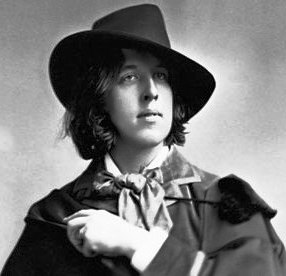
Oscar Wilde: Flamboyance Personified

Oscar Wilde: Flamboyance Personified

Oscar Fingal O’Flahertie Wills Wilde, born on October 16 in 1854, was not just famous for his long name and writings which were shocking in his Victorian times, he was also known for his fussy attention to his personal appearance and his propensity for the finer things in life, In short, he was a dandy.

A dandy is defined is defined as a man who is extraordinarily fussy about his appearance and who seeks out the finer luxuries of life in the exclusive men’s clubs of London. So, although Wilde was born in Ireland to a noble family of Irish intellectuals, he moved to London shortly after graduation from college to seek out the high life in London’s elite men’s clubs.

And it was in London where he became famous for his plays, his poetry, and his one and only wildly popular Victorian novel “The Picture of Dorian Gray”, a book whose main character was also a dandy. Therefore, the critics cited Wilde as being too decadent and immoral in his writings, but since Wilde was of the Aesthetic Movement in art believing in “art for art’s sake” and the amoral nature of art and beauty, and that the mores of the should have no bearing on art for arts sake, But criticism not withstanding his most famous play “The Importance of Being Earnest, a comedy about the follies of the upper classes, was a long running play in London, and Wilde prospered as a writer.

However his life took a dark turn when he sued the marquess of Queensbury, who was the father of his male lover Lord Alfred Douglas, for criminal libel. But he lost in court and was himself subsequently convicted of performing homosexual acts and sent to prison for a span of two years, And it was there that Wilde discovered his affinity for Jesus and converted to Catholicism and wrote a lengthy letter about his suffering in prison which wasn’t published until after his death. After his release from prison Wilde moved permanently to France where he lived the rest of his life as an ex-patriot. He could speak fluently in both the French and German languages.

He was also an expert in classic, and in addition to his blockbuster plays, his decadence and his famous novel, Wilde was also known for his dry wit as displayed in these famous quotes by him.

………………………………………………………………………………………………….

Be yourself, everyone else is taken.

I can resist everything except temptation.

We are all in the gutter, but some us us are looking at the stars.

The truth is rarely pure and never simple.

To liveis the rarest thing in the world. Most people exist, that is all.

I have nothing to declare but my genius.

………………………………………………………………………………………………………..

Oscar Wilde died at the young age of 46 of meningitis as a complication of aninfection following ear surgery in France, when ironically his own father was an accomplished ear and throat surgeon in Ireland.. He is buried in Pere Lachaise Cemetery in Paris where his gravestone is regularly decorated with lipstick by his still adoring fans.

,

HELLO MEMBERS AND FRIENDS OF DAILY WISDOM WORDS! HAPPY THANKSGIVING!!! 2020

GRATITUDE AND THANKS

DEAR DAILY WISDOM WORDS MEMBERS AND FRIENDS,

OUR TEAM WHICH INCLUDES MONDAY ABUH, @MONDAYPOET, WHO HOSTS OUR WEEKEND MUSIC PROMPTS, DESERVES A HUGE SHOUTOUT FOR HIS AMAZING WORK NOT ONLY WITH THE MUSIC PROMPT, BUT ALSO OUR DAILY POETRY PROMPTS.  I HAVE ALWAYS THOUGHT OF THANKSGIVING AS A SPECIAL TIME TO ACKNOWLEDGE THOSE PEOPLE IN OUR LIVES THAT MAKE A DIFFERENCE IN THIS WORLD.  MONDAY IS ONE OF THESE GIFTS WE AS A WRITING COMMUNITY HAVE GOTTEN THE PLEASURE TO WORK WITH.  

I AM THANKFUL FOR EACH WRITER WHO HOSTS A LIVE PROMPT, BUT NO PERSON REFLECTS THIS AS WELL AS MONDAY!  MONDAY IS 20 YEARS OLD, AND. SUCH AN INSPIRATION!  NOT ONLY DOES HE GO TO COLLEGE BUT HE JUST FINISHED UP DOING VOLUNTEER WORK FOR HIS PLACE OF RESIDENCE, NIGERIA!  HE ALSO PUBLISHES THE AWESOME PODCAST, THE POETRY CAPSULE AND HAS SELF PUBLISHED HIS OWN BOOK.  HE IS THOUGHTFUL, CARING AND SO VERY GIFTED AS A WRITER AND POET!  MONDAY, YOU ARE LIKE A SON TO ME AND I THANK YOU ON THIS DAY OF THANKSGIVING FOR ALL YOU ADD TO DAILY WISDOM WORDS, BUT FOR BEING THE CARING, KIND PERSON WE ALL IN THIS WRITING COMMUNITY HAVE THE PLEASURE OF KNOWING.  

NOT ONLY DOES MONDAY VOLUNTEER HIS TIME, SHIRLEY MANDEL SATTERFIELD, AN AWARD WINNING POET AND AUTHOR DOES AS WELL.  SHIRLEY, HAS THE WISDOM OF JOBE AND WE SEE IN IN EVERY WORD OF WRITING SHE SHARES.  SHIRLEY NOT ONLY HOSTS OUR YOUTUBE DAILYWISDOMWORDS.COM CHANNEL, BUT PUBLISHES OUR “WISE POET AND AUTHORS, PRESENT AND PAST” PAGE.  WE ARE SO THANKFUL FOR YOU, SHIRLEY AND EVERY GIFT YOU ADD TO THIS WRITING COMMUNITY INCLUDING YOUR POSITIVITY AND INSPIRATION.  YOU ARE FAMILY TO ALL OF US!  I WANT TO THANK YOU FOR ALL YOU DO FOR OUR MEMBERS AND MYSELF AS THE FOUNDER OF DAILY WISDOM WORDS.  YOU ARE SO DEAR TO MY HEART.  I AM SO GRATEFUL THAT YOU VOLUNTEER 

LAST, BUT CERTAINLY NOT LEAST, I WISH TO THANK NEEL TRIVEDI, MY CFO, CEO AND RIGHT HAND MAN.  NOT ONLY HAS HE GIVEN SO MUCH OF HIMSELF WITH HIS CONTRIBUTIONS TO DAILY WISDOM WORDS, HE HOSTS THE FANTASTIC PAGE ON OUR WEBSITE, “WISDOMOLOGY”.  I AM SURE YOU’VE READ HIS POSTS AND EXCELLENT ADVICE FILLED WRITING, QUOTES OF MEANING AND AWESOME POEMS!  HE IS ALSO AN AWARD WINNING POET!  HE GIVES HIS TIME, KNOWLEDGE, KINDNESS AND LOVE TO ALL WHO ARE BLESSED TO HAVE HIM IN THEIR LIFE.  NEEL HANDLES TOO MANY DETAILS TO LIST! 

WE RECENTLY STARTED A NEW PAGE ON FACEBOOK CALLED, “WISDOM’S WORDS”.  THIS ALLOWS OUR MEMBERS AND FRIENDS TO VISIT OUR ONLINE STORE AND ORDER A CUSTOM POEM WRITTEN FOR  THEIR LOVED ONES WHERE ORDERS ARE FULFILLED WITH FRAMING OPTIONS THROUGH “CHATTERBOX WALLS”.  THERE IS NOT GREATER GIFT THAN THE WORDS OF MEANING WE GIVE TO YOU FOR YOUR LOVED ONE’S, WHICH IS PRICELESS.  THIS ITEM CAN ORDERED ON  OUR NEWLY REVISED DAILY WISDOM WORDS STORE CREATED. DESIGNED AND UPDATED BY NEEL.  HAPPY THANKSGIVING MY DEAR FRIEND…YOU ARE AMAZING, AND SO MANY WORDS OF THANKS GO YOUR WAY TODAY, ALONG WITH MY LOVE AND THANKFULNESS FOR YOUR FRIENDSHIP AND ALL YOU DO!

I NOW WANT TO ACKNOWLEDGE ALL OF YOU WHO HAVE JOINED OUR WRITING COMMUNITY , DAILYWISDOMWORDS.COM, OR PARTICIPATE IN OUR WRITING CONTESTS OR BOTH!  YOU ALL AS  OUR MEMBERS ARE ALSO OUR FRIENDS!  WE WISH ALL OF YOU THE WARMEST AND BLESSED THANKSGIVING THIS YEAR, 2020.  WE KNOW WHAT A CHALLENGE THIS YEAR HAS BEEN WITH THE WORLD PANDEMIC, AND ARE SO VERY THANKFUL FOR YOU AND THOSE WHO DONATE AND POST ON FACEBOOK, TWITTER AND OUR WEBSITE ADDING SO MUCH WITH THEIR WRITTEN WORDS! THANK YOU TO OUR AUTHOR’S  WHOSE WORDS IN BOOKS WE’VE HAD THE PLEASURE TO READ OR POST BOOK REVIEWS FOR.  YOUR MEMBERSHIP AND LOYALTY IS SO APPRECIATED.

WE’VE HAD THE PLEASURE TO READ THE MEANINGFUL AND TALENTED WORDS FROM OUR AMAZING POETS, SONGWRITERS, AND EVERYONE WHO HAS SOMETHING TO SAY AND SHARES THIS MESSAGE WITH ALL OF US ON OUR WEBSITE, DAILYWISDOMWORDS.COM.  THANK YOU FOR YOUR TRUST AND PARTICIPATION IN OUR WRITING COMMUNITY.  WE HOPE THIS IS A SAFE PLACE FOR YOU TO SHARE AND WILL ONLY ADD MORE IN THE YEAR 2027 FOR YOU ALL TO ENJOY AS GIFTED WRITERS!  WE ARE ALL BLESSED AND THANKFUL FOR EACH AND EVERY ONE OF YOU, AND THANK YOU FROM THE BOTTOM OF OUR HEARTS FOR YOUR MEMBERSHIP AND WRITING THE POEMS THAT TOUCH OUR HEART!  WE WILL ONLY BE ADDING MORE WRITING AND POETRY CONTESTS FOR YOU, PROMPTS TO PARTICIPATE IN, AND MUCH MORE IN THE YEAR 2027.  WE LOVE YOU ALL, AND HOPE YOU ARE ENJOYING YOUR MEMBERSHIPS.  

I ALSO WISH TO ACKNOWLEDGE DR. SHANNI DOVER, RETIRED PSYCHOLOGIST AND ADD HER TO THOSE WE ARE THANKFUL FOR.  WE CAN’T WAIT UNTIL SHE IS ABLE TO WRITE FOR US AGAIN ON SUNDAY’S.  THANK YOU  SHANNI,  FOR YOUR WISE, KNOWLEDGEABLE ARTICLES FILLED WITH VALUABLE ADVICE AND YOUR TIME THIS YEAR. 

I PERSONALLY WISH TO THANK ALL OF YOU THAT ARE A PART OF OUR FACEBOOK PAGES AND TWITTER MEMBERS AND FOLLOWERS.  AS MOST OF YOU KNOW, I LOST MY LITTLE SISTER TO CANCER THIS YEAR.  THERE ARE NO WORDS I CAN FIND TO EXPRESS MY THANKS FOR ALL OF YOUR SUPPORT, CONDOLENCES, AND WISDOM.  EACH OF YOU TOUCH MY HEART DAILY, AND AGAIN I WISH TO THANK ALL OF THE MEMBERS, FRIENDS, CONTEST WINNERS AND WONDERFUL WRITING VOLUNTEERS THAT MAKE DAILY WISDOM WORDS POSSIBLE.  YOU ALL ARE EACH A PIECE OF THIS COMMUNITY AND IMPORTANT IN YOUR OWN WAY.  MUCH LOVE, GRATITUDE, AND HOPE THAT NEXT YEAR WILL BE A YEAR WE CAN SHARE WITH OUR LOVED ONES WITH VACCINES ON THE WAY IN HOPES FOR YOUR HEALTH, HAPPINESS AND FUTURE.  THANK YOU ALL FOR BEING A PART OF OUR WRITING COMMUNITY.  WITHOUT EACH OF YOU, THERE WOULD NOT BE A DAILYWISDOMWORDS.COM!  GOD BLESS YOU ALL WITH MY GRATITUDE AND LOVE THAT ALL OF US FEEL WHO ARE A PART OF DAILY WISDOM WORDS FROM OUR HOSTS TO OUR MEMBERS AND FRIENDS.  

SAMANTHA LEBOEUF, FOUNDER-DAILY WISDOM WORDS LLC.  

Modern Prose Poetry Bends the Rules

Modern Prose Poetry Bends the Rules

There are definite difference between poetry and prose. Poetry is written in verse form and relies on picturesque speech, metaphor, imagery, can bend the rules of grammar, and has line breaks in verse form that define it as poetry. Prose on the other hand is always written with regular grammar and punctuation, does not necessarily rely on flowery speech, is written in paragraph form, and has no line breaks in order for it to be defined as prose.

However, there have been through history certain innovative poets who have thrown out the poetry rule book altogether, starting with Japan’s star haiku poet of the 17th Matsuo Basho, He artfully combine the elements of traditional haiku with prose to create a new form of poetry called haibun. This new form of of Japanese poetry also included biographical in formation about the poet himself when ancient poetry was historically written about the myths, heroes and epic stoies of the nation, as exemplified by the Greeks.

In more modern times prose poetry has become a combination of the two forms of writing, prose and poetry and became especially popular in France during the 18th century, as a reaction to all the strict rules of form that was historically employed by French poets. This gave Western poets a new sense of artistic freedom that endures in our free-verse poetry today. In the 19th century Irish Poet Oscar Wilde adopted this form of poetry, however, with the modernist movement cam dissent with such heavy weight poets as T,S, Eliot speaking against it; thus poetry in verse form became apropos again.

In America, Walt Whitman used this during the mid 19th century and is by and large considered to be the American Father of Free-Verse Poetry. And with the advent of the hippy movement of the 20th century prose poetry became popular again in the highly popular coffee houses of the time through the likes of Bob Dylan and Allen Ginsburg,

Today’s prose poetry still uses such literary devices as simile and metaphor, repetition, and loose rhyme and approximate rhyme schemes, they are always written in paragraph form and boast of no line breaks as in this example by prose poet, Amy Lowell.

      Bath

  The day is fresh-washed and fair, and there is a smell of tulips and narcissus in the air.
  The sunshine pours in at the bath-room window and bores through the water in the bath-tub in lathes and planes of greenish-white. It cleaves the water into flaws like a jewel, and cracks it to bright light.
  Little spots of sunshine lie on the surface of the water and dance, dance, and their reflections wobble deliciously over the ceiling; a stir of my finger sets them whirring, reeling. I move a foot, and the planes of light in the water jar. I lie back and laugh, and let the green-white water, the sun-flawed beryl water, flow over me. The day is almost too bright to bear, the green water covers me from the too bright day. I will lie here awhile and play with the water and the sun spots.
  The sky is blue and high. A crow flaps by the window, and there is a whiff of tulips and narcissus in the air.

Next week we will explore the poetry of Oscar Wilde. Sign up for dailywisdomwords,com for poetry prompts, book reviews, and more great content like this.

Agatha Christie the Dame of Mystery: Halloween Horror Month Part III

Agatha Christie the Dame of Mystery: Halloween Horror Month Part III

Ah, Agatha Christie, Her wildly popular murder mysteries have kept readers gleefully occupied on cold winter nights for decades. They kept me gleefully occupied for hours on end for decades with her eccentric, sometimes comical, fatally flawed characters and her logical, slightly ironic plot lines.

Agatha Christie, born Agatha Mary Clarissa Miller on September 15, 1890 in the quaint town of Torguay, England was one of the most important authors in the English speaking world, second only to Shakespeare himself in book sales. She sold upwards of 100 million books which were translated into 100 languages, and she had the longest running play in history. “The Mousetrap” was performed in London from 1952 to 2020 and was only halted in this present year due to the Covid 19 virus.
But Agatha Christie did have a rough spot in the road when her first 9 novels were rejected by the publishers However, with her breakthrough novel “The Mysterious Affair of Styles,” also came the advent of her two most endearing serial characters Hercules Poirot, the little fat detective with the huge mustache and the giant ego, and the busybody spinster sleuth, Miss Marple that soon followed. Her career then took off.

Christie herself got hands on experience with poisons and potions while working in a dispensary during WWI, thereby gaining the knowledge she needed to write her detective novels. And during her second marriage to her archaeologist husband Max Mallowan she went on the digs handling the ancient artifacts which gave her the inspiration for her stories set in the exotic countries of the Middle East. So, Agatha Christie was able transport her readers visually from the spooky Gothic manner houses of England in her book “And Then There Were None” to a fatal train ride through the exotica of the Oriental badlands in her book “Murder on the Orient Express”.

All in all, her entire body of work consisted of 66 detective books, 44 short story collections, and one play. She also wrote several romantic novels under the pen name Mary Westmacott, and she was declared to be a Dame of the British Empire in 1971.

As a side note: Agatha Christie created her own little personal mystery when she disappeared for two weeks prompted by her divorce from her first husband Archibald Christie, and rumor had it that she committed suicide when her abandoned car was found with no Agatha in it. But actually she was found vacationing in a luxury hotel in Yorkshire under the name of her ex-husband’s new bride.

This grand dame of detective novels died in 1976 at age 85 and now lies at rest at the Church of St. Mary in Cholsey, Oxfordshire, England.

e e cummings: The Experimental Poet

Today’s prevailing wisdom in literary circles is that language is fluid and the rules of grammar can be bent, as long as the skilled author intuitively knows it works. And it was most likely the influence of the innovative poet e e cummings that led to this kind of thinking because he broke the rules of grammar, syntax, and spelling in his highly experimental form of modernist free form poetry. He used small case letters, changed the spelling of words, invented his own words by combining existing words, and even assigned private meanings to words, setting the precedent for the poetic license we all enjoy today.

[i carry your heart with me(i carry it in]
BY E. E. CUMMINGS
i carry your heart with me(i carry it in
my heart)i am never without it(anywhere
i go you go,my dear;and whatever is done
by only me is your doing,my darling)
i fear
no fate(for you are my fate,my sweet)i want
no world(for beautiful you are my world,my true)
and it’s you are whatever a moon has always meant
and whatever a sun will always sing is you

here is the deepest secret nobody knows
(here is the root of the root and the bud of the bud
and the sky of the sky of a tree called life;which grows
higher than soul can hope or mind can hide)
and this is the wonder that’s keeping the stars apart

i carry your heart(i carry it in my heart)

In this particular poem we see the characteristic small case letter, the bending of the rules of grammar pertaining to punctuation and the expert use of parenthesis to express deep feeling.

Edward Estlin Cummings was born on October 14, 1894 in Cambridge, Massachusetts and was one of Harvard’s native son poets with his father Edward Cummings being a professor at the university and a nationally renown Unitarian minister. E E Cummings had a good attentive mother who played games with him, gave him a lot of attention , and fostered his creative bent for art and literature, as Cunnings was an artist as well as a prolific writer. He was only a child of about eight years old when he knew he wanted to be a poet, and he wrote on average one poem a day until he produced a vast body of work of approximately 2,900 poems. The first volume of poems to be published was entitled “Tulips and Chimneys”, published in 1923, but many of his more innovative poems were cut out of the book by the publisher, So Cummings followed up by publishing a second volume containing the missing poems entitled “XLI”: two years later.

Cummings was himself a Unitarian and a Transcendentalist who believed in the goodness of man and nature and having an close intimate “I Thou” relationship with God, and the themes for his writing included this relationship with God, the high ideals of romantic love and nature. But Cummings was a rebel of the pen, and this rebellion became self evident during WWI. in 1917. when he, as a conscientious objector, volunteered to drive an ambulance in lieu of serving as a soldier and was arrested and jailed , along with a writing buddy, for flagrantly expressing anti war sentiment in his letters. despite knowing he was being monitored by the military censures. And upon his release, which was orchestrated by his influential father, after three months of imprisonment, he wrote the first of his two autobiographical novels “The Enormous Room” about lessons he learned in prison life.

However, Cummings” spiritual Transcendentalist writings about love began to become much more erotic when he fell in love with Elaine Orr, another man’s wife, who he impregnated and later married after she divorced her first husband. But then she in turn betrayed Cummings by running away with yet another man whom she met while sailing on a ship to France,

Cummings would eventually make a trip to the Soviet Union believing that he would find a compassionate utopia there, but was instead very deeply disillusioned by the totalitarian government there and the group-think of the Sate. Individualism and personal creativity was very important to the man.

e e cummings died on September 3, 1962 from bleeding on the brain. The man led a long prolific life.

Emma Lazarus Wants “Your Tired and Your Poor

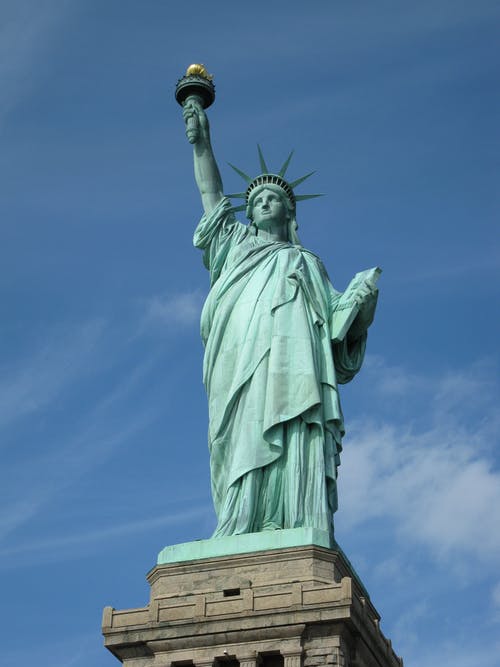
The Iconic poem ‘The New Colossus” was one sonnet all American children had to read in school, at least those of us in the Baby Boom generation. And the words immortalized on a plaque hanging inside the the base of the Statue of Liberty are as follows:

Not like the brazen giant of Greek fame,
With conquering limbs astride from land to land;
Here at our sea-washed, sunset gates shall stand
A mighty woman with a torch, whose flame
Is the imprisoned lightning, and her name
Mother of Exiles. From her beacon-hand
Glows world-wide welcome; her mild eyes command
The air-bridged harbor that twin cities frame.
“Keep, ancient lands, your storied pomp!” cries she
With silent lips. “Give me your tired, your poor,
Your huddled masses yearning to breathe free,
The wretched refuse of your teeming shore.
Send these, the homeless, tempest-tost to me,
I lift my lamp beside the golden door!”

It was originally written by poet Emma Lazarus in 1883 to be cast on a copper plaque and sold in a fundraiser to raise money to fund the construction of the monument’s elaborate base. But it was not used as a part of the monument until the poem was published in the New York Times and lauded by Joseph Pulitzer, the owner of the newspaper and himself an immigrant. Then the venerable sonnet took on a special significance to America’s inwardly bound immigrants

The statue itself was a gift to the United States from the people of France in 1886 to simply represent the new republic in the New World, but the poem made the monument to take on the special significance of being a beacon of hope for the immigrants who were sailing into the harbor and seeing it for the first time. So instead of the giant statue being like the Greek conquering Colossus warrior of ancient times, she was more like a welcoming mother figure with the “imprisoned lightning” of the torch being indicative of the new technology of electricity with the the dawning of a new day. Hence the statue made America the symbol of being the melting pot for the peoples of the world.

Emma Lazarus was born on July 22, 1849, and in addition to being a writer and a poet, she was an activist for Jewish rights and was the descendant of of the original 24 Jewish settlers in New York who fled the Spanish Inquisition in Portugal and South America since before the American Revolution. The original manuscript for the poem id being preserved by the American Jewish Historical Society .

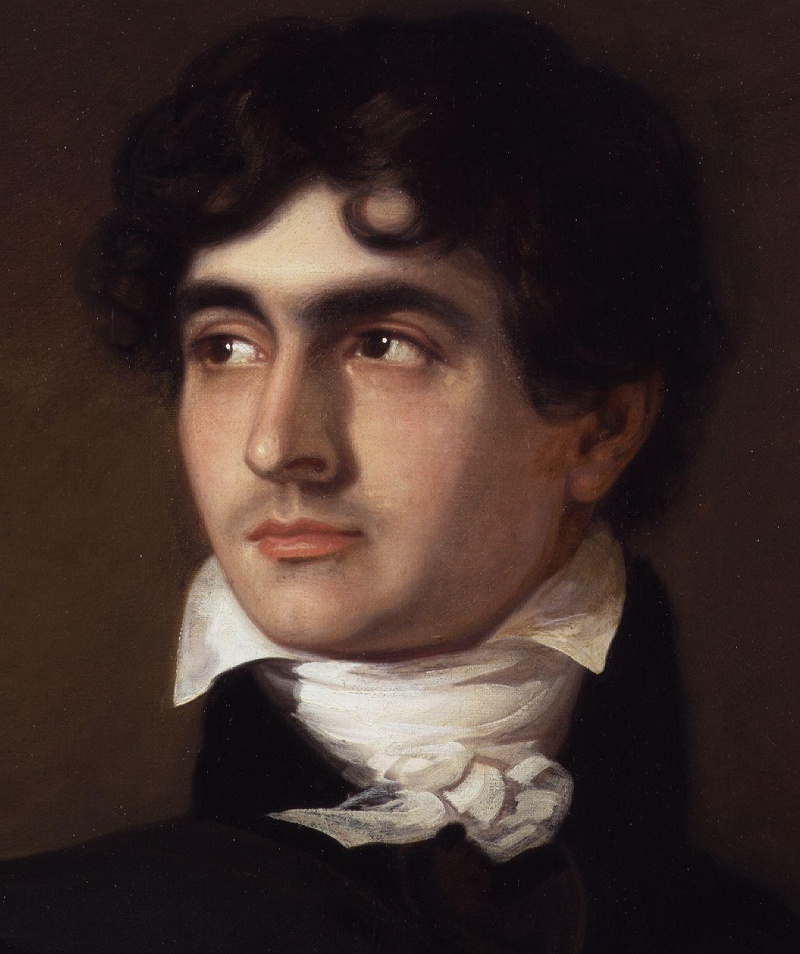
Percy Bysshe Shelley: The Radical English Poet of Social Change

Percy Bysshe Shelley was born on August 4, 1792 in Sussex, England to a well heeled noble family and enjoyed a pleasant rural childhood. And although his father Timothy Shelley was a conservative member of the Whig party in Parliament, Percy himself grew up to be a politically radical writer and poet and a firebrand for equality between the classes. Thus, he would later be a seminal influence for such controversial historical figures as Karl MPercy Bysshe Shelley was born on August 4, 1792 in Sussex, England to a well heeled noble family and enjoyed a pleasant rural childhood. And although his father Timothy Shelley was a conservative member of the Whig party in Parliament, Percy himself grew up to be a politically radical writer and poet and a firebrand for equality between the classes. Thus, he would later be a seminal influence for such controversial historical figures as Karl Marx and Leo Tolstoy. And shockingly for his day and time Shelley was also an atheist who became a disciple of William Godwin, his anarchist future father-in-law with his second wife, who also espoused equality and atheism.

So, although Shelley became a member of the Romantic poetry elite crowd, along with such greats as Byron, Keats, and Wordsworth. and wrote such classic poems as “Ozymandias”, “Ode to the West Wind”, “The Masque of Anarchy”, and “Queen Mab”, the nations publishers would avoid him for fear of being charged with the crimes of sedition and heresy themselves, Shelly was such a loose canon to them.

Shelley as a youth did not have it easy in school. As a child he was home schooled with a private tutor, but went on to Eton College in 1804 where he was relentlessly bullied by his peers for having socially backward ways. However, the young poet had a mischievous side himself and was an avid science buff so he found a way to get back on his tormentors by using his knowledge of science. He would use a frictional electric machine to charge the handle of his door in order to give an electric shock to any intruders. So both his pranks and his social awkwardness earned him the nickname of Mad Shelley among his peers, He had officially become the schools proverbial nerd.

Upon graduation from Eton, Shelley then matriculated at Oxford University, but was later expelled for allegedly writing a pamphlet espousing atheism, something he never admitted as being true. But it was also while he was at Oxford when his first Gothic novel was published expressing his atheistic leanings. arx and Leo Tolstoy. And shockingly for his day and time Shelley was also an atheist who became a disciple of progressive philosopher William Godwin, his anarchist future father-in-law with his second wife, who also espoused equality and atheism.

So, although Shelley became a member of the Romantic poetry elite crowd, along with such greats as Byron, Keats, and Wordsworth. and wrote such classic poems as “Ozymandias”, “Ode to the West Wind”, “The Masque of Anarchy”, and “Queen Mab”, the nations publishers would avoid him for fear of being charged with the crimes of sedition and heresy themselves, Shelly was such a loose canon to them.

Shelley as a youth did not have it easy in school. As a child he was home schooled with a private tutor, but went on to Eton College in 1804 where he was relentlessly bullied by his peers for having socially backward ways. However, the young poet had a mischievous side himself and was an avid science buff so he found a way to get back on his tormentors by using his knowledge of science. He would use a frictional electric machine to charge the handle of his door in order to give an electric shock to any intruders. So both his pranks and his social awkwardness earned him the nickname of Mad Shelley among his peers, He had officially become the schools proverbial nerd.

Upon graduation from Eton, Shelley then matriculated at Oxford University, but was later expelled for allegedly writing a pamphlet espousing atheism, something he never admitted as being true. But it was also while he was at Oxford when his first Gothic novel was published expressing his atheistic leanings.

Needless to say. Timothy Shelley was not happy with his rebellious son. And the estrangement became complete when Percy eloped and married a tavern owner’s daughter, a 16 year old by the name of Harriet Westbrook. The elder Shelley deemed the marriage into the family of a mere tavern keeper to be beneath the his station in life. But later, after the birth of two children, Shelly would divorce his first wife over friction between himself and his much older sister-in-law to marry Mary Godwin, a woman he considered more intelligent than Harriet, and an accomplished author in her own right. Mary Godwin would become the author of the world famous story of “Frankenstein”.

Shelley would later experience an untimely death as the result of a boating accident in the sinking of an un-seaworthy sailing vessel in Italy’s Gulf of La Spezia on July 8,1822.But his life and his works had a lasting effect on the world. His legacy touched off a movement in England to give suffrage to working class men called the Chartist movement and influenced such modern day luminaries as Mahatma Gandhi and Marin Luther King Jr.. And his views on tyranny were aptly expressed in the third versa of his famous poem entitled “Ode to Liberty”.

III.

Man, the imperial shape, then multiplied
His generations under the pavilion
Of Sun-s throne; palace and pyramid,
Temple and prison, to many a swarming
million
Were, as as to mountain-wolves their ragged
caves.
The human living multitude
Was savage, cunning, blind and rude.
For thou wert not; but o-er the populous
solitude
Like one fierce cloud over a waste of waves,
Hung Tyranny, sate deified
The sister-pest, congregator of slaves;
into the shadow of her pinions wide
Anarchs and priests, who feed on gold and
blood
Till with the stain their inmost souls are dyed,
Drove the astonished herds of men from
every side

I believe that the metaphor of “the sister-pest” is a reference to his first wife’s older sister whom he detested and shows the depth of his disdain over the condition of man under the tyranny of religion and governments.

Johnathan Edwards Preached the American House Down

Tucked deep in the annals of classic American literature you will find a recorded sermon entitled “Sinners in the Hands of an Angry God” that literally brought the Thirteen Colonies to it’s knees. This iconic sermon touched off a highly emotional and intense spiritual movement called the Great Awakening that is still legendary in America’s Protestant churches today, with stories of people crying and quaking and holding onto the pillars of the church building at the sound of Edward’s voice lest they faint faint and fall onto the floor.This amazing:”hell fire and damnation” sermon proved to be quite the phenomena that was felt all the way across the sea in England.

So Johnathan Edwards is the man who was credited with being the father of the Revivalist Movement whose lasting effects were still being felt in America well into the 20th century with the rise of such evangelists as Billy Sunday, Dwight L.Moody and Billy Graham, men who emphasized the personal religious fervor of the individual rather than a congregational group think and accepting a personal Christ rather than finding him through the traditional rite of the Eucharist alone. In fact, the outwardly emotional Pentecostal movement with its outward manifestation of the speaking in tongues was also profoundly influenced by this Great Awakening revival.

Edwards was quoted as saying “human beings have done nothing to appease God” and that they will be “burning forever over a fiery pit” unless they experience a “change of heart and accept Christ,” And Edwards artfully used the metaphor of a spider being held over a fire to illustrate how close a living human being is to hell.

Needless to say, this fiery preacher was ultimately rejected by the staid Puritan religious establishment of the day and was finally fired from his pastorate at his church in Northhampton, Massachusetts for his zeal and his strict stance on holy living and his a strict form of church of church discipline that stepped on many toes. So this dedicated and resilient minister went onto become a missionary to the Mohican Native American Indian Tribe, touching off another great spiritual movement in America, the missionary movement. It seems that they just could not keep the down down!

Edwards was born in East Windsor, Massachusetts on October 5, 1668 to his minister father Timothy Edwards and his mother Esther Stoddard, a woman known for her uncanny intelligence and a hardy independence of a woman before her time. But Edwards was actually home schooled by his father and his older sisters and was admitted to Yale University at the tender age of thirteen proving to be quite the child prodigy.In doctrine he was a Calvinist rather than an Arminianism meaning that he believed that God predetermined who would be saved rather than being strictly as matter of man’s free will. He died on March 22, 1758 as the result of an infection stemming from a bad small pox vaccine.

H.I.E. Dhlomo: The Literary Luminary of South African Apartheid

HIE Dhlomo: The Literary Luminary of South African Apartheid

South Africa is a land rich in history and literature which can boast of up to eleven official languages, including English. And although the Black Africaan people were suppressed and their literature not published during the colonial period, they were still prolific in the oral tradition and the written word under the tutelage of the Christian missionaries. However, Herbert Isaac Ernest Dhlomo was South Africa’s first rising star in literature in the early post colonial age of the nation.

Born in 1903 to a prominent Black family during the early years of the Africaan struggle for freedom, Herbert Dhlomo was the son of a revolutionary and descendant of the Zulu royal family and the younger brother to R.R. Dhlomo, a famous artist of the time. And early in his career, Herbert Dhlomo aligned himself with the White Progressives in the hopes that through them, he could he could gain equality for his people over time. But as he grew older he became disillusioned because they proved to still be to conservative in their views and moved the country much too slowly toward true equality, so he began to take a more radical stance later in life.

As a child born and educated in the Natal Province of South Africa, Dholomo proved to be bright and got further training as a teacher at Adams College and landed a teaching job in Johannesburg where he worked for several years, and in his latter years he was a librarian. But in the long run, he regarded his life as a creative writer as being more important when he wrote, “ My creative life life is the greatest thing give to my people, to Africa. I am determined to die writing and writing and writing.”

This level of enthusiast led him to a diverse career in literature as a newspaper writer for Bantu World, a playwright for the Bantu Dramatic Society and a published poet, usually published by his successful artist brother. And he strove to combine
“traditional tribal ways of solving modern problems” with the decidedly English romantic styles of Keats and Shelly. Thus was his a blending of two unique and equal cultures Aricaan and English. . But Dhlomo’s more radical and angry views are aptly expressed in this passage from the long poem On Munro Bridge, Johannesburg, when the Progressive Movement proved to not be working for him.

Jerusalem can boast no better sight,
For here the veld with glorious scenes is dight.
O sweet miniature Edens of the north!
O glorious homes! Is gold but all your worth?
Shall Belial rule forever in your towers,
Polluting all this beauty, all your hours?
How can you rest content so near the hells
Of poverty where Moloch fiercely dwells;
Where children die of hunger and neglect.
While city Fathers boast suburbs select;
Where minds diseased and dead to Love make gains
Through drunkards, widows, waifs and worker’s pains 

Unfortunately, Dhlomo died prematurely during heart surgery in 1956 at the tender age of 53, and “the South African literary firmament lost one of it’s brightest stars when he seemed to have had the whole world at his feet,” according the publication New Frame.

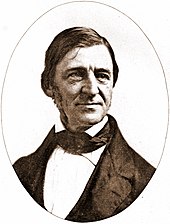
Ralph Waldo Emerson: America’s Most Influential Essayist

Ralph Waldo Emerson: America’s Most Influential Essayist

Emerson may have been an ordained minister and the son of an ordained minister, but he was anything but a Christian. He was the, in fact, the man credited with being the primary leader of the American transcendentalist movement and the father of it.

Actually though, transcendentalism was really nothing new in the world but hearkened back to the more ancient nature religions of the past pre-Christian eras of history. The core value of this “new” post Christian American philosophy is that both man and nature are good and that everything in nature is God and that God is diffused throughout nature. This is called pantheism. In other words, everything that exists is God and contains God and thus reality cannot be understood outside the realm of nature.

The values of individualism and self reliance were also paramount in Emerson’s transcendentalist philosophy, in which the highest state of man is to be an independent free thinker whose thought transcends the traditional norms of society. Thus the values of individualism and self reliance were important to both Emerson and his protege David Henry Thoreau and still hold sway over American people today as being perceived to be the ultimate freedom for the freedom loving American people.

Born on May 25, 1803 in aristocratic Boston, Massachusetts to a Unitarian minister father and a staunch Anglican mother, Emerson indeed became a Unitarian minister after graduating from Harvard University and Harvard Divinity School, which was in the keeping with the family tradition of his forefathers being in the ministry. But not believing in the miracles of the Bible, he got disillusioned with Christianity and left the ministry. He then began to write his very influential essays and poems and to give speeches at various colleges and universities. His first published transcendentalist essay was entitled “Nature” and he went onto deliver a highly influential speech at Harvard University entitled “The American Scholar” which the then prominent poet Oliver Wendell Holmes went on to call “America’s Intellectual Declaration of Independence” . And Emerson’s influence is still felt in the halls of higher learning today since the objective of most schools today is to teach the students the principles of independent critical thinking. In this way Emerson is still an important influence on American education, touching nearly all of us.

Emerson went on to give many important speeches which he edited into a final essay format which he divided into two groups; Essays: First Series and Essays: Second Series and some of the things that he said are as follows:

1, Every spirit builds itself a house; and beyond its house a world; and beyond its world, a heaven.

2, But if a man would be alone, let him look at the stars.

3. The happiest man is he who learns from nature the lesson of worship.

…………………………………………………………………………………………

Emerson was considered to be an American mystic because of his focus on the intuition and spirit, however he was not a Christian mystic because he did not belive in a personal God.

He died on April 27, 1882 in the city of Concord, Massachusetts.

Francis Scott Key: On The Fence in Freedom’s Defense

Francis Scott Key: On The Fence in Freedom’s Defense

Some poets are famous for only one poem, and Francis Scott Key, a Fredrick, Maryland lawyer is the amateur poet who was famous for writing the immortal words of America’s national anthem; The Star Spangled Banner.

He had boarded an English warship during the War of 1812 to secure the release of one prisoner of war by the name of Dr. William Beans. The War of 1812 was a naval war over maritime rights between the two nations on the high seas and the British bad habit of impressing American merchant seamen into into service in the British Navy. And it was in the morning after one especially fierce battle on September 14, 1814 that Key felt inspired to write the words of the poem originally entitled the “Defense of Fort M’ Henry”as he beheld the sight of a tattered American flag still flying high over Baltimore’s own fort, Fort M’ Henry. And the words are truly stirring.

The Star-Spangled Banner
Oh, say can you see by the dawn’s early light
What so proudly we hailed at the twilight’s last gleaming?
Whose broad stripes and bright stars thru the perilous fight,
O’er the ramparts we watched were so gallantly streaming?
And the rocket’s red glare, the bombs bursting in air,
Gave proof through the night that our flag was still there.
Oh, say does that star-spangled banner yet wave
O’er the land of the free and the home of the brave?
On the shore, dimly seen through the mists of the deep,
Where the foe’s haughty host in dread silence reposes,
What is that which the breeze, o’er the towering steep,
As it fitfully blows, half conceals, half discloses?
Now it catches the gleam of the morning’s first beam,
In full glory reflected now shines in the stream:
‘Tis the star-spangled banner! Oh long may it wave
O’er the land of the free and the home of the brave!
And where is that band who so vauntingly swore
That the havoc of war and the battle’s confusion,
A home and a country should leave us no more!
Their blood has washed out their foul footsteps’ pollution.
No refuge could save the hireling and slave
From the terror of flight, or the gloom of the grave:
And the star-spangled banner in triumph doth wave
O’er the land of the free and the home of the brave!
Oh! thus be it ever, when freemen shall stand
Between their loved home and the war’s desolation!
Blest with victory and peace, may the heav’n rescued land
Praise the Power that hath made and preserved us a nation.
Then conquer we must, when our cause it is just,
And this be our motto: “In God is our trust.”
And the star-spangled banner in triumph shall wave
O’er the land of the free and the home of the brave!
But unfortunately this ‘ home of the free and land of the brave’ as expressed in the first stanza of this four stanza poem was not a totally free country; America in 1814 was still half slave and half free, and the poet himself was on the fence between the two opinions on the issue.

Key himself was a slave owner by the year of 1800, and for this, both he and his poem received bad reviews in abolitionist circles, but in Key’s defense, he was also a man who was experiencing a measure of personal growth in his morals and values, so he freed most of his slaves in the 1830’s and hired one man back and paid him wages to manage his farm. However Key was also a lawyer who played both sides by representing slaves who were trying to gain their freedom at no charge to them, but also he represented slave owners who were trying to recover their runaway slaves. So this man was definitely on the fence regarding freedom and liberty for all and still had a lot of growing to do in his views by his death in the year of 1843 (as did the rest of the nation).

And grow the nation did, but slowly, and it took the growing pains involved in fighting a bloody Civil War to bring civil liberty to everyone which was beautifully expressed in a fifth stanza added to the “Star Spangled Banner’” by poet Oliver Wendell Holmes eighteen years after Key’s death during the Civil War.

When our land is illum’d with Liberty’s smile,
If a foe from within strike a blow at her glory,
Down, down, with the traitor that dares to defile
The flag of her stars and the page of her story!
By the millions unchain’d who our birthright have gained
We will keep her bright blazon forever unstained!
And the Star-Spangled Banner in triumph shall wave
While the land of the free is the home of the brave.

There were many patriotic songs like “America the Beautiful” and “My Country Tis of Thee” being considered for the honor of being named America’s National Anthem, but on March 3, 1931 ‘The Star Spangled Banner’, now the anthem of the US Navy, was declared to be the National Anthem by the Congress of the United States and was signed into law by President Herbert Hoover.

And America has been experiencing intense social justice growing pains ever since the Civil War and the penning of those poignant words and continues to struggle in the American quest for equality and freedom to this very day.

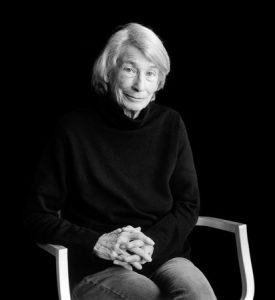
Mary Oliver and Her Wise Connection to the Natural World

Mary Oliver and Her Wise Connection to the Natural World

Mary Oliver was such a natural born poet that she started writing by the young age of 14, eventually winning the National Book Award and the Pulitzer Prize in 2007. And the New York Times said of her “that she was by far this country’s best selling poet. But Oliver was first and foremost nature’s most prominent post modern poet.

She grew up in the semi rural Cleveland suburb of Maple Heights, Ohio and was by and large a lover of the great outdoors. Born to Edward William and Helen Oliver on September 10, 1935, and she described her childhood as being lonely and difficult and her family as dysfunctional, so she felt strongly drawn to the woods outside and escaped into a world of poetry. Nature was her comfort and poetry her retreat Oliver said of her hometown,

It was pastoral, it was nice, it was an extended family.
I don’t know why I feel such an affinity with the
natural world except it was available to me.

Perhaps the sky, the birds and the trees became her “extended family because her own family had emotionally abandoned her. And it’s poems such as The Kitten that shows the poets unique perspective on nature and how she was one woman, as one critic put it, “thar stood on the line between earth and sky…human and animal.”

The Kitten

More amazed than anything
I took the perfectly black
stillborn kitten
with one large eye
in the center of its small forehead
from the house cat’s bed
and buried it in a field
behind the house.

I suppose I could have given it
to a museum,
I could have called the local
newspaper.

But instead I took it out into the field
and opened the earth
and put it back
saying it was real,
saying, life is infinitely inventive,
saying what other amazements
lie in the dark seed of the earth
lie in the dark seed of the earth, yes,

I think I did right to go out alone
and give it back peacefully, and cover the place
with the reckless blossoms of weeds.

Here, in just plain, ordinary everyday English, Oliver mesmerizes the reader with the wonder of this anomaly of nature while holding the hapless dead creature to the highest standard of dignity, as if it was a human being.

Oliver never finished earning her college degrees at Ohio State University and Vassar University, but at age 17 she paired with Norma Millay to organize the papers of the late Pulitzer Prize winning poet Edna St. Vincent Millay, no doubt getting a real education on how to write fine poetry. Oliver’s own prize winning book was entitled American Primitive.

Oliver died shortly after being diagnosed with lung cancer on January 17, 2019 at age 83.

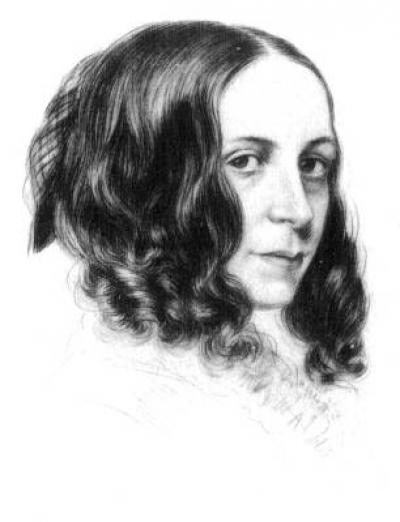
Elizabeth Barrett Browning: Sweet Lady Poet of the Love Poet

Elizabeth Barrett Browning: Sweet Lady Poet of the Love Sonnet

Elizabeth Browning was the proverbial child prodigy who began writing at the early age of 11, and her lifetime body of work boasted of the largest collections of childhood poetry in existence. Then after being accepted as an adult into some of Britain’s most prestigious literary circles during the Victorian era, she bedazzled both readers and other poets alike with her love sonnets, becoming an influence on such great American poets as Edgar Allen Poe and Emily Dickinson. In fact, she was so renown in Great Britain that she was being considered for the office of Poet Laureate by the Royal Family.

Born on March 6, 1806 to a well off Englishman named Edward Moulton Barrett, she was the eldest child of 12 children and spent a happy childhood in a large country home in Durham, England. However, she fell ill at age 15 succumbing to headaches, and after the death of a brother, she became a bit reclusive and shy. But, she was not too shy to be swept off her feet by another poet, Robert Browning, who fell deeply in love with her after reading her beautiful verses about love, but fearing the disapproval of her father, she kept her marriage a secret for a week while still living under his roof as if she were still single. And he did indeed disown her, and her most famous Sonnet “How Do I Love Thee” tells of her legendary love for the man, a poem that is a pure joy to read.

How Do I Love Thee

How do I love thee? Let me count the ways.
I love thee to the depth and breadth and height
My soul can reach, when feeling is out of sight
For the ends of being and ideal grace.
I love thee to the level of every day’s
Most quiet need, by sun and candle-light.
I love thee freely, as men strive for right.
I love thee purely, as they turn from praise.
I love thee with passion put to use
In my old griefs, and my childhood’s faith.
I loved thee with a love I seemed to lose
With my lost saints. I love thee with the breath,
Smiles, tears, of all my life; and, if God choose,
I shall love thee better after death.

Now this kind of love smacks of intense unconditional, almost everlasting commited love “beyond death,” if possible, howbeit she had to keep it discreet by calling it her “most quiet need,” she had a controlling father after all, and she did live in Victorian times when Christianity ruled and propriety was the order of the day, and girls were mostly educated at home, and when all outward manifestations of outward passion had to be kept under one’s strict control at all times.

Her most famous book was entitled Sonnets from the Portuguese, all love poems and she died on June 29, 1861 in Florence, Italy, but not before this poetess made giant inroads for many English speakin female poets that came after her.

Sonnets Are the ‘Little Songs’ of the Wise Poets

Sonnets Are the ‘Little Songs’ of Wise Poets

Form. Form. Form. Form is what the sonnet is all about. All types of sonnets are written by the same basic rules of being a total of fourteen lines written according to a strict rhyme scheme and meter of certain common patterns employed at discretion of the poet. And most often iambic pentameter, a meter of ten syllables per line with a strong syllable being followed by a weak one, is used in the English speaking world.

The sonnet itself had it’s beginning in Italy and was the invention of Giacomo da Lentini who served as a poet in the court of Fredrick the II, the Emperor of the Holy Roman Empire in 13th century Sicily. The early sonnets always presented a problem or a perplexing situation at the beginning and ending with a solution or a wise reflection on the problem. And classically the problem involved the love for a dispassionate beautiful woman and a broken-heart-ed suitor. But as time went on, and the form evolved, these sonnets also included a more realistic woman and and were written on a variety of subjects by the time of Shakespeare.

In the English tradition there are three main types of sonnets: the Italian (Petrarch-an) sonnet, the Spenserian sonnet and the Shakespearean sonnet, The Italian sonnet is characterized by an octave of eight lines with an ABBAABBA rhyme scheme and a sextet with a with either a CDECDE or a CDCDCD rhyming pattern as seen in this example by Milton:

When I consider how my light is spent,
Ere half my days in this dark world and wide,
And that one talent which is death to hide
Lodged with me useless, though my soul more bent
To serve therewith my Maker, and present
My true account, lest He returning chide;
“Doth God exact day labor, light denied?”
I fondly ask, But Patience, to prevent
That murmur, soon replies, “God doth not need
Either man’s work or His own gifts. Who best
Bear His mild yoke, they serve Him best, His state
Is kingly: thousands at His bidding speed,
And post o’er land and ocean without rest;
They also serve who only stand and wait.

The Shakespearean sonnet is written in three quatrains of four lines each and ends in a couplet with a rhyme scheme of ABAB CDCD EFEF GG as in this example:

Two households, both alike in dignity,
In fair Verona, where we lay our scene,
From ancient grudge break to new mutiny,
Where civil blood blood makes civil hands unclean.
From forth the fatal loins of these two foes
A pair of star-cross’d lovers take their life;
Whose misadventured piteous overthrows
Do their death bury their parents’ strife,
The fearful passage of their death-mark’d love,
And the continuance of their parents’ rage,
Which, but their children’s end, nought remove,
Is now the two hours’ traffic of our stage;
The which if you with patient ears attend,
What here shall miss, our toil shall strive to mend.

The Spenserian sonnet is a very complex form with the interlocking rhyme scheme of ABAB BCBC CDCD EE making the poem a tight unified ,
little unit, and although these poems are relatively short, they are in really huge masterpieces in form.

One day I wrote her name upon the strand,
But came the waves and washed it away:
Again I write it with a second hand,
But came the tide, and made my pains his prey.
Vain man, said she, that doest in vain assay,
A mortal thing so to immortalize,
For I myself shall like this decay,
and eek my name be wiped out likewise.
Not so, (quod I} let baser things devise
To die in dust, but you shall live by fame:
My verse, your virtues rare shall eternize,
And in the heavens write your glorious name.
Where when as death shall all the world subdue,
Our love shall live, and later life renew.
…………………………..

This is first a three part series on this most historically important form of poetry which will include an article about the works of contemporary writers and the life and works of Elizabeth Browning, a lady master of the sonnet. Contemporary poets vary both the rhyme schemes and meters of the seemingly “simple” sonnet.