Getting Ripe

by: Shirley Satterfield

Getting Ripe ????

I sit here on the edge of eternity.
Let’s toast to the present moment.
The Lord shall cut me off
And set my spirit free.
As a dove’s feather blowing in the the wind,
I shall go to Him.
I love my present God given life,
But my soul is getting ripe
For heaven and the grave.
No longer will I be sin’s most humble slave.

They Kissed the Blarney Stone: The Wise Bards of Ireland

They Kissed the Blarney Stone: The Wise Bards of Ireland

With the advent of Christianity and monasteries in Ireland came the commencement of a new age of literacy and alphabet in the nation; then, naturally, a tradition of highly structured syllabic and lyrical poetry followed, a tradition in the two languages of Gaelic first and then English. And while the secular poets glorified and commemorated the heroes of the land, as was the universal theme of most of the ancient world, the religious poets, however, venerated both the love of nature and religion in verse, with solitude being a real ideal in their poetry. And in this an excerpt of from such poetry quoting a character named Marbin the Hermit they wrote:

Sound of wind in a branching wood grey cloud,
river falls-beautiful music.

This verse is almost Japanese in it’s complex profound simplicity with its imagery of the pristine scenes of nature including the senses of sight and sound.

These styles and themes persisted down through time, but with the turn of the 20th century and fast approaching shift in culture to city life brought on by the Industrial Revolution came the Northern Irish school of modernist poetry and the celtic Revival which produced two Nobel Prize winning poets during the course of the century, William Butler Yeats, who was on June 13, 1865 and died on January 28, 1939 and Seamus Heaney who was born in Northern Ireland on April 13, 1939. Thus the Irish virtually dominated the world of fine literature in the 20th century.

Yeats was born into the Protestant tradition, but he rejected this form of Christianity because of it’s focus on material prosperity and embraced his own interpretation of the pagan beliefs and mysticism of his ancient Gaelic ancestors, and he was considered a master of the traditional forms of Irish poetry and French symbolism. Yeats would use just one word or a group of words to symbolize an abstract
thought or idea, and in the following words he used a simple ladder to symbolize both the vigor and the loss of his youth as he aged.

Now that my ladder’s gone
I must lie down here
where all ladders start
in the rag and bone shop of the heart.

The “rag and bones shop” here refers to a vendor of secondhand stuff, or junk if you will, or second hand emotions. He also aptly wrote about the changes and loss of the comfort of love in his poem When You Are Old.

When You Are Old 
BY WILLIAM BUTLER YEATS
When you are old and grey and full of sleep,
And nodding by the fire, take down this book,
And slowly read, and dream of the soft look
Your eyes had once, and of their shadows deep;

How many loved your moments of glad grace,
And loved your beauty with love false or true,
But one man loved the pilgrim soul in you,
And loved the sorrows of your changing face;

And bending down beside the glowing bars,
Murmur, a little sadly, how Love fled
And paced upon the mountains overhead
And hid his face amid a crowd of stars.
,,,,,,,,,,,,,,,,,,,,,,,

Then Yeats, aging Yates, being a non-religious pagan himself, also believed in “Spiritus Mundi” which is the collective memory of the universe that fuels and inspires all poets.

Now while Yeats was born Protestant, Heaney on the other hand was born in Northern Ireland to a Catholic family and being in the minority religion of the region, he felt a bit marginalized by society and was well acquainted with the political turmoil known as The Troubles which served as the backdrop of all his writings, both poetry and prose.. But instead of embracing the mysticism of Yeats, he chose to write about more concrete things such as the quickly passing away of the rural life in Ireland and the death of nature in his first book appropriately entitled The Death of a Naturalist in which he lamented the death of the innocence and natural world of traditional farm life he so enjoyed as a boy.

Death of a Naturalist
BY SEAMUS HEANEY
All year the flax-dam festered in the heart
Of the townland; green and heavy headed
Flax had rotted there, weighted down by huge sods.
Daily it sweltered in the punishing sun.
Bubbles gargled delicately, bluebottles
Wove a strong gauze of sound around the smell.
There were dragonflies, spotted butterflies,
But best of all was the warm thick slobber
Of frogspawn that grew like clotted water
In the shade of the banks. Here, every spring
I would fill jampotfuls of the jellied
Specks to range on window sills at home,
On shelves at school, and wait and watch until
The fattening dots burst, into nimble
Swimming tadpoles. Miss Walls would tell us how
The daddy frog was called a bullfrog
And how he croaked and how the mammy frog
Laid hundreds of little eggs and this was
Frogspawn. You could tell the weather by frogs too
For they were yellow in the sun and brown
In rain.

    Then one hot day when fields were rank
With cowdung in the grass the angry frogs
Invaded the flax-dam; I ducked through hedges
To a coarse croaking that I had not heard
Before. The air was thick with a bass chorus.
Right down the dam gross bellied frogs were cocked
On sods; their loose necks pulsed like sails. Some hopped:
The slap and plop were obscene threats. Some sat
Poised like mud grenades, their blunt heads farting.
I sickened, turned, and ran. The great slime kings
Were gathered there for vengeance and I knew
That if I dipped my hand the spawn would clutch it.

Here he expertly captures both the innocent curiosity of a boy growing tadpoles in a jar and with the coming of his age of his metaphoric adult bull frog to the coming of age his full blown anger over the loss of a beloved way of life.

Yeats swon the Nobel Prize in 1923, “…For his always inspired poetry, which in high artistic highly artistic form gives expression to the spirit of a whole nation,” and Yeats was not just a supremely accomplished poet, but he was also a vitally important playwright and a giant figure in the theater arts.

And Heaney won the same Nobel prize at the latter end of the century in 1995 “…for works of lyrical beauty and ethical depth, which exult everyday miracles and the living past…” He was also a teacher and a tenured professor at Harvard University. He died on August 30, 2013 of a stroke.

When it comes to poetry of the 20th century, the Irish poets rule.

The Meeting Place

by: Shirley Satterfield

The Meeting Place

I love you, Lord,
And there is no greater pleasure for me
Than to spend time alone with You.
Just you, me, and the morning quiet
Is where the peace is at where
{ will not fret,
Where “He that letteth” will let the Spirit flow
So that my soul can grow where
Peace and prayer always intercept.

Ernest Hemingway: The Paradox of a Full and Empty Life

Ernest Hemingway: The Paradox of a Full and Empty Life

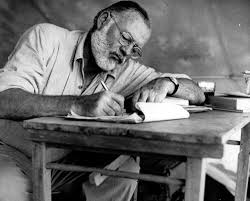
Ernest Hemingway was what you call a “Man’s Man”, and he did just about everything. He was a traveler, a soldier, a sportsman, a fisherman, a great adventurer. And he made his living as a daring young dashing foreign correspondent living as an ex patriot in France and Spain and as a fiction writer.

He led a full life, but ironically, Hemingway was also empty enough inside and depressed enough to end his own life in suicide, as did six other members of his immediate family, including a sister, with a self inflicted gunshot wound with a shot gun. And his sparse, unadorned minimalist style of writing aptly reflected the emptiness within him and the emptiness he saw in the lives of other ex patriots living in Europe. He wrote his novels in a typical journalist style and captured the depravity of his morally failing characters in typical journalistic dialogue using short, quip-like quotes such as these in his short story about Madrid entitled The Capital of the World about the life of a second rate matador is is sexually harassing a chamber maid.

…The sister of Paco had gotten out of the embrace of the matador…”These are hungry people. A failed bullfighter. With your tonload of fear. If you have so much of that, use it in the ring.”

That is the way a whore talks.”

A whore is also a woman, but I am not a whore.”

You’ll be one,”

Not through you.” …

‘Leave me”… “You dirty little whore.”

……………………………………………………

Hemingway loved Spain and bullfighting.

Hemingway was born Ernest Miller Hemingway in Oak Park, Illinois to an average middle class family on July 21, 1899 and attended public school, but upon graduation from high school he elected not to attend college but to start his career as a newspaper reporter immediately after graduation. When WWI broke out he was rejected by the Army, Navy and Marines because he suffered with poor eyesight, so he opted to become a volunteer ambulance driver and was severely wounded while serving in Italy and where he also saw much suffering and bloody carnage and later he wrote about picking up the little pieces of human remains. He also survived two plane crashes while in Africa in 1952; the man no doubt suffered from Post Traumatic Stress disorder.

All in all this prolific writer wrote seven novels with such famous titles as The Old Man and the Sea and The Sun Also Rises, a book that gives us an apt description the follies of of a group of American ex patriots living strictly for pleasure in Paris, six short story collections and two books in the nonfiction genre. Hemingway was a wildly popular writer that had a multi generational appeal and won both the Pulitzer Prize and the Nobel Prize for literature. But he was not so popular with the US government because he chose to live in Cuba during WWII and he was suspected by the FBI as being a spy for the Soviet Union during the Cold War. But he finally moved home to the USA and died in Ketchum, Idaho on July 2, 1961 by his own town, and his famous, super-model granddaughter Mariel Hemingway followed him also followed him in suicide. Mental illness ran in the family.

He both lived and died big, and he was also married a total of four times in the fashion of a man who was larger than life.

On Wings of Words

by: Shirley Satterfield

On Wings of Words

On wings of words
We send our thoughts to heal a soul or
Rend a heart asunder.
So don’t send out crows, Brother
To hurt the heart of another or
Steal another’s thunder.
Send out songbirds instead
So that souls will be fed,
And joy will surely abound
At your songbird’s lovely sound.
On wings of words
We bind the hearts torn asunder
And flash out another’s glorious
Thunder.

Canada’s Jamie Routley: The Voice of Contemporary Romance

Canada’s Jamie Routley The Voice of Today’s Contemporary Romance

Today’s romance poetry is different from that of the Romantic era in that it is more realistic because it includes verse about the desires of the body, and not just the soul, and is a lot less realistic in it’s tone, Today’s featured poet is Twitter’s own popular ‘Jamie’ who beautifully blends both the desires of the body and the soul all packed in this one short verse verse, which is in effect a foreshadowing of today’s lusty micro-poetry, those two and three lines romantic poems that are becoming so popular today.

You caress my infinity

that lasts beyond the flesh

my souls fire…how do reach

through me

without touch…just look in your

eyes

the heat within, down my spine

teeth on edge…released…spiraling

beaded sweat,,,between the folds…

……………….

This poetry is adeptly written, but Jamie has not only shared her beautiful poetry with us, but she has also kindly granted #dailywisdomwords some answers to a set of questions in a written interview and her prose is just as beautiful and compelling as is her poetry.

Hi Shirley.


I feel honored that you want to interview me for #dailywisdomwords. The following are the answers to the interview questions that you sent.

1. Hi Jamie, can you tell us a little about your life in Canada and how your childhood played a roll in your decision to become a poet?

I grew up in a typical family in the capital of Canada, Ottawa. I’m bilingual and an avid reader. Had a lot of friends growing up. Played the typical games. I was the kid that everyone would come to, when they needed to share their problems with.  I also, went through much loss. My first experience with death was at 6 yrs old. I lost my best friend, she passed from a congenital heart defect..Through that painful experience, I found a love for expression through poetry.Tried through others words to understand the feelings I was going through.. To try and make things make sense to me in some way.

2. I noticed that you write a lot of amazing free verse poetry about romantic relationships, What was the catalyst that sparked all this beautiful passionate poetry?

I really love this question, Shirley. You’re speaking to my heart, and she feel it.

Poetry about romantic relationships, is who I am in a nutshell. When love talks to me, I’m the first one who replies with, “I’m here, make me feel it”. I love watching love unfold. When two hearts meet and start their journey. I see love all around. I’ve learned to see through my heart.I’ m not afraid to feel. I’d have to say what started me on this journey was I’ve seen some messed up relationships. Lack of communication, and for some the fear of intimacy. I wanted to write poetry for these souls, who forgot what love was truly about.

3.Why did you choose free verse as your signature style?

I chose free verse as my signature style because it’s an easier way for me to artistically express myself. Feels more of a “me” thing. I can shape the words as my mind sees them. There’s a beat  that plays and the words tend to flow from that place. Gives me more room to experiment with structure. Also it’s not glorified prose either. Though prose is beautiful in itself as well.

4. Is there any specific poet or writer who had an influence over you?

I can’t say any specific poet that had an influence over me. I do love the work of, Margaret Atwood, her poem, “Siren Song”. “Fog” by Carl Sandburg and “Tulips” by Sylvia Plath.. Especially her line, “I’m learning peacefulness, lying by myself quietly”. She made me feel as If I was in the sickroom with her. Seeing what she saw and felt. Poetry at it’s finest. I can’t forget about the lovely, Maya Angelou and her poem, “Still I Rise”.

5. Why did you choose Twitter in particular as a platform for your poetry, and what does the #WritingCommunity and #dailywisdomwords mean to you?

When my sister passed away, I had stopped all my writing. I felt nothing inside. My creativity was at a standstill. The more I thought about it, I felt my sister would be disappointed in how I was living my life. I thought to myself, “Let’s just try one poem and post it to twitter”. I wasn’t even sure at that point If anyone would feel my words. I wasn’t even sure If my words spoke to me even. Then I started to get some feedback, and people seemed to genuinely like that first poem I posted. My heart felt lighter, and I could feel my sister smiling. The #WritingCommunity and #dailywisdomwords has been a blessing. To find people who are like minded, who openly share their ups and downs. People who build each other up.Who welcome you in with open arms. How could you ask for anything more..These are people that understand your struggles, what makes you laugh. Create worlds from the words that live in your head. Writers, poets, artistic souls and creative beings. The main feeling I get is genuine warmth and love. It’s become my home away from home. I love these communities, I truly do. I guess what I’m truly saying is, “I’m blessed and appreciative to everyone I’ve come across on here”.

6. Can you share with us from the heart what your friendship with with Samantha Leboeuf the moderator @dailywisdomwords means tp you.

My friendship with, Samantha LeBoeuf honestly means the world to me. She welcomed me with open arms. She shared her heart through words.How she writes told me about her heart, hopes and dreams. She’s shown me her strength, even in times she didn’t see it herself. When we actually started speaking to each other, my first thought was, “Oh my God, I love this quirky girl”. Her outlook on life and her heart she brought to the table. “This is me”, was her attitude. How can you not adore a person like that? We eventually became BFF’s and I feel that it’s one of the best things that happened to me. She is that light that draws you in, makes you comfortable ,while in her presence. I can listen to her talk for hours. Which is why we have to be careful while talking on the phone, time has a way of flying by when you engage with, Samantha.. I love, Sam. I love who she is, how she got here and she’s all heart. She goes out of her way, to make everyone feel good. To know her is to love her.

7. Any future plans?

Right now I’m working on tightening up my poetry. and categorizing it.. Than hopefully sometime soon, having it published. Which is kind of scary in itself. A part of you wants to share it with the world. The other half of you , with that voice that sometimes talks too much, says “what are you even thinking?” “Do you really want to share all this?” I’m just keeping things moving forward, and trying to prepare myself for whatever the future may hold for me…

I hope my answers made sense, Shirley. I was waiting to feel better to respond to your questions. It’s not happening at all. So these are flu induced responses. Sorry I tried my best. I enjoyed this interview and appreciate you thinking of me. Thank you from my heart to yours! xx

………………

Thank you so much Jamie for sharing so deeply your beautiful thoughts with us and I in particular am honored that you granted this interview. We are all looking forward to more poetry and prose from you and are eagerly anticipating the publication of your poetry. Take care.

Bug Musings

by: Shirley Satterfield

Oh how I love
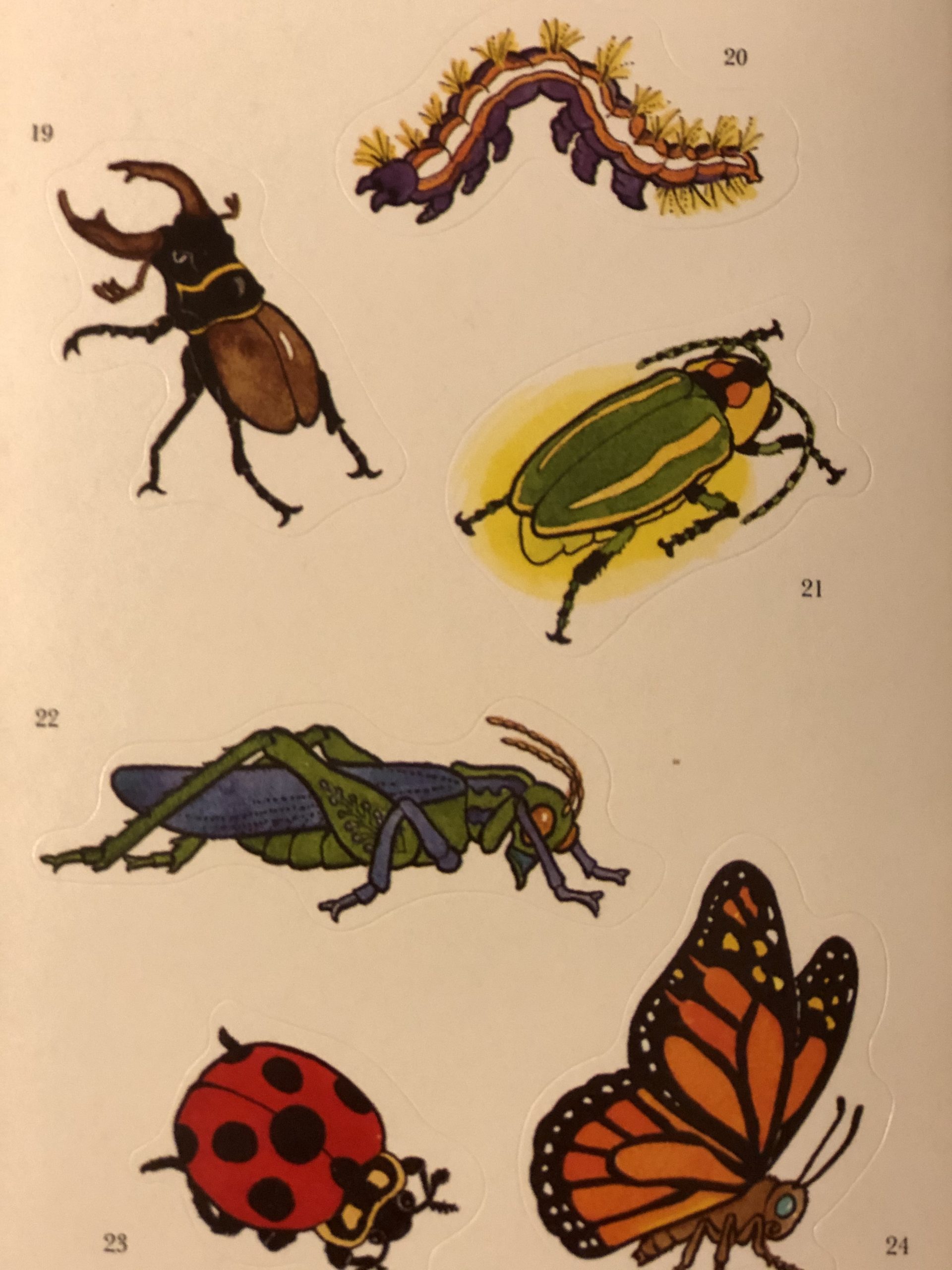
My insect envelope stickers.
They make my more unusual thoughts to flicker.
I have a zeal for my own bug like brain
Which I will not strain to please all others.
Who all opposing thoughts rise up to smother for
I have a real zeal for the differing opinions of another.

The differing thoughts of another
Should not be smothered with blind hate.

Don’t take the devil’s bait, my dear dear soul make. (Just vote your conscience.)

T. S. Eliot: A Tale of Two Countries

T. S. Eliot: A Tale of Two Countries 

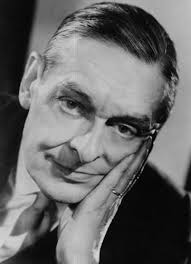
Today’s distinguished poet T.S. Eliot wrote such intellectually challenging verse that it is difficult to read his poetry without cross-referencing some of his imagery, He was a forefather of the modernist movement in poetry with it’s plain language, stark imagery and pessimistic tone as opposed to the more ornate imagery, flowery language and idealistic poetry of the Romantic and Victorian era. And it was a most pessimistic and complicated poem that gave him the claim to international fame and the Nobel Prize for literature. The name of the poem is “The Wasteland” which and in this brief excerpt from this 22 page poem Elliot aptly paints a picture of the bleakness of post WWI London, the hypocrisy of war and the emptiness of early 20th century man between the two World Wars.

Except from part one; The Burial of the Dead

One must be so careful these days.

  Unreal City,

Under the brown fog of a winter dawn,

A crowd flowed over London Bridge, so many,

I had not thought death had undone so many.

Sighs, short and infrequent, were exhaled,

And each man fixed his eyes before his feet.

Flowed up the hill and down King William Street,

To where Saint Mary Woolnoth kept the hours

With a dead sound on the final stroke of nine.

There I saw one I knew, and stopped him, crying: “Stetson!

You who were with me in the ships at Mylae!

That corpse you planted last year in your garden,

Has it begun to sprout? Will it bloom this year?

Or has the sudden frost disturbed its bed?

Oh keep the Dog far hence, that’s friend to men,

Or with his nails he’ll dig it up again!

You! hypocrite lecteur!—mon semblable,—mon frère!

This part of the poem is written in signature Modernist free verse with a touch of rhyme at the end, and I believe that at the end of stanza, the poet calls himself a hypocrite because of the similarity of his own sins to his friend’s during the war.

Eliot was a distinguished individual indeed, not just for his poetry and his brilliant literary reviews and criticisms, but also for his family pedigree as he hailed fro m one of the oldest founding families of Boston, Massachusetts, however he was born in St. Lewis, Missouri on September 26, 1888 since his family transplanted themselves to that Southern state to establish a Unitarian Church. So, being a family of Northerners living in a Southern state, Eliot felt like quite the outsider as a boy and also suffering from a congenital double in hernia which excluded him from playing sports with his peers, Eliot was an isolated child indeed, so he immersed himself the world of books and gained a deep love for literature. He eventually went to college and became a poet there in his own rite by writing and publishing his first landmark poem The Love Song of J.Alfred Prufrock considered to be his first Modernist masterpiece. Eliot went on to move back to Boston and to attend Harvard University as a Philosophy major where he graduated in three years instead of the usual four year, but his strong ancestral connections to England drew him to move to London where he was mentored by the great Modernist pioneer poet Ezra Pound and became a British subject and joining the Anglican Church on June 29, 1927. He died on the January 4, 1965 in London.

Charlotte Bronte an Author of Immense Gothic Suspense

Charlotte Bronte

With secret rooms in looming towers and gloomy mansions nessled in the countryside Charlotte Bronte and her sister Emily set the stage for the classic Gothic novel with their books, Jane Eyre and Wuthering Heights, respectively. In both books the heroin is an innocent, young, penniless woman of low estate who goes to an imposing manner house to serve in some capacity, in Charlotte’s case as a governess, only to be met with certain dangers and perils that she must overcome and survive. These two books were prototypes of what we know as the Gothic novels in which the heroins faced their natural human enemies, but sometimes the protagonists in this genre were supernatural spirits and ghosts.

In Charlotte’s famous book, Jane Eyre, her primary character is a physically plain governess who, after leaving the bleak orphanage school for unwanted girls in which she was raised and was subsequently teaching, falls in love with her new boss, Edward Rochester, who is equally plain in his looks. But Jane finds herself being bullied by a more attractive and socially superior rival in romance for her Master’s love who viciously calls out her plain “physiognomy” and her inferior social status. However, Rochester reciprocates Jane’s love and proposes marriage to her, only for Jane to find out that Rochester is already married to a “crazy ” woman who he is hiding in the attic under the care of a nurse. So Jane runs away from home and sets up shop as a school mistress in another town where she is proposed to by a clergyman who wants to take her to an African mission field with the not so sweet words, “Jane, you were not made for love. You were made for hard work,” but Jane refuses him. She then returns to the Rochester mansion to find that her former fiance has been blinded and physically disabled as a result of escaping from a house fire that was set by his first wife and that his first wife has died. So Jane marries her lover after all in order to work to support and take care of him, and ironically, finds out that she was made for both love and hard work.

Bronte herself had attended an unpleasant boarding school for girls and had served as a governess, first to her own surviving siblings, after her two older sisters had died of tuberculosis, and then to a stranger’s family. And she had a great disdain for serving in this profession because of disrespect she herself had experienced serving in her profession. So Jane Eyre was, in a great part, a reflection of her own hard life.

Charlotte was born on April 21, 1816 in Thornton, England to Irish Anglican minister, Patrick Bronte and his wife Maria, but her mother died when she was only 5 years old, and she was the eldest of three sisters who survived into adulthood. She and her four sisters were educated at Clergy Daughter’s School where Charlotte experienced the unpleasant conditions in school that she wrote about in her book. After the untimely deaths of her two older sisters, Charlotte and her two surviving younger sisters actually became a writing trio together whiling away their childhood hours making up elaborate stories set in imaginary countries and experimenting with poetry. And in fact, their first published book was a collaborative collection of self published poems under the assumed male pen names of Currier, Ellis and Acton Bell. They did not want the public to know that they were woman for fear of being pandered to and humored by the male literary critics of the day due to their gender, thereby receiving insincere praise. But, unfortunately, the book did not thrive and sold only two copies since Victorian tastes in literature were transitioning from poetry to prose and narrative fiction.

Bronte’s first work of fiction The Professor did not fly with the publishers and did not make it into print, however, but her second novel Jane Eyre debuted to rave reviews and was heartily accepted by the public.

Bronte eventually married the love of her life, Arthur Bell Nicholls, a man her father did not approve of because of his relative poverty and died shortly after the wedding, along with her unborn child, due to the complications of pregnancy, on March 31, 1855. at the untimly age of 38 years.

Here and Now

by: Shirley Satterfield

Here and Now

I’m sitting right here right now drinking coffee
and soaking up the sounds outside,
and I’m present moment satisfied,
my sense of self ratified,
And I have peace that as I age
my sense of self and satisfaction will increase.

“Oh Lord, give me the things in life
that You deem appropriate for me to have,”

Slave Girl PhillisWheatley and Her Amazing Life and Works

Slave Girl Phillis Wheatley and Her Amazing Life and Works

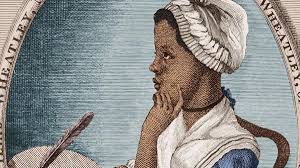
Phillis Wheatley, born in 1753 in Senegal, West Africa, was a woman of uncanny talent and intelligence, Kidnapped in her homeland and sold as a slave in 1761 while still a child, her wit and talent garnered her special attention by her owners, John and Susanna Wheatley who treated her as one of their own children, and most importantly, they took the unusual step of teaching her to read and nurture her special talent as a poet. Phillis Wheatly then went on to dazzle the Bostonian gentry with her poetry and her mastery of Greek and Latin and her translations of many classical works, Thus, in essence, she began to challenge the racial stereotypes of early American history.

Her first poem was to be published in 1767 and was entitled Messrs. Hussy and Coffin, a poem in which Wheatley encourages two men not to trust God and to not fear the sea, and most of her work was highly moral and spiritual in theme. However, her most important poem, for all intents and purposes was “On Being Brought from Africa to America” a work that very gently pricked the colonial American conscience and laid some ground work for the Abolitionist Movement many years hence. Yet the the poem is also an expression of the Poet’s basic shame and modesty about not being born White, no doubt, making the gentle rebuke of the poem more palatable to Americans of that present day.

On Being Brought from Africa to America

Twas mercy brought me from my Pagan land,

Taught my benighted soul to understand

That there’s a God, that there’s a Savior too:

Once redemption neither sought nor knew.

Some view our sable race with scornful eye,

Their color is a diabolic die.”

Remember, Christians, Negros black as Cain,

May be refin’d, and joined the’ angelic train.

Phillis Wheatley was a devout Christian who reminds us here that both Black and White Christians are on an equal footing in the sight of God, thus making both races truly equal, a radical thought in her day.

After her debut in America and the publication of her first book, Poems on Various Subjects, Religious and Moral, Phillis traveled with the Wheatleys England where the venerable Poetess also bedazzled crowds in London both with her social grace and mental prowess and upon return to America she was set free by the Wheatleys shortly before they both died when she married another freed slave named John Peters. But he in turn left her in poverty, and she died shortly afterwards in childbirth on December 5, 1784 but not without leaving a lasting legacy for all American.

Freedom Wings

by: Shirley Satterfield

I sprouted forgiveness wings today
Flying me to places of pleasant fantasy.
There’s a brighter future at hand
When mankind forgives a man.
Forgiveness wings
Give flight to the heart
And give a brand new body
A brand new start.
These things are freedom wings.

Mother Teresa: The Secret Sainted Bard

Mother Teresa: The Sainted Secret Bard

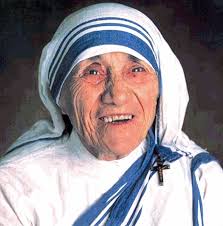
Not wanting to garner too much public attention for her writings, Mother Teresa of Calcutta wrote her diary and poems in secret as part and parcel of her own private spiritual self-discipline, But it was this kind of self-discipline that propelled her into India’s worst slums to care for the poor and earned her a prominent place in the world’s history books.

Born in Skoppje, Macedonia of the Ottoman Empire, Agnes Gonxha Bojaxhiu was baptized into the the Roman Catholic Church August 27, 1910 just one day after her birthday and was the daughter of the town grocer, But being devout in religion she went to Ireland to study at t6her Institute of the Blessed Virgin Mary where in six short weeks she became a novice teaching nun with the Sisters of Loretto and set sail for Calcutta India to teach school there and was now known as Sister Mary Teresa Bojaxhiu when she wrote this sad farewell poem about leaving her safe, familiar life as she knew it:

Farewell

 I’m leaving my dear house

And my beloved land

To steamy Bengal go I

To a distant shore,

I’m leaving my old friends

Forsaking family and home

My heart draws me onward

To serve my Christ.

Goodbye, O mother dear

May God be with you all

A Higher Power compels me

Toward torrid India.

The ship moves slowly ahead

Cleaving the ocean waves,

As my eyes take one last look

At Europe’s dear shores,

Bravely standing on the deck

Joyful, peaceful of mien,

Christ’s happy little one,

His new bride to be,

In her hand a cross of Iron

On which the Savior hangs,

While her eager soul offers there

Its painful sacrefice.

Oh God, accept this sacrifice

As a sign of my love,

Help, please, Thy creature

To glorify Thy name!

In return, I only ask of Thee,

O most kind Father of us all:

Let me save at least one soul-

One you already know,

Fine and pure as summer dew

Her soft warm tears begin to flow,

Sealing and sanctifying now

Her painful sacrifice.

After her novitiate was finished and her final vows were taken Mother Teresa settled into her new Calcutta convent home where she taught school for 17 years, but becoming more and more disturbed by the abject poverty that she saw around her and felt “The call within the call” to vacate her still comfortable life to care for the dying poor in the slums in the year of 1944. She became famous for her written quotes and she wrote “Our Lord wants me to be a free nun covered with the poverty of the cross” and she adopted both the country of India by assuming Indian citizenship and the wearing of the simple white traditional sari of Indian women. She went on to found the Order of the Missionaries of Charity women’s congregation and to open a plethora of nursing homes that served multiplied thousands of the blind, disabled, sick and dying, homeless persons of the street as she inspired millions of people throughout the world to also help the poor. And she was the author of many inspiring quotes and a compelling diary “Come Be My Light”.

She said important things with such profound simplicity.

………………………………

We shall never know all the good that a simple smile can do.”

If you can’t feed a hundred people, then feed just one.”

Each one of them is Jesus in disguise.”

Loneliness and the feeling of being unwanted is the most terrible poverty.”

…………………………………

But although this woman was revered worldwide and got the attention of governors and Popes alike, even Mother Teresa had her critics as some were offended by her stance on contraception and abortion, but agree with her or disagree, I know that her poetry and her quotes have made me feel more accepting of my own personal struggles with pain and tribulation since it is all done for the the glory of Christ anyway.

Mother Teresa died on September 5, 1997 after a long bout with heart disease, pneumonia, malaria at age 87. She was beautified by Pope John Paul II on October 19 2003 and Canonized by Pope Frances on September 4, 2016.

She was also the winner of the Nobel Peace Prize.

Les Murray: Great Poet of the Vast Outback

OLes Murray: The Great Poet of the Vast Outback

The magnitude of the open landscape of Australia can be beyond a man’s imagination, but was deftly captured by Australia’s leading modern poet, Les Murray, who was also known as his country’s Bush-Bard. Inspired by observing a hovering cloud of fireflies on the riverbank at age !8, he decided then to become a poet, and he wrote a whopping 30 volumes of poetry in his lifetime and won many awards, including the Queen’s Gold Medal for Poetry. He was also praised by “The New Yorker” magazine as being worthy of a Nobel Prize for Literature as he was a leading English speaking poets of his day.

Murray wrote about many subjects such as the animals and landscape of the Outback wilderness, the lives of the farmers and white settler pioneers who struggled with poverty, and the culture of the indigenous people of the land, and he was called “the last of the “Jindyworobaks”. This was a movement in Australian literature to promote indigenous ideas and culture lead by Caucasian writers.

Murray himself was raised by his impoverished stricken grandparents on a farm, and in his poem The Cows on Killing Day he actually gets into the heads of the animals themselves and writes with a certain rawness and empathy what their thoughts must have been:

The Cows on Killing Day

BY LES MURRAY

All me are standing on feed. The sky is shining.

All me have just been milked. Teats all tingling still   

from that dry toothless sucking by the chilly mouths   

that gasp loudly in in in, and never breathe out.

All me standing on feed, move the feed inside me.

One me smells of needing the bull, that heavy urgent me,   

the back-climber, who leaves me humped, straining, but light   

and peaceful again, with crystalline moving inside me.

Standing on wet rock, being milked, assuages the calf-sorrow in me.

Now the me who needs mounts on me, hopping, to signal the bull.

The tractor comes trotting in its grumble; the heifer human   

bounces on top of it, and cud comes with the tractor,   

big rolls of tight dry feed: lucerne, clovers, buttercup, grass,   

that’s been bitten but never swallowed, yet is cud.

She walks up over the tractor and down it comes, roll on roll   

and all me following, eating it, and dropping the good pats.

The heifer human smells of needing the bull human   

and is angry. All me look nervously at her

as she chases the dog me dream of horning dead: our enemy   

of the light loose tongue. Me’d jam him in his squeals.

Me, facing every way, spreading out over feed.

One me is still in the yard, the place skinned of feed.   

Me, old and sore-boned, little milk in that me now,   

licks at the wood. The oldest bull human is coming.

Me in the peed yard. A stick goes out from the human   

and cracks, like the whip. Me shivers and falls down

with the terrible, the blood of me, coming out behind an ear.   

Me, that other me, down and dreaming in the bare yard.

All me come running. It’s like the Hot Part of the sky   

that’s hard to look at, this that now happens behind wood   

in the raw yard. A shining leaf, like off the bitter gum tree   

is with the human. It works in the neck of me

and the terrible floods out, swamped and frothy. All me make the Roar,

some leaping stiff-kneed, trying to horn that worst horror.

The wolf-at-the-calves is the bull human. Horn the bull human!

But the dog and the heifer human drive away all me.

Looking back, the glistening leaf is still moving.

All of dry old me is crumpled, like the hills of feed,   

and a slick me like a huge calf is coming out of me.

The carrion-stinking dog, who is calf of human and wolf,   

is chasing and eating little blood things the humans scatter,   

and all me run away, over smells, toward the sky.

The poet here brings the humans down to an equal plain with the animals as he calls the woman a heifer human and the man a bull human, and he elevates the cows to a near equality with the humans by giving them thoughts and feelings of what a human would feel in the same circumstances and also equalizes the dog by calling it “a calf of human. Thusly is there little difference between the human and the heifer in the poet’s mind here,

Les Murray was born on October 17, 1938 in Nabiac on the North Coast of New South Wales but was raised by his grandparents in nearby Bunyash His mother died when he was a toddler and his father was so sickly Murray had to care for him, so he felt “chained” to his circumstances from a young age and suffered from depression. But he was so significant as a poet, his works were translated into 11 languages.

He died at age 80 on April 29 in the year of 2019.

Hum Song

by: Shirley Satterfield

Hum Song

Lord, I have hummingbird lips;
I like to alight a flower.
Sipping, sipping natures health
Hour after hour.
Yum; hum I got me some.
I love to bend and ‘light a flower
Every eternal second
Hour after hour.
Yum; yum I got me some.
Yum; hum I got me some.
Ah. SWEET!

Now Presenting India’s Own Up and Coming Indie Author

Now Presenting India’s Own Indie Author Yasir Sulaiman

Yasir Sulaiman is the prolific author od five books written on the dark side of love; Who is There: Two Tales of the Unknown, In My Words: A Collection of Poems, 3 Stories of Love, Collection of Short Stories: hearing unspoken voices, and his masterpiece Fire, And in this interview, Yasir tells his own story in his own words.

1. Tell us about your life, and what was the catalyst that prompted you to become an author in the first place. 

 
I started writing at a very young age. Wrote my first poem as a birthday wish for my mom at the age of eight. I had grown up  in Abu Dhabhi (United Arab Emirates) where my dad worked as a banker. At  that time, the country was just born. (Late 1980’s to early 90’s) There was not much entertainment and we were (and still are ) people of middle class income. I found a release in writing. Just wrote whatever came to my mind. Started with poems, then moved to short stories and then write my firs novel for a girl (my first love) at the age of 17. That book hasn’t been published so far. Plan to re-release sometime in the future.

I left novel writing for a while after that as I got involved in studies. But a grievous accident changed everything. I lost my memory and my ability to study more. Still have only faint memories of how it all happened. People say I was rushing to dance for a program in my college while a lorry  hit my bike and I was overthrown – landing on my head. My skull broke leaving a deep scar in my head. The last though I still remember till date was that  “I had to get up. It was now or never” Cutting the story short (the whole story can be told at some other time) – I lost everything in life. Couldn’t continue education and lost all my friends. My dad lost his job and we got back to India. I tried and tried to support my family. but couldn’t because I was just a living-dead body! 

A ray of hope came in the form of a friend; who introduced me to a small contest that Oxford University was conducted to encourage writers from our part of the world. I worked and starved until death to complete a novel. Submitted it and in 3 months, I got a notification that I was awarded! There was no looking back after that. The novel or rather story is part of the  book I republished http://www.lulu.com/shop/yasir-sulaiman/3-stories-of-love/paperback/product-24071495.html

The story’s name is “Just Between  You and Me”

Anyway life wasn’t simple even after that. I went through many hallways of hell! Yet my writing and books kept encouraging me.

 2 . Is there a message in your writings that you wish to communicate to the world?  

Yes three things; My name is Yasir Sulaiman and I am still alive.

I never was mentally ill.

There were several other shades to my past than anyone ever knew.

  3. Can you explain a little to your fellow authors a little about your marketing plan. I myself would like to learn and know.  

 It is pretty direct actually. I never have spent a penny on book marketing and promotion. Yet with God’s grace, my books are reaching thousands if not more.

What I do?

Networking and be seen on any platform. That is; get noticed. An entire book may have to be written on my marketing techniques. Maybe that is an idea I will have to follow later. As a tip; don’t ask people to buy  your book. “Sell your book or rather your idea to those who are willing to read.”

  4. Tell us about that hidden rebel within you that you so often write about and how that applies to your new book entitled “Fire”.  

There is so much to tell; but I can’t. I just can’t. That’s Y i write fiction. I am there in every book of mine. Certain scenes were real life incidents; just dramatized. People may find it hard to believe;  but I have lived many lives in the past 25 years. I  have had many professions and have seen both heaven and hell right here in life. The only reason I wish to stay alive anymore is my young son, my wife and my ageing parents plus grandmother.

  5. What is your vision for yourself as a writer in the future? Any more books in the offing?  

Related to my previous response; I realized this is my identity. If God wills; my life may become better in the future and I may get more glamorous jobs. Yet, I will continue to be a writer and a poet (Have written thousands) at heart. I have a few other books in mind including a sequel to “Fire” and the rewriting the novel I had written as a teenager. But those will have to wait. Owing to poor health, I wish to take a break from writing and perhaps all work, once I got some finances ready. Have some immediate necessities. Once they are fulfilled, it is high time I take a vacation. Haven’t taken a vacation in 16+ years (the time since my accident).

  1. Tell us about all your books and where they can be obtained.

    I have written 5 books so far. All of them are available on Amazon.  Here is my Amazon’s author profile  https://www.amazon.com/Yasir-Sulaiman/e/B07PN8YF5B?ref=dbs_a_def_rwt_hsch_vu00_taft_p1_i1. Two of t hem are available on Lulu.com as well  http://www.lulu.com/spotlight/loveuntold

    An e-book version of my latest will soon come on another platform. 

Thank You

Ha Ha

by: Shirley Satterfield

This is a poem about resistance to those who resist positive change and anything they deem to be even a little different than what they have experienced to be the norm. I dedicate this poem to the Daily Wisdom Words community that has stood beside me as I live and struggle in a small southern community that is so resistant to change they still boast of az Klu-Klux-Klan presence.

Ha Ha
(Let’s Make Poetry Fun Again).

Their nostrils flaring way out;
The thundering sound of hooves!

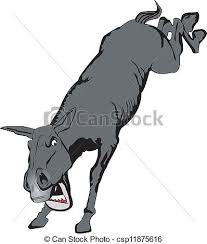
I’m running with the bulls, not the mules.

My heart beats wildly,
And that’s putting it mildly.

I’m running with the bulls, not the mules.

I’m no fool.
I’m running with the bulls, not the mules.

Black lightning at my heels.
My head swerves and reels.

I’m running with the bulls, not the mules.

Henry Wadsworth Longfellow: The Quintessential American Poet

Henry Wadsworth Longfellow: The Quintessential American Poet

Henry Wadsworth Longfellow was a poet who was deeply entrenched in both the fabric of the American spirit and American history, He was born in Portland, Maine on February 27, 1807 which was still a part of Massachusetts and was a direct descendant of the Pilgrims that settled at Plymouth Rock, and his mother, Zilpath Wasdsworth, was a daughter of an American Revolutionary hero and his father, Stephan Longfellow, was a highly successful Portland lawyer who served in the U.S. Congress.

Longfellow himself would achieve much success himself as a great American poet in his lifetime and, It was written by a friend of his that “no other poet was so recognized was so fully recognized in his lifetime,” and Wikipedia asserts that “Many of his works helped shape the American and its legacy particularly with the historical poem ‘Paul Revere’s Ride’,” He was so popular, in fact, that there were parades given for him on his 70th birthday.

But this great American poet, however, was not without sorrow and tragedy in his life as he first lost his first wife, Mary Storer Potter, due to a miscarriage during a trip to live overseas and his second wife when she accidentally set herself on fire attempting to seal an envelope containing locks of her children’s hair with hot wax, And Longfellow was so grieved by the death of the former wife that he wrote “One thoughtr occupies me night and day…She id dead—She is dead! All day I am weary and sad”. And after the death of his second wife he wrote the sad, poignant sonnet “The Cross of Snow.”

The Cross of Snow

In the long, sleepless watches of the night,

   A gentle face — the face of one long dead —

   Looks at me from the wall, where round its head

   The night-lamp casts a halo of pale light.

Here in this room she died; and soul more white

   Never through martyrdom of fire was led

   To its repose; nor can in books be read

   The legend of a life more benedight.

There is a mountain in the distant West

   That, sun-defying, in its deep ravines

   Displays a cross of snow upon its side.

Such is the cross I wear upon my breast

   These eighteen years, through all the changing scenes

   And seasons, changeless since the day she died.

Longfellow mainly specialized in writing a very musical form of lyric poetry, but he also wrote in free verse, blank verse and sonnets such as the form above, but he was more than just a poet, he was a linguist adept in modern European languages such as German and Dutch and an expert in translating Latin into English and his translation of Dante’s The Divine Comedy into English was an important part of his life’s work and he was also known to be a great educator who was commissioned to teach modern European languages at the iconic Harvard University. Longfellow wrote at least eight books in all including The Song of Hiawatha about life for the Native American’s in America and Evangeline a book length poem about about the separation of two ardent lovers during az British war against the French on Canada and their rediscovery of each other in old age,

Longfellow died of acute peritonitis in March of 1882 at age 75 and was perhaps America’s closest rival to Briton’s great bard Shakespeare himself.

A Woman on the Cutting Edge of Free

Virginia Woolf: A Woman on the Cutting Edge of Free

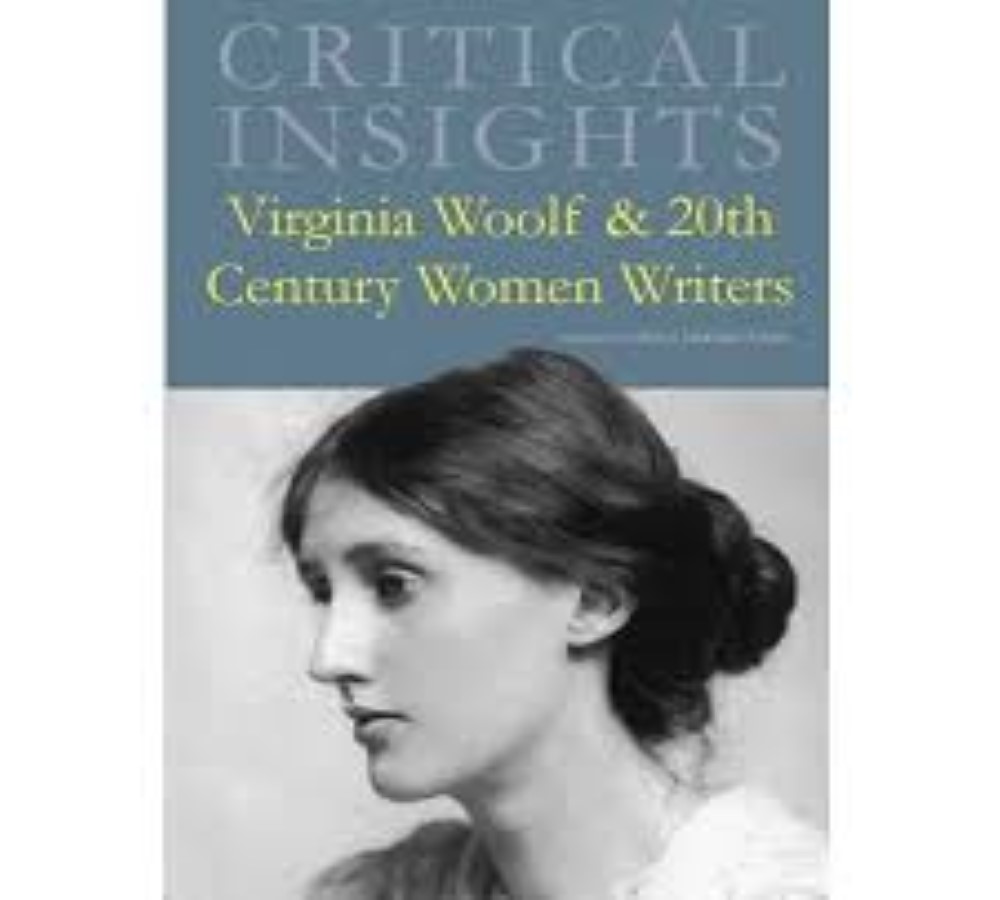
Virginia Woolf was born on January 25, 1882 in South Kensington, London the seventh a large upper middle class blended family of eight children, and her father, Leslie Stephen, was a prosperous editor and publisher and a great man of letters, Virginia, however, was home schooled by her mother, Julia, in the English classics and Victorian literature while her brothers received formal schooling. But she proved to be talented so her father encouraged her to write and become a giant in the Modernist literary movement of the day.

Woolf had become, in fact, an early practitioner of stream of consciousness and nonlinear writing. Nonlinear writing is a narrative that is not necessarily written in chronological order or contains a smaller plot embedded within a larger plot. She was also very deeply influenced by the brand new feminist of the early 1900s while attending college and glibly wrote, “A woman must have money and a room of her own if she is to write fiction,” expressing a new spirit of independence stirring in the hearts of modern women in England and America.

Her famous novels include Mrs. Dalloway, a story that follows a turn of the century woman thoughts while planning a party, A Room of Her Own, and To the Lighthouse, a novel that was inspired by a childhood get-away place. And in addition to being a prolific novelist, Woolf was an adept essayest whose quotes include:

You cannot find peace by avoiding life.

……….

The eyes of others our prisons; their thoughts our cages.

……….

As a woman I have no country. As a woman my country is the whole world.

………..

For most of history anonymous was a woman.

………..

Women have served all these centuries as looking glasses possessing the magic and delicious power of reflecting the figure of man at twice it’s natural size.

…………..

After the death of her parents Virginia and the other Stephan siblings moved to bohemian Bloomsbury where they led a free and easy life and formed a writer’s community called the Bloomsbury group. And after her marriage Leonard Woolf, the pair founded a publishing company called Hogarth press which published most of Virginia’s work.

Virginia Woolf, unfortunately, died of suicide by drowning herself at the age of 59. She had suffered a series of mental breakdowns stemming from the untimely death of her mother while still a child of age 13 and the death of her stepsister two years later.. But Virginia Woolf proved to be a pivotal force in gaining more equal rights for women in England and America in the quest for voting and equal educational rights.

David the Hebrew Song-Master and the Elements of Hebrew Poetry

David the Hebrew Song Master and the Elements of Hebrew Poetry

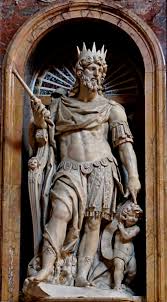
David, son of Jesse, was many things: he was a shepherd boy, a singer/song writer, a warrior, a king, a murderer, and finally he was a man after God’s own heart. David started his life as the youngest and least of 8 brothers, and was consigned to the outer fields to tend and defend the sheep. But it was there in the fields that he was being prepared to care for and defend the nation of Israel. And the prophet Samuel was perceptive enough to see that, so that according to Hebrew Scripture he was moved by the Spirit of God to anoint David the next king to supplant the despot, backsliding King Saul.

And in the course of due time through a series of alliances by marriage between his family and the kings family, David was called to serve in Saul’s royal court as a singer and amour bearer to the increasingly depressed and defunct King Saul, gaining Saul’s great favor. But when it was found that David could hold his own in the battle, even to killing a man many times his size with a well placed stone from a slingshot, David increased in popularity as the envious King Saul declined and was himself in battle, along with his son and David’s close friend; thus David was finally placed on the throne.

But, alas, David had his own great moral failure when he fell in love with another man’s wife, by the name of Bathsheba, and impregnated her. So to cover up his sin, King David sent her husband Uriah, one of his chief warriors, to the front lines to fight the enemy in order to deliberately get him killed. And yes, he was tragically killed, however Davids sincere remorse over his crime, his repentance, and his continued devotion to God saved his throne, and he was thence called “a man after God’s own heart” also being promised by the prophet through a word from God that the Christ would be born through his line of heirs.

But although he was a King and a great warrior, David also had his fame as a great singer and song writer, and we call his work the Psalms, These famous Psalms he wrote, many recorded in the Bible, covered the whole gamut of the ups and downs human experience from fear and deep depression to high praise for the God of the universe. Two good examples of these highs and lows can be found in Psalm 43 and Psalm 103:

Psalm 43 is a cry for help and shows the frail human side of the great king, without, however, ever losing hope because of his faith in the Hebrew God.

………………………..

Psalm 43 King James Version (KJV)

43 Judge me, O God, and plead my cause against an ungodly nation: O deliver me from the deceitful and unjust man.

For thou art the God of my strength: why dost thou cast me off? why go I mourning because of the oppression of the enemy?

O send out thy light and thy truth: let them lead me; let them bring me unto thy holy hill, and to thy tabernacles.

Then will I go unto the altar of God, unto God my exceeding joy: yea, upon the harp will I praise thee, O God my God.

Why art thou cast down, O my soul? and why art thou disquieted within me? hope in God: for I shall yet praise him, who is the health of my countenance, and my God.

,,,,,,,,,,,,,,,,,,,,,,,

And then we find the glorious joyful highs of David’s life as expressed in Psalm 103, verses 1-6.

Psalm 103 King James Version (KJV)

103 Bless the Lord, O my soul: and all that is within me, bless his holy name.

Bless the Lord, O my soul, and forget not all his benefits:

Who forgiveth all thine iniquities; who healeth all thy diseases;

Who redeemeth thy life from destruction; who crowneth thee with lovingkindness and tender mercies;

Who satisfieth thy mouth with good things; so that thy youth is renewed like the eagle’s.

The Lord executeth righteousness and judgment for all that are oppressed.

,,,,,,,,,,,,,,,,,,,,,,,,,,,,,,,,,,,,,

David wrote in the markedly seductive repetitive ancient cadence of ancient Hebrew parallelism in which the same thought is repeated in different ways from line to line for emphasis, and there are five such poetry books in the old testament which are: Job, Proverbs, Psalms, Ecclesiastes, and Song of Solomon. However, this ancient form of verse was also repeated in the New Testament in the Beatitudes of Jesus in the Sermon on the mount in which Jesus says “Blessed are the poor in spirit…Blessed are the pure in heart…Blessed are the meek,,,blessed are the peacemakers…, and again in Paul’s love chapter to the Corinthian’s in which he wrote, “love is patient…is kind…love envy’s not…is not puffed up….

So unlike English poetry which has meter and rhyme and derives from the Greek and Latin traditions, Hebrew poetry is markedly free verse, without a set form, rhythm or rhyme and was born of the Canaanite middle eastern tradition of a hypnotic repetitive parallelism.