Good to Be Alive

by: Shirley Satterfield

Good to Be Alive

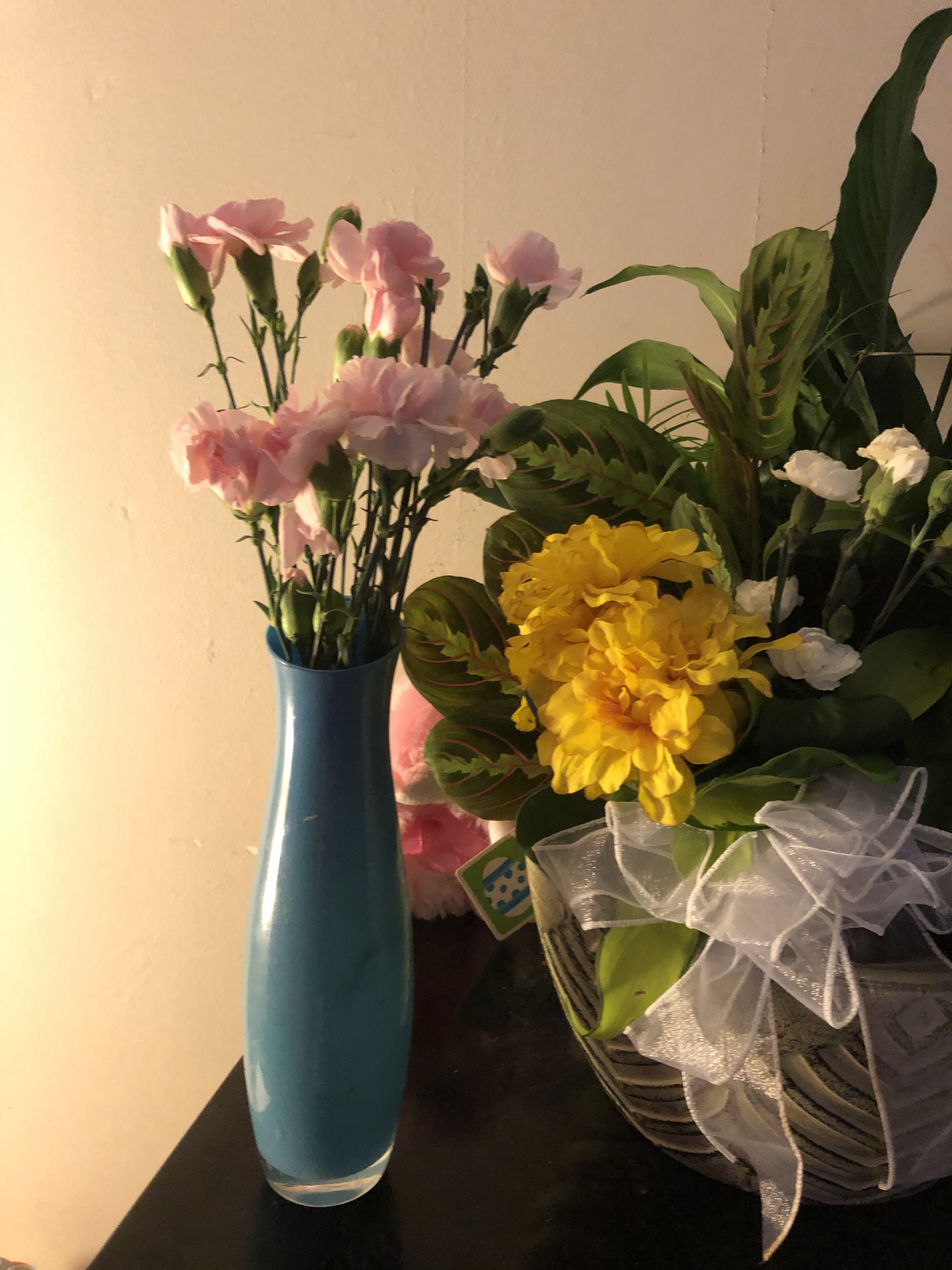
I used to think about committing suicide a lot. But now I’m glad that I’m still alive. I am glad to hear the birds sing in the morning, and I am glad that I get to prune my rosebush and that I am able to fill my house with inexpensive Walmart flowers. I’m glad that I can do little random acts of kindness for those who are less fortunate than myself, and also to be able to wash dishes for my husband Danny and to be able to give him the best life he ever had. And I am also glad that I lived to see the computer age in which life is now a more even playing field and the world is no longer tipped solely toward the rich and well connected and also that I can write my poetry and self publish my books, not just for myself but for others also. For I do not want to live in a world of only one person; I want to live in a world of one person and everybody else. So I am glad that I am alive and that I did not commit suicide. It always pays to wait on God to make things better.

Modern Sonnet

Modern Sonnet

Although the forms of the classical 14 line Petrarchan and English sonnets were written in stone, time marches on and with that onward march comes change. The post modern movement brought with it poetic license and artistic freedom that has also brought innovative changes to the old art form of sonnet writing. So modern sonnet writers have been experimenting and bringing certain fresh new changes to the form; howbeit all poems that can be called sonnets must still contain fourteen lines to qualify as a sonnet.

Contemporary poets are now changing the trochees, meters and rhyme schemes to fit the spirit of the poem and the creative bent of the poet,. Now poets are using eight syllable lines instead of the traditional 10, reversing the accent marks in a metric foot, varying the rhyme schemes apart from the traditional Shakespearean and Spenserian sonnets as discussed in a previous blog post, and even writing these tight ‘little songs’ in blank verse, not rhyming them at all. And one common new rhyme scheme employed by poets today consists of four quatrains of AABB CCDD EEFF GG. Thus igt seems that the only requirements to call a poem a sonnet is that it be fourteen line long and contain any kind of rhyme scheme and meter that floats a poets boat. For instance in Maya Angelou’s expertly done sonnet “Harlem Hopscotch” the poetess employs this new rhyme scheme of AABB CCDD EEFF GG and puts the accent on each first syllable instead of Shakespeare’s tradition of using iambic pentameter with the soft syllable first in a metric foot. A metric foot is simply a unit of two syllable sounds with the accent being on either the second or the first, as in Angelou’s poem. This new meter appears to work well in American English rather than the language of Shakespeare’s and Spenser’s lifetimes.

Harlem Hopscotch
BY MAYA ANGELOU
One foot down, then hop! It’s hot.
Good things for the ones that’s got.
Another jump, now to the left.
Everybody for hisself.

In the air, now both feet down.
 Since you black, don’t stick around.
Food is gone, the rent is due,
 Curse and cry and then jump two.

All the people out of work,
 Hold for three, then twist and jerk.
Cross the line, they count you out.
That’s what hopping’s all about.

Both feet flat, the game is done.
They think I lost. I think I won.

Notice here that Angelou not only moves away here from the traditional themes of romantic love and lofty intangibles such as waiting on God or time itself to the more timely subject of racism in America through the eyes of a black child. Now the lofty sonnet has come down to earth and can be pretty much what the poet can fit into a mere fourteen lines. So have fun, poet.

Next week we will look at the life and work of Elizabeth Browning, a lady master of traditional sonnet form.

My Ordinary Rosebush

by: Shirley Satterfield

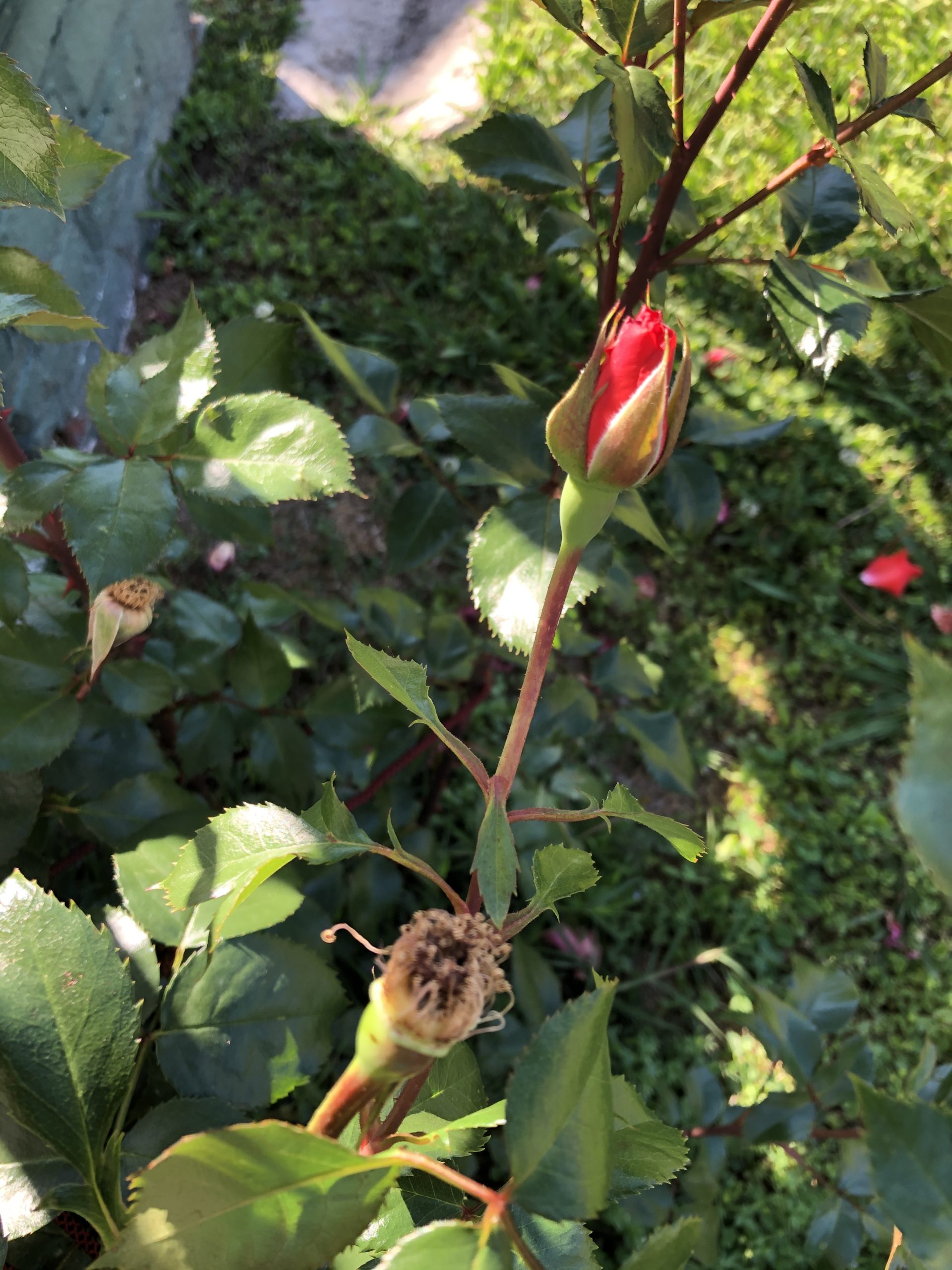
My Ordinary Rosebush (Birth)

I love, love, love
My ordinary rosebush
With all it’s tender baby buds
All wrapped in swaddling clothes
Awakening from virgin sleep
And winter’s deep repose.

It’s all in a day’s ordinary glory.

Life is anything but ordinary,
I suppose.
I love, love, love
My little baby Rose. ????

Ordinary verses Extraordinary

by: Shirley Satterfield

Ordinary verses Extraordinary ????

Life on earth for me
is anything but ordinary.
Where else can you see
A splendid towering tree,
Or a bird fly high above the hills
Without an engine made in mills?

Where else can you see
Life like this
In the endless universal abyss
Of countless stars, dry planets like mars
Where lovers kiss
And oceans list
Toward the shore.

Where else is life shiny to it’s very
core.

No where but here, dear.
On this extraordinary planet
Of ordinary Safire, rock and granite.

A Prayer on Sunday for General Cleansing

by: Shirley Satterfield

A Prayer on Sunday for General Cleansing ????

Remind me of who You are
in my life, Oh Lord.
Remind me of who You are in the universe.
And cleanse me from
all anger at the core of me,
Oh Lord.
Let You and me and them all
live in harmony
and move through life in one accord.
The sins of anger and doubt
I cannot afford.
Cleanse me now dear Lord.

Sonnets Are the ‘Little Songs’ of the Wise Poets

Sonnets Are the ‘Little Songs’ of Wise Poets

Form. Form. Form. Form is what the sonnet is all about. All types of sonnets are written by the same basic rules of being a total of fourteen lines written according to a strict rhyme scheme and meter of certain common patterns employed at discretion of the poet. And most often iambic pentameter, a meter of ten syllables per line with a strong syllable being followed by a weak one, is used in the English speaking world.

The sonnet itself had it’s beginning in Italy and was the invention of Giacomo da Lentini who served as a poet in the court of Fredrick the II, the Emperor of the Holy Roman Empire in 13th century Sicily. The early sonnets always presented a problem or a perplexing situation at the beginning and ending with a solution or a wise reflection on the problem. And classically the problem involved the love for a dispassionate beautiful woman and a broken-heart-ed suitor. But as time went on, and the form evolved, these sonnets also included a more realistic woman and and were written on a variety of subjects by the time of Shakespeare.

In the English tradition there are three main types of sonnets: the Italian (Petrarch-an) sonnet, the Spenserian sonnet and the Shakespearean sonnet, The Italian sonnet is characterized by an octave of eight lines with an ABBAABBA rhyme scheme and a sextet with a with either a CDECDE or a CDCDCD rhyming pattern as seen in this example by Milton:

When I consider how my light is spent,
Ere half my days in this dark world and wide,
And that one talent which is death to hide
Lodged with me useless, though my soul more bent
To serve therewith my Maker, and present
My true account, lest He returning chide;
“Doth God exact day labor, light denied?”
I fondly ask, But Patience, to prevent
That murmur, soon replies, “God doth not need
Either man’s work or His own gifts. Who best
Bear His mild yoke, they serve Him best, His state
Is kingly: thousands at His bidding speed,
And post o’er land and ocean without rest;
They also serve who only stand and wait.

The Shakespearean sonnet is written in three quatrains of four lines each and ends in a couplet with a rhyme scheme of ABAB CDCD EFEF GG as in this example:

Two households, both alike in dignity,
In fair Verona, where we lay our scene,
From ancient grudge break to new mutiny,
Where civil blood blood makes civil hands unclean.
From forth the fatal loins of these two foes
A pair of star-cross’d lovers take their life;
Whose misadventured piteous overthrows
Do their death bury their parents’ strife,
The fearful passage of their death-mark’d love,
And the continuance of their parents’ rage,
Which, but their children’s end, nought remove,
Is now the two hours’ traffic of our stage;
The which if you with patient ears attend,
What here shall miss, our toil shall strive to mend.

The Spenserian sonnet is a very complex form with the interlocking rhyme scheme of ABAB BCBC CDCD EE making the poem a tight unified ,
little unit, and although these poems are relatively short, they are in really huge masterpieces in form.

One day I wrote her name upon the strand,
But came the waves and washed it away:
Again I write it with a second hand,
But came the tide, and made my pains his prey.
Vain man, said she, that doest in vain assay,
A mortal thing so to immortalize,
For I myself shall like this decay,
and eek my name be wiped out likewise.
Not so, (quod I} let baser things devise
To die in dust, but you shall live by fame:
My verse, your virtues rare shall eternize,
And in the heavens write your glorious name.
Where when as death shall all the world subdue,
Our love shall live, and later life renew.
…………………………..

This is first a three part series on this most historically important form of poetry which will include an article about the works of contemporary writers and the life and works of Elizabeth Browning, a lady master of the sonnet. Contemporary poets vary both the rhyme schemes and meters of the seemingly “simple” sonnet.

A Covid Conversation Between Three Micro Poets

by: Shirley Satterfield

A Covid Conversation Between Three Micro Poets

Shirley:
“Virtual world.
Friends now come in little boxes.
Wow.”

Karl:
“Virtual world
In daydreams and computer reality.
The mind of fantasy come to life.”

Shirley:
“We are all empty images.
Holograms in hell.
Under Covid’s deathly spell.”

Neel:
“Every morning I wear it fresh and clean.
Every night I strip it off, filthy and hanging on a thread.
A smile in a virtual world is high maintenance.”

Shirley:
“Dreams shattered.
Nerves tattered.
What’s the matter?
What’s that smell?
Holograms in hell.”

Twitter Driven Micro Poetry: The Hot New Trend for Wise Poets

Twitter Driven Micro-Poetry: The Hot New Trend for Wise Poets

The decade of the 90’s sand beyond 2000 was the age of the short poem, with the submission guidelines averaging 20 line or less for most print anthologies of the day. These guidelines were in place mainly due to space constraints and the literary preferences of modern readers. Gone were the days of the book length poem. And then came along the wildly popular character restricted social media platform Twitter then wa-la micro poetry was born, and today Twitter poets have the challenge of packing a great big verbal punch in only a few short words contained in only 280 characters in writing very short haiku-like poems.

But the one basic difference between haiku and micro poetry is that there are no set rules regarding the number of syllables per line in micro poetry. In fact, there are no set rules for micro poetry at all, so this new form, for all intents and purposes, is free verse poetry in style, and poetic license is the only real rule. These new Twitter poems can be expressed in any shape that fits within 280 character limit, with some poets electing to use one or two words per line in a linear shape, While other poets elect to use numbers and single letters to stand for words in their pithy little poems with lines such as “My kisses go 2 you” or perhaps “My kisses go to U”. These new literary devices are not only trendy and cool. But also help the Twitter poet to stay within the character limit guidelines.

Also, while traditional Japanese haiku almost always brings the reader to a momentary experience happening in nature, this Millennia form of present day “haiku” can be about any subject that is important to the poet, with some writers still writing about nature, while others write about mediation, art and lifestyle, as in the following two examples by Michael Robert Lawrence and Rosie Mann pulled directly off of Twitter respectively, And here we also see that the rules of grammar and punctuation are also fluid or do not apply at all.

Solitude
Habitat of the loner

Fertile grounds
Growing art

Fiercely present
in introspective silence

Static free
Undisturbed channel

Divine conduit
Broadcasting

Into pen, brush, camera or
guitar
Magic wands of creation

For the world to see

…………………………

lavender-
rest awhile in the deep calmness
within

……………….

Then often the subject matter in micro verse is often about love, relationships and romantic passion as in the poetry of popular Twitter poet diego garcia,

Your life is still unfamiliar
That guides mine.
Thank you.

…………………

Your gaze burned my retina,
I have become blind,
Now I only watch you.

…………………….

Your sweat, all in star dust
Will come and light up
My body.
……………………

We do not know who the next generation of poets will look back on as being the masters of this new form, but these present day bards of micro poetry are blazing trails on the vast social media platforms of today. And a Renaissance a of the arts is happening today, right now, to us. Thus, #poetryisnotdead.

Dear Church,

by: Shirley Satterfield

Shirley Satterfield
4 hrs
Dear Church,
Been giving some deep thought this morning as to who my leaders really are, and it’s all of you. It’s Dennis and Mary Jane, Al and Naomi, Tom and Linda, Annie, the Fears family and the Zorns, all of you who have shown me love. And I want to emulate people like you who show people like me love. Samantha LeBoeuf is also my leader because she believes in my ability to communicate good things to other people like me, so I am going to do my part to make that woman famous and a major force in social media. In short, I follow the people who really care about me because I want to take care of others, and I need to know from personal experience how it is really done. Thank you, church.

Gaslight

by: Shirley Satterfield

Dedicated to Those Who Tell Me How I’m Supposed to Feel

My feelings are a gaslight.
Up and down at the whim of the lamp lighter.
My soul feels rather dead,
Like nothing I say should ever be said.

May there be change in the offing
Before I lie still in my coffin.

The Star King

by: Shirley Satterfield

The Star King ????

God’s light is brighter than all the collected stars
And reflecting moons of the universe.

The universe is only a real big thing,
But Jesus is the King of kings,
And God is the being
that does the mankind freeing.

So worship Him alone,
The living, ever loving Being
Who sits high above the starry thrones.

Excilia Saldaña: La Latina Matriarch of Cuban Poetry

Excilia Saldaña: La Latina Matriarch of Cuban Poetry

Award winning Cuban poetess Excilia Saldaña is the Wise Poet of this week. Born in on August 7, 1946, she was raised in Havana by her grandmother and her young teenage mother, and being raised in a matriarchal family like that, Saldaña became the poetic voice of those women born into into the Afro-Cuban tradition. She wrote about such issues as motherhood and the role of Afro-Cuban women in Cuban society, and the guilt and shame inherently associated with being born a woman. And being a Black Cuban national descendant of West African enslaved people, she must have been keenly aware of violence against woman in the history of her people and the shame of being a victim of such violence.

According to statistics 62% of the Cuban population is of African decent and of the Afro-Cuban tradition of the Santeria religion, meaning The Way of the Saints, which is a hybrid of the original religion of the Yoruban people of West Africa and Roman Catholicism. They believe that there is only one God but that the forces of nature are overseen by lesser godlike beings called corishas, spirits which are pleased through divination. Saldaña’s family roots were dug deep into this tradition of religion and culture, music, dance and literature. She was most known as an academic and a children’s author, but she was also an accomplished poet whose poetry was translated from Spanish into both French and English, and she was recognized by the National Union of Writers and Artists of Cuba for her excellent writing, and her first book of poems entitled Enlloro was unpublished during her lifetime but won acclaim from the Casa de las Americas Prize board shortly after her death on July 20, 1999.

Her poem entitled Anonymous Landscape is a poem about the shame of just being an average woman and not famous or a man and is the voice of a woman feeling quite insignificant.

Anonymous Landscape

Every afternoon
The woman sits
before an open window
guilty of not being air, water
–or at least a wing that flies-
of being only a woman before an open window.

Every afternoon
the sky hangs itself out to dry
beyond the open window
ashamed of not being man, flesh, body
—or at least earth—
of being only sky beyond an open window,
Secret passion of guilt and shame:
a golden woman of violet sky
every afternoon through an open window.

Although this poem about feeling insignificant initially reads plain and almost prose-like in style in the beginning and the body of the piece, it ends with the vivid imagery of a golden woman and a violet sky and signifies the true significance of a mere woman who is not a man, This poem flares up into color at the end.

The Old Tree

by: Shirley Satterfield

During this corona virus isolation time my husband and I have been sitting on the porch a lot just bonding and enjoying the peace of nature. And yesterday a poem came to me when I spotted a half dead old tree in the neighborhood that still had buds and leaves growing here and there on it’s dry cracked old limbs, and I want to share this symbol of survival with you in a poem. Really? Should they sacrifice the older generation for the economy?!!

The Old Tree

I saw that gnarled old tree down yonder.
Made me think. Made me ponder.
It has survived a lot.
Winds and rains and whatnot.
I love that old tree down yonder.
The more I look the more I grow fonder.
Makes me think. Makes me ponder.
The love of God who lives up yonder.

Writer William Faulkner: The Free Spirit of the South

Writer William Faulkner: The Free Spirit of the South

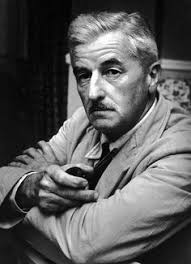
William Faulkner, he was the legend the English class who was known as the writer whose intellect was so big that his mind could not be contained in a formal classroom or in a regular nine to five job.
He started out in the lower elementary grades as a good student, but this free spirit grew bored and dropped out of high school after repeating the 11th and 12th grades in order to read and study on his own. And legend has it that this man was such a voracious reader that he would about bankrupt the library shelves of all it’s books, and he was also even fired from his postal job in the mail room of a university for reading other people’s mail.

Faulkner was quite the Southern rebel as an author, for rather than writing for the traditional publishers of the day, he wrote mostly motivated just by the art of it, and thus, he faced the rejection of both his short stories and his early books, such as his World War I based novels entitled Soldiers Pay and Flags in the Dust, although the latter did finally find a publisher. He even wrote a biting satire mocking the established Southern literary scene entitled Mosquitoes. He was also quite dispassionate about the formal technique the publishers expected when he said in an interview,

Let the writer take up surgery or bricklaying if he is interested in technique. There is no ,mechanical way to get writing done, no shortcuts. The young writer would be a fool to follow such theory. Teach yourself by your own mistakes…

Faulkner was much influenced by such modernist writers such as James Joyce, often employing a Joycean brand of stream of consciousness style.

Faulkner was born William Falkner in New Albany, Mississippi on September 25, 1897 but was raised in Oxford, Mississippi, located in Lafayette County, by his businessman father Murry Cuthbert Falkner, and his mother, Maud Falkner, and he was much inspired by stories of the bold life of his Civil War hero great grandfather Colonel William Clark Falkner, who was also a legend as a railway builder and an author in his own rite. And young Falkner even emulated his great grandfather by doing a stint in The Royal Canadian Air Force during WWI, however, he did not see combat.

The young William Falkner later adopted the pen name of Faulkner which was the result of a misprint of his name on a title page. Most of his most important novels such as The Sound and the Fury and as I Lay Dying were set in a fictional county and based on Lafayette County and the town of Oxford called Yoknapatawpha County and the fictional town of Jefferson and dealt with such sophisticated subjects as Southern racism in America and the complex relationships between the the members of a poor white family while transporting the decaying corpse of their dead mother across the county to the nearby town of Jefferson. The expression of each person’s thought processes along the way was expressed in stream of consciousness writing. And the book proves to be quite gristly and private thoughts quite dicey with each character harboring their own secret ulterior motives for making the arduous trip across creek and county.

In writing these masterpieces Faulkner proved himself to be one of the South’s most accomplished writers by winning both the Pulitzer Prize and the Nobel Prize for Literature.

Faulkner died of a heart attack on July 6, 1962 while dwelling in a nursing facility in Byhalia, Mississippi.

Ezra Pound: The Wise Poet Arrested for Treason

Erza Pound: The Wise Poet Arrested for Treason

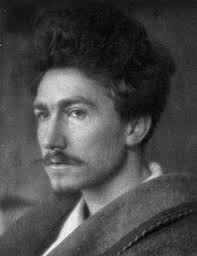
Ezra Weston Loomis Pound, born in the rural Idaho on October 30, 1885, was a pioneer in the early Imagist movement in which poetry was characterized by succinct language and exact detail in visual images. And the man influenced such greats as Elliott, Robert Frost, James Joyce, and Ernest Hemingway. But this poet also had a dark side; he was a fervent fascist sympathizer who wrote against the United States in various anti-American fascist publications while living as an ex-patriot in Great Britain. And then he blasted America and the President of the United States in numerous radio broadcasts while living in Italy during WWII.

Consequently, he was arrested by the American forces in at the war’s end in 1945 and charged with treason. However, he was found to be mentally insane by the court after his arrival back to the States and was confined to St. Elizabeth Hospital for the criminally insane for the next twelve years of his life.

He had written 70 poetry books and published his work in 70 other publications in his lifetime, but it was while he was still in Italy imprisoned in a 6 foot by 6 foot open air cage that he began to write the most important section in his masterpiece book, The Cantos, entitled The Pisan Cantos for which he won the Bollingen Prize by the Library of Congress, a controversial move by the Library indeed. The Cantos was a lengthy poem of 116 sections that was never really finished by Pound during his 12 year long stay at St. Elizabeth’s Hospital, but this small portion of Canto I amply illustrates the stark beauty of his lovely and succinct and detailed verse.

Canto I 
BY EZRA POUND
And then went down to the ship,
Set keel to breakers, forth on the godly sea, and
We set up mast and sail on that swart ship,
Bore sheep aboard her, and our bodies also
Heavy with weeping, and winds from sternward
Bore us out onward with bellying canvas,
Circe’s this craft, the trim-coifed goddess.
Then sat we amidships, wind jamming the tiller,
Thus with stretched sail, we went over sea till day’s end.

Ezra Pound was not just a master of complex poetic verse, but he was also an expert linguist proficient at the classic languages of Latin and Greek and had become a professor of the Romance languages of French, Spanish, and Italian after graduation from Hamilton College with a BA in philosophy and the University of Pennsylvania, where he earned his Masters Degree in the Romance languages.

On the urging of his fellow poets, Pound was released from the hospital in 1958 and set sail for Italy where he quietly lived until his death in 1972.

Dr. Geisel Seuss: The Pied Piper of Children’s Poetry

Dr. Seuss: The Pied Piper of Children’s Poetry

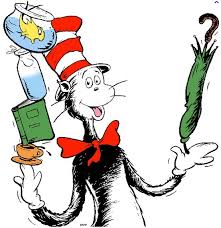
Dr. Seuss, born Theodor Seuss Geisel on March 2, 1904, was the author who spirited away a generation of children from their parents into a world of mesmerizing rhymes, strange characters, and free thinking. And with personified characters such as The Grinch Who Stole Christmas he imparted values to the children of the WWII post baby boom such as the importance of spiritual things over materal goods and the importance of being able to think outside the box and resist the status quo.

Seuss was the most wildly popular illustrator and children’s author of his time, and the secret to this Bard’s success lay in large part to his enchanting rhymes and mesmerizing meters. His most commonly used meter was called anapestic tetrameter which consists of two weak syllables followed by a strong syllable from this example from Wiki Pedia

And today the Great Yertle
that Marvelous he
Is King of the Mud. That is all
he can see.

But some of his verse also contained a kind of meter wherein every other was the stressed syllable called amphibrachic tetrameter, and most of his rhyme schemes most often consisted of AABB and ABCB all these elements together giving the poetry a the sing-songy appeal most familiar to children:

All ready to put up the tents
for my circus.
I think I will call it the circus
Mcgurkus

……………..

“Dr. Seuss”Giesel was an undergraduate at Dartmouth College and a graduate student at Lincoln College where he adoted the “Dr.” in front of his name when he did not finish his doctorate studies. After college he became an illustrator for Vanity Fair Magazine and a prosperous advertiser for Standard Oil. During WWII Giesel became a satirical political cartoonist for New York’s PM Magazine and wrote his first children’s book entitled “And To Think That I First Saw It on Mulberry Street, which
was subsequently rejected by 30 publishers before it found a home. All in all he wrote 60 children’s books and one adult book which flopped. He said about adults, “Adults are obsolete children. To hell with them.”

‘Dr. Seuss” Giesel was born Springfield, Massachusetts and died on
September 24, 1991 in La Jolla, California at the ripe old age of 87 and sold over 600 million copies of his books and won the Pulitzer prize for his massive contribution to literature. He led a long, prosperous and prolific life,

Announcing The New DWW Poetry Anthology

by: Shirley Satterfield

Hi, friends and followers of the #dailywisdomwords writing community. I am going to be creating a group anthology containing your poetry. All I need to create this book is a copy of two or three of your best poems, and I am going to be approaching each of you individually on Twitter, Facebook, Daily Wisdom Words and Linkedin to ask you for your poetry, so please give it your careful consideration. The name of the book is going to be Living Pearls of Wisdom and will be published through lulu.com and reviewed on the Daily Wisdom Word website for your book distribution convenience If you have any questions or poems you want to send me please email me at shirleysatterfield63@gmail.com.

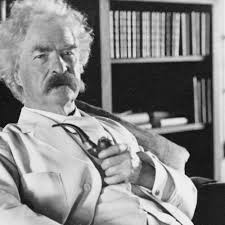
Mark Twain: Man of the Mighty Mississippi

Mark Twain: The Man of the Mighty Mississippi

The stock advise for aspiring writers is to “Write what you know,” and Mark Twain did just that. He was born, with the given name of Samuel Langhorne Clemens on November 30, 1835 in the town of Florida Missouri, but was raised in the town of Hannibal situated right on the iconic Mississippi river. And so being intimately acquainted with this beloved waterway, he used this river and his hometown as the setting for two of his most loved novels; The Adventures of Huckleberry Finn and the sequel The Adventures of Tom Sawyer, and it was this idyllic setting that Twain used to write his adventure stories and dealt with such serious topics as slavery, the value of freedom and human worth.

In fact, the primary plot of The Adventures of Huckleberry Finn involves quest of two individuals to find freedom by escaping from their circumstances by way of the Mississippi river. Jim is an escaped slave, who is headed for the free state of Illinois and Huck is the wild-child who is running away from a tyrannical drunken father and the social norms of society which don’t make sense to him and being imposed on him by his very religious guardian, the widow Douglas. Thus, the wild and woolly river itself symbolizes freedom for the both of them as they both flee from their “owners.” This book is also a kind of coming of age story for Huck as he comes to the realization that the norms and common beliefs of his elders really are often unjust, unfair, and just plain wrong when he utters what are probably some of the most important words in American literature, “All right, then. I’ll go to hell,” regarding the common belief in his hometown that those helping an escaped slave will suffer eternal damnation. This statement is in fact the climax of the book and the moment when Huck truly becomes free in his own mind and finds the courage to become his own independently thinking man.

Mark Twain, himself, was also an independently thinking man and a truly colorful, larger than life, public figure who mastered many trades in his lifetime. He was a printer, a journalist, a steamboat pilot, a witty humorist and public speaker, as well as the author of 20 novels. And in his books about the American South, he was also a master of writing in local dialect of the town, thereby making his characters come alive through their unique colloquial speech.

“Pap” Finn, for example, was the course drunken father of Huck who did not believe in education, and his profound ignorance becomes apparent when he blasts his son for learning to read,

Don’t you give me none o’ your lip….You’ve put on considerable frills since I been away. I’ll take you down a peg before I get done with you. You’re educated they say-can read and write,…I’ll take it out of you. Who told you you might meddle with such hifalut’n foolishness, hey?—who told you you could?

Pap Finn goes on to blast the “govment” for giving black people the right to vote in free states in a later part of the book.

Now while Twain denigrates Huck’s abusive father, he elevates Jim, the escaped slave, with dialogue when Jim speaks about the realization of his true worth as a person when he says;

I’s rich now, come to look at it. I owns myself, en I’s wuth eight hund’;d dollars. I wish I had de money, I wouldn’ want no mo’ .

Twain was one of America’s greatest and most endearing writers of all time and more than succeeded in writing “The Great American Novel”, and was adept at capturing both the entertainment value of adventure in a book and also highlighting the important issues of his day. He was truly larger than life and a real versatile literary genius with a whole range of talent.

He died on April 21, 1910 of a heart attack.