Some Writing Tips of My Own that I Learned Through the Years

Some Writing Tips of My Own that I Learned Through the Years

I am a strictly a poet and a non-fiction writer, so writing fiction is out of my league. However, I have learned a few pointers about good writing in the classroom over the years that I think will be of help to writers of every ilk.

The first piece of advice that I ever heard from a high school English teacher was to “write what you know,” She gave the example of one man who lived in the 1800’s who told his wife that he could write a better novel than the ones that were written in his day. She then challenged him to “go and write one then.” The man subsequently wrote a book about life in the wild, wild West when the man actually lived in Boston. So the book did not succeed and bombed at the box office not finding a publishing house that would print it. Then the woman challenged him again to write a book set in his own hometown and the book became a best seller.

This story may sound trite, but a good case in point is the luminous career of writer JK Rowling of Harry Potter fame. The the setting for her novels was her own home town of London, a city whose culture, magic and ambiance she knew quite intimately. And not only did the brilliant lady know her setting and subject, she also did her homework and knew what her target audience wanted to read.

And that brings me to importance of research. There was another novelist who lived in the late 1800s by the name of Steven Crane who wrote a Civil War story entitled the Red Badge of Courage that was heavily based on personal research. Although he had not experienced the war first hand, he elected to move himself into a deeply impoverished ghetto neighborhood so he could experience the feeling of what people were having in their struggle for survival. This is the kind of in depth sacrifice that is sometimes required to create art,

Next week I will touch on how restriction and specificity in your writing can elevate your work of art into fine art.

Twitter’s Own (Kattt): On The Cutting Edge of a Scotland Sea

Twitter’s Own (Kattt): On The Cutting Edge of a Scotland Sea

1.  When did you start writing and why?
Kattt – I started writing in my late teens. My niece was a baby and I would tell her little bedtime stories. As she got older I started to write them down. She loved listening and I even tried the various voices (tried and failed I might add). I used to have to call her at night retell her stories of pixie dust and princesses who rescued the princes. Eventually we read them together.
The other thing that drove me to write was it’s something I can do alone, without being part of the crowd. I don’t always fit in with a group and tend to find myself on the periphery.  

2. What is your hometown and does your environment influence your writing in any way?
Kattt – I live in a small town close to the coast in Scotland. It heavily influences my writing in various ways. I often head off to the beach for a walk just to listen to the ocean.  I find water calms my soul and let’s me write. I also write about water a lot.

3. What is the seminal inspiration for your poetry, your favorite themes etc and why.
Kattt – I am playing with themes if I’m honest. I don’t want to feel stuck in a genre so I try to push myself past my comfort zone to allow me to grow into it. My most prominent theme would be realism tho. I use my personal experiences a lot and write from the heart. But also write about others feelings, their stories and experiences. I write their words.

4. What forms of poetry  do you like  use, for example free verse, sonnets, a meter and rhyme scheme? Do you write in other forms of writing such as novels, short stories, nonfiction or journalism?

Kattt – I’m most comfortable using the meter & rhyme process but then feel it can be somewhat pedestrian. I’m working on expanding free verse but not quite as comfortable with this.  I’d love to write in the abstract but my mind doesn’t want to cooperate.
I have some wip in the form of short stories that I have been “working” on for a long time. Over the past while life has gotten in the way of writing so I’ve utilised my limited free time in the form of poetry. I can rattle up a poem in 5mins (yes… you can tell with some of them lol)  this allows me to still feel creative and use both parts of my brain for a few minutes.

5. Do you have someone special in your life you like to write to or about.

Kattt – hmm, this is a tricky one.  Some of my writing has focused on past relationships – the good and the bad. I find it quite cathartic. I write to relive the good times but it banish some of the bad.  Heartbreak is always a good medium.  Currently, no-one serious but I’m working on it lol

6. What do you want the future to hold for you as a writer. Your plans.

Kattt – One day I’d love to put together a collection of poetry or short stories and publish but I have a long way to go before I have the skill to be successful. Til then I will keep experimenting until I find my niche and gain the experience to move to that elusive next level

Thanks dear

A Call to Home 
A Poem By Kattt 

I’m tense. 
My body rigid 
in the frigid cold. 
Breath erratic, 
As I rush to that place. 
That one place that will always save me! 
In the near distance, 
I can feel it pulling me… 
Calling to me. 
Urging me to hurry! 
I’m so close now, 
I can feel icy stabs on my ruddy cheeks, 
taste the tang of salt on my cracked lips. 
I hear the swirl and roar of the waves. 
On the precipice of the abyss, 
I silently flutter. 
And with unseeing eyes 
through dark murky waves, 
I seek my truth. 
Through a choppy, abstract reflection I finally see my beauty 
And with one tiny step, 
I finally feel home.

Sandra Cisneros: Wise Poet of Chicana Literature

Sandra Cisneros: Wise Poet of Chicana Literature

The Chicana writers are a group of poets and authors of a current Mexican/American “cultural hybridity” tradition. And Sandra Cisneros is one of the most prominent figures in this post-modern movement with her much loved novel The House on Mango Street, her short stories, and her poetry,

This engaging novel follows the life of Esperanza a 12 year old girl, living in Chicago, who straddles life between two cultures, Mexican and American. And much like Cisneros herself, she faces a life in poverty in a highly male driven patriarchal society. This book, originally written in English, has been translated into 20 languages and appeared on the New York Times Best Selling List.

Cisneros, in addition to being a highly successful novelist, is also an accomplished poet whose poetry touches on both American and international racism regarding the misconceptions and stereotypes of the Mexican/American people,

He says he likes Mexico,
especially all that history.
That’s what I understand
although my French
is not good.

And wants to talk
about U.S. Racism.
It’s not often he meets
Mexicans in the South of France.

He remembers
a Mexican Marlon Brando once
on French tv.

How in westerns,
the Mexicans are always
the bad guys, And-

is it true
all Mexicans
carry knives?

I laugh.
Lucky for you
I’m not carrying my knife
today.

He laughs too,
I think
the knife you carry
is abstract.

Cisnereos is a highly respected writer who has won such awards as the National Endowment of the Arts Fellowship and the Ford Foundation Art of Change Fellowship. She was born in Chicago on December 20, 1954 and currently lives in San Miguel de Allende.

Daily Wisdom’s Own Island Poet Michelle Hugelmann: An Interview

Daily Wisdom’s Own Island Poet Michelle Hugelmann: An Interview

1, Michelle, can you tell us where you are from and a little about your current life, work and any special relationships?

My name is michelle helene hugelmann(amblavaney). 44 years old. And married, children
I live in Seychelles .Seychelles is an archipelago of 115 islands. i live on the main island of Mahe. Aside from  writing, I enjoy reading and cooking and I love animals .I have been unemployed for a long time due to my illness. was diagnosed with lupus since i was 18 and lately an overlap of lupus mixed connective tissue disorder.  

2, When did you start writing poetry and what was the inspiration?

.My fascination and love for poetry started when i was 15 .i would play with words in my head and try to make them rhyme and it slowly grew from there though i never really wrote much back then.i started putting more effort and life into my poetry when i was much older . a lot of things inspire me really my love for life and nature as much as a curious sense of everyday emotions.

3. What are your favorite themes to write about, and what is your favorite form to write in?
I don’t really have a favourite theme though love is a major force . I like to touch a bit of every emotion which touches my heart and mind.

.Aside from poetry I do sometimes write short stories mostly for my own amusement.

4. What are the dreams for the future that you have for your poetry and your life?

I have a lot of dreams but i am working on one ,this is the publication of my work thus far like an anthology. It has taken some time due to some setbacks but happy to say much is in progress. As for my life I want to make it as interesting as possible. I will try some photography which is  also one of my dreams. for the rest i want to live and give kindly my help and love and enjoy the simple pleasures of everyday  life

“With every flutter of her heart
her lovely feature rise.
She sways and sigh..
in beauty she abides
in strength she thrives
with grace her spirit flows
in wings of colored hope.”

……………………………………………………..

Note: The Seychelles Islands is an Island nation located in the Indian ocean due east of the continent of Africa It was uninhabited until it was occupied by Europeans in the 16th century and came under British control in the 19th century until the islands gained independence from Great Britain in 1976. Today, the Seychelles Islands is a largely agricultural nation, but also boasts of a great tourism economy,

Abuh Monday and His Wise Reflections on His Life and Works

Abuh Monday and His Wise Reflections on His Life and Works

Nigeria is one place like any other place that possesses the ability of making and destroying a man and his passion especially when it is ridden with certain culture that doesn’t allow certain profession. 
Life in Nigeria is what many would call ‘not too pleasant’ because of the absence of many opportunities they desire. I was in that category. I searched for a platform that would project my art but there was none. So, I created my own platform by reading poems on radio. In three words, it is adventurous.
I don’t know about other poets but poetry like my lecturer would say is innate. Inspiration to write poetry came spontaneously when my heart was filled with too much thought about the bad and unpleasant things that was happening around me. If I’m not mistaken, the first poem I wrote was about the war of choice between father and son.
To an extent, I think it was the need to correct and say things I wasn’t bold enough to utter that inspired me to start writing poetry.

On Twitter. I posted one of my poem and a member from DWW liked it and introduced me to the writing community. It wasn’t long after that encounter that the founder, Samantha Lebeouf, saw it necessary to make the host on DWW MUSIC PROMPT.

I guess it was partly the motivating words of Samantha Lebeouf and my love for music. As a radio broadcaster, music as well as talk is one the things we hold dear and also use while on air. 
I still recall how I tried to paint the imagination I had in my head but it just couldn’t come out until I turned on the stereo. So, yes music inspires my writing greatly. I think it helps calm me down or should I say ease the tension in wanting to express quickly what I have up stairs so I can paint the idea well.

Piary is a collection of poems that explicates to a great length, the things I experienced. I call it Piary because it is a poetic diary. I’ll tell you how I came about the name. So, I was in deep thought of what to call it. Truth be told, I needed something out of the world. Something unusual. “Since it is a diary of poems, why not call it Piary” That was me talking to me. The sound of it was awkward at first but a friend told me it was cool so I clinged to it.
I’m not really good with following rules and that’s the reason why I decided to make the e-book of Piary free for readers on Google drive. Hard copies will be available June 15. You could get via this link: https://drive.google.com/file/d/12cwPU-rqKGN5EHD_j6aWfnLpk-CrfWc4/view?usp=drivesdk

Now, drama and prose. I’m currently working on a novel, Eagle of the North. If all works out as planned, I’ll have it published before the end of 2020 or when when I start a post graduate course in Arts History or Journalism.
……………………………………
“A rough cloth is always not good to the eye but when you iron it, there will be a revelation of its beauty whether old or new. Many things happen in the mind of a man when he receives not creative ideas. See, just like a rough shirt, you must press it so you can see the beauty.” 
Abuh Monday Eneojo 
PIARY (Diary of a pensive poet)

Modern Sonnet

Modern Sonnet

Although the forms of the classical 14 line Petrarchan and English sonnets were written in stone, time marches on and with that onward march comes change. The post modern movement brought with it poetic license and artistic freedom that has also brought innovative changes to the old art form of sonnet writing. So modern sonnet writers have been experimenting and bringing certain fresh new changes to the form; howbeit all poems that can be called sonnets must still contain fourteen lines to qualify as a sonnet.

Contemporary poets are now changing the trochees, meters and rhyme schemes to fit the spirit of the poem and the creative bent of the poet,. Now poets are using eight syllable lines instead of the traditional 10, reversing the accent marks in a metric foot, varying the rhyme schemes apart from the traditional Shakespearean and Spenserian sonnets as discussed in a previous blog post, and even writing these tight ‘little songs’ in blank verse, not rhyming them at all. And one common new rhyme scheme employed by poets today consists of four quatrains of AABB CCDD EEFF GG. Thus igt seems that the only requirements to call a poem a sonnet is that it be fourteen line long and contain any kind of rhyme scheme and meter that floats a poets boat. For instance in Maya Angelou’s expertly done sonnet “Harlem Hopscotch” the poetess employs this new rhyme scheme of AABB CCDD EEFF GG and puts the accent on each first syllable instead of Shakespeare’s tradition of using iambic pentameter with the soft syllable first in a metric foot. A metric foot is simply a unit of two syllable sounds with the accent being on either the second or the first, as in Angelou’s poem. This new meter appears to work well in American English rather than the language of Shakespeare’s and Spenser’s lifetimes.

Harlem Hopscotch
BY MAYA ANGELOU
One foot down, then hop! It’s hot.
Good things for the ones that’s got.
Another jump, now to the left.
Everybody for hisself.

In the air, now both feet down.
 Since you black, don’t stick around.
Food is gone, the rent is due,
 Curse and cry and then jump two.

All the people out of work,
 Hold for three, then twist and jerk.
Cross the line, they count you out.
That’s what hopping’s all about.

Both feet flat, the game is done.
They think I lost. I think I won.

Notice here that Angelou not only moves away here from the traditional themes of romantic love and lofty intangibles such as waiting on God or time itself to the more timely subject of racism in America through the eyes of a black child. Now the lofty sonnet has come down to earth and can be pretty much what the poet can fit into a mere fourteen lines. So have fun, poet.

Next week we will look at the life and work of Elizabeth Browning, a lady master of traditional sonnet form.

Twitter Driven Micro Poetry: The Hot New Trend for Wise Poets

Twitter Driven Micro-Poetry: The Hot New Trend for Wise Poets

The decade of the 90’s sand beyond 2000 was the age of the short poem, with the submission guidelines averaging 20 line or less for most print anthologies of the day. These guidelines were in place mainly due to space constraints and the literary preferences of modern readers. Gone were the days of the book length poem. And then came along the wildly popular character restricted social media platform Twitter then wa-la micro poetry was born, and today Twitter poets have the challenge of packing a great big verbal punch in only a few short words contained in only 280 characters in writing very short haiku-like poems.

But the one basic difference between haiku and micro poetry is that there are no set rules regarding the number of syllables per line in micro poetry. In fact, there are no set rules for micro poetry at all, so this new form, for all intents and purposes, is free verse poetry in style, and poetic license is the only real rule. These new Twitter poems can be expressed in any shape that fits within 280 character limit, with some poets electing to use one or two words per line in a linear shape, While other poets elect to use numbers and single letters to stand for words in their pithy little poems with lines such as “My kisses go 2 you” or perhaps “My kisses go to U”. These new literary devices are not only trendy and cool. But also help the Twitter poet to stay within the character limit guidelines.

Also, while traditional Japanese haiku almost always brings the reader to a momentary experience happening in nature, this Millennia form of present day “haiku” can be about any subject that is important to the poet, with some writers still writing about nature, while others write about mediation, art and lifestyle, as in the following two examples by Michael Robert Lawrence and Rosie Mann pulled directly off of Twitter respectively, And here we also see that the rules of grammar and punctuation are also fluid or do not apply at all.

Solitude
Habitat of the loner

Fertile grounds
Growing art

Fiercely present
in introspective silence

Static free
Undisturbed channel

Divine conduit
Broadcasting

Into pen, brush, camera or
guitar
Magic wands of creation

For the world to see

…………………………

lavender-
rest awhile in the deep calmness
within

……………….

Then often the subject matter in micro verse is often about love, relationships and romantic passion as in the poetry of popular Twitter poet diego garcia,

Your life is still unfamiliar
That guides mine.
Thank you.

…………………

Your gaze burned my retina,
I have become blind,
Now I only watch you.

…………………….

Your sweat, all in star dust
Will come and light up
My body.
……………………

We do not know who the next generation of poets will look back on as being the masters of this new form, but these present day bards of micro poetry are blazing trails on the vast social media platforms of today. And a Renaissance a of the arts is happening today, right now, to us. Thus, #poetryisnotdead.

Canada’s Jamie Routley: The Voice of Contemporary Romance

Canada’s Jamie Routley The Voice of Today’s Contemporary Romance

Today’s romance poetry is different from that of the Romantic era in that it is more realistic because it includes verse about the desires of the body, and not just the soul, and is a lot less realistic in it’s tone, Today’s featured poet is Twitter’s own popular ‘Jamie’ who beautifully blends both the desires of the body and the soul all packed in this one short verse verse, which is in effect a foreshadowing of today’s lusty micro-poetry, those two and three lines romantic poems that are becoming so popular today.

You caress my infinity

that lasts beyond the flesh

my souls fire…how do reach

through me

without touch…just look in your

eyes

the heat within, down my spine

teeth on edge…released…spiraling

beaded sweat,,,between the folds…

……………….

This poetry is adeptly written, but Jamie has not only shared her beautiful poetry with us, but she has also kindly granted #dailywisdomwords some answers to a set of questions in a written interview and her prose is just as beautiful and compelling as is her poetry.

Hi Shirley.


I feel honored that you want to interview me for #dailywisdomwords. The following are the answers to the interview questions that you sent.

1. Hi Jamie, can you tell us a little about your life in Canada and how your childhood played a roll in your decision to become a poet?

I grew up in a typical family in the capital of Canada, Ottawa. I’m bilingual and an avid reader. Had a lot of friends growing up. Played the typical games. I was the kid that everyone would come to, when they needed to share their problems with.  I also, went through much loss. My first experience with death was at 6 yrs old. I lost my best friend, she passed from a congenital heart defect..Through that painful experience, I found a love for expression through poetry.Tried through others words to understand the feelings I was going through.. To try and make things make sense to me in some way.

2. I noticed that you write a lot of amazing free verse poetry about romantic relationships, What was the catalyst that sparked all this beautiful passionate poetry?

I really love this question, Shirley. You’re speaking to my heart, and she feel it.

Poetry about romantic relationships, is who I am in a nutshell. When love talks to me, I’m the first one who replies with, “I’m here, make me feel it”. I love watching love unfold. When two hearts meet and start their journey. I see love all around. I’ve learned to see through my heart.I’ m not afraid to feel. I’d have to say what started me on this journey was I’ve seen some messed up relationships. Lack of communication, and for some the fear of intimacy. I wanted to write poetry for these souls, who forgot what love was truly about.

3.Why did you choose free verse as your signature style?

I chose free verse as my signature style because it’s an easier way for me to artistically express myself. Feels more of a “me” thing. I can shape the words as my mind sees them. There’s a beat  that plays and the words tend to flow from that place. Gives me more room to experiment with structure. Also it’s not glorified prose either. Though prose is beautiful in itself as well.

4. Is there any specific poet or writer who had an influence over you?

I can’t say any specific poet that had an influence over me. I do love the work of, Margaret Atwood, her poem, “Siren Song”. “Fog” by Carl Sandburg and “Tulips” by Sylvia Plath.. Especially her line, “I’m learning peacefulness, lying by myself quietly”. She made me feel as If I was in the sickroom with her. Seeing what she saw and felt. Poetry at it’s finest. I can’t forget about the lovely, Maya Angelou and her poem, “Still I Rise”.

5. Why did you choose Twitter in particular as a platform for your poetry, and what does the #WritingCommunity and #dailywisdomwords mean to you?

When my sister passed away, I had stopped all my writing. I felt nothing inside. My creativity was at a standstill. The more I thought about it, I felt my sister would be disappointed in how I was living my life. I thought to myself, “Let’s just try one poem and post it to twitter”. I wasn’t even sure at that point If anyone would feel my words. I wasn’t even sure If my words spoke to me even. Then I started to get some feedback, and people seemed to genuinely like that first poem I posted. My heart felt lighter, and I could feel my sister smiling. The #WritingCommunity and #dailywisdomwords has been a blessing. To find people who are like minded, who openly share their ups and downs. People who build each other up.Who welcome you in with open arms. How could you ask for anything more..These are people that understand your struggles, what makes you laugh. Create worlds from the words that live in your head. Writers, poets, artistic souls and creative beings. The main feeling I get is genuine warmth and love. It’s become my home away from home. I love these communities, I truly do. I guess what I’m truly saying is, “I’m blessed and appreciative to everyone I’ve come across on here”.

6. Can you share with us from the heart what your friendship with with Samantha Leboeuf the moderator @dailywisdomwords means tp you.

My friendship with, Samantha LeBoeuf honestly means the world to me. She welcomed me with open arms. She shared her heart through words.How she writes told me about her heart, hopes and dreams. She’s shown me her strength, even in times she didn’t see it herself. When we actually started speaking to each other, my first thought was, “Oh my God, I love this quirky girl”. Her outlook on life and her heart she brought to the table. “This is me”, was her attitude. How can you not adore a person like that? We eventually became BFF’s and I feel that it’s one of the best things that happened to me. She is that light that draws you in, makes you comfortable ,while in her presence. I can listen to her talk for hours. Which is why we have to be careful while talking on the phone, time has a way of flying by when you engage with, Samantha.. I love, Sam. I love who she is, how she got here and she’s all heart. She goes out of her way, to make everyone feel good. To know her is to love her.

7. Any future plans?

Right now I’m working on tightening up my poetry. and categorizing it.. Than hopefully sometime soon, having it published. Which is kind of scary in itself. A part of you wants to share it with the world. The other half of you , with that voice that sometimes talks too much, says “what are you even thinking?” “Do you really want to share all this?” I’m just keeping things moving forward, and trying to prepare myself for whatever the future may hold for me…

I hope my answers made sense, Shirley. I was waiting to feel better to respond to your questions. It’s not happening at all. So these are flu induced responses. Sorry I tried my best. I enjoyed this interview and appreciate you thinking of me. Thank you from my heart to yours! xx

………………

Thank you so much Jamie for sharing so deeply your beautiful thoughts with us and I in particular am honored that you granted this interview. We are all looking forward to more poetry and prose from you and are eagerly anticipating the publication of your poetry. Take care.

Now Presenting India’s Own Up and Coming Indie Author

Now Presenting India’s Own Indie Author Yasir Sulaiman

Yasir Sulaiman is the prolific author od five books written on the dark side of love; Who is There: Two Tales of the Unknown, In My Words: A Collection of Poems, 3 Stories of Love, Collection of Short Stories: hearing unspoken voices, and his masterpiece Fire, And in this interview, Yasir tells his own story in his own words.

1. Tell us about your life, and what was the catalyst that prompted you to become an author in the first place. 

 
I started writing at a very young age. Wrote my first poem as a birthday wish for my mom at the age of eight. I had grown up  in Abu Dhabhi (United Arab Emirates) where my dad worked as a banker. At  that time, the country was just born. (Late 1980’s to early 90’s) There was not much entertainment and we were (and still are ) people of middle class income. I found a release in writing. Just wrote whatever came to my mind. Started with poems, then moved to short stories and then write my firs novel for a girl (my first love) at the age of 17. That book hasn’t been published so far. Plan to re-release sometime in the future.

I left novel writing for a while after that as I got involved in studies. But a grievous accident changed everything. I lost my memory and my ability to study more. Still have only faint memories of how it all happened. People say I was rushing to dance for a program in my college while a lorry  hit my bike and I was overthrown – landing on my head. My skull broke leaving a deep scar in my head. The last though I still remember till date was that  “I had to get up. It was now or never” Cutting the story short (the whole story can be told at some other time) – I lost everything in life. Couldn’t continue education and lost all my friends. My dad lost his job and we got back to India. I tried and tried to support my family. but couldn’t because I was just a living-dead body! 

A ray of hope came in the form of a friend; who introduced me to a small contest that Oxford University was conducted to encourage writers from our part of the world. I worked and starved until death to complete a novel. Submitted it and in 3 months, I got a notification that I was awarded! There was no looking back after that. The novel or rather story is part of the  book I republished http://www.lulu.com/shop/yasir-sulaiman/3-stories-of-love/paperback/product-24071495.html

The story’s name is “Just Between  You and Me”

Anyway life wasn’t simple even after that. I went through many hallways of hell! Yet my writing and books kept encouraging me.

 2 . Is there a message in your writings that you wish to communicate to the world?  

Yes three things; My name is Yasir Sulaiman and I am still alive.

I never was mentally ill.

There were several other shades to my past than anyone ever knew.

  3. Can you explain a little to your fellow authors a little about your marketing plan. I myself would like to learn and know.  

 It is pretty direct actually. I never have spent a penny on book marketing and promotion. Yet with God’s grace, my books are reaching thousands if not more.

What I do?

Networking and be seen on any platform. That is; get noticed. An entire book may have to be written on my marketing techniques. Maybe that is an idea I will have to follow later. As a tip; don’t ask people to buy  your book. “Sell your book or rather your idea to those who are willing to read.”

  4. Tell us about that hidden rebel within you that you so often write about and how that applies to your new book entitled “Fire”.  

There is so much to tell; but I can’t. I just can’t. That’s Y i write fiction. I am there in every book of mine. Certain scenes were real life incidents; just dramatized. People may find it hard to believe;  but I have lived many lives in the past 25 years. I  have had many professions and have seen both heaven and hell right here in life. The only reason I wish to stay alive anymore is my young son, my wife and my ageing parents plus grandmother.

  5. What is your vision for yourself as a writer in the future? Any more books in the offing?  

Related to my previous response; I realized this is my identity. If God wills; my life may become better in the future and I may get more glamorous jobs. Yet, I will continue to be a writer and a poet (Have written thousands) at heart. I have a few other books in mind including a sequel to “Fire” and the rewriting the novel I had written as a teenager. But those will have to wait. Owing to poor health, I wish to take a break from writing and perhaps all work, once I got some finances ready. Have some immediate necessities. Once they are fulfilled, it is high time I take a vacation. Haven’t taken a vacation in 16+ years (the time since my accident).

  1. Tell us about all your books and where they can be obtained.

    I have written 5 books so far. All of them are available on Amazon.  Here is my Amazon’s author profile  https://www.amazon.com/Yasir-Sulaiman/e/B07PN8YF5B?ref=dbs_a_def_rwt_hsch_vu00_taft_p1_i1. Two of t hem are available on Lulu.com as well  http://www.lulu.com/spotlight/loveuntold

    An e-book version of my latest will soon come on another platform. 

Thank You

Now Presenting Daily Wisdom Words Own Poet Guildford Windley

Now Presenting Daily Wisdom Words Own Poet Guildford Windley

Almost all poets are deeply affected by happenings in childhood and important people along the way, and this is Poet Guildford’s own story in his own words in response to several interview questions he was sent by the dailywisdomwords.com team.

Hi Shirley, hope all is well for you and your family. First I want to thank you for this honor. Your questions are quite good and it takes some thought to answer. But let’s start at the beginning  I was born in 1945 in Santa Monica California I was the firstborn in our family after my birth at about six months old we moved to an unincorporated part of Hayward California where we lived for about eleven years. In that time my brother and sister were born, however, due to a car accident on the way to deliver my sister, she was stillborn, her lost had a profound effect on me, and is my source passion and caring for others. My brother was born seven years after my birth and in later years was somewhat of his rock while going through some tough times.

 But let’s go back to before he was born, where I was influenced in life. One of those life-changing moments came when I was about nine my cousin Dave and his two older brothers I was playing and guess we were bothering them, so they but us into an old abandoned icebox and they shut the door, Dave and I were trapped with no way out. Well, there was only so much air to breathe, and it was running out fast. I still from time to time have nightmares about this Dave was laying on top of me he had passed out and I was with every ounce of fight in me kicking at the door, I could no longer cry out and we were only a short time from death. My father got concern as to where Dave and I had disappeared to, fortunately, he asked the two older boys and they had forgotten to let us out of the Icebox and told my dad that’s where we were. My dad got us out in a nick of time. Because of this incident, I learn that life is very fragile and never give up the fight until the very end. In life, one must remember that we all are in the same boat, no matter who you are or how important you might be we all are just one breath eternity.   Also, I’m very claustrophobic.

Another influence happen when I was about ten I was walking home from school one day when all of a sudden a bald eagle landed on my head, at first I was scared but it moved down to my right shoulder and it gave me a peck on my cheek and then it talked to me, not in human language  but it squawk to me and it look me in the eye, and I felt that I understood what it was communicating, it stayed with me for I think about five minutes gave me one more peck and brush me with his left-wing and off he went. Through this experience, I found it’s most important to give full attention to not only humans, for we make up only a small part of the living organisms on this here island we call Earth. each and every living thing has a story to tell, we just need to listen and feel, for words are a human thing and all other living things communicate plain. However when listing to some humans I forget to pay attention, my bad. Also, I found out as I got older for some reason I have had several encounters with creatures and lots of stories that I could tell, but I leave that for some other time. 

I was also very much influenced by an elderly neighbor lady when we lived in Hayward, I was very young about seven and to be honest I’m not sure how our relationship got started but she was one of my great loves, maybe she was watching me for my mother, or I was just a pest, but I always thought I was there to protect and help her, she was very old, not how old but when your seven most adults are old. Both of my grandmothers were dead, so this lady was the embodiment of a grandmother. I guess from her point of view I was the embodiment of a grandchild. I do remember that my mom would always check on her, my mom told me that she was all alone in this world. that her husband and children had died. it’s hard for me to remember but as I recall she had two boys that were killed in the war, and that after the second one died her husband died of a broken heart. So one can see how this arrangement might work and how love can grow between two souls. She gave me a world that I will never forget. A love for beauty, literature, nature, and music. oh I should not forget my love of food. She taught me so much and gave me an understanding of and respect for all living things. To be respectful of people no matter their place in life, for we all have a place and until you lived in that place you should not make judgments on others’ lives. she was a major factor in how I evolved to a person who has embraced not only my masculinity but also my femininity.

You very much honor me, by inferring to me as a poet, when I see me as a simple storyteller, and I have been telling stories for a long time. I even once told upon entering a new school a story to my new class and teacher that I was an exchange student from England and this keeps going on for about a week until word got back to my folks and I was exposed as a prevaricator, oh the shame of it, when just calling me a liar would have done just as good.

My family moved to San Francisco when I was eleven, those years from that point until I was seventeen were hard years, my father lost his job due to sickness and also alcoholism and my mother was also an alcoholic too. we had lost are home and so we found an apartment in San Francisco and my dad found work that well did not last long. in a short time, we found our selves living in a housing project and being dirt poor. I did what I could to make money for the family  I hawk newspapers on a corner in downtown I also had a large paper route that I did in the early morning. I would also go to this bakery that had a discount outlet store where they sold fruit pies and cupcakes I would buy several and sell them at school since the cafeteria did not have the kind of desserts that the kids wanted, I did make a little profit, which helped my family. But during this time we also had days where the food was not available so I also know what hunger is. I also learn to appreciate what I have and to be thankful and to share where needed.

When I was seventeen I lost first my mother in the spring, then in the fall my dad. So here I was just a kid with a ten-year-old brother no home no money I went from my childhood to adulthood in a brink of an eye, my never say die attitude kicked in, we took a breath and never looked back. I made arrangements with my Uncle who lived in Hawaii to take my brother in, as for me II had some friends that I would stay with from time to time and other times I lived on the street, you can learn a lot going through that.  I had just graduated from high school before my dad passed and was going to junior college when he died I drop out of college and I was able to find a job to get some money for my brother and I  but once my brother was safely taken care of I went into the Navy, and I spent a great deal of time in a place called Viet Nam, my job was to drive landing craft and later a gunboat there I learn what hell is. enough said on that, oh by the way I’m no hero I came home whole the heroes are the ones who gave their all and those that left parts of their body or their souls in that war on a distant shore.   

But life always has its smiles, besides its frowns. it’s joys and its tears life is one of balance and we need to find that balance, to find happiness in what our soul is and not to worry what some other soul is. Yes, I’m weird. but I sure I’m unique. I was blessed to find the love of my life, Peggy my wife of 46 years, we have been blessed with three daughters, and now that they are grown we were blessed with a fourth daughter  who married my oldest daughter and a son who married my middle daughter, you may note I do not refer to them as in law, in my family you’re family on the same level of love so there no in law in my family. We have two dogs Suzie and bailey and a bunch of cats. We live in Pacifica California. I love the coast and the Redwoods and I seldom go inland, and I have not been outside of California in years.

I have been writing poetry and story stories most of my life, and I don’t know if it’s a curse or a gift, but it seems like most of the time I have stories or poems floating in my head, I will be sleeping and wake up to a poem or story that I’m thinking about. my inspiration comes from wherever it just comes to me. sometimes when I see injustice I need to give life to the passion that I feel inverse. One thing about writing for me is always a challenge because I’m tone-deaf so I do not hear words the way most people hear words, so spelling ha and will always be a challenge. I also have a hard time with grammar so with all these difficulties it gives rise to my never say die attitude. Two things that I am blessed with, is my ability to read and to know words. the other thing people love when I read out loud poems stories mine and other people’s work, I have been blessed with a voice and a gift of the dramatics. 

I have not really published anywhere except my daughter put some of my poems and stories into two books that they put together as a gift to me, which of course I love. I should also say that I started writing more when I was forced to retire due to my health. I had congestive heart failure and a very bad lower back problem, oh and we should throw in a right hip, that is bone on bone and which I will be soon getting replace.

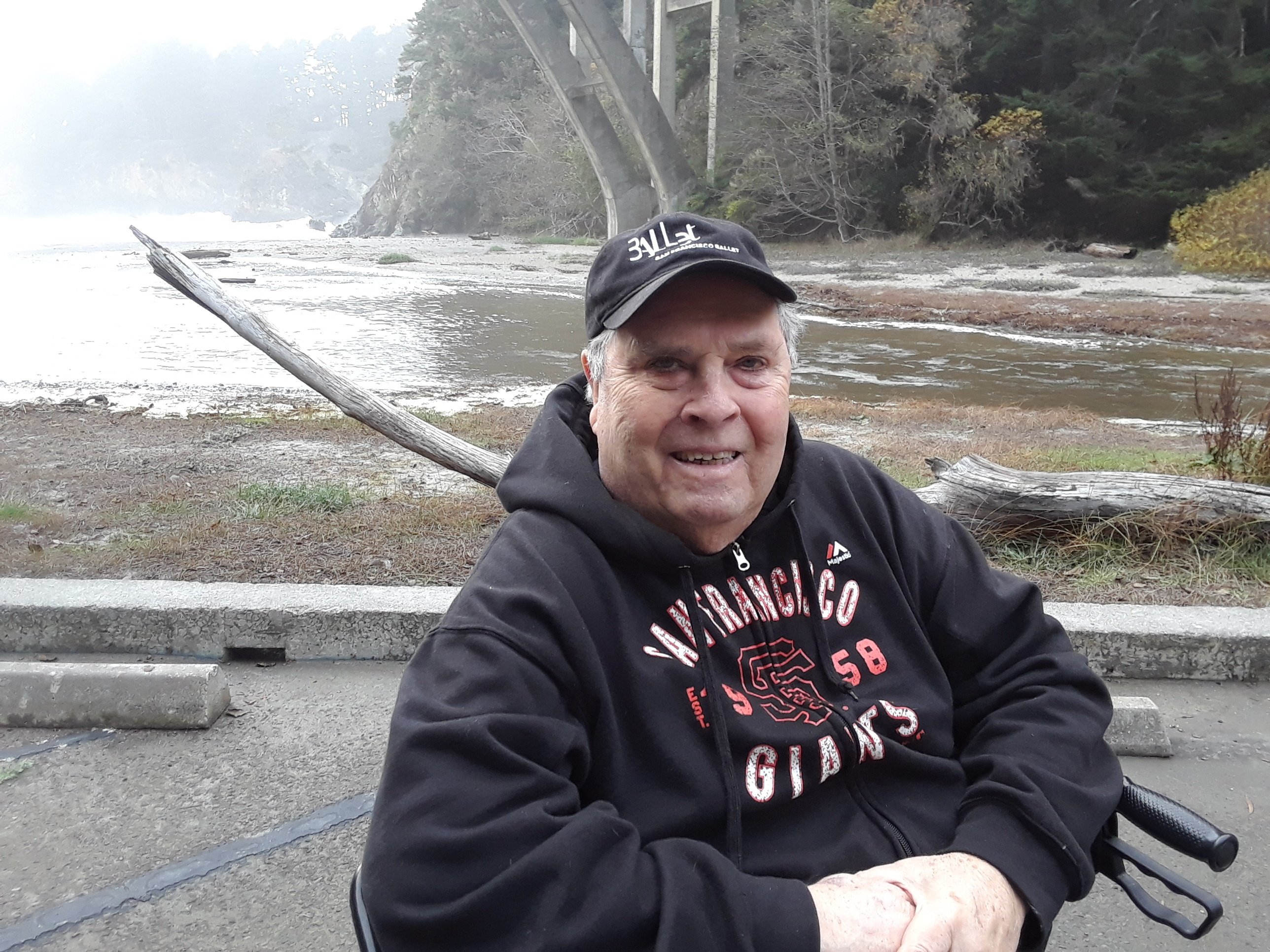
what are my other interest, I love the 49ners I love to read, I love also with a great deal of passion Ballet, my wife and I have season tickets to San Francisco Ballet. Since walking is a problem I go to a therapy pool and enjoy walking and dancing in the water, which is about 90 degrees. I love history, I love ships and the sea. Besides Pacifica, I love the San Mateo, Mendocino, and Sonoma Coast. Yosemite and oh can not forget Napa valley.

Politically I considered myself a humanist, I believe in respect for all life and I value life over money. I am environmentalist and believe we should do what we can to keep our imprint on this world as small as possible. The earth is in itself a living thing, it will change naturally, mankind is like an unwanted rash that has scarred the world if we don’t minimize our presence, the earth will evolve in such a way that our presence will no longer be. I support indigenous people’s rights, equality, and racial justice. I also am an outspoken feminist.  

Well, Shirley, I hope I answer your question if I forgot anything just let me know but I can see on the clock its 5:18 am I should be in bed. I hope you have a great day and again thank you for this honor.

…………

As we can see by his words, Guildford is a man of great compassion and a real asset to the DWW community, and his deep love for humanity and compassion for one little immigrant lady is poignantly expressed in the following poem.

by: Guildford Windley

.A poem for Maria
_____________________________________
A child lost in a world that does not care
A world of greed, hate, and deceit wrap up in phony Christianity
She is one but there are others
Both to these shores in hopes of life-saving measures
The medical establishment brought her here, legally when we had a government that care
She has a rare disease; we a new treatment
A test patient she would become
Her cost is paid for no federal funds were used
We have to learn a lot, giving new hope to those who have this problem
This young child is now a woman she still needs medical attention
She has grown and is highly educated never commit a crime
But she is Guatemalan; she is not the right kind
So she must go even though she will die
But our government could careless
To us, Guatemala is a place to rape them of their natural wealth
To Trump, it is for his base drive all people who are not white out of this place
But what of us when do we say an enough is enough
Please take a stand, a far immigration plan do we demand.
Treat people with dignity and respect
Where is our humanity where is our heart
It is not the child that is lost
It is a country who once should upon others
A country that though not perfect tries
Not now, we have lost our way
A cry in the woods, a country without a soul
We will reap what we have sowed!
Guildford H Windley
August 30, 2019
Dedicated to a beautiful powerful woman Maria Isabel Bueso

………….

Thank you Guildford for sharing your beautful thoughts and life with us. I am looking forward to seeing more of your poetry on dailywisdomwords,com and to interviewing more DWW members and Twitter poets on our soon coming YouTube channel.

Joy Harjo: Modern Edition of the American Indian Oral Tradition

Joy Harjo: Modern Edition of the American Indian Oral Tradition

At the beginning of the the 20th century living conditions for Native Americans were so bad life came down to just a day to day struggle for survival. But as conditions began to gradually improve in the 1960’s, so did the quality of public education education for Native American improve, especially in the command of the English language. And what ensued after these improvements was an explosion in English language literary and a Renaissance in the literary arts and a whole cadre of great Native American writers, novelists, and poets, In fact it was Native American poetess Joy Harjo who was the darling of the poetry establishment during this era and would eventually be name Poet Laureate of the United states of America, presently in 2019.

Born on May 9, 1951 in Tulsa , Oklahoma, Harjo has a mixed ancestry of Cherokee, Muscogee Creek, French and Irish and attended the Indian School of the arts after gradation from high school to nurture her creativity and to express herself in her paintings, She went on to attend the University of New Mexico as a premed student but would eventually switch her major to creative writing in order to write poetry.

Harjo is not merely a print poet, however, she is also a performing poet who has carried on the oral tradition by public storytelling, and singing, and by performing her work using voice inflections to hold the attention of her audience, but she has also written many books including An American Sunrise, Crazy Brave, and How We Became Human, and she was named Chancellor of the Academy of American Poets.

As a performing poet, sound is of the utmost importance Harjo, with image being of close secondary importance to the poet, and her adeptness in both aspects of a poem are aptly demonstrated in her famous poem about Native American women entitled She Had Some Horses.

She Had Some Horses

BY JOY HARJO

I. She Had Some Horses

She had some horses.

She had horses who were bodies of sand.

She had horses who were maps drawn of blood.

She had horses who were skins of ocean water.

She had horses who were the blue air of sky.

She had horses who were fur and teeth.

She had horses who were clay and would break.

She had horses who were splintered red cliff.

She had some horses.

She had horses with eyes of trains.

She had horses with full, brown thighs.

She had horses who laughed too much.

She had horses who threw rocks at glass houses.

She had horses who licked razor blades.

She had some horses.

She had horses who danced in their mothers’ arms.

She had horses who thought they were the sun and their

bodies shone and burned like stars.

She had horses who waltzed nightly on the moon.

She had horses who were much too shy, and kept quiet

in stalls of their own making.

She had some horses.

She had horses who liked Creek Stomp Dance songs.

She had horses who cried in their beer.

She had horses who spit at male queens who made

them afraid of themselves.

She had horses who said they weren’t afraid.

She had horses who lied.

She had horses who told the truth, who were stripped

bare of their tongues.

She had some horses.

She had horses who called themselves, “horse.”

She had horses who called themselves, “spirit,” and kept

their voices secret and to themselves.

She had horses who had no names.

She had horses who had books of names.

She had some horses.

She had horses who whispered in the dark, who were afraid to speak.

She had horses who screamed out of fear of the silence, who

carried knives to protect themselves from ghosts.

She had horses who waited for destruction.

She had horses who waited for resurrection.

She had some horses.

She had horses who got down on their knees for any saviour.

She had horses who thought their high price had saved them.

She had horses who tried to save her, who climbed in her

bed at night and prayed as they raped her.

She had some horses.

She had some horses she loved.

She had some horses she hated.

These were the same horses.

The horse here is being used as a symbol of the different aspects of a Native American woman’s character and illustrates the enigma of the different kinds of people she can be, Some are more spirit than body, as expressed in the first stanza, some were afraid of themselves and some were fearless as in the second stanza, while others were religiously seeking salvation and expecting resurrection while still others were only fit for destruction. But however many aspects there are of this woman, or how she feels about herself (love or hate) she is all one whole person who fits no-one’s stereotype of what a native American woman should be , or women in general. Personally. this reader thinks it’s appropriate that Harjo used the image of a horse to represent people since horses are so necessary to every day life, like the women themselves for these indigenous peoples, and are the international symbol of strength and beauty, making women in all their aspects to be strong and beautiful.

The Greek Greats: The Austerity Songs

The Greek Greats: The Austerity Songs

It seems that good poetry always comes on the heels of deep suffering and today’s Greek poets are no different. And my, how the Greeks have suffered in recent decades since the 20th century, with wars, political turmoil, deep national economic deprivation and natural disasters such as the massive wildfires that claimed many lives in recent decades,

Now after suffering under a right wing dictatorship sympathetic to to the Neo-Nazis in the 60’s and the 70’s and a Turkish war, the Greek people are teeter-tottering under such a massive national dept that the new, more liberal government, along with the big banks, have had to slash spending to the bare bones by drastically cutting government services, pensions and jobs, calling this official government policy Austerity Measures, and what is currently emerging in today’s Greece is a giant collective groan being emitted by a glut of contemporary Greek poets called austerity poets, and an important book in the Greek language, also translated into English, entitled Austerity Measures,

And with the Greek people being just as poetic and soulful as their ancestors, these austerity poets are everywhere. They are publishing in books, magazines, the internet and even as graffiti on walls in public spaces: and then there are the performing arts poets that are reciting their poems and singing their songs in the city square and theaters like the story tellers and poets of old. And while much of this contemporary literary art touches the reader’s heart with Greek despair, disillusionment and a depth of anger and fury describing the national landscape, some poets like #Dailywisdomwords own Greek poet, Alexis Karpouzos, who write softly spiritual verses about nature that elevate the reader above the country’s economic and political fray.

In this first poem Poetess Ebtychia Panayiotou expresses her disillusionment in one short but sweeping verse:

I woke at sunrise to change

the window, warped from looking

across, slicing my view.

I open the shutters, wild

from the wind and misfortune,

In this exceedingly short, almost haiku-like poem she describes herself as awakening fully expecting to see a new day full of changes, but actually experiences having her view being spliced by reality and herself becoming “warped by looking across” at what actually transpires in Greece and she’s “made wild by the winds and misfortune.” Outside conditions for her have not changed for the better; it was outside conditions that actually changed her on the inside. But Poet Elena Penga writes of her nation’s collective despair and likens it to her neighbor’s barren cheery trees:

The cheery trees in the neighbor’s yard haven’t had fruit

for years. Four men enter the neighbor’s yard carrying sticks. They enter the

neighbor’s yard along with the rain, They’ve come to

discipline the trees and chop them down if they don’t

blossom. I watch the men hit the trees. I watch the rain

hit the men.

Perhaps she is saying here that the trees is the unproductive government that may have to be chopped down in a new revolution by the “men carrying sticks”. But online poet Jazra Khaleed expresses his absolute political rage and the inwardly ugly feelings that post-modern life has kindled in this present time by writing:

The leopards are caged like KFC hens. And the poets? The poets are quiet again. Fuck off, flower poets.”

This poet rejects the traditional Greek ideals of truth and the beauty of man and the natural world and deviates sharply from the poetic forms, myths and the philosophy of his ancestors by thinking that a poet’s only job is to call out the wrong doings of modern man, and is, in a sense much like an old testament prophet calling out the wrongs of the government and the people,

But DWW’s own poet Alexis Karpouzos is one poet who still loves nature and is a bit of a throwback to Plato’s meta-physical world when he wrote:

I Love a Flower

I love a flower.

I stretch my hand

and touch his soft leaves

and it sends me a sweet smell.

It’s tacit love,

in a sense of wonder

we found in each other

secret signals from another life

that bring poetry to my heart.

He also asks the universe a meta-physical question when he wrote:

who am I or am I not?

The universe responded immediately:

‘you asked me the same thing billions of years ago.

And then and now I answer:

You’re the smile of no birth and no death,

The great promise.

Karpouzos thus writes beyond the physical world of his compatriots as he touches the secret heart of another life and asks as questions of the universe,

This is the conclusion of my series on the Greek poets, actors and story tellers. They brought the Western world great art and literature, and was the cradle country of occidental logic and science, and they are still on an Odyssey to overcome insurmountable obstacles like their heroes of olden times, but unfortunately what they lack today is a hero to save them.

Simon Armitage: The Queen’s Choice

Simon Armitage: The Queen’s Choice

Simon Armitage, born on May 26, 1963 in Yorkshire , England is the wise poet of the present who was chosen by Queen Elizabeth to replace the famed poetess Dame Carol Ann Duffy as Great Britain’s current Poet Laureate of the United Kingdom.

A poet laureate is a person who is selected by a head of state to write official poems to commemorate special patriotic occasions of the state and to mark important historical happenings. It is a paid position and Armitage is slated to serve a term of ten years,

The tradition of choosing a special poet to represent the country of Great Britain began when King James I in 1616 granted a pension to Ben Jonson, an important writer of the day, But it was John Dyden who was chosen to be the first official poet laureate of England by Charles II in 1668.

Armitage wrote his first poem in grammar school but after graduating from high school he went on to study geography in college and then went on to earn a Master’s degree in social work at Vistoria college and obtained a position as a probation officer which gave him much practical experience in the ways of human nature and real life problems. It was during his work as a probation officer that he began to pursue the art of writing poetry earnestly and his first volume of poetry entitled Zoom was accepted favorably by the critics. And Armitage is known for his creative use plain ordinary language that is “accessible” to the readers. And one of the first poems he was commissioned to write was a poem to commemorate 9/11 entitled“Out of the Blue” which is pretty much a plain realistic snapshot of one man’s lazst hopeless minute in life as he jumps from a window in the burning building.

You have picked me out.
Through a distant shot of a building burning
you have noticed now
that a white cotton shirt is twirling, turning.

In fact I am waving, waving.
Small in the clouds, but waving, waving.
Does anyone see
a soul worth saving?

So when will you come?
Do you think you are watching, watching
a man shaking crumbs
or pegging out washing?

I am trying and trying.
The heat behind me is bullying, driving,
but the white of surrender is not yet flying.
I am not at the point of leaving, diving.

A bird goes by.
The depth is appalling. Appalling
that others like me
should be wind-milling, wheeling, spiralling, falling.

Are your eyes believing,
believing
that here in the gills
I am still breathing.

But tiring, tiring.
Sirens below are wailing, firing.
My arm is numb and my nerves are sagging.
Do you see me, my love. I am failing, flagging

The victim here first addresses the witnesses of the terrible thing is unfolding here to please notice him struggling to survive as hope for rescue flickers a little in his heart when he hears the blaring of the on coming sirens of the ambulances, But as he feels the heat of the blazing building he comes to realize that he must jump and addresses someone special to him as he falls, perhaps his wife, to see and also accept his death,

Armitage was also commissioned to write in order to commemorate the important historical events of VE day and the rise of the Khmer Rouge. He is also a playwright and a novelist. He has a most important job.

Forrest Gander: The 2019 Pulitzer Prize Winner for Poetry


Forrest Gander is the renown award-winning poet and translator who won this current year’s Pulitzer prize for his book Be With. Be with is a collection of poems dealing with the sorrows of loss and bereavement. In his poem “Ruined Tunnel” he writes about a group of trapped miners who are fighting for their lives in the seemingly endless moment of a mine collapse. And Gander adeptly handles how such a moment can be perceived as a forever moment with his expert use of the word “aorist”, an ongoing past tense such as found in the Spanish language. And like his book this poem broaches the subject of bereavement as the minors dread leaving two people behind.

Ruined Tunnel

One of them             drops radio into hardhat

                               and spits, Damn it,

                               boys, we won’t need this one.

But hell, they had already drilled

the charge. In the dynamite’s

wake, boulders turn to snow.

Men walk through the trees.

            It’s cool now in here.

Quiet enough

to hear tracks rust;

the Monte Ne line that never whistled through

and the summering passengers

unstartled by sudden dark,

the temperature drop.

Stones jut out,

gargoyles scabbed with lichen.

The steamy eye

of an afternoon

watches us from either end.

            We are waylaid by a spell.

A stone

slithers off

or I imagine this.

In the pitch I feel

the others when they breathe.

We are unborn. One

of our silhouettes speaks,

            There’s a camera in the car.

Bats opening like orchids.

The absence of one of us, unimaginable—

our present so intense

its tense is aorist.

Each of us afraid to leave

two men he loves behind.

Gander writes his poetry in a modern lyrical style. A lyrical poem is a highly emotional poem with a musical rhythm that can be sung. A lyre is an ancient Greek stringed musical instrument and is the root word of lyrical. Lyrical poems are often romantic in nature and expressing such strong emotion as love or grief.

Born in 1956 in the Mojave desert town of Barstow, California, his family subsequently moved to the state of Virginia where he grew up and would eventually attend the college of William and Mary where he majored in geology and English Literature. Thus, many of his poems include references to the environment and ecology. Currently, he is a professor of English at Brown University in Providence, Rhode Island and is the Chancellor of the Academy of American Poets.

A Pulitzer Prize is an American top prize for excellence in journalism, literature, poetry, and music, and the winners are awarded $15,000 dollars with the top journalist being awarded a gold medal. The Pulitzer Prize was instituted by Joseph Pulitzer, an immigrant who made his fortune as a newspaper publisher,

Bob Dylan: The Conscience of a Counter-Culture

Bob Dylan: The Conscience of a Counter-Culture

He moved a generation to action with these heart-probing lyrics in which he questions the purpose of racism and war:

Blowin in the Wind

How many roads must a man walk down

Before you call him a man.

How many seas must a white dove sail

Before he sleeps in the sand?

Yes,’n’ how many times must the cannon balls fly

Before they’re forever banned?

The answer my friend is blowin’ in the wind

The answer is blowin’ in the wind.

Yes, ‘n’ how many years can a mountain exist

Before it’s washed to the sea?

Yes, ‘n’ how many years can some people exist

Before they’re allowed to be free?

Yes, ‘n’ how many times can a man turn his head

And pretend that he just doesn’t see?

The answer, my friend is blowin’ in the wind

The answer is blowin’ in the wind.

This song and these questions became the anthem of America’s youth for nearly two decades and those words should still haunt us today since wars and racism have not yet ceased.

Thus, was lyricist Bob Dylan was the voice of a whole generation of America’s youth in the counter-culture. The counter-culture of the ’60s was a time of major political and cultural change which was sparked by the Civil Rights Movement and the escalation of the very unpopular Vietnam war and commenced with the assassination of John F. Kennedy. It was a time when, much like the prohibition days of The Roaring Twenties when alcohol was illegal, people questioned authority and it came apropos for people to break the law against illegal substances and to question the traditional sexual mores of the day. It was a time of “drugs, sex and rock, and roll” also known as the “New Morality.” And Dylan was a major spokesperson for this new anti-establishment and anti-war movement that changed the entire Western world and ushered in a “New Age” beginning with his first hit “The Times they are a Changin”.The songwriter here warns the politicians and the older generation to change with the times or risk being left behind and losing control of their children.

Come senators, congressman

Please heed the call

Don’t stand in the doorway

Don’t block the hall

For he that gets hurt

Will be he who has stalled…”

Come mothers come fathers

Throughout the land

And don’t criticize

What you don’t understand

Your sons and your daughters

Are beyond your command…

For the times they are a changin”.

Dylan was born on May 14, 1941, in Duluth, Minnesota as Robert Allen Zimmerman but later changed his name to Dylan, some say as a tribute to poet Dylan Thomas, however, others dispute that claim, His inspiration was his musical idol, Woody Guthrie,, but he traveled to New York City where he performed folk-rock music on the coffeehouse circuit in Greenwich Village using only a harmonica, a tambourine, and a guitar and was highly influenced by the folk music artists of the day such as Peter, Paul, and Mary.

Since his debut in the early sixties, Dylan has won many music awards and most recently he has won the Nobel Prize for Literature, a great honor for the whole nation of the United States of America, but unfortunately he was unable to travel to Sweden in order to claim it due to his now failing health.

Dylan is by and large one of America’s most important poets still alive today.

.

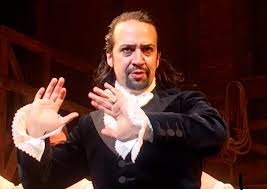
Lin-Manuel Miranda: The Man Who Elevated Rap

Lin-Manuel Miranda: The Man Who Elevated Rap

Rap music, it seems that one either loves it or hates it, And I think that one is more apt to love it if you’re still in your youth. But Lin-Manual Miranda, a Tony award-winning lyricist and actor, elevated this fairly new genre to the realm of legitimate when he wrote the first Rap/ hip-hop opera for Broadway, Hamilton.

There has been a certain amount of controversy in recent years whether or not Rap is real poetry, but if it is not poetry it is a close cousin of poetry because it shares many of the characteristics of poetry such as rhyme, rhythmic speech, and the literary devices of assonance and alliteration. However, there is one minor difference between the two which is the characteristic accompaniment of a soundtrack making rap a genre which is meant to only be heard, whereas poetry is meant to be both heard and read.

Rap like poetry has its roots deeply embedded in history. Rap originated in the storytelling of West Africa’s village elders known as Griots, the men who disseminated the village oral traditions, genealogies and the news of the day through their songs and stories. Then the African American slaves carried on this tradition by singing songs in order to cope with their work and the brutality of slavery. But the two main modern influences on Rap were soul singer James Brown with his between-song interactions with the audience and the clever little rhythmic poems of Muhammad Ali. But modern Rap as we know it originated in Bronx New York where DJ Kool Herc and his sisters hosted after school parties during which Herc discovered that he could keep the party going through “looping” the songs and speaking in the mic. Thus, Rap was considered a street genre until Lin-Manuel Miranda elevated this new form of poetry/music to a legitimate art form through his play.

How does a bastard, orphan, son of a whore and a
Scotsman, dropped in the middle of a forgotten
Spot in the Caribbean by Providence, impoverished, in squalor
Grow up to be a hero and a scholar?

The ten-dollar Founding Father without a father
Got a lot farther by workin’ a lot harder
By bein’ a lot smarter
By bein’ a self-starter
By fourteen, they placed him in charge of a trading charter

Here the writer relies heavily on a free verse type rhythm and a rhyme scheme of a,a in the two last lines of the first verse and b,b,b in the last three lines of the next verse and repetition in the same verse, and his skill in alliteration is self evident with the repetition of several hard consonant sounds throughout the piece aptly demonstrating his skill in poetic literary devices.

Miranda is a Puerto Rican American who himself grew up poor. But he got his big break when he was commissioned to write the lyrics for In the Heights for which he won a Tony award. Today he is also the winner of both the Emmy Grammy awards

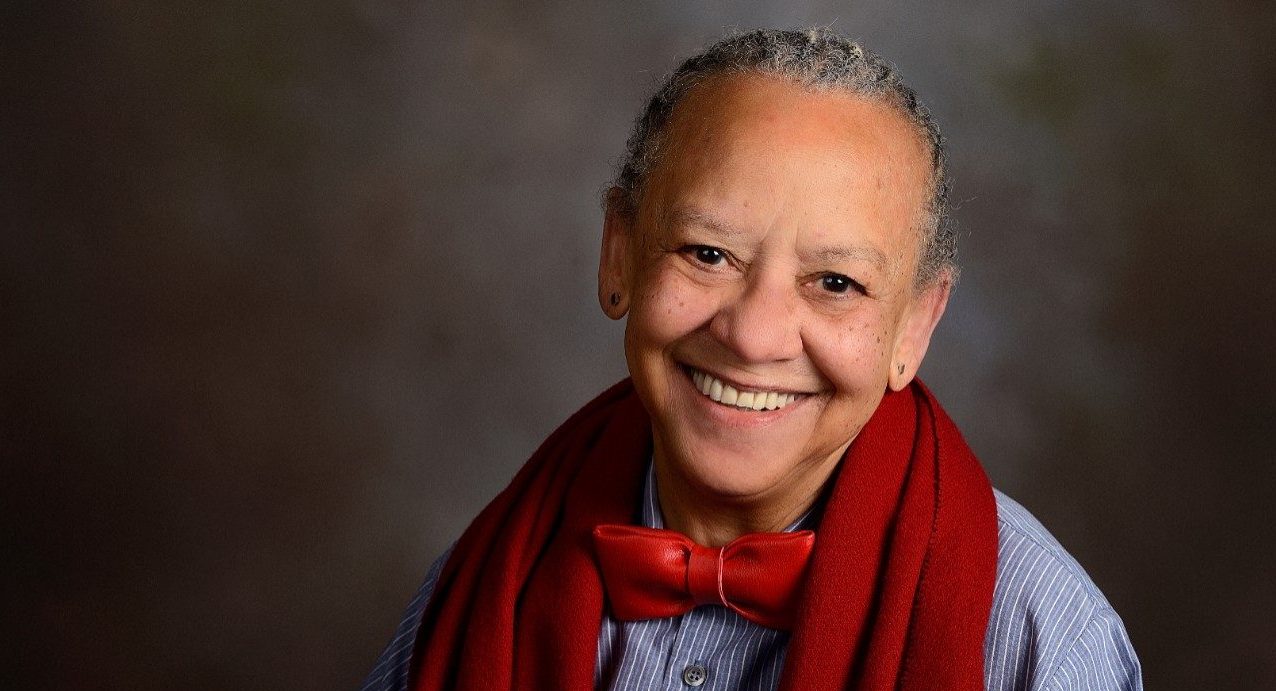
Wise Poets of the Present: Nikki Giovanni

by: Shirley Satterfield

Nikki Giovanni: The Voice of Triumph in the Aftermath of a Mass Shooting

On April 16, 2007 there was an unusual sound ringing out at Ambler Johnson Hall and then again at Norris Hall on the campus of Virginia Tech University, a school located in the peaceful, semi-rural town of Blacksburg, Virginia. It was the terrifying sound of gunfire which had left 32 students and professors dead at the hands of troubled English student Seung Hui Cho of South Korea, who then, finally, took his own life.
This was one of the largest mass shootings that was ever perpetrated in the US, but out of this deeply sorrowful event and the the utter chaos of it all, as the gun smoke began to clear, came the lone poetic voice of English Professor Nikki Giovanni who declared in a poem that she had publicly delivered in a sweeping speech on that same day asserting that the campus community would ultimately triumph over and prevail over the evil violence of the day and find the strength to move on in the aftermath of this tragedy to do the same great thing that they had always done as a campus family to make the world a better place.

We are Virginia Tech.
We are sad today and we will be sad for quite awhile.
We are not moving on; we are embracing our mourning.
We are Virginia Tech.
We are strong enough to stand tall tearlessly;
We are brave enough to bend to cry
And sad enough to know we must laugh again.
We are Virginia Tech.
We do not understand this tragedy. We know we did nothing to deserve it, but neither does the child in Africa dying of AIDS; neither do the invisible children walking the night away to avoid being captured by a rogue army; neither does the baby elephant watching his community be devastated for ivory; neither does the Mexican child looking for fresh water; neither does a Appalachian infant killed in the middle of the night in his crib in the home his father built with his own hands being run over by a boulder because the land was destabilized. No one deserves a tragedy.
We are Virginia Tech.
The Hokie Nation embraces our own and reaches out with open heart and hand to those who offer their hearts and minds. We are strong and brave and innocent and unafraid. We are better than we think, and not quite what we want to be. We are alive to the imagination and the possibility we will continue to invent the future through our blood and tears, through all this sadness. We are the Hokies.
We will prevail!
We will prevail!
We will prevail!

This poem, spoken in a speech to Virginia Tech’s “Hokie Nation” in a combination of free verse and prose poetry form, while making expert use of the technique of repetition, Giovanni reminds us all that although we cannot fathom the “whys” of violence and all the sufferings that are universal to innocent children and all nature and mankind that we will go on to survive all these bad things and even flourish because we must for the greater good.
Born in deep south Tennessee in 1943, Nikki Giovanni herself was no stranger to a violent era since she flourished as a poet during the turbulence of the Civil Rights Movement in the USA during the 1960s. She became an award winning poet who was recognized by the NAACP for her many literary accomplishments and her support of the Black Arts Movement and was also honored with the Book Award for her achievements in fine literature and has taught at several universities including Virginia Tech.