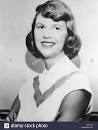
Sylvia Plath: A Study in Hopelessness
Sylvia Plath: A Study in Terminal Hopelessness
No wonder she was suicidal. On October 27, 1932 in Boston, Massachusetts Sylvia Plath was a born into a dark family situation in which her immigrant father was a former Nazi, the very definition of death and darkness, and Plath tasted the harsh sting of abandonment when her father died of diabetes complications when she was only at the tender age of eight. Also Plath herself was born with a strong biological tendency for severe depression and was finally diagnosed as an adult to be suffering from bipolar disorder which was probably triggered by the untimely death of her father,
Plath began to exhibit self destructive behaviors as a teenager when she cut her legs in order to test her own fears of death and suicide, thus she also suffered with suicidal tendencies for nearly a lifetime in addition to clinical depression and bipolar disorder. Then she went on to attempt suicide two more times as a young woman by taking an overdose of pills, once in her mother’s basement and once under the crawlspace under the family home and was finally treated as an inpatient for mental illness. She then unfortunately committed her completed suicide on February 11, 1963 at the age of 30 when she was the divorced mother of two children.
As a student she performed brilliantly, and her first poem was published at the age of eight and went on to sell her first poem to the Christian Science Monitor while in high school and went on to sell her first short story to Seventeen Magazine. She then graduated to attend Smith College where she won the Fulbright fellowship to attend Newnham College in Cambridge England. There she met and married her husband, Poet Ted Hughes, they later divorced over his alleged infidelity.
Plath wrote post-modern confessional poetry expressing her own strong emotions about her personal experiences, instead of masking herself through the voice of a third person character or a narrator, and confessional poetry is still a popular form of poetry of today. Plath was popular, yet she was also controversial because of the dark and violent imagery that she used. In her famous poem Daddy Daddy she angerly dismisses her father out of her life as if she were one his Jewish victims.
Sylvia Plath is so often portrayed as such a tragic figure. I imagine people shaking their heads and saying “What a pity”. Wherever her spirit is today, I hope that not only does she realize the value of her works, but I hope she can feel true joy just like we do when someone says “I really like what you wrote”.
Amen. I hope she sings with angels now,
Astonished I saw my
mind pool beside these
ghosts you left behind
thinking they would do.
But they find me
remembering days we
amused ourselves
laughing at our word plays.
I need to call what remains
scattered in my life &
hope your cherished words
find me again
#dailywisdomwords
Thank you for your beautiful poem concerning the tragic life of Sylvia Plath. She was the most complicated poet to write about. But I think we can all relate on some deep level with her psychic pain, without I hope, to losing our own hope for a better future. I pray often for the entire DWW community.
Thank you so much, Shirley.
this is just so lovely
Thank you so much, Laurel.