


The Paper

by: Shirley Satterfield

.The Paper

The scholar and the printer
Work to put the Paper out;
One strains every fiber in his brain
While the other his sinewy arms maintain
To make the Paper shout
Good News! Good News!
This Paper you peruse
Says Jesus died and rose again
Our guilty stains to lose.

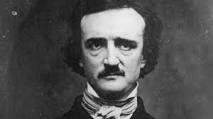
Edgar Allen Poe: The Spooky Poet

by: Shirley Satterfield

Edgar Allen Poe, born in January 1849, liked to weave tales of mystery and macabre. And he often delved into the inner workings of a sick man’s mind often using rich symbolism to signify his character’s insanity in works such as the Fall of the House of Usher in which a grand old house falls one wall, one brick at a time as the master of the house himself goes insane. He also wrote such gut-grabbing stories as Murders in the Rue Morgue, a real murder mystery, so Poe is credited as being both the father of the detective story and the short story. The Tell-Tale Heart is another detective story in which the perpetrator of a murder thinks in his mind that he hears the heart of his victim beating under the floorboards of his house where he is buried as Poe’s character is being questioned a homicide detective, so as a result of his guilt he confesses his crime to the police.
Poe was also quite a poet and wrote his masterpiece The Raven about the loss of one of his two ladies great lady loves, his dearly departed 14-year-old child bride, Virginia Clemm Poe. And although the poem gives the reader a ghostly feel with its incessant rapping and tapping of the raven on the window pane and the nightly shadows dancing in the room and the dying embers in the fireplace, the poem itself was inspired by an actual bird, the beloved pet that Charles Dickens kept in his barn and enjoyed. But on so many levels it’s mostly about the memories of the wife, who he had so tragically lost to tuberculosis, haunting him with the rapping, tapping in his mind. The Raven is a really long poem so for the purposes of this blog, I am only going to quote a few key verses here.

The Raven

Once upon a midnight dreary, while I pondered,
weak and weary,
Over many a quaint and curious volume of
forgotten lore-
While I nodded nearly napping, suddenly
there came a tapping,
As of some one gently rapping, tapping at my chamber door-
“Tis some visitor,” I muttered, tapping at my
chamber door-
Only this and nothing more.

Ah, distinctly I remember it was in bleak
December;
And each dying ember wrought its ghost
upon the floor.
Eagerly I wished the morrow-vainly I had
sought to borrow
From my books surcease of sorrow-sorrow
for the lost Lenore-
For the rare and radiant maiden whom the angels
name Lenore-
Nameless here for evermore.

And the silken, sad uncertain rustling of each
purple curtain
Thrilled me-filled me with fantastic terrors
never felt before;
So that now, to still the beating of my heart, I
stood repeating
“Tis some visitor entreating entrance at my
chamber door-
Some late visitor entreating entrance at my
chamber door-
This it is and nothing more.

Poe was a man well acquainted with loss, death, and sorrow. Both his parents were dead by the time he was three years old, leaving himself and his two siblings destitute and orphaned. So he was taken in as a foster child by a pair of distant relatives and raised in Richmond Virginia. He was a good student throughout the lower grades, however, unfortunately, he failed in college due to a growing gambling addiction and misuse of alcohol. He then suffered a further loss when he was at the age of sixteen when his 15-year-old lover,, Sarah Elmira, married another man because her father vehemently disapproved of Poe and his status as a penniless orphan and with his gambling problems. But later on in life, the couple rekindled the romance flame after the deaths of their respective spouses. But a marriage between the pair was never to be because Poe himself died of mysterious causes at Church Home and Hospitals in Baltimore Maryland before the nuptials, with some saying he died of alcoholism and others theorizing that Poe himself was murdered and thus a character in a real life mystery.
Poe was such a man of shadows and sorrows and inspiration that some doctors today theorize that he may have been bipolar was quite a mad, inspired and genius poet indeed.

James Joyce: Ireland’s Premiere

by: Shirley Satterfield

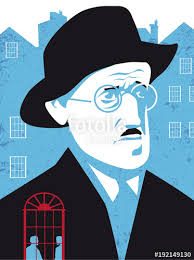
James Joyce: Ireland’s Premiere Artist

James Joyce was born in February of 1882 the Irish city of Dublin and became one of the 20th century’s foremost writers of the Modernist Movement. He was an innovative writer who was the father of a new form of writing called stream of consciousness narrative in which the author describes a stream of random thoughts that pass through a character’s mind as if in real time, but not necessarily in a logical order.
In his autobiography “Portrait of the Artist as a Young Man” Joyce writes about himself in the third person, essentially becoming both the narrator of the book and the main character whom he calls Stephan Dedalus, a young student in a boarding school who was also his alter-ego and he records the childlike thoughts as if thoughts of a young child, almost in baby talk.

Once upon a time and a very good time it was there was a moocow coming
down along the road and this moocow that was down along the road met a
nicens little boy named baby tuckoo… He was baby tuckoo. The moocow
came down the road where Betty Byne lived: she sold lemon platt.

O, the wild rose blossoms
On the little green place
He sang the song that was his song.
O, the green
wothe botheth.
Although his father failed in business and his family of two parents and nine siblings fell into deep poverty and dark squalor, Joyce attended a private Roman Catholic Boarding school and another private Parochial anyway as a child. His family made the necessary financial sacrifices to educate him because of the self-evident intellectual and academic gifts he demonstrated early in life. Joyce became a devout Catholic as a child and even became quite religious for a while, but as he became a young man he became disillusioned by a church corrupted by politics and demanding of unquestioning conformity by its parishioners, a kind of mind-numbing conformity deemed bad for society by Joyce.
Finally Joyce left Ireland altogether to live with his wife and two children as an expatriate in the countries of Italy and Switzerland where unfortunately his ballet dancer daughter Lucia was diagnosed with the mental illness of schizophrenia by famed Swiss psychiatrist Carl Jung, his daughter eventually becoming a permanent resident of an institution, inspiring Joyce to write this poem:

A Flower Given to my Daughter,

Frail the white rose and frail are
Her hands that gave
Whose soul is sere and paler
Than time’s wan wave.

Rosefrail and fair — yet frailest
A wonder wild
In gentle eyes thou veilest,
My blueveined child. 

Notice the profound simplicity of this poem. J oyce describes both the woman that gives the flower and the precious daughter that receives it as being frail, even using the image of a blueveined child to describe his child which conjures up images in this reader of what the “old wives” used to call a blue baby, a child that is dying of a heart defect. Yet she receives the gift “in gentle eyes” denoting compassion. Perhaps both frail women were residents of the same hospital.
James Joyce, a giant of a writer, was probably one of the darkest and most complicated personalities in the literary world, and writing as though he was standing afar-off from his characters and peering down a tunnel of time, and the thing that made him so different was that not only did his writings engage the five senses of sight, sound, smell, taste, and texture, but also Joyce could appeal to the sixth sense of the human intuition.

All These Gifts

by: Shirley Satterfield

Earth is a gift.
Life is a gift.
Art and Nature together are yet another gift.

But all these gifts we so enjoy
Will give way to something better.
Just ask the Lord. Just ask the Lord.
He said so in His Letter.
When life breaks free from pain’s decree
To remove our earthly fetter.

We shall be free. We shall be free.
He sais so in His Letter.

Oh thank God.
He sais so in His Letter.

Wise Poets of the Present: Nikki Giovanni

by: Shirley Satterfield

Nikki Giovanni: The Voice of Triumph in the Aftermath of a Mass Shooting

On April 16, 2007 there was an unusual sound ringing out at Ambler Johnson Hall and then again at Norris Hall on the campus of Virginia Tech University, a school located in the peaceful, semi-rural town of Blacksburg, Virginia. It was the terrifying sound of gunfire which had left 32 students and professors dead at the hands of troubled English student Seung Hui Cho of South Korea, who then, finally, took his own life.
This was one of the largest mass shootings that was ever perpetrated in the US, but out of this deeply sorrowful event and the the utter chaos of it all, as the gun smoke began to clear, came the lone poetic voice of English Professor Nikki Giovanni who declared in a poem that she had publicly delivered in a sweeping speech on that same day asserting that the campus community would ultimately triumph over and prevail over the evil violence of the day and find the strength to move on in the aftermath of this tragedy to do the same great thing that they had always done as a campus family to make the world a better place.

We are Virginia Tech.
We are sad today and we will be sad for quite awhile.
We are not moving on; we are embracing our mourning.
We are Virginia Tech.
We are strong enough to stand tall tearlessly;
We are brave enough to bend to cry
And sad enough to know we must laugh again.
We are Virginia Tech.
We do not understand this tragedy. We know we did nothing to deserve it, but neither does the child in Africa dying of AIDS; neither do the invisible children walking the night away to avoid being captured by a rogue army; neither does the baby elephant watching his community be devastated for ivory; neither does the Mexican child looking for fresh water; neither does a Appalachian infant killed in the middle of the night in his crib in the home his father built with his own hands being run over by a boulder because the land was destabilized. No one deserves a tragedy.
We are Virginia Tech.
The Hokie Nation embraces our own and reaches out with open heart and hand to those who offer their hearts and minds. We are strong and brave and innocent and unafraid. We are better than we think, and not quite what we want to be. We are alive to the imagination and the possibility we will continue to invent the future through our blood and tears, through all this sadness. We are the Hokies.
We will prevail!
We will prevail!
We will prevail!

This poem, spoken in a speech to Virginia Tech’s “Hokie Nation” in a combination of free verse and prose poetry form, while making expert use of the technique of repetition, Giovanni reminds us all that although we cannot fathom the “whys” of violence and all the sufferings that are universal to innocent children and all nature and mankind that we will go on to survive all these bad things and even flourish because we must for the greater good.
Born in deep south Tennessee in 1943, Nikki Giovanni herself was no stranger to a violent era since she flourished as a poet during the turbulence of the Civil Rights Movement in the USA during the 1960s. She became an award winning poet who was recognized by the NAACP for her many literary accomplishments and her support of the Black Arts Movement and was also honored with the Book Award for her achievements in fine literature and has taught at several universities including Virginia Tech.

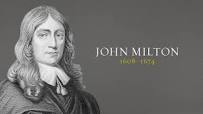
John Milton: The Great English Scholar Poet

by: Shirley Satterfield

John Milton: The Great English Scholar Poet

Born in London in the year of 1608 Milton lived and wrote at a time when England was in political turmoil and religious flux, and to understand Milton you have to understand Oliver Cromwell’s revolution for more personal freedom, his government and his Puritanical religious views, with Milton being the poetical voice and Cromwell’s civil servant of these changing times in the British Isles. In short, Milton himself was no great friend of King Charles I and his age old Monarchy and was, for the most part, ignored in England by the gentry of his time, especially after the death of Cromwell when the King reascended his throne and took back his power.
However, Milton was an adept poet and a man of Letters who wrote in the four languages of English, Latin, Italian and Greek and made his mark on the rest of the world to the point that he is considered to be second only to Shakespeare in his poetic stature by scholars today. And in fact, Shakespeare was greatly admired by Milton and was his seminal inspiration when he called the Bard a “Dear son of memory, great heir of Fame…” in his poem On Shakespeare, meaning that Shakespeare would always be remembered for his great works for all time.
But Milton’s own skill as a poet is self evident in his twin poems on Mirth and Melancholy which describes two opposite moods reflected against each other and two different kinds of people with opposite humors, one a morning person and the other a night person but who share the same dreamy muse, each poem reflected the image of the other in perfect form and rhyme scheme. These are some highlights:

L” Allegro

“To many a youth and many a maid,
Dancing in the checkered shade; 
And young and old come forth to play
On a sunshine holiday,”
– – – 
“Such sights as youthful poets dream
On summer eves by haunted stream.” 
– – – 
“And ever against eating cares;
Lap me in soft Lydian airs,” 

Il Penseroso

“Hide me from the day’s garish eye,”
– – – 
“And let some strange mysterious dream
Wave at his wings in airy stream
Of lively portraiture displayed
Softly on my eyelids laid.”
– – – 
“Dissolve me into ecstasies,
And bring all heaven before mine eyes.” 
Unfortunately Milton lost his eyesight as he aged, but by no means his insight when he wrote his book length masterpiece Paradise Lost about the fall of man in the garden and his eventual redemption by Jesus Christ in Paradise Regained when he dictated his work to his daughter on his deathbed in 1667. Legend has it that this scholarly man lost his eyesight from overmuch reading of the Greek and Latin classics by candlelight at night.

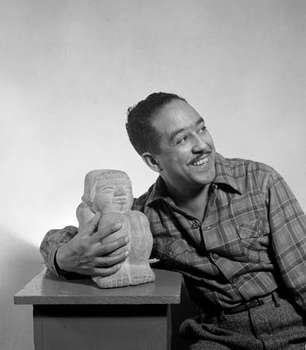
Langston Hughes:The Harlem Voice Prophetic Pain and Hope

by: Shirley Satterfield

Langston Hughes:The Harlem Voice Prophetic Pain and Hope

Born in 1902, Langston Hughes was a great American Negro poet who who flourished as a writer and an author during the Harlem Renaissance Roaring i920′. He was a versatile writer who wrote in many different genres including poetry, plays and novels, but we will only give focus in this article on his poetry.
America, during the 1920’s was essentially a prejudice, segregated, repressive regime which relegated people of color to a no-man’s-land of second class citizenship. The reality was that for at least half the population of America, complete freedoms were being denied and this sparked a political controversy, and a kind of cultural revolution of sorts, in New York City’s vast neighborhood of Black Harlem which was expressed in an explosion of the African American literary and musical arts. During this time Hughes came along who was a brilliant, sensitive man with a great soul and an uncanny vision of what will happen in the future,
It was a dark time in America when Hughes came along to shine a little light on us and the whole world about the humanity of all people regardless of hue or color. He wrote:

The Negro Speaks of Rivers

I’ve known rivers:
I’ve known rivers ancient as the world and older than the
flow of human blood in human veins.

My soul has grown deep like rivers.

I bathed in the Euphrates when dawns were young.
I built my hut near the Congo and it lulled me to sleep.
I looked upon the Nile and raised the pyramids above it.
I heard the singing of the Mississippi when Abe Lincoln
when down to New Orleans, and I’ve seen its muddy
bosom turn all golden in the sunset.
I’ve known river;
Ancient, dusky rivers.

My soul has grown deep like rivers.

This is a work in which Hughes reminds us that the Black Man shares the same blood and the same rivers with all men and that and that He has been here with the whole collective “us” on this planet since the dawn of time itself and are sharing the same Divinely inspired spirit as is in us all regardless of color. Then Hughes waxes prophetic about the future here where he expresses both his pain and his hope in these few verses.
I, Too

I, too, sing America.

I am the darker brother.
They send me to eat in the kitchen
When company comes,
But I laugh,
And eat well,
And grow strong.
Tomorrow,
I’ll be at the table
When company comes.
Nobody will dare
Say to me,
Eat in the kitchen,
Then.

Besides, They’ll see how beautiful I am
And be ashamed–
I, too, am America.

Here he expresses a sort of serene acceptance of the injustice of the present without losing hope for the future, all the while pointing out to America specifically what is wrong here but without disowning or losing hope for the moral advancement of his his beloved America. In short, Langston Hughes, the man whose dreams were so deferred because of the color of his skin, and whose dreams of more freedom and equality for the future had become burdensome to him, became a prophetic voice of the future and set the stage for the Civil Rights Movement, when Martin Luther King took up the gauntlet of this dream that had just exploded into a worldwide movement of brotherly love. Hughes had remarkable foresight in this poem when he wrote:

Harlem

What happens to a dream deferred?

Does it dry up
like a raisin in the sun?
Or fester like a sore–
And then run?
Does it stink like rotten meat?
Or crust over like a syrupy sweet?

Maybe it just sags
like a heavy load.

Or does it explode?

I think this man’s dream just exploded throughout the generations of earth’s people and still explodes in many American hearts today. Lets all take up the gauntlet.

Building Hope

by: Shirley Satterfield

Hi Facebook, Twitter and Linkedin friends. Now while most people my age are preparing to die, I’m preparing to just begin to live and to live and to just keep on living even after I die. Such are the personal thoughts of a baptized believer in Christ.

Sure, we believers have our little disagreements and our private tussles, but we have to keep our eyes on the bigger picture. We believers are building a Kingdom and sometimes we get a little weary in our work-a-day world, but God promised us that if we do not grow weary in well doing and we continue our work until the end, we will reap a just reward in the end. God bless.
Willie Willie

by: Shirley Satterfield

.Willie, Willie
such a paradox of a person.
He’s a real nice guy,
he drives a church van,
cooks dinner for the saints on Sunday
and shares pizza with a neighbor under a shade tree.
But have you met his shadow man?
Have you met the him that sins?
The him that no one sees?
If only he would cozy up to Jesus
and be baptized
God would set this shadow man Scott free.

God would forgive him.
I have forgiven him.
He would then forgive himself,
Dear God
Amen and amen.

Wise Poets from the Past

by: Shirley Satterfield

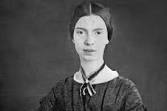
Emily Dickenson: The Secret Poet

Emily Dickinson: The Great American Lady Bard

Emily Dickinson was the mysterious recluse poet who, although her friends and neighbors deemed her to be an exceedingly eccentric spinster as she grew older and older, so when they saw her moving about alone in her garden wearing her customary ghost-like white attire (McMichael pg.8), they missed the real poetic genius blossoming right under their noses, but however eccentric and solitary she seemed to be, she was actually a passionate woman who knew how to love a man. Howbeit the man she to whom she directed her love was a forbidden fruit for her, a married man with a family and a minister of the Gospel of the strictest of Puritan persuasions.
Born May 30, 1830 in Amherst, Massachusetts to a politically prominent family, with her father being a U.S. Congressman, she never traveled much farther from her childhood home than nearby Boston. She attended Amherst Academy as a young woman, the college which was founded by her own devoutly Christian grandfather, who was a man “that ruined himself for the materializing of his apocalyptic vision; the founding of Amherst College” (Bianchi and Hampson pg.v), and thusly she was an educated and talented woman, but she only published as few as eight of her vast collection of poems during her lifetime because in being such a private person, she never really wanted to be published and none that she wrote had titles but were each one given a Roman numeral number by her editors post posthumously (McMichael pg.9), and being so private this shy poet penned these words.

I’m nobody! Who are you?
Are you nobody, too?
Then there’s a pair of us-don’t tell.
They’d banish us, you know.

How dreary to be somebody!
How public like a frog
To tell your name the live long day
To an admiring bog!
Her natural humor which expresses her true sentiments and intellectual wit is self evident in this poem, and so it behooves all writers and poets of every ilk to examine the underlying motives of the “why” they want their words to be immortalized in print. Is it done for the art of it or a purpose greater than self, or is it just to being done to be “public like a frog,”? That is the question that every writer needs to examine.
Her great body of work of at least one thousand poems was not published until her death in 19..) when her sister L discovered them written on little bits paper stashed in Dickinson’s dusty attic among all her other old mementos of her earthly life and this great poet had written of her own inevitable death:
I died for beauty, but was scarce
Adjusted in the tomb
When one who died for truth was lain
In an adjoining room.

He questioned softly why I failed?
For beauty’ I replied.
“And I for truth—the two are one;
We brethren are,” he said.

And so, as kinsmen met
Until the moss had reached our lips,
And covered up our names
She also loved to write about nature and she had such an eye for detail that her own garden provided a whole world of color and inspiration, and her own personal modesty is expressed as she was moved to write:
Forever cherished be the tree,
Whose apple Winter warm,
Enticed to breakfast from the sky
Two Gabriels yestermorn;

They registered Nature’s book
As Robin – Sire and Son,
But angels have that modest way
To screen them from renoun.
She writes here as if nature itself was this lonely, solitary woman’s only best friends and it also seems as though she drew much of her spiritual strength and solace from this natural world just outside her door, although this shy woman herself was a rather otherworldly figure,
But alas, this great American Lady poet who died inside for beauty and although she was a nobody, was elevated by “Truth “ to become one of America’s foremost, famous bards.

1. Anthology of American Literature, Fifth Edition: p.8 and 9, George McMichael.
2. Poems by Emily Dickinson, p.v, edited by Martha Dickenson Bianchi and Alfred Leete Hampson.

Baptism

by: Shirley Satterfield

The Baptism

Stumbling, Trembling, Faltering
as I step down into the cold clean waters of death.
Oh how I fear.
Oh how I dread
the chilly abode of the dead.
But, down I go
as trust grips the likes of me.

Then up I come,
a slave of fear set free
as joy, joy, joy
grips the likes of me.
Now, what’s that I hear
in the background din?????-Its the sounds of angels singing!
So, now I know what I only knew in part;
It is really true-I was truly saved from sin.

The Table of Light

by: Shirley Satterfield

The mood was
Pitch,
The mood was
Dark
in this everyday Box-store hustle,
And there was tension in the air
During this everyday Big-store
Tussle ..

But lo, Deep in the midst of this horrible hurried
Hassle,
in the Backdrop of this Box-store
Night
The Lord had laid,
The Lord had laid
His table full of light
.
There were Bibles, Bibles everywhere
stacked way up into the air
on sale for really cheap.
Sadly though
people just moved on
so the light they did not reap.
They didn’t even give a glance.
They didn’t even think
To give my Lord a second chance
To save them from this Big-Box Hell.

The Bibles didn’t sell.

Peace, Harmony and Things to Come

by: Shirley Satterfield

Dedicated to a very Special Friend

Marilyn went to the School of the Birds
And when she warbles out a note
She keeps my soul afloat.
She has the gift of singing.
What is your gift?
Its Lisa that can cook
And bless the souls at her breakfast nook
She has the gift of Hospitality.
What is your gift?
And its Shirley that can write a book.
That is her gift.
And MJ can really organize
The many things
I highly prize.

What is your gift?

Just look within
Then look to Him

And you’ll find your gift..

But all these gifts that we so enjoy will give way to something better.

Just ask God. Just ask the Lord.

He said so in His letter.

When life breaks free from pain’s decree and death removes our earthly fetter.

We shall be free! We shall be free!

He said so in His Letter.

Mortal Moment

by: Shirley Satterfield

My name is written on a graven stone
In a lonely yard somewhere,
But I’m not about to go
Exactly right in there.

So I’ll be glad when doomsday dawns
And God burns up that mossy plot
With fire and wrath
And things to come
Of which we don’t know what.

Alls I know is that Christ the Lord
Died to save me from that grave And no longer will I serve sin
Or be death’s so willing slave.

feelin Broken

by: Shirley Satterfield

Spitting flys into the wind.
Thats what we so often do
When we let harsh and bitter words
Escape into our immortal sin.
May I, Lord, keep my fly trap shut
And not a Venus flower be
Seeking whom I may devour
By setting those nasty, nasty flies free

Necessary Critics

by: Shirley Satterfield

May God bless
our haters,
Our oh so lovely ego deflaters.
We need them every one.
They keep us grounded to the earth,
Although they are not fun.
Its not about us anyway;
Its all about them.
Our lives must always glorify God
And His precious holy Son.

Recovered

by: Shirley Satterfield

Recovered

I sit here fully recovered
In the accomplishment
He did for me at Calvary
Hanging on a cross
I’m at peace now
As I count my life but dross.
He has purified me by His blood
As peace rolls in like a flood.
I am free at last.
Free at last from the tyranny me.

Sing Africa!

by: Shirley Satterfield

Sing to me, sing to me, Africa.
I sure do need your joyful music today.
And if I had a dollar and if I had a wing.
I’d fly out and find a tiny inn to stay.
Is it in the fates? Is it in the fates?
I’ll be there tomorrow and I won’t even be late.

Morning Dance

by: Shirley Satterfield

Its my everyday dance
That fitness stepper morning dance.
How do I love thee.
How do I love the way you
make my heart prance.

God is coming to judge the
quick and the dead.
But I’d rather be quick than
silent as lead.
So I rise and I prevail
So my little heart will not fail.

Oh how God loves me.
Oh how I now I feel free, free, free
To just live now.
To just be me now.