Morning Fun

by: Shirley Satterfield

I have a plant that’s jumping up to the sky
To spy on the heavenlies as I lift my eyes up to the sun
And feelin’ a poem coming on.
Sitting on the porch is fun, hon.

I see that that the trees don a hint of Fall
While the leaves are dancing and having a ball
Swaying in the breeze while I’m sitting on the porch
And taking my ease. Sitting on the porch is fun, hon.

So I’ll just sit on the porch all day
And listen to the music of the world go by
While I give my housework a hardy GOODBYE,
It’s fun, hon.

William Shakespeare: Part III His Poems

This is the last in my three part series on Shakespeare, but perhaps it should have been my first since Shakespeare started his expansive writing career as a poet before he became a playwright. And in the year of 1593 he published his first long narrative poem of 199 stanzas “Venus and Adonis” a poem about the Goddess of Love who kin the words of Shakespeare “She is Love, she loves and yet is not loved” by the object of her ardent affections the handsome hunter Adonis.

Shakespeare wrote five such lengthy narrative poems in all, all of which were met with critical acclaim by the literary scholars of the day including the story of the “Rape of Lucrece” a story of lust, rape and revenge. Thus Shakespeare was an apt and intense story teller from the beginning.

But where Shakespeare really shines is in his mastery of the sonnet, A sonnet is a highly structured poem of 0nly 14 lines with an ABAB rhyme scheme in the body of the poem in perfect iambic pentameter and ending in a couplet of two lines with a CC rhyme scheme, the last two lines rhyming with each other. This particular form of poetry had it’s beginnings in the country of Italy but was adopted by the poets of England sometime in the middle ages. And although the subject matter was always about a man’s love for a perfect woman, the form had evoled to be about various subjects by Shakespeare’s time. For example in Shakespeare’s famous sonnet number 18 he compares a young man’s beauty to the beauty of summer which, unlike the season of summer, he makes eternal in the classic lines of his ;poem.

Sonnet 18: Shall I compare thee to a summer’s day?
By William Shakespeare
Shall I compare thee to a summer’s day?
Thou art more lovely and more temperate:
Rough winds do shake the darling buds of May,
And summer’s lease hath all too short a date;
Sometime too hot the eye of heaven shines,
And often is his gold complexion dimm’d;
And every fair from fair sometime declines,
By chance or nature’s changing course untrimm’d;
But thy eternal summer shall not fade,
Nor lose possession of that fair thou ow’st;
Nor shall death brag thou wander’st in his shade,
When in eternal lines to time thou grow’st:
So long as men can breathe or eyes can see,
So long lives this, and this gives life to thee.

So Shakespeare, of course, brought this form of poetry to it’s highest level, and this particular poem had that Wow factor for me. No wonder Shakespeare was considered the national poet of England and was dubbed the “Bard of Avon.” He wrote 154 sonnets, 5 book length narrative poems and about 37 plays in all, and he is a must read for English speaking writers of today. He set the bar,

My Affirmation

by: Shirley Satterfield

Bipolar disorder may make me a bit different and perhaps even a bit odd. But I rejoice in my affliction because it is my strength, for my joy is just as rich as my sorrow is deep, and “I can do all things through Christ who strengthens me.” I can succeed and Christ Jesus will give me the final victory over sin and death in my life.

Southern Fried Fun

by: Shirley Satterfield

Drinking, smoking, gambling
And cussing out your hated driver;
The raceway is a den of iniquity.
But it’s fun though.

Cars careening screaming down the track crashing each other loud.
The raceway is a den of iniquity.
But it’s fun though.

French fries sliding down
the booby hatch making me fat.
The raceway is a den of iniquity.
But you just gotta love the track.

For it’s fun though.

My House

by: Shirley Satterfield

There’s something special
Going on in my house,
And it’s called love.
For when God sent me Danny dear,
He sent out a dove.
He rubs my back,
And I make him biscuits.
Commited marriage was
Conceived by a Good God up above us, we are in love

Book Review: 3 Stories of Love

by: Shirley Satterfield

Book Review:
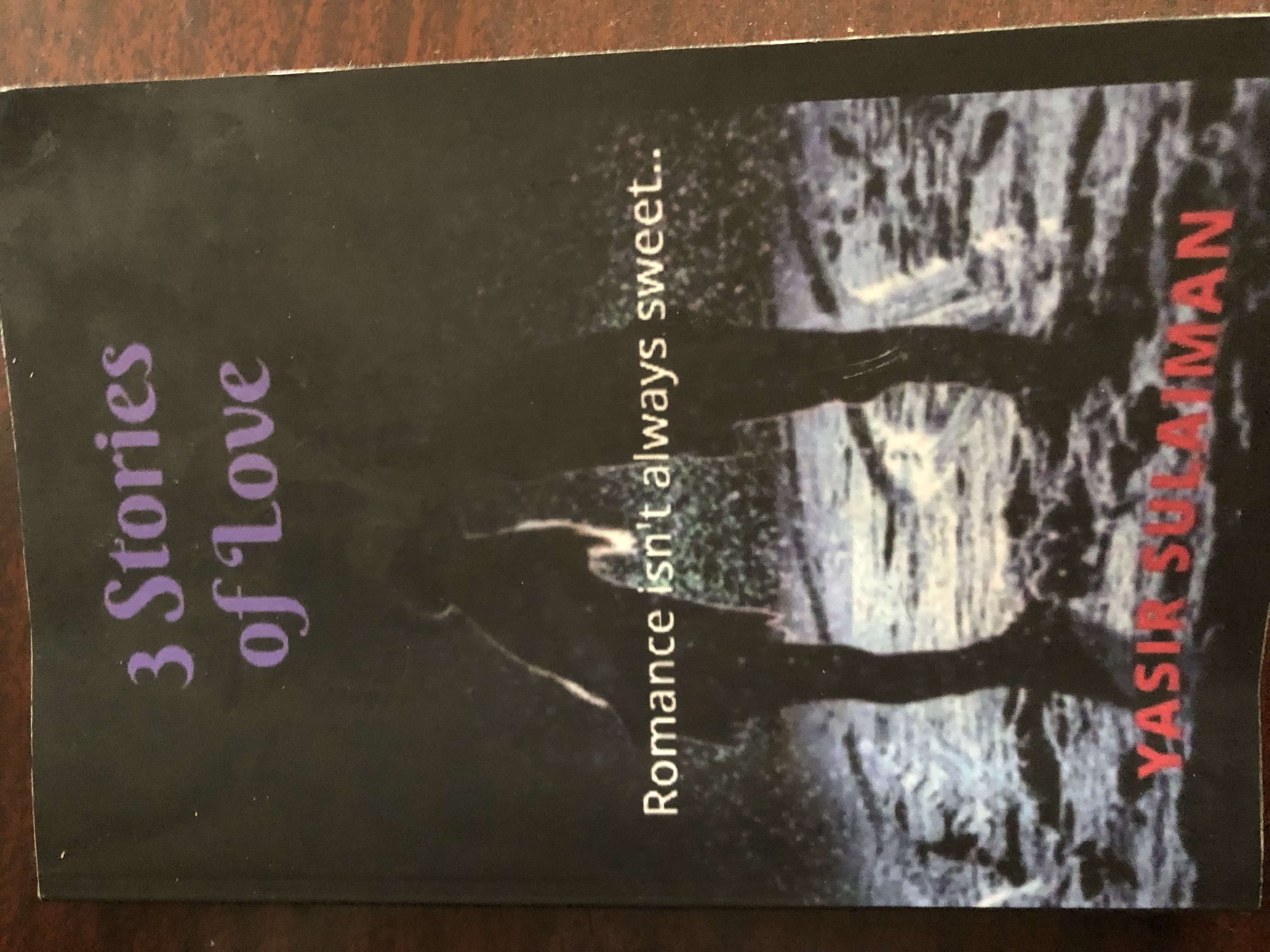
3 Stories of Love by Yasir Sulaiman

Yasir’s book “3 Stories of Love” is one of the best new reads I’ve enjoyed this year. It is full of charming, provocative and lovely romantic poetry and prose.

In the first story “Just Between You and Me” one cocky, sharp tongued Yuvan falls in love with a very independent Dia, but pride went ahead of his eventual downfall, and there is an ironic end to this one. In the second story “Obsession” the beautiful and innocent Koran has a stalker who fitting comes to a bad end.

But it is the third story “Milan and Emily”: that really captured my heart and their pure love’s triumph over disease and mortality,

Yasir is an authentic and exciting new author whose books are a must read

William Shakespeare: Part II His Plays

William Shakespeare Part II: His Plays

William Shakespeare was part owner of the world renown Globe Theater in London and the blockbuster actor and playwright of England’s Elizabethan era. And his language was so beautiful, and he had such an adept command of the English language that he went down in history as a great and is known simply as The Bard today. He wrote about 37 plays in all that crisscrossed all the major genres and forms of play writing. Shakespeare wrote great tragedies such as Hamlet and tragic romantic plays such as Romeo and Juliet, and he pretty much covered the whole gamut of human behavior and motivation by writing about motives such as revenge, envy, and love, and he often portrayed the worst of human condition of insanity since such strong motivations can drive one insane. He also wrote such famous comedies as The Taming of the Shrew and a host of history plays such as Henry IV, a kind of a coming of age story for a party-animal English prince and his drunken sidekick, Falstaff whom he eventually rejects once he becomes a full blown king.

One writing technique that was rather unique to Shakespeare was the “play within the play” which was expertly employed by Shakespeare in the Taming of the Shrew in which the preamble of the play in which a slick nobleman tricks a drunken commoner that he is really royalty in disguise and stages a play for him about the taming of a woman with a wild temper. The major plot or “the play within the play” involves a man by the name of Petruchio and his quest to find a rich wife. And unfortunately for him his lady love, Katharina is an aggressive and ill-tempered woman in her own right so Petruchio employs the clever strategy of verbally abusing the officiating priest at his wedding and the hired help to subdue his new bride. The audiences of the day went wild over the humor in this play, however, the underlying motivation here was a bit more serious, greed. The man married Katharina strictly for her money!

There is some speculation about where Shakespeare got his inspiration from for his numerous plays, but in my own undergraduate studies I stumbled upon a short story written during the earlier middle ages in the Spanish language with a similar plot in which a man abuses animals to subdue his ill tempered bride. So perhaps it was the legendary tales of the era of Lords and Ladies that was the source of much of his seminal inspiration for Shakespeare, but he himself was such a rich and diverse writer that he should indeed be a seminal influence of all of us who write today, and I for one would take the class again today

To Paint the Stars

by: Shirley Satterfield

Can you paint the stars?
I think so, if you let the Spirit flow
You can reach right up and touch the planet, Mars.

Can you paint the stars?
Yes you can when you’ve’ been blessed by God
To be conceived of Man.
You can paint the stars.

Can I paint the stars?
Yes, I can go really, really far
If I let the Spirit flow
God will really let me know
How really, really far
I really get to go

William Shakespeare: Part I, His Life

William Shakespeare: Part I, His Life

Shakespeare is too big of a literary figure so he will be covered in a three-part series about his life his plays and his poetry.

The exact day of his birth is not known, but William Shakespeare was in April 1564 in the little town of Stratford, a community of about 2000 people. Stratford was a farming community where the trade of wool and mutton were king And Shakespeare’s father prospered as a yeoman with a lucrative side-hustle in the illegal, unlicensed trade of wool. Eventually, he was elected to be a city alderman with the responsibility of approving and licensing traveling theater groups to perform in his town, until, of course, he was caught and convicted. And that’s when his family began to decline in its economic fortunes.

Thusly, was Shakespeare introduced to the acting profession early in his life. However, actors were not highly regarded and held in high esteem in the Elizabethan times in which Shakespeare lived as they are today but were counted as being among “the masterless men” who did not have “real jobs” but were chronically unemployed. And there were no actresses in existence in those days since acting was considered beneath woman so it was the younger teenage boys who dressed up in drag and played the female parts.

Not much is known about Shakespeare’s life outside of public records and scholarly conjecture, but according to the records Shakespeare attended grammar school, as was the manner of English boys, and was a good student who learned to translate the Latin classics into English. However, not much is known about his teenage and young adult years, but legend has it that he was joining himself to various traveling acting troops and “paying his dues” so to speak and that he married his wife Anne Hathaway from whom he conceived three children in his lifetime. But eventually he emerged in a popular theater group called Lord Chamberlain’s Men, but eventually, their name was changed to the King’s Men when King James became their patron and an important source of their financial support. They gave their performances at the prestigious Globe Theater in London. Shakespeare was primarily for his company but also supported his company by writing his vast body of plays and poems on the side.

Shakespeare, or The Bard” as he is now known, did have his critics and was denounced by one of his critics as “an upstart cow…that supposes he is able to bombaste out a blanke verse as the best of you…in his own conceit.” In other words, he was being accused of being full of himself,

In his later years, he was part owner of his company but died on April 23, 1616, at the age of 52 after a night out drinking ale with his friends, and it is thought that the cause of his death was a fever that he contracted from someone at the tavern.

Henry David Thoreau: Nature’s Friend

Henry David Thoreau: Nature’s Friend

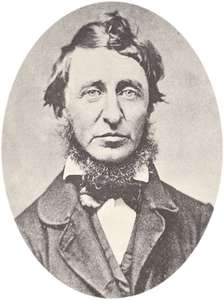
Henry David Thoreau was born July 12, 1817, in Concord, Massachusetts where he spent most of his life and was educated at Harvard University. But he was no lover of town life and the mundane, more trivial things pertaining to man. He was a very deeply spiritual person who had a deep love for and a connection to nature, and he subscribed to Transcendentalist thought. Transcendentalist thought is a philosophy in which he believed that spirit is greater than matter and intuitive thought more insightful than mere reasoning. In short, this man had the mind of a poet, and the story has it that he bristled so much at the status-qua that he insisted on wearing a green jacket to chapel as a young student when the rules of the school called for black.

But no discussion of Thoreau is complete without touching on Thoreau’s close friendship with Ralph Waldo Emerson, one of the foremost writers and transcendentalists of the day. Emerson was a man who staunchly believed in the value of the individual over the group and the importance of the ability of man to live independently and free from having overmuch reliance on others. Thus Emerson became a close mentor to Thoreau and provided the parcel of land where Thoreau built his tiny cabin on Walden Pond to launch his own experiment in independent living by living off the land, connecting with nature, and to write his most famous book, Walden. So there on Walden pond, he lived alone for the span of two years,

Walden is a book about his adventure in the wilderness and is a vivid description of the natural world there throughout the four seasons and embodies the many-core Transcendentalist philosophies such as the importance of living a simple life, with few expenses, as the way to true independence and joy. He was a minimalist whose three most famous words “Simplify!” “Simplify!” “Simplify!” really resonate with my spirit today. Thoreau hated the technology that encroached upon nature especially the railroad and commercial farming, but always believed that nature would ultimately triumph as expressed in the following poem:

The moon now rises to her absolute rule

BY HENRY DAVID THOREAU

The moon now rises to her absolute rule, 

And the husbandman and hunter 

Acknowledge her for their mistress. 

Asters and golden reign in the fields 

And the life everlasting withers not. 

The fields are reaped and shorn of their pride 

But an inward verdure still crowns them; 

The thistle scatters its down on the pool 

And yellow leaves clothe the river— 

And nought disturbs the serious life of men. 

But behind the sheaves and under the sod 

There lurks a ripe fruit which the reapers have not gathered, 

The true harvest of the year—the boreal fruit 

Which it bears forever, 

With fondness annually watering and maturing it. 

But man never severs the stalk 

Which bears this palatable fruit.

He himself lived by hunting and foraging for fruits and vegetables in the wood and growing his own small patch of beans.

Thoreau was not commercially successful in his lifetime selling only 200 copies of his first self published book and his most famous book Walden only sold 2000 copies over the span of his lifetime, and it took 5 years.

As Thoreau grew older, he moved away from transcendentalism to become an anti-slavery political activist and wrote his most important essay, Civil Disobedience which was largely ignored until the civil rights movement and the anti-Vietnam war movements of the 1960s, He died on May 6, 1862, at age 44.

Forrest Gander: The 2019 Pulitzer Prize Winner for Poetry


Forrest Gander is the renown award-winning poet and translator who won this current year’s Pulitzer prize for his book Be With. Be with is a collection of poems dealing with the sorrows of loss and bereavement. In his poem “Ruined Tunnel” he writes about a group of trapped miners who are fighting for their lives in the seemingly endless moment of a mine collapse. And Gander adeptly handles how such a moment can be perceived as a forever moment with his expert use of the word “aorist”, an ongoing past tense such as found in the Spanish language. And like his book this poem broaches the subject of bereavement as the minors dread leaving two people behind.

Ruined Tunnel

One of them             drops radio into hardhat

                               and spits, Damn it,

                               boys, we won’t need this one.

But hell, they had already drilled

the charge. In the dynamite’s

wake, boulders turn to snow.

Men walk through the trees.

            It’s cool now in here.

Quiet enough

to hear tracks rust;

the Monte Ne line that never whistled through

and the summering passengers

unstartled by sudden dark,

the temperature drop.

Stones jut out,

gargoyles scabbed with lichen.

The steamy eye

of an afternoon

watches us from either end.

            We are waylaid by a spell.

A stone

slithers off

or I imagine this.

In the pitch I feel

the others when they breathe.

We are unborn. One

of our silhouettes speaks,

            There’s a camera in the car.

Bats opening like orchids.

The absence of one of us, unimaginable—

our present so intense

its tense is aorist.

Each of us afraid to leave

two men he loves behind.

Gander writes his poetry in a modern lyrical style. A lyrical poem is a highly emotional poem with a musical rhythm that can be sung. A lyre is an ancient Greek stringed musical instrument and is the root word of lyrical. Lyrical poems are often romantic in nature and expressing such strong emotion as love or grief.

Born in 1956 in the Mojave desert town of Barstow, California, his family subsequently moved to the state of Virginia where he grew up and would eventually attend the college of William and Mary where he majored in geology and English Literature. Thus, many of his poems include references to the environment and ecology. Currently, he is a professor of English at Brown University in Providence, Rhode Island and is the Chancellor of the Academy of American Poets.

A Pulitzer Prize is an American top prize for excellence in journalism, literature, poetry, and music, and the winners are awarded $15,000 dollars with the top journalist being awarded a gold medal. The Pulitzer Prize was instituted by Joseph Pulitzer, an immigrant who made his fortune as a newspaper publisher,

The Definition of Old

by: Shirley Satterfield

What is old?
Old is only a perception,
A down and dirty
Worldly-wise deception.
No one that trods this sod
Is old compared to Moses or dirt,
Or old compared to God.
We are all God’s children
Groping in the dark-
Searching, searching for live’s lively spark.
So don’t be so bold
As to call me old.

Walt Whitman: The Great American Bard

Walt Whitman: The Great American Bard

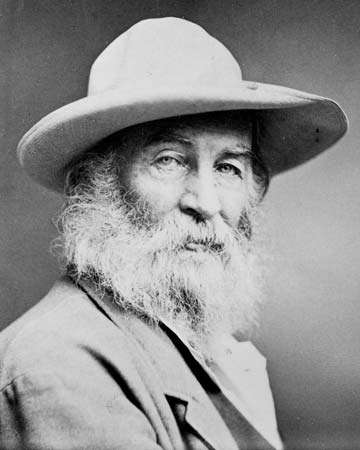
Walt Whitman was an innovative poet who went down in history as America’s most influential bard because of his unprecedented experimentation with free-verse poetry. He was born on May 31, 1819, to a farming family that was failing financially, so his father had to move the family of 9 children from his rural birthplace in West Hill, New York to Brooklyn where his father became a carpenter. Whitman attended public school there, but because his impoverished family still struggled, Whitman, unfortunately, had to drop out of school at age twelve and go to work in order to help them. He became a printer’s apprentice, however, he liked to read and continued to educate himself in New York’s public libraries.

He was eventually promoted from printer to journalist and then to the editor of one of New York’s major newspapers, but he was fired because of his antislavery views. During this self-education period of his life, Whitman began to experiment writing poetry in free-verse form using the very hypnotic cadences found in the Bible and was very much like Hebrew poetry found in the Old Testament. Much of it did not rhyme making it a revolutionary form on the current day’s literary landscape. So when the first edition of his book Leaves of Grass was anonymously self-published in 1855 it was mostly written off by the establishment as “garbage” except for Ralph Waldo Emerson who said the book was full of “wit and wisdom”. And Whitman wrote three more revised editions over his lifetime.

During the Civil War Whitman was one of America’s greatest patriots and was a staunch abolitionist so he wrote his poem Beat! Beat! Drums as a call for the people to rally and fight to keep America one nation. He did not want the people to rest and become complacent with their everyday lives.

Beat! Beat! Drums! -blow bugles blow!

Over the traffic of cities- over the rumble of

wheels in the streets:

Are beds prepared for sleepers at night in the

houses? No sleepers must sleep in those beds…”

So when Whitman got word that his own brother had been wounded in the war, he traveled to the South to find him and was so moved by seeing the carnage of the war that he moved to Washington DC to become a volunteer nurse in the army hospitals there and served to comfort both the wounded Confederate and Union soldiers suffering there. Whitman was a man of great compassion and love and he wrote my all-time favorite American poem O’ Captain My Captain as a heartfelt tribute to President Abraham Lincoln after his assassination.

O Captain! My Captain!

BY WALT WHITMAN

O Captain! my Captain! our fearful trip is done,

The ship has weather’d every rack, the prize we sought is won,

The port is near, the bells I hear, the people all exulting,

While follow eyes the steady keel, the vessel grim and daring;

                         But O heart! heart! heart!

                            O the bleeding drops of red,

                               Where on the deck my Captain lies,

                                  Fallen cold and dead.

O Captain! my Captain! rise up and hear the bells;

Rise up—for you the flag is flung—for you the bugle trills,

For you bouquets and ribbon’d wreaths—for you the shores a-crowding,

For you they call, the swaying mass, their eager faces turning;

                         Here Captain! dear father!

                            This arm beneath your head!

                               It is some dream that on the deck,

                                 You’ve fallen cold and dead.

My Captain does not answer, his lips are pale and still,

My father does not feel my arm, he has no pulse nor will,

The ship is anchor’d safe and sound, its voyage closed and done,

From fearful trip the victor ship comes in with object won;

                         Exult O shores, and ring O bells!

                            But I with mournful tread,

                               Walk the deck my Captain lies,

                                  Fallen cold and dead

After the war, Whitman became a civil servant for the US Department of the interior but was promptly fired by the director because some of the passages in Leaves of Grass were considered obscene by him and Whitman was accused of being a homosexual because some of the passages he wrote praised the beauty of the naked male body.

Whitman died in 1892 as the result of a stroke and was greatly honored for his both his patriotism and poetry in a public funeral.

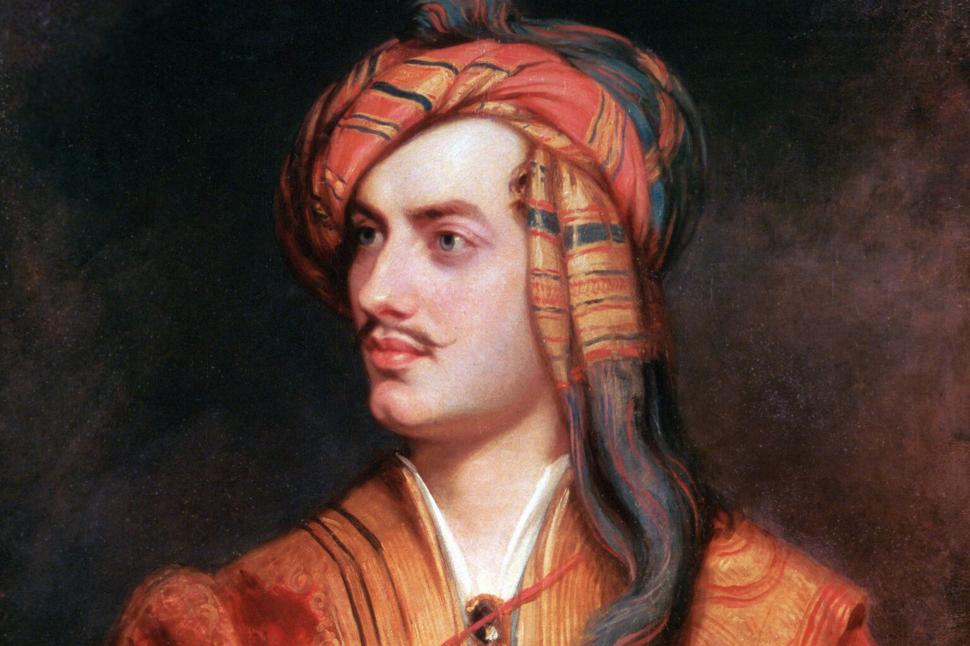
Lord Byron: Idealistically Romantic

Lord Byron: Ideally Romantic

George Gordon Byron the 6th was as baron born in a family of men with a checkered past. His father was a chronic debtor who moved his family from place to place to avoid his creditors, and his uncle, from whom he inherited his title and a fortune, had a bad reputation as a murderer and a crook.

Born on January 22, 1788, Byron suffered from lameness since birth and was horribly abused physically as a child by his nanny, unbeknownst to his mother, and his schoolmasters. However, Byron was a good student who liked to read and became adept at writing poetry at an early age in grammar school and developed his craft over the years to become one of England’s most important poets of the Romantic era.

The poetry of the Romantic period was characterized by a love of nature, the supernatural fantasy, beauty and ideals that transcend the “real world.” Byron displays all these elements in his famous work, She Walks in Beauty

She walks in beauty like the night

Of cloudless climes and starry skies;

And all that’s best of dark and bright

Meet in her aspect and her eyes:

Thus mellowed to that tender light

Which heaven to gaudy day denies.

One shade the more, one ray the less,

Had half impaired the nameless grace

Which waves in every raven tress,

Or softly lightens o’er her face;

Where thoughts serenely express,

How pure, how dear their dwelling-place.

And on that cheek, and o’er that brow,

So soft, so calm yet eloquent,

The smiles that win, the tints that glow,

But tell of days in goodness spent,

A mind at peace with all below,

A heart whose love is innocent.

This poem has many, if not all, the elements of Romantic poetry. The woman in this poem is otherworldly in her beauty, almost as if she is a supernatural perfect angel but is also compared to nature’s interplay of darkness and starlight during the night hours. Yet the poet not only loves her for her physical beauty, the physiognomy of her countenance of the “light and dark that meet in her aspect”, but he also loves the beauty of her mind and her spirit in which she lived her days “in goodness spent.” Thus we see the idealism in this poem as expressed in the holistic description of this perfect woman.

However, Byron like his father spent all of his wealth on wanton living and became a debtor himself while still in college. But he became disillusioned with the relative hedonism of his life in England and traveled to Greece where he embraced both Greek thought and ideals and there he wrote his first famous poem Childe Harold’s Pilgrimage, a biographical poem about his many lovers and exploits while traveling the Mediterranean countries to pursue more personal liberty and a more laid back life than he had experienced in Great Britain, for Byron had not only became Idealistic in his nature, but also gloomy because the ideals of the Romantic era were not congruent with the realities that he was experiencing in the world. Thus Byron was a bit of a paradox of a man with the two opposite contrasts in his nature. He was an idealist with a pessimistic view of life.

Near the end of his life Byron involved himself in Greece’s struggle to gain independence from the Turks by becoming a military commander but unfortunately died of a fever on April 19, 1824, probably as a result of his bloodletting treatment for his illness.

The Japanese Haiku Master, Matsuo Basho

Japanese Haiku Master, Matsuo Basho: Simply Natural

Simplicity, contrasts, and opposites in nature are what constituted the three-line poems of Japan’s most important bard, Matsuo Basho. Basho was born in 1644 near the Japanese town of Ueno. His family was of Samurai decent, however, his father was a low ranking Samurai who essentially made his living as a landowning gentleman farmer. As a young man, Basho served as a page for a high ranking Samurai before moving to Tokyo where he became a poet and a teacher, but he then became so disillusioned with urban life that he left the city to travel into the more distant parts of Japan’s wilderness where he connected to nature and hone his skills as a “hokku” poet. There he raised the writing of hokku (or first verse) to a fine art.

Hokku was originally the first verse, consisting of only three lines, in a form of poetry called a renga in which one poet writes the first verse and is followed by another two-line verse written by a second poet. Today the hokku is known as a haiku and has only three lines of five syllables, seven syllables, and five syllables which rarely rhyme with the subject matter usually being about a real scene taking place in nature that has a deeper spiritual meaning for the reader.

Haiku is characterized by a having a strict form of containing only three lines of 5,7, and 5 syllables (or little units of sound in the Japanese language called moras) and being objective in nature, rooted in the reality of the natural physical world, rather than in the subjective in which the reader brings his own meaning to the poem. But, it is, in fact, the deeper truths in nature that illuminates the reader’s intuitive mind. Haiku also gives the reader a clear picture of the contrasts in nature. Basho wrote:

An old silent pond,

a frog jumps into the pond.

Splash! Silence again

I as a reader can hear the contrasting silence of the pond almost as dramatically as I can feel the motion of the frog and the sound of the splash on the water and with the silence being contrasted with the sound, the silence itself is loud in this little snippet of time

Autumn moonlight-

A worm digs silently

into the chestnut.

Here you have the contrast the closing of a year and of repose of night with the work of .the worm laboring for his food. Nature never stops. Nature never goes to sleep,

In the twilight rain

these brilliant hued hibiscus-

A lovely sunset.

This gives the reader a vivid image in the mind’s eye of the contrast of the brilliant-hued flower with the somberness of rain and twilight.

Basho died in November of 1694 and is today revered in Japan as their greatest poet of all times with his verses inscribed today on many public monuments.

Celebrating my Birthday

by: Shirley Satterfield

Happy birthday, self, everything ‘s okay now.
You are making it.
You’ll be just fine
Until the day of of your competition.
At 67 years young
Life is really fun.
No more worries.
No more regrets.
And I’m not done
Until gone the sun.
I’ve done my best
To love someone-
Even my friends,
Even my enemies,
Even you too,
Even me.

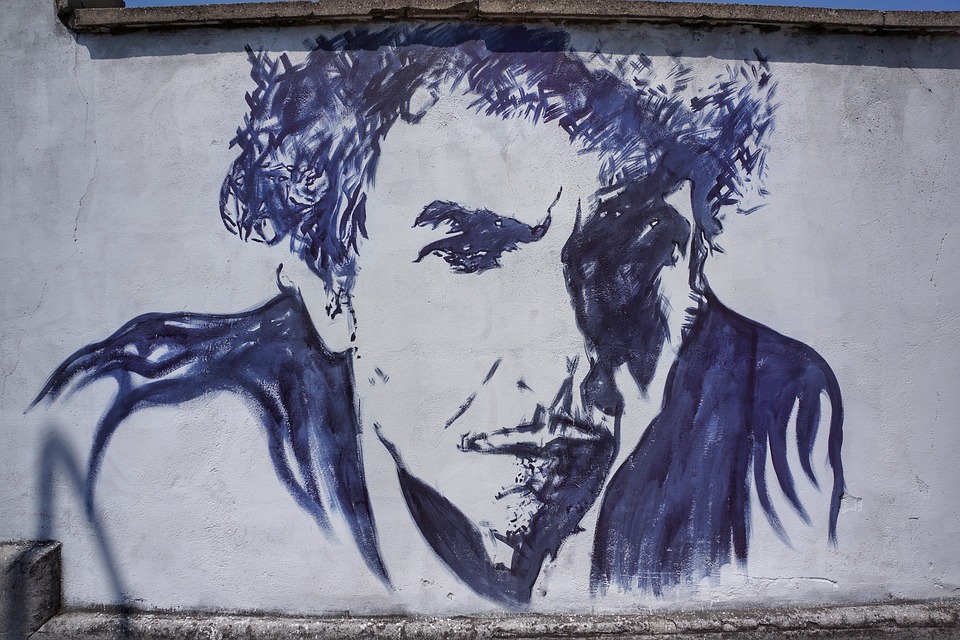
Bob Dylan: The Conscience of a Counter-Culture

Bob Dylan: The Conscience of a Counter-Culture

He moved a generation to action with these heart-probing lyrics in which he questions the purpose of racism and war:

Blowin in the Wind

How many roads must a man walk down

Before you call him a man.

How many seas must a white dove sail

Before he sleeps in the sand?

Yes,’n’ how many times must the cannon balls fly

Before they’re forever banned?

The answer my friend is blowin’ in the wind

The answer is blowin’ in the wind.

Yes, ‘n’ how many years can a mountain exist

Before it’s washed to the sea?

Yes, ‘n’ how many years can some people exist

Before they’re allowed to be free?

Yes, ‘n’ how many times can a man turn his head

And pretend that he just doesn’t see?

The answer, my friend is blowin’ in the wind

The answer is blowin’ in the wind.

This song and these questions became the anthem of America’s youth for nearly two decades and those words should still haunt us today since wars and racism have not yet ceased.

Thus, was lyricist Bob Dylan was the voice of a whole generation of America’s youth in the counter-culture. The counter-culture of the ’60s was a time of major political and cultural change which was sparked by the Civil Rights Movement and the escalation of the very unpopular Vietnam war and commenced with the assassination of John F. Kennedy. It was a time when, much like the prohibition days of The Roaring Twenties when alcohol was illegal, people questioned authority and it came apropos for people to break the law against illegal substances and to question the traditional sexual mores of the day. It was a time of “drugs, sex and rock, and roll” also known as the “New Morality.” And Dylan was a major spokesperson for this new anti-establishment and anti-war movement that changed the entire Western world and ushered in a “New Age” beginning with his first hit “The Times they are a Changin”.The songwriter here warns the politicians and the older generation to change with the times or risk being left behind and losing control of their children.

Come senators, congressman

Please heed the call

Don’t stand in the doorway

Don’t block the hall

For he that gets hurt

Will be he who has stalled…”

Come mothers come fathers

Throughout the land

And don’t criticize

What you don’t understand

Your sons and your daughters

Are beyond your command…

For the times they are a changin”.

Dylan was born on May 14, 1941, in Duluth, Minnesota as Robert Allen Zimmerman but later changed his name to Dylan, some say as a tribute to poet Dylan Thomas, however, others dispute that claim, His inspiration was his musical idol, Woody Guthrie,, but he traveled to New York City where he performed folk-rock music on the coffeehouse circuit in Greenwich Village using only a harmonica, a tambourine, and a guitar and was highly influenced by the folk music artists of the day such as Peter, Paul, and Mary.

Since his debut in the early sixties, Dylan has won many music awards and most recently he has won the Nobel Prize for Literature, a great honor for the whole nation of the United States of America, but unfortunately he was unable to travel to Sweden in order to claim it due to his now failing health.

Dylan is by and large one of America’s most important poets still alive today.

.

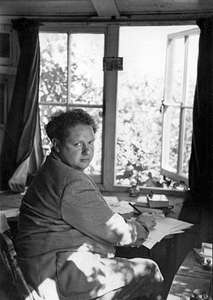
Dylan Thomas: The wise and Wanton Poet

by: Shirley Satterfield

.Dylan Thomas: The Wise and Wanton Poet

Dylan Thomas, Wales’ most distinguished poet, was a consummate poet of the modernist movement in literature and poet who influenced such contemporary music luminaries as Bob Dylan and The Beatles, Bob Dylan even changed his last name from Zimmerman to Dylan and The Beatles included his image on an album cover.
However, Dylan himself was quite the luminary in the modernist movement, a movement in poetry characterized by freedom of form and poetic license. And unlike traditional forms of verse in which the poets adhere to various forms, as dictated by literary rules, modernist poetry does not have to have set of predetermined meter and rhyme but can be written in free verse, rhyme or blank verse or a combination of all the forms and does not necessarily have to make logical sense to the reader. Thus the reader can feel it and experience it and bring to the poem his own experiences and his own personal of the poem. So in modernist poetry, both freedom of expression and interpretation is the name of the game.
Dylan’s most famous poem is “Do Not Go Gentle into that Good Night” was written at a time when Dylan’s beloved father was on his deathbed as a heartfelt response to his grief and his anger that death cuts us off leaving many good things that life has to offer unrealized and inexperienced. And the poem was a call to all sorts of men to live life to the fullest and to proactively resist the limitations of aging the finality of death. In short, Dylan saw death as the great enemy of man. And this masterpiece of a poem is one of my own personal favorites.

Do Not Go Gentle into that Good Night

Do not go gentle into that good night,
Old age should burn and rave at close of day:
Rage, rage against the dying of the light.

Though wise men at their end know dark is right,
Because their words forked no lightning they
Do not go gentle into that good night.

Good men, the last wave by, crying how bright
Their frail deeds might have danced in a green bay,
Rage, rage against the dying of the light.

Wild men who caught and sang the sun in flight,
And learn, too late, they grieved it on its way,
Do not go gentle into that good night.

Grave men, near death, who see with blinding sight
Blind eyes could blaze like meteors and be gay,
Rage, rage against the dying of the light.

And you, my father, there on the sad height,
Curse, bless me now with fierce tears, I pray.
Do not go gentle into that good night.
Rage, rage against the dying of the light.

Dylan Thomas was born in 1914 in the Welsh town of Swansea where he secured his first job as a journalist after dropping out of school at the age of sixteen (he had not been a good student). However, his first poem had been published by a newspaper at the age of 14, so he began to make a name for himself as a poet. But finding that he could not make a living wage as a writer and a poet, he, later on, moved to New York where he went on the poetry reading circuit where he was paid for his speaking engagements. But unfortunately, Dylan was a far gone alcoholic who described himself as a “drunken and doomed poet” and as much as he despised a death experienced prematurely, he himself experienced a premature death at the age of 39 when he lapsed into a coma during a drinking binge.

Wise Poets from the Present

by: Shirley Satterfield

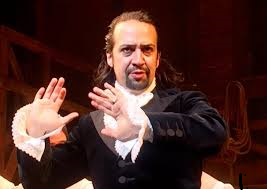
Lin-Manuel Miranda: The Man Who Elevated Rap

Rap music, it seems that one either loves it or hates it, And I think that one is more apt to love it if you’re still in your youth. But Lin Manual Miranda, a Tony award winning lyricist and actor, elevated this fairly new genre to the realm of legitimate when he wrote the first Rap/ hip-hop opera for Broadway, Hamilton.
There has been a certain amount of controversy in recent years whether or not Rap is real poetry, but if it is not poetry it is a close cousin of poetry because it shares many of the characteristics of poetry such as rhyme, rhythmic speech, and the literary devices of assonance and alliteration. However, there is one minor difference between the two which is the characteristic accompaniment of a sound track making rap a genre which is meant to only be heard, whereas poetry is meant to be both heard and read.
Rap like poetry has its roots deeply embedded in history. Rap originated in the storytelling of West Africa’s village elders known as Griots,, the men who disseminated the village oral traditions, genealogies and the news of the day through their songs and stories. Then the African American slaves carried on this tradition by singing songs in order to cope with their work and the brutality of slavery. But the two main modern influences on Rap were soul singer James Brown with his between song interactions with the audience and the clever little rhythmic poems of Muhammad Ali. But modern Rap as we know it originated in Bronx New York where DJ Kool Herc and his sisters hosted after school parties during which Herc discovered that he could keep the party going through “looping” the songs and speaking in the mic. Thus, Rap was considered a street genre until Lin-Manuel Miranda elevated this new form of poetry/music to a legitimate art form through his play.

How does a bastard, orphan, son of a whore and a
Scotsman, dropped in the middle of a forgotten
Spot in the Caribbean by Providence, impoverished, in squalor
Grow up to be a hero and a scholar?

The ten-dollar Founding Father without a father
Got a lot farther by workin’ a lot harder
By bein’ a lot smarter
By bein’ a self-starter
By fourteen, they placed him in charge of a trading charter

Here the writer relies heavily on a free verse type rhythm and a rhyme scheme of a,a in the two last lines of the first verse and b,b,b in the last three lines of the next verse and repetition in the same verse, and his skill in alliteration is self evident with the repetition of several hard consonant sounds throughout the piece aptly demonstrating his skill in poetic literary devices.
Miranda is a Puerto Rican American who himself grew up poor. But he got his big break when he was commissioned to write the lyrics for In the Heights for which he won a Tony award. Today he is also the winner of both the Emmy Grammy awards

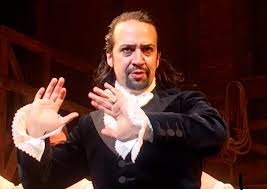
Lin-Manuel Miranda: The Man Who Elevated Rap

Lin-Manuel Miranda: The Man Who Elevated Rap

Rap music, it seems that one either loves it or hates it, And I think that one is more apt to love it if you’re still in your youth. But Lin-Manual Miranda, a Tony award-winning lyricist and actor, elevated this fairly new genre to the realm of legitimate when he wrote the first Rap/ hip-hop opera for Broadway, Hamilton.

There has been a certain amount of controversy in recent years whether or not Rap is real poetry, but if it is not poetry it is a close cousin of poetry because it shares many of the characteristics of poetry such as rhyme, rhythmic speech, and the literary devices of assonance and alliteration. However, there is one minor difference between the two which is the characteristic accompaniment of a soundtrack making rap a genre which is meant to only be heard, whereas poetry is meant to be both heard and read.

Rap like poetry has its roots deeply embedded in history. Rap originated in the storytelling of West Africa’s village elders known as Griots, the men who disseminated the village oral traditions, genealogies and the news of the day through their songs and stories. Then the African American slaves carried on this tradition by singing songs in order to cope with their work and the brutality of slavery. But the two main modern influences on Rap were soul singer James Brown with his between-song interactions with the audience and the clever little rhythmic poems of Muhammad Ali. But modern Rap as we know it originated in Bronx New York where DJ Kool Herc and his sisters hosted after school parties during which Herc discovered that he could keep the party going through “looping” the songs and speaking in the mic. Thus, Rap was considered a street genre until Lin-Manuel Miranda elevated this new form of poetry/music to a legitimate art form through his play.

How does a bastard, orphan, son of a whore and a
Scotsman, dropped in the middle of a forgotten
Spot in the Caribbean by Providence, impoverished, in squalor
Grow up to be a hero and a scholar?

The ten-dollar Founding Father without a father
Got a lot farther by workin’ a lot harder
By bein’ a lot smarter
By bein’ a self-starter
By fourteen, they placed him in charge of a trading charter

Here the writer relies heavily on a free verse type rhythm and a rhyme scheme of a,a in the two last lines of the first verse and b,b,b in the last three lines of the next verse and repetition in the same verse, and his skill in alliteration is self evident with the repetition of several hard consonant sounds throughout the piece aptly demonstrating his skill in poetic literary devices.

Miranda is a Puerto Rican American who himself grew up poor. But he got his big break when he was commissioned to write the lyrics for In the Heights for which he won a Tony award. Today he is also the winner of both the Emmy Grammy awards

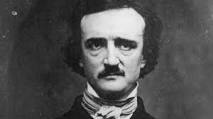
Edgar Allen Poe: The Spooky Poet

Edgar Allen Poe, born in January 1849, liked to weave tales of mystery and macabre. And he often delved into the inner workings of a sick man’s mind often using rich symbolism to signify his character’s insanity in works such as the Fall of the House of Usher in which a grand old house falls one wall, one brick at a time as the master of the house himself goes insane. He also wrote such gut-grabbing stories as Murders in the Rue Morgue, a real murder mystery, so Poe is credited as being both the father of the detective story and the short story. The Tell-Tale Heart is another detective story in which the perpetrator of a murder thinks in his mind that he hears the heart of his victim beating under the floorboards of his house where he is buried as Poe’s character is being questioned a homicide detective, so as a result of his guilt he confesses his crime to the police.
Poe was also quite a poet and wrote his masterpiece The Raven about the loss of one of his two ladies great lady loves, his dearly departed 14-year-old child bride, Virginia Clemm Poe. And although the poem gives the reader a ghostly feel with its incessant rapping and tapping of the raven on the window pane and the nightly shadows dancing in the room and the dying embers in the fireplace, the poem itself was inspired by an actual bird, the beloved pet that Charles Dickens kept in his barn and enjoyed. But on so many levels it’s mostly about the memories of the wife, who he had so tragically lost to tuberculosis, haunting him with the rapping, tapping in his mind. The Raven is a really long poem so for the purposes of this blog, I am only going to quote a few key verses here.

The Raven

Once upon a midnight dreary, while I pondered,
weak and weary,
Over many a quaint and curious volume of
forgotten lore-
While I nodded nearly napping, suddenly
there came a tapping,
As of some one gently rapping, tapping at my chamber door-
“Tis some visitor,” I muttered, tapping at my
chamber door-
Only this and nothing more.

Ah, distinctly I remember it was in bleak
December;
And each dying ember wrought its ghost
upon the floor.
Eagerly I wished the morrow-vainly I had
sought to borrow
From my books surcease of sorrow-sorrow
for the lost Lenore-
For the rare and radiant maiden whom the angels
name Lenore-
Nameless here for evermore.

And the silken, sad uncertain rustling of each
purple curtain
Thrilled me-filled me with fantastic terrors
never felt before;
So that now, to still the beating of my heart, I
stood repeating
“Tis some visitor entreating entrance at my
chamber door-
Some late visitor entreating entrance at my
chamber door-
This it is and nothing more.

Poe was a man well acquainted with loss, death, and sorrow. Both his parents were dead by the time he was three years old, leaving himself and his two siblings destitute and orphaned. So he was taken in as a foster child by a pair of distant relatives and raised in Richmond Virginia. He was a good student throughout the lower grades, however, unfortunately, he failed in college due to a growing gambling addiction and misuse of alcohol. He then suffered a further loss when he was at the age of sixteen when his 15-year-old lover,, Sarah Elmira, married another man because her father vehemently disapproved of Poe and his status as a penniless orphan and with his gambling problems. But later on in life, the couple rekindled the romance flame after the deaths of their respective spouses. But a marriage between the pair was never to be because Poe himself died of mysterious causes at Church Home and Hospitals in Baltimore Maryland before the nuptials, with some saying he died of alcoholism and others theorizing that Poe himself was murdered and thus a character in a real life mystery.
Poe was such a man of shadows and sorrows and inspiration that some doctors today theorize that he may have been bipolar was quite a mad, inspired and genius poet indeed.