Now Presenting India’s Own Up and Coming Indie Author
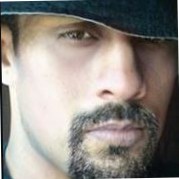
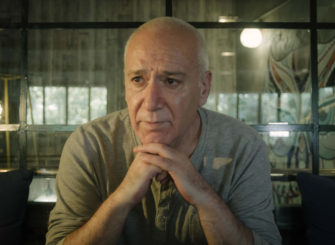
Now Presenting India’s Own Indie Author Yasir Sulaiman

Yasir Sulaiman is the prolific author od five books written on the dark side of love; Who is There: Two Tales of the Unknown, In My Words: A Collection of Poems, 3 Stories of Love, Collection of Short Stories: hearing unspoken voices, and his masterpiece Fire, And in this interview, Yasir tells his own story in his own words.

1. Tell us about your life, and what was the catalyst that prompted you to become an author in the first place. 

 
I started writing at a very young age. Wrote my first poem as a birthday wish for my mom at the age of eight. I had grown up  in Abu Dhabhi (United Arab Emirates) where my dad worked as a banker. At  that time, the country was just born. (Late 1980’s to early 90’s) There was not much entertainment and we were (and still are ) people of middle class income. I found a release in writing. Just wrote whatever came to my mind. Started with poems, then moved to short stories and then write my firs novel for a girl (my first love) at the age of 17. That book hasn’t been published so far. Plan to re-release sometime in the future.

I left novel writing for a while after that as I got involved in studies. But a grievous accident changed everything. I lost my memory and my ability to study more. Still have only faint memories of how it all happened. People say I was rushing to dance for a program in my college while a lorry  hit my bike and I was overthrown – landing on my head. My skull broke leaving a deep scar in my head. The last though I still remember till date was that  “I had to get up. It was now or never” Cutting the story short (the whole story can be told at some other time) – I lost everything in life. Couldn’t continue education and lost all my friends. My dad lost his job and we got back to India. I tried and tried to support my family. but couldn’t because I was just a living-dead body! 

A ray of hope came in the form of a friend; who introduced me to a small contest that Oxford University was conducted to encourage writers from our part of the world. I worked and starved until death to complete a novel. Submitted it and in 3 months, I got a notification that I was awarded! There was no looking back after that. The novel or rather story is part of the  book I republished http://www.lulu.com/shop/yasir-sulaiman/3-stories-of-love/paperback/product-24071495.html

The story’s name is “Just Between  You and Me”

Anyway life wasn’t simple even after that. I went through many hallways of hell! Yet my writing and books kept encouraging me.

 2 . Is there a message in your writings that you wish to communicate to the world?  

Yes three things; My name is Yasir Sulaiman and I am still alive.

I never was mentally ill.

There were several other shades to my past than anyone ever knew.

  3. Can you explain a little to your fellow authors a little about your marketing plan. I myself would like to learn and know.  

 It is pretty direct actually. I never have spent a penny on book marketing and promotion. Yet with God’s grace, my books are reaching thousands if not more.

What I do?

Networking and be seen on any platform. That is; get noticed. An entire book may have to be written on my marketing techniques. Maybe that is an idea I will have to follow later. As a tip; don’t ask people to buy  your book. “Sell your book or rather your idea to those who are willing to read.”

  4. Tell us about that hidden rebel within you that you so often write about and how that applies to your new book entitled “Fire”.  

There is so much to tell; but I can’t. I just can’t. That’s Y i write fiction. I am there in every book of mine. Certain scenes were real life incidents; just dramatized. People may find it hard to believe;  but I have lived many lives in the past 25 years. I  have had many professions and have seen both heaven and hell right here in life. The only reason I wish to stay alive anymore is my young son, my wife and my ageing parents plus grandmother.

  5. What is your vision for yourself as a writer in the future? Any more books in the offing?  

Related to my previous response; I realized this is my identity. If God wills; my life may become better in the future and I may get more glamorous jobs. Yet, I will continue to be a writer and a poet (Have written thousands) at heart. I have a few other books in mind including a sequel to “Fire” and the rewriting the novel I had written as a teenager. But those will have to wait. Owing to poor health, I wish to take a break from writing and perhaps all work, once I got some finances ready. Have some immediate necessities. Once they are fulfilled, it is high time I take a vacation. Haven’t taken a vacation in 16+ years (the time since my accident).

  1. Tell us about all your books and where they can be obtained.

    I have written 5 books so far. All of them are available on Amazon.  Here is my Amazon’s author profile  https://www.amazon.com/Yasir-Sulaiman/e/B07PN8YF5B?ref=dbs_a_def_rwt_hsch_vu00_taft_p1_i1. Two of t hem are available on Lulu.com as well  http://www.lulu.com/spotlight/loveuntold

    An e-book version of my latest will soon come on another platform. 

Thank You

Henry Wadsworth Longfellow: The Quintessential American Poet

Henry Wadsworth Longfellow: The Quintessential American Poet

Henry Wadsworth Longfellow was a poet who was deeply entrenched in both the fabric of the American spirit and American history, He was born in Portland, Maine on February 27, 1807 which was still a part of Massachusetts and was a direct descendant of the Pilgrims that settled at Plymouth Rock, and his mother, Zilpath Wasdsworth, was a daughter of an American Revolutionary hero and his father, Stephan Longfellow, was a highly successful Portland lawyer who served in the U.S. Congress.

Longfellow himself would achieve much success himself as a great American poet in his lifetime and, It was written by a friend of his that “no other poet was so recognized was so fully recognized in his lifetime,” and Wikipedia asserts that “Many of his works helped shape the American and its legacy particularly with the historical poem ‘Paul Revere’s Ride’,” He was so popular, in fact, that there were parades given for him on his 70th birthday.

But this great American poet, however, was not without sorrow and tragedy in his life as he first lost his first wife, Mary Storer Potter, due to a miscarriage during a trip to live overseas and his second wife when she accidentally set herself on fire attempting to seal an envelope containing locks of her children’s hair with hot wax, And Longfellow was so grieved by the death of the former wife that he wrote “One thoughtr occupies me night and day…She id dead—She is dead! All day I am weary and sad”. And after the death of his second wife he wrote the sad, poignant sonnet “The Cross of Snow.”

The Cross of Snow

In the long, sleepless watches of the night,

   A gentle face — the face of one long dead —

   Looks at me from the wall, where round its head

   The night-lamp casts a halo of pale light.

Here in this room she died; and soul more white

   Never through martyrdom of fire was led

   To its repose; nor can in books be read

   The legend of a life more benedight.

There is a mountain in the distant West

   That, sun-defying, in its deep ravines

   Displays a cross of snow upon its side.

Such is the cross I wear upon my breast

   These eighteen years, through all the changing scenes

   And seasons, changeless since the day she died.

Longfellow mainly specialized in writing a very musical form of lyric poetry, but he also wrote in free verse, blank verse and sonnets such as the form above, but he was more than just a poet, he was a linguist adept in modern European languages such as German and Dutch and an expert in translating Latin into English and his translation of Dante’s The Divine Comedy into English was an important part of his life’s work and he was also known to be a great educator who was commissioned to teach modern European languages at the iconic Harvard University. Longfellow wrote at least eight books in all including The Song of Hiawatha about life for the Native American’s in America and Evangeline a book length poem about about the separation of two ardent lovers during az British war against the French on Canada and their rediscovery of each other in old age,

Longfellow died of acute peritonitis in March of 1882 at age 75 and was perhaps America’s closest rival to Briton’s great bard Shakespeare himself.

A Woman on the Cutting Edge of Free

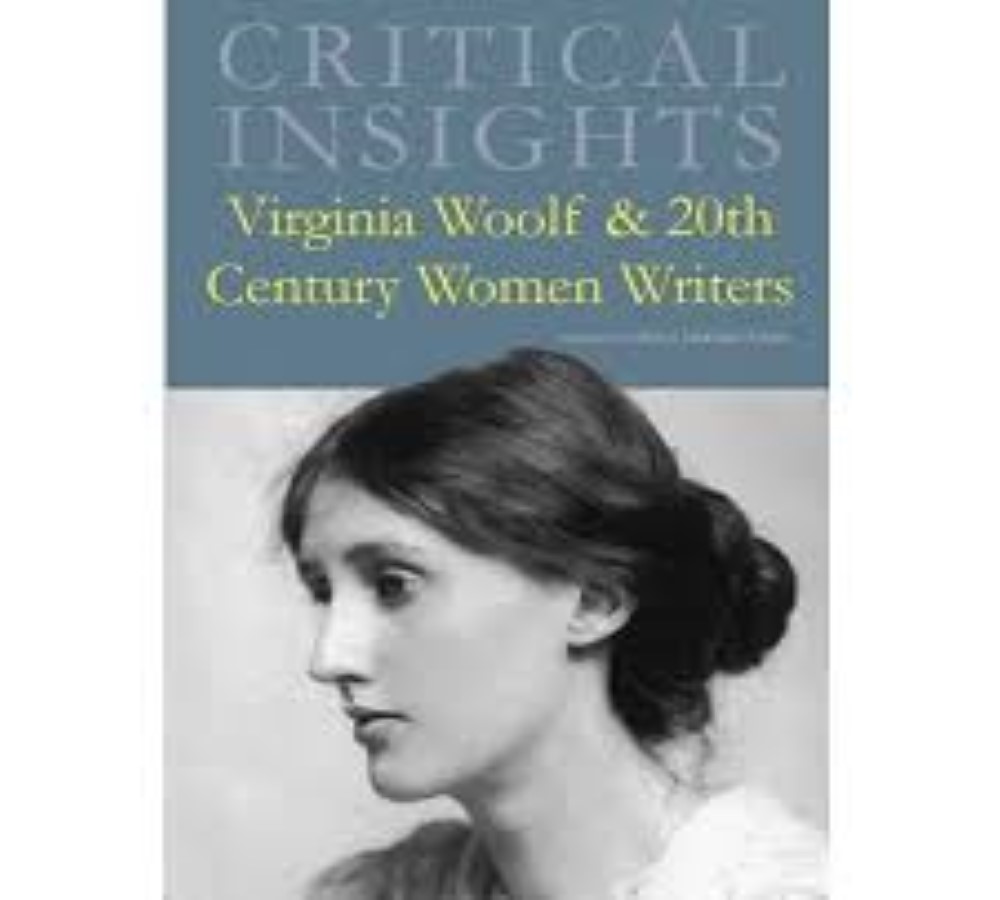
Virginia Woolf: A Woman on the Cutting Edge of Free

Virginia Woolf was born on January 25, 1882 in South Kensington, London the seventh a large upper middle class blended family of eight children, and her father, Leslie Stephen, was a prosperous editor and publisher and a great man of letters, Virginia, however, was home schooled by her mother, Julia, in the English classics and Victorian literature while her brothers received formal schooling. But she proved to be talented so her father encouraged her to write and become a giant in the Modernist literary movement of the day.

Woolf had become, in fact, an early practitioner of stream of consciousness and nonlinear writing. Nonlinear writing is a narrative that is not necessarily written in chronological order or contains a smaller plot embedded within a larger plot. She was also very deeply influenced by the brand new feminist of the early 1900s while attending college and glibly wrote, “A woman must have money and a room of her own if she is to write fiction,” expressing a new spirit of independence stirring in the hearts of modern women in England and America.

Her famous novels include Mrs. Dalloway, a story that follows a turn of the century woman thoughts while planning a party, A Room of Her Own, and To the Lighthouse, a novel that was inspired by a childhood get-away place. And in addition to being a prolific novelist, Woolf was an adept essayest whose quotes include:

You cannot find peace by avoiding life.

……….

The eyes of others our prisons; their thoughts our cages.

……….

As a woman I have no country. As a woman my country is the whole world.

………..

For most of history anonymous was a woman.

………..

Women have served all these centuries as looking glasses possessing the magic and delicious power of reflecting the figure of man at twice it’s natural size.

…………..

After the death of her parents Virginia and the other Stephan siblings moved to bohemian Bloomsbury where they led a free and easy life and formed a writer’s community called the Bloomsbury group. And after her marriage Leonard Woolf, the pair founded a publishing company called Hogarth press which published most of Virginia’s work.

Virginia Woolf, unfortunately, died of suicide by drowning herself at the age of 59. She had suffered a series of mental breakdowns stemming from the untimely death of her mother while still a child of age 13 and the death of her stepsister two years later.. But Virginia Woolf proved to be a pivotal force in gaining more equal rights for women in England and America in the quest for voting and equal educational rights.

David the Hebrew Song-Master and the Elements of Hebrew Poetry

David the Hebrew Song Master and the Elements of Hebrew Poetry

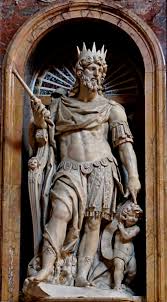
David, son of Jesse, was many things: he was a shepherd boy, a singer/song writer, a warrior, a king, a murderer, and finally he was a man after God’s own heart. David started his life as the youngest and least of 8 brothers, and was consigned to the outer fields to tend and defend the sheep. But it was there in the fields that he was being prepared to care for and defend the nation of Israel. And the prophet Samuel was perceptive enough to see that, so that according to Hebrew Scripture he was moved by the Spirit of God to anoint David the next king to supplant the despot, backsliding King Saul.

And in the course of due time through a series of alliances by marriage between his family and the kings family, David was called to serve in Saul’s royal court as a singer and amour bearer to the increasingly depressed and defunct King Saul, gaining Saul’s great favor. But when it was found that David could hold his own in the battle, even to killing a man many times his size with a well placed stone from a slingshot, David increased in popularity as the envious King Saul declined and was himself in battle, along with his son and David’s close friend; thus David was finally placed on the throne.

But, alas, David had his own great moral failure when he fell in love with another man’s wife, by the name of Bathsheba, and impregnated her. So to cover up his sin, King David sent her husband Uriah, one of his chief warriors, to the front lines to fight the enemy in order to deliberately get him killed. And yes, he was tragically killed, however Davids sincere remorse over his crime, his repentance, and his continued devotion to God saved his throne, and he was thence called “a man after God’s own heart” also being promised by the prophet through a word from God that the Christ would be born through his line of heirs.

But although he was a King and a great warrior, David also had his fame as a great singer and song writer, and we call his work the Psalms, These famous Psalms he wrote, many recorded in the Bible, covered the whole gamut of the ups and downs human experience from fear and deep depression to high praise for the God of the universe. Two good examples of these highs and lows can be found in Psalm 43 and Psalm 103:

Psalm 43 is a cry for help and shows the frail human side of the great king, without, however, ever losing hope because of his faith in the Hebrew God.

………………………..

Psalm 43 King James Version (KJV)

43 Judge me, O God, and plead my cause against an ungodly nation: O deliver me from the deceitful and unjust man.

For thou art the God of my strength: why dost thou cast me off? why go I mourning because of the oppression of the enemy?

O send out thy light and thy truth: let them lead me; let them bring me unto thy holy hill, and to thy tabernacles.

Then will I go unto the altar of God, unto God my exceeding joy: yea, upon the harp will I praise thee, O God my God.

Why art thou cast down, O my soul? and why art thou disquieted within me? hope in God: for I shall yet praise him, who is the health of my countenance, and my God.

,,,,,,,,,,,,,,,,,,,,,,,

And then we find the glorious joyful highs of David’s life as expressed in Psalm 103, verses 1-6.

Psalm 103 King James Version (KJV)

103 Bless the Lord, O my soul: and all that is within me, bless his holy name.

Bless the Lord, O my soul, and forget not all his benefits:

Who forgiveth all thine iniquities; who healeth all thy diseases;

Who redeemeth thy life from destruction; who crowneth thee with lovingkindness and tender mercies;

Who satisfieth thy mouth with good things; so that thy youth is renewed like the eagle’s.

The Lord executeth righteousness and judgment for all that are oppressed.

,,,,,,,,,,,,,,,,,,,,,,,,,,,,,,,,,,,,,

David wrote in the markedly seductive repetitive ancient cadence of ancient Hebrew parallelism in which the same thought is repeated in different ways from line to line for emphasis, and there are five such poetry books in the old testament which are: Job, Proverbs, Psalms, Ecclesiastes, and Song of Solomon. However, this ancient form of verse was also repeated in the New Testament in the Beatitudes of Jesus in the Sermon on the mount in which Jesus says “Blessed are the poor in spirit…Blessed are the pure in heart…Blessed are the meek,,,blessed are the peacemakers…, and again in Paul’s love chapter to the Corinthian’s in which he wrote, “love is patient…is kind…love envy’s not…is not puffed up….

So unlike English poetry which has meter and rhyme and derives from the Greek and Latin traditions, Hebrew poetry is markedly free verse, without a set form, rhythm or rhyme and was born of the Canaanite middle eastern tradition of a hypnotic repetitive parallelism.

Author Charles Dickens: The Conscience of His Age

Author Charles Dickens: The Conscience of His Age

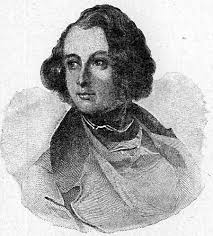
With debtors and the poor being remanded to rat infested prisons in 1812 when Charles Dickens was born, the Victorian age was a brutal time to be poor. And young Dickens himself experienced some of this brutality first hand as a child when his middle class family had descended into deep poverty because of debt.

His father, John Dickens had been able to provide a pleasant lifestyle for Charles Dickens and his siblings until the family thrown into debt by the lavish spending of his father. John Dickens was then thrown into prison by his debtors along with his wife and younger children. So Charles had to drop out of school at age twelve to work in a shoe polish factory, doing hard manual labor, in order to help support his family and pay down the debt. And although Dickens had to drop out of school, this hard experience was the catalyst to make Dickens become one of England’s great novelists, with most of his most endearing characters being taken out of his poverty experience, especially a young co-worker, whose named Bob Fagin, whose name he used in Oliver Twist, as he confided to his close friend John Forster.

The blacking-warehouse was the last house on the left-hand side of the way, at old Hungerford Stairs. It was a crazy, tumble-down old house, abutting of course on the river, and literally overrun with rats. Its wainscoted rooms, and its rotten floors and staircase, and the old grey rats swarming down in the cellars, and the sound of their squeaking and scuffling coming up the stairs at all times, and the dirt and decay of the place, rise up visibly before me, as if I were there again. The counting-house was on the first floor, looking over the coal-barges and the river. There was a recess in it, in which I was to sit and work. My work was to cover the pots of paste-blacking; first with a piece of oil-paper, and then with a piece of blue paper; to tie them round with a string; and then to clip the paper close and neat, all round, until it looked as smart as a pot of ointment from an apothecary’s shop. When a certain number of grosses of pots had attained this pitch of perfection, I was to paste on each a printed label, and then go on again with more pots. Two or three other boys were kept at similar duty down-stairs on similar wages. One of them came up, in a ragged apron and a paper cap, on the first Monday morning, to show me the trick of using the string and tying the knot. His name was Bob Fagin; and I took the liberty of using his name, long afterwards, in Oliver Twist.[26]

Starting with the success of the his first novel The Pickwick Papers that was published as a series in a magazine, Dickens wrote 15 novels in all, including Oliver Twist, Bleak House and the Christmas Carol and numerous short stories and many essays highlighting the injustices of the day and the dangers of greed. He became a wildly popular author in England, loved by rich and poor alike. The rich were greatly entertained by his stories and the poor could relate to his characters. The illiterate poor would even have someone read the installments of his stories to them, and Dickens became a wealthy man in his own rite. Dickens then became a philanthropist when he financially sponsored a school for wayward girls with an eye to rehabilitate them rather than punish them as was the order of the day.

Dickens died as the result of a stroke on June 8, 1870 after a full days work om his last novel Edwin Drood which he left unfinished; he died doing what he loved to do.

Now Presenting Daily Wisdom Words Own Poet Guildford Windley

Now Presenting Daily Wisdom Words Own Poet Guildford Windley

Almost all poets are deeply affected by happenings in childhood and important people along the way, and this is Poet Guildford’s own story in his own words in response to several interview questions he was sent by the dailywisdomwords.com team.

Hi Shirley, hope all is well for you and your family. First I want to thank you for this honor. Your questions are quite good and it takes some thought to answer. But let’s start at the beginning  I was born in 1945 in Santa Monica California I was the firstborn in our family after my birth at about six months old we moved to an unincorporated part of Hayward California where we lived for about eleven years. In that time my brother and sister were born, however, due to a car accident on the way to deliver my sister, she was stillborn, her lost had a profound effect on me, and is my source passion and caring for others. My brother was born seven years after my birth and in later years was somewhat of his rock while going through some tough times.

 But let’s go back to before he was born, where I was influenced in life. One of those life-changing moments came when I was about nine my cousin Dave and his two older brothers I was playing and guess we were bothering them, so they but us into an old abandoned icebox and they shut the door, Dave and I were trapped with no way out. Well, there was only so much air to breathe, and it was running out fast. I still from time to time have nightmares about this Dave was laying on top of me he had passed out and I was with every ounce of fight in me kicking at the door, I could no longer cry out and we were only a short time from death. My father got concern as to where Dave and I had disappeared to, fortunately, he asked the two older boys and they had forgotten to let us out of the Icebox and told my dad that’s where we were. My dad got us out in a nick of time. Because of this incident, I learn that life is very fragile and never give up the fight until the very end. In life, one must remember that we all are in the same boat, no matter who you are or how important you might be we all are just one breath eternity.   Also, I’m very claustrophobic.

Another influence happen when I was about ten I was walking home from school one day when all of a sudden a bald eagle landed on my head, at first I was scared but it moved down to my right shoulder and it gave me a peck on my cheek and then it talked to me, not in human language  but it squawk to me and it look me in the eye, and I felt that I understood what it was communicating, it stayed with me for I think about five minutes gave me one more peck and brush me with his left-wing and off he went. Through this experience, I found it’s most important to give full attention to not only humans, for we make up only a small part of the living organisms on this here island we call Earth. each and every living thing has a story to tell, we just need to listen and feel, for words are a human thing and all other living things communicate plain. However when listing to some humans I forget to pay attention, my bad. Also, I found out as I got older for some reason I have had several encounters with creatures and lots of stories that I could tell, but I leave that for some other time. 

I was also very much influenced by an elderly neighbor lady when we lived in Hayward, I was very young about seven and to be honest I’m not sure how our relationship got started but she was one of my great loves, maybe she was watching me for my mother, or I was just a pest, but I always thought I was there to protect and help her, she was very old, not how old but when your seven most adults are old. Both of my grandmothers were dead, so this lady was the embodiment of a grandmother. I guess from her point of view I was the embodiment of a grandchild. I do remember that my mom would always check on her, my mom told me that she was all alone in this world. that her husband and children had died. it’s hard for me to remember but as I recall she had two boys that were killed in the war, and that after the second one died her husband died of a broken heart. So one can see how this arrangement might work and how love can grow between two souls. She gave me a world that I will never forget. A love for beauty, literature, nature, and music. oh I should not forget my love of food. She taught me so much and gave me an understanding of and respect for all living things. To be respectful of people no matter their place in life, for we all have a place and until you lived in that place you should not make judgments on others’ lives. she was a major factor in how I evolved to a person who has embraced not only my masculinity but also my femininity.

You very much honor me, by inferring to me as a poet, when I see me as a simple storyteller, and I have been telling stories for a long time. I even once told upon entering a new school a story to my new class and teacher that I was an exchange student from England and this keeps going on for about a week until word got back to my folks and I was exposed as a prevaricator, oh the shame of it, when just calling me a liar would have done just as good.

My family moved to San Francisco when I was eleven, those years from that point until I was seventeen were hard years, my father lost his job due to sickness and also alcoholism and my mother was also an alcoholic too. we had lost are home and so we found an apartment in San Francisco and my dad found work that well did not last long. in a short time, we found our selves living in a housing project and being dirt poor. I did what I could to make money for the family  I hawk newspapers on a corner in downtown I also had a large paper route that I did in the early morning. I would also go to this bakery that had a discount outlet store where they sold fruit pies and cupcakes I would buy several and sell them at school since the cafeteria did not have the kind of desserts that the kids wanted, I did make a little profit, which helped my family. But during this time we also had days where the food was not available so I also know what hunger is. I also learn to appreciate what I have and to be thankful and to share where needed.

When I was seventeen I lost first my mother in the spring, then in the fall my dad. So here I was just a kid with a ten-year-old brother no home no money I went from my childhood to adulthood in a brink of an eye, my never say die attitude kicked in, we took a breath and never looked back. I made arrangements with my Uncle who lived in Hawaii to take my brother in, as for me II had some friends that I would stay with from time to time and other times I lived on the street, you can learn a lot going through that.  I had just graduated from high school before my dad passed and was going to junior college when he died I drop out of college and I was able to find a job to get some money for my brother and I  but once my brother was safely taken care of I went into the Navy, and I spent a great deal of time in a place called Viet Nam, my job was to drive landing craft and later a gunboat there I learn what hell is. enough said on that, oh by the way I’m no hero I came home whole the heroes are the ones who gave their all and those that left parts of their body or their souls in that war on a distant shore.   

But life always has its smiles, besides its frowns. it’s joys and its tears life is one of balance and we need to find that balance, to find happiness in what our soul is and not to worry what some other soul is. Yes, I’m weird. but I sure I’m unique. I was blessed to find the love of my life, Peggy my wife of 46 years, we have been blessed with three daughters, and now that they are grown we were blessed with a fourth daughter  who married my oldest daughter and a son who married my middle daughter, you may note I do not refer to them as in law, in my family you’re family on the same level of love so there no in law in my family. We have two dogs Suzie and bailey and a bunch of cats. We live in Pacifica California. I love the coast and the Redwoods and I seldom go inland, and I have not been outside of California in years.

I have been writing poetry and story stories most of my life, and I don’t know if it’s a curse or a gift, but it seems like most of the time I have stories or poems floating in my head, I will be sleeping and wake up to a poem or story that I’m thinking about. my inspiration comes from wherever it just comes to me. sometimes when I see injustice I need to give life to the passion that I feel inverse. One thing about writing for me is always a challenge because I’m tone-deaf so I do not hear words the way most people hear words, so spelling ha and will always be a challenge. I also have a hard time with grammar so with all these difficulties it gives rise to my never say die attitude. Two things that I am blessed with, is my ability to read and to know words. the other thing people love when I read out loud poems stories mine and other people’s work, I have been blessed with a voice and a gift of the dramatics. 

I have not really published anywhere except my daughter put some of my poems and stories into two books that they put together as a gift to me, which of course I love. I should also say that I started writing more when I was forced to retire due to my health. I had congestive heart failure and a very bad lower back problem, oh and we should throw in a right hip, that is bone on bone and which I will be soon getting replace.

what are my other interest, I love the 49ners I love to read, I love also with a great deal of passion Ballet, my wife and I have season tickets to San Francisco Ballet. Since walking is a problem I go to a therapy pool and enjoy walking and dancing in the water, which is about 90 degrees. I love history, I love ships and the sea. Besides Pacifica, I love the San Mateo, Mendocino, and Sonoma Coast. Yosemite and oh can not forget Napa valley.

Politically I considered myself a humanist, I believe in respect for all life and I value life over money. I am environmentalist and believe we should do what we can to keep our imprint on this world as small as possible. The earth is in itself a living thing, it will change naturally, mankind is like an unwanted rash that has scarred the world if we don’t minimize our presence, the earth will evolve in such a way that our presence will no longer be. I support indigenous people’s rights, equality, and racial justice. I also am an outspoken feminist.  

Well, Shirley, I hope I answer your question if I forgot anything just let me know but I can see on the clock its 5:18 am I should be in bed. I hope you have a great day and again thank you for this honor.

…………

As we can see by his words, Guildford is a man of great compassion and a real asset to the DWW community, and his deep love for humanity and compassion for one little immigrant lady is poignantly expressed in the following poem.

by: Guildford Windley

.A poem for Maria
_____________________________________
A child lost in a world that does not care
A world of greed, hate, and deceit wrap up in phony Christianity
She is one but there are others
Both to these shores in hopes of life-saving measures
The medical establishment brought her here, legally when we had a government that care
She has a rare disease; we a new treatment
A test patient she would become
Her cost is paid for no federal funds were used
We have to learn a lot, giving new hope to those who have this problem
This young child is now a woman she still needs medical attention
She has grown and is highly educated never commit a crime
But she is Guatemalan; she is not the right kind
So she must go even though she will die
But our government could careless
To us, Guatemala is a place to rape them of their natural wealth
To Trump, it is for his base drive all people who are not white out of this place
But what of us when do we say an enough is enough
Please take a stand, a far immigration plan do we demand.
Treat people with dignity and respect
Where is our humanity where is our heart
It is not the child that is lost
It is a country who once should upon others
A country that though not perfect tries
Not now, we have lost our way
A cry in the woods, a country without a soul
We will reap what we have sowed!
Guildford H Windley
August 30, 2019
Dedicated to a beautiful powerful woman Maria Isabel Bueso

………….

Thank you Guildford for sharing your beautful thoughts and life with us. I am looking forward to seeing more of your poetry on dailywisdomwords,com and to interviewing more DWW members and Twitter poets on our soon coming YouTube channel.

Joy Harjo: Modern Edition of the American Indian Oral Tradition

Joy Harjo: Modern Edition of the American Indian Oral Tradition

At the beginning of the the 20th century living conditions for Native Americans were so bad life came down to just a day to day struggle for survival. But as conditions began to gradually improve in the 1960’s, so did the quality of public education education for Native American improve, especially in the command of the English language. And what ensued after these improvements was an explosion in English language literary and a Renaissance in the literary arts and a whole cadre of great Native American writers, novelists, and poets, In fact it was Native American poetess Joy Harjo who was the darling of the poetry establishment during this era and would eventually be name Poet Laureate of the United states of America, presently in 2019.

Born on May 9, 1951 in Tulsa , Oklahoma, Harjo has a mixed ancestry of Cherokee, Muscogee Creek, French and Irish and attended the Indian School of the arts after gradation from high school to nurture her creativity and to express herself in her paintings, She went on to attend the University of New Mexico as a premed student but would eventually switch her major to creative writing in order to write poetry.

Harjo is not merely a print poet, however, she is also a performing poet who has carried on the oral tradition by public storytelling, and singing, and by performing her work using voice inflections to hold the attention of her audience, but she has also written many books including An American Sunrise, Crazy Brave, and How We Became Human, and she was named Chancellor of the Academy of American Poets.

As a performing poet, sound is of the utmost importance Harjo, with image being of close secondary importance to the poet, and her adeptness in both aspects of a poem are aptly demonstrated in her famous poem about Native American women entitled She Had Some Horses.

She Had Some Horses

BY JOY HARJO

I. She Had Some Horses

She had some horses.

She had horses who were bodies of sand.

She had horses who were maps drawn of blood.

She had horses who were skins of ocean water.

She had horses who were the blue air of sky.

She had horses who were fur and teeth.

She had horses who were clay and would break.

She had horses who were splintered red cliff.

She had some horses.

She had horses with eyes of trains.

She had horses with full, brown thighs.

She had horses who laughed too much.

She had horses who threw rocks at glass houses.

She had horses who licked razor blades.

She had some horses.

She had horses who danced in their mothers’ arms.

She had horses who thought they were the sun and their

bodies shone and burned like stars.

She had horses who waltzed nightly on the moon.

She had horses who were much too shy, and kept quiet

in stalls of their own making.

She had some horses.

She had horses who liked Creek Stomp Dance songs.

She had horses who cried in their beer.

She had horses who spit at male queens who made

them afraid of themselves.

She had horses who said they weren’t afraid.

She had horses who lied.

She had horses who told the truth, who were stripped

bare of their tongues.

She had some horses.

She had horses who called themselves, “horse.”

She had horses who called themselves, “spirit,” and kept

their voices secret and to themselves.

She had horses who had no names.

She had horses who had books of names.

She had some horses.

She had horses who whispered in the dark, who were afraid to speak.

She had horses who screamed out of fear of the silence, who

carried knives to protect themselves from ghosts.

She had horses who waited for destruction.

She had horses who waited for resurrection.

She had some horses.

She had horses who got down on their knees for any saviour.

She had horses who thought their high price had saved them.

She had horses who tried to save her, who climbed in her

bed at night and prayed as they raped her.

She had some horses.

She had some horses she loved.

She had some horses she hated.

These were the same horses.

The horse here is being used as a symbol of the different aspects of a Native American woman’s character and illustrates the enigma of the different kinds of people she can be, Some are more spirit than body, as expressed in the first stanza, some were afraid of themselves and some were fearless as in the second stanza, while others were religiously seeking salvation and expecting resurrection while still others were only fit for destruction. But however many aspects there are of this woman, or how she feels about herself (love or hate) she is all one whole person who fits no-one’s stereotype of what a native American woman should be , or women in general. Personally. this reader thinks it’s appropriate that Harjo used the image of a horse to represent people since horses are so necessary to every day life, like the women themselves for these indigenous peoples, and are the international symbol of strength and beauty, making women in all their aspects to be strong and beautiful.

The Native American Poets Part One: Lore of the Ancestors

The Native American Poets Part One: Lore of the Ancestors

America’s indigenous people from Alaska to South America were deeply connected to the animals and the land and would sit around the evening campfires at night to weave their myths and folklore in song, chants, and dance in the oral tradition, as other ancient peoples, But the difference between folklore and myth was that were their folklore were tales about natural and supernatural beings that existed “after the people came”, a lot like European fairy-like creatures or the leprechauns of Ireland. Myths on the other hand were the creation stories that transpired “before the people came” often involving deified animals such as the bald eagle the deified chief of all animals, who made man out of a little lump of clay and woman out of one of his own feathers while the man slept or the water beetle that dived to the bottom of the ocean and made the land out of the mud that he found there. The Native American storytellers would often thusly personify the animals with human and divine characteristics The Cherokee also believed that the earth was a vast, flat piece of land floating on the surface of the sea and being held to the sky dome by four cords with one being in each corner of the world.

In folklore it was the Trickster who was often the chief character in a story who, much like our Batman’s Joker, was mischievous, amoral, evil being, with a warped sense of humor, that would throw a monkey wrench into the affairs of men. This supernatural creature would often be in the middle of the act of being between human and animal so that one would never know quite what he was, hence he was known as the Trickster!

Later on in history, after the missionaries came, Native Americans began to write prayers to the Great Spirit that still reflect their deep connection to the things of nature such as animals, and and sky, and their poetry- prayers was both simple and profound, and they are so beautiful and deeply spiritual I thought I would share with you all the prayers that I found.

I Give You This One Thought

I give you this one thought to keep
I am with you still – I do not sleep.
I am a thousand winds that blow,
I am the diamond glints on snow,
I am the sunlight on ripened grain,
I am the gentle autumn rain.

When you awaken in the morning’s hush,
I am the swift, uplifting rush
of quiet birds in circled flight.
I am the soft stars that shine at night.

Do not think of me as gone –
I am with you still – in each new dawn.

The Warm Winds

May the warm winds of heaven blow gently on your house, and may the great spirit bless all who enter.
May your moccasins make happy tracks in many snows, and may the rainbow always touch your shoulder.

Traditional Navajo Prayer

Now I walk in beauty,
beauty is before me,
beauty is behind me,
above and below me.

Great Spirit Prayer

Oh, Great Spirit, whose voice I hear in the wind,
Whose breath gives life to all the world.
Hear me; I need your strength and wisdom.
Let me walk in beauty, and make my eyes ever
behold the red and purple sunset.
Make my hands respect the things you have
made and my ears sharp to hear your voice.
Make me wise so that I may understand
the things you have taught my people.

Help me to remain calm and strong in
the face of all that comes towards me.
Let me learn the lessons you have hidden
in every leaf and rock.

Help me seek pure thoughts and act
with the intention of helping others.
Help me find compassion without
empathy overwhelming me.

I seek strength, not to be greater than my brother,
but to fight my greatest enemy Myself. Make me always ready to come to you
with clean hands and straight eyes.

So when life fades, as the fading sunset,
my spirit may come to you without shame.

A Prayer for Healing

Mother, sing me a song
That will ease my pain,
Mend broken bones,
Bring wholeness again.
Catch my babies
When they are born,
Sing my death song,
Teach me how to mourn.
Show me the Medicine
Of the healing herbs,
The value of spirit,
The way I can serve.

Mother, heal my heart
So that I can see
The gifts of yours
That can live through me.

Sioux Indian Prayer

Hear me, four quarters of the world– a relative I am! Give me the strength to walk the soft earth. Give me the eyes to see and the strength to understand, that I may be like you. With your power only can I face the winds. Great Spirit…all over the earth the faces of living things are all alike. With tenderness have these come up out of the ground. Look upon these faces of children without number and with children in their arms, that they may face the winds and walk the good road to the day of quiet. This is my prayer’ hear me!

Next week I will be posting about Native American Wise Poets of the Present and the modern day poetry Renaissance in the Native American community. This is the first in a two part series.

Robert Frost: America’s Beloved Farmer Poet

Robert Frost: America’s Beloved Farmer Poet

Robert Frost was America’s most beloved poet because he wrote about us the ordinary people, in ordinary English language, performing the ordinary tasks of life in poems such as neighbors “Mending Walls,” sleeping “After Apple Picking,” and the everyday choices people make in “The Road Not Taken”. In essence, Frost was truly America’s best folk poet,

Surprising though, although Frost was America’s favorite farmer-poet, he was born in the big city of San Francisco, California in 1874. His father, William Prescott Frost was an aspiring journalist hoping to make it big in California but died a of tuberculosis before he could succeed, so his wife moved Frost and his sister to the rural setting of Lawrence, Massachusetts to live with their paternal grandparents. Here he excelled in high school where he wrote his early poems, and it was then that his first poem was to be published which was entitled “My Butterfly: An Elegy.” He went on to graduate at the top of his class, along with Elinor White, the woman who would become his future wife and partner in poetry. After high school Frost went on to attend college but did not last very long because he was right bored with the everyday routines of college life. He first went to Dartmouth and lasted less than one year, and then he tried Harvard but dropped out after only two years.

Frost then tried teaching school and then he and his wife bought a farm in New England to support his growing family, but Frost was rather unsuccessful at both farming and getting his poetry accepted by American publishing houses. So being discouraged by their lack of success, the Frost family boarded a ship and set sail for London where Frost believed there was more acceptance of unknown poets like himself. And his hunch proved to be correct, for it was in London that his first book, entitled A Boy’s Will was accepted and where the famous American ex-patriot poet Ezra Pound mentored him, and his book was first “discovered” a famous American poetess who wrote the good review that got his poetry accepted by American publishing houses, and his career began to sizzle. So upon the outbreak pf WWI he moved his family back to the United States where he won four Pulitzer Prizes for poetry and was one of only five poets who was tapped to recite his poetry at a presidential inauguration.

While being an adept writer of all things related to nature, his poems also penetrate the psyche a little more deeply philosophically as illustrated in “Mending Walls” in which Frost questions the real necessity of the walls that people build to separate each other when he wrote:

There where it is we do not need the wall:

He is all pine and I am all apple orchard.

My apple trees will never get across

And eat to eat the cones under his trees, I tell him.

He only says, ‘Good fences make good neighbors.’

He also wrote about the regrets one has on his deathbed, not so much about things one’s done but has left undone in “After Apple Picking.”

My two pointed ladder’s sticking through a tree,

Toward heaven still’

And there’s a barrel that I didn’t fill

Beside it, and there may be two or three

Apples I didn’t pick upon some bow.

But I am done apple picking now,

Essence of winter sleep is on the night,

The scent of apples: I am drowsing off…

This sleep of mine, whatever sleep it is.

Were he not gone,

The woodchuck could say whether it’s like his

Long sleep, as I describe is coming

Or is it some human sleep.

Finally in “The Road Not Taken” we have Frost’s important poetic thesis about the inevitable changes in a person’s life and the eternal ramifications of the choices we make, although the differences in our choices may seem minor to us like the two seeming similar paths described in the poem.

The Road Not Taken 

Launch Audio in a New Window

BY ROBERT FROST

Two roads diverged in a yellow wood,

And sorry I could not travel both

And be one traveler, long I stood

And looked down one as far as I could

To where it bent in the undergrowth;

Then took the other, as just as fair,

And having perhaps the better claim,

Because it was grassy and wanted wear;

Though as for that the passing there

Had worn them really about the same,

And both that morning equally lay

In leaves no step had trodden black.

Oh, I kept the first for another day!

Yet knowing how way leads on to way,

I doubted if I should ever come back.

I shall be telling this with a sigh

Somewhere ages and ages hence:

Two roads diverged in a wood, and I—

I took the one less traveled by,

And that has made all the difference.

Robert Frost was not only one of the most beloved American poets, but was probably one of our most wholesome poets and he died in Boston, Massachusetts at the ripe old age of 89 years old in the year of 1963.

The Greek Greats: The Austerity Songs

The Greek Greats: The Austerity Songs

It seems that good poetry always comes on the heels of deep suffering and today’s Greek poets are no different. And my, how the Greeks have suffered in recent decades since the 20th century, with wars, political turmoil, deep national economic deprivation and natural disasters such as the massive wildfires that claimed many lives in recent decades,

Now after suffering under a right wing dictatorship sympathetic to to the Neo-Nazis in the 60’s and the 70’s and a Turkish war, the Greek people are teeter-tottering under such a massive national dept that the new, more liberal government, along with the big banks, have had to slash spending to the bare bones by drastically cutting government services, pensions and jobs, calling this official government policy Austerity Measures, and what is currently emerging in today’s Greece is a giant collective groan being emitted by a glut of contemporary Greek poets called austerity poets, and an important book in the Greek language, also translated into English, entitled Austerity Measures,

And with the Greek people being just as poetic and soulful as their ancestors, these austerity poets are everywhere. They are publishing in books, magazines, the internet and even as graffiti on walls in public spaces: and then there are the performing arts poets that are reciting their poems and singing their songs in the city square and theaters like the story tellers and poets of old. And while much of this contemporary literary art touches the reader’s heart with Greek despair, disillusionment and a depth of anger and fury describing the national landscape, some poets like #Dailywisdomwords own Greek poet, Alexis Karpouzos, who write softly spiritual verses about nature that elevate the reader above the country’s economic and political fray.

In this first poem Poetess Ebtychia Panayiotou expresses her disillusionment in one short but sweeping verse:

I woke at sunrise to change

the window, warped from looking

across, slicing my view.

I open the shutters, wild

from the wind and misfortune,

In this exceedingly short, almost haiku-like poem she describes herself as awakening fully expecting to see a new day full of changes, but actually experiences having her view being spliced by reality and herself becoming “warped by looking across” at what actually transpires in Greece and she’s “made wild by the winds and misfortune.” Outside conditions for her have not changed for the better; it was outside conditions that actually changed her on the inside. But Poet Elena Penga writes of her nation’s collective despair and likens it to her neighbor’s barren cheery trees:

The cheery trees in the neighbor’s yard haven’t had fruit

for years. Four men enter the neighbor’s yard carrying sticks. They enter the

neighbor’s yard along with the rain, They’ve come to

discipline the trees and chop them down if they don’t

blossom. I watch the men hit the trees. I watch the rain

hit the men.

Perhaps she is saying here that the trees is the unproductive government that may have to be chopped down in a new revolution by the “men carrying sticks”. But online poet Jazra Khaleed expresses his absolute political rage and the inwardly ugly feelings that post-modern life has kindled in this present time by writing:

The leopards are caged like KFC hens. And the poets? The poets are quiet again. Fuck off, flower poets.”

This poet rejects the traditional Greek ideals of truth and the beauty of man and the natural world and deviates sharply from the poetic forms, myths and the philosophy of his ancestors by thinking that a poet’s only job is to call out the wrong doings of modern man, and is, in a sense much like an old testament prophet calling out the wrongs of the government and the people,

But DWW’s own poet Alexis Karpouzos is one poet who still loves nature and is a bit of a throwback to Plato’s meta-physical world when he wrote:

I Love a Flower

I love a flower.

I stretch my hand

and touch his soft leaves

and it sends me a sweet smell.

It’s tacit love,

in a sense of wonder

we found in each other

secret signals from another life

that bring poetry to my heart.

He also asks the universe a meta-physical question when he wrote:

who am I or am I not?

The universe responded immediately:

‘you asked me the same thing billions of years ago.

And then and now I answer:

You’re the smile of no birth and no death,

The great promise.

Karpouzos thus writes beyond the physical world of his compatriots as he touches the secret heart of another life and asks as questions of the universe,

This is the conclusion of my series on the Greek poets, actors and story tellers. They brought the Western world great art and literature, and was the cradle country of occidental logic and science, and they are still on an Odyssey to overcome insurmountable obstacles like their heroes of olden times, but unfortunately what they lack today is a hero to save them.

The Greek Greats: Plato the Athenian Schoolmaster

The Greek Greats: Plato the Athenian Schoolmaster

While the poets, actors and playwrights of Greece gave us compelling stories and great heroes, the Greek philosophers gave us teachings about the deeper things of life, and Plato is credited with being the most important teacher of Greece. But to understand Plato we must understand the definition of metaphysics because he was a metaphysical philosopher. And Webster defines metaphysics as a:

Division of philosophy that is concerned with the fundamental nature of reality and

being, and a study of what is outside objective experience.

The encyclopedia Britannica describes Plato’s philosophy as being about “the perfect chairness” of a chair or about the very essence and attributes of a chair or the perfect essence of a human individual beyond this physical world.

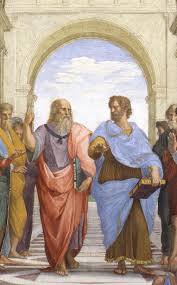
Plato believed that there were actually two realities existing side by side, a perfect eternal spiritual world containing the truest, purest essence of physical things and a world full of beauty and truth and our imperfect, temporal physical world, and he was also the first man in the occidental world to teach that man has an eternal soul, a soul that he divided into three parts: reason, spirit and appetite, And this trait of reason, seated in the head, he ascribes to teachers and philosophers; spirit, seated in the chest, he ascribes to the brave and loyal warrior class, and appetite, located in the abdomen, he ascribed to the tradesman and the merchants. He also believed that human government and society should be structured as a kind of a caste system with the philosopher kings at the top, as opposed to Athenian democracy with one of his most important works being entitled The Republic.

Plato was the student of Socrates, the teacher who was condemned to a poisoning death by the Greeks in Athens for his opposition to Athenian democracy, his impiety to the gods, and corrupting the youth, and Aristotle was Plato’s student. And Plato is also credited with being the founder of the the world’s first university, and while Socrates actually wrote nothing, Plato wrote two great works, The Dialogues and The Republic both of which the original manuscripts have survived in their entirety to this very day, In the following three quotes Plato asserts that man does not know everything and describes the reaction of his contemporaries to this truth.

I am the wisest man alive alive, for I know one thing, and that is that I know nothing,”


To fear death, gentlemen, is no other than to think oneself wise when one is not is not, to

think one knows what he does not know. No one knows whether death may not be the

greatest of all blessings for a man, yet men fear it as if they knew it was the greatest of all

evils.”


What is their hatred but a but a proof that I am speaking the truth.”

Plato also said that “A life examined is not worth living.” And Plato was not only a man of such high ideals and possessed an uncanny knowledge of a world beyond our world, but he was also a man of science and mathematics, setting the tone for the Western logic and medicine of this present day and was called the father of mathematics by present day scholars,

This concludes my series on Greece’s wise poets of the past; next week we’ll examine one of Greece’s wise poets of the present day.

The Greek Greats: The Rise of Drama and Actors

The Greek Greats: The Rise of Drama and the Thespian Arts

In the history of Greece, drama began as a group effort with the choruses as group of about 50 actors who sang, danced and spoke in unison about the story line and the message of a play. These plays had their roots in ancient Greek mythology and were an extension of the oral tradition of the poets and storytellers of earlier times, and they were enacted to honor the Greek god Dionysus, known as Bacchus in the Roman empire, the god of wine and the grape harvest, But then along came Thespis, the first Greek actor to step away from the group to play individual characters using masks.

Thus, the theater, more as we know it was born. Thespis was also the first actor to win an award for his craft and to go on a multi city-state tour and to become very popular, making him the world’s first celebrity! Also the authorship of several plays was attributed to him, however most scholars today believe they were forgeries perpetrated by scholars in the later Christian era. Thespis was born in the latter part of the Archaic age, but the most important figure to rise in Greek drama was Sophocles of the Classical age, the author of the great Greek tragedy, Oedipus Rex.

A tragedy is a play in which the hero suffers from some glaring personality defect, called a fatal flaw, that leads him to utter ruin. In the case of Oedipus it was his overmuch pride that led him to doubt and resist the will of the gods for him as spoken by the seer at his birth that he would kill his father, Laius, the king of Thebes, and marry his mother, thereby incurring their wrath. So indeed he did inadvertently kill his father as the result of a war and unknowingly marry his mother, Queen Jocasta, and upon the revelation of this error his wife kills herself and Oedipus blinds himself and goes into exile in utter disgrace. His flaw here is hubris and his sin is unbelief and the moral is that you cannot resist the will of the gods.

Oedipus says to the audience before his departure,

May Providence deal with thee kindlier than it has dealt with me. His will set forth fully to destroy the parricide, the scoundrel, and I am he.”

But I am the god’s abhorrence.

Later on in the Classical Age there was the rise of the comedy, a play with a more lighthearted plot and humor and in which no one dies and has a happy ending, and satyr, a burlesque type play in which the actors played the mythical mischievous satyrs would mock drunkenness and and depict wild sex acts.

The Greek Greats: Homer the Epic Poet

The Greek Greats: Homer the Epic Poet

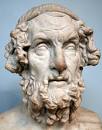
Homer was the legendary poet of 8th century BC ancient Greece who was ascribed authorship of the two epic Greek poems the Iliad and the Odyssey, However, scholars debate whether or not Homer was a real historical figure or if these poems evolved over time as the Homeric tradition of many oral storytellers.

Homer himself was purported to have been born in Ionia, now located in modern day Turkey, and was traditionally depicted as being blind, and was thought to be illiterate. Thus these two lengthy poems were recited by the storytellers in the oral tradition before being transcribed by scribes.

The Iliad and the Odyssey are both epic poems, An epic poem is a long narrative poem that tells a story , much like it’s modern counterpart the novel, that tells of the great exploits of noble men and woman in the natural and supernatural worlds. The Iliad was the first poem written in this tradition and tell the story of Greece’s ten year war with Troy to free the beautiful, captive Queen Helen from the clutches of the evil king of Troy and focuses on the events of only a few weeks near the end of the conflict.

Every Greek story has a hero and Achilles is the warrior-hero of this saga, and he saves the day when he slays Hector outside the city wall, the enemy prince of Troy and Greece wins the war. Every Greek story has a moral, and Achilles is the very embodiment of loyalty and courage, both the high ideals of ancient Greece.

The Odyssey is the sequel to the story that tells about the struggles Odysseus the King, and his treacherous ten year journey by sea to reach home to his family and Penelope his wife’s struggle to remain faithful while she awaits his return. And the struggle is intense, Odysseus must fight angry gods as he sails the turbulent seas and his wife needs the help of her son,Telemachus to fend off her many suitors, This story taught the Greeks the ideals of faithfulness, love of family, and perseverance, Later on in history, the Romans adopted the hero of this story and called him Ulysses,

The following quotes aptly illustrate the deep understanding of the ancient Greeks had about the many nuances of human nature and their high ideals concerning loyalty and the love of family:

There is a heat of love, the pulsing rush of Longing, the lover’s whisper, irresistible—magic to make the sanest man go mad. The Iliad,

Of all creatures that breathe and move upon the earth, nothing is bred that is weaker than man. The Odyssey

Hateful to me as the gates of Hades is that man who hides one thing in his heart and speaks another, The Iliad

There is nothing more admirable than when two people who see eye to eye keep house as man and wife, confounding their enemies and delighting their friends, The Odyssey

The Greeks were an idealistic people and their values spread throughout the ancient Hellenistic world all the way to Rome, and Homer was the backbone of their literary tradition and education much like Shakespeare is the backbone the English speaking world,

Greek Literature: An Intro to the Three Ages

Greek Literature: Intro to the Three Ages

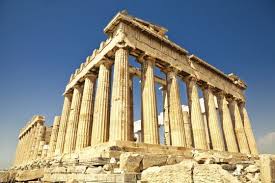
Greece was the philosophical, cultural and literature epicenter of the ancient Occidental world and laid the foundations of Western thought, logic and government. And Greek literature and language spread though out of the “known world during the reign of Alexander the Great over Greece and Macedonia.

There were basically three ages in art and literature in ancient world: the Archaic period from the beginning to the 6th century b,c, the Classical period from the 5th to the 4th century, and the Greek Hellenistic/Roman period from 3rd century until the present day. This subject will be covered in a series of five or six separate blog posts touching the most important poets, philosophers and playwrights of Greece from ancient times to the present day.

Greek poetry during the Archaic period was not written to be read, but sung or recited and the subject matter revolved around myth. A myth is a story which was part legend based on historical fact and ancient oral tradition and was part folklore and part an expression of religious dogma and moral wisdom, all rich with many gods and goddesses and poetic imagery. Homer was the most important poet of this age with his two epic poems of the Iliad and the Odyssey. This period ended when Athens fell to the Persian army.

Hence began the the Classical period and the golden age of the philosophers and the physicians in which Plato was important and the Hippocratic oath for the doctors was written. Aristotle was the important philosopher in the Hellenistic era and was a student of Plato and a teacher to Alexander the Great. He was considered to be the father of logic.

Since Greek culture and religion spread through-out the world it also spread to ancient Rome, and both the Greeks and the Romans were polytheistic, sometimes often sharing the same gods.

Simon Armitage: The Queen’s Choice

Simon Armitage: The Queen’s Choice

Simon Armitage, born on May 26, 1963 in Yorkshire , England is the wise poet of the present who was chosen by Queen Elizabeth to replace the famed poetess Dame Carol Ann Duffy as Great Britain’s current Poet Laureate of the United Kingdom.

A poet laureate is a person who is selected by a head of state to write official poems to commemorate special patriotic occasions of the state and to mark important historical happenings. It is a paid position and Armitage is slated to serve a term of ten years,

The tradition of choosing a special poet to represent the country of Great Britain began when King James I in 1616 granted a pension to Ben Jonson, an important writer of the day, But it was John Dyden who was chosen to be the first official poet laureate of England by Charles II in 1668.

Armitage wrote his first poem in grammar school but after graduating from high school he went on to study geography in college and then went on to earn a Master’s degree in social work at Vistoria college and obtained a position as a probation officer which gave him much practical experience in the ways of human nature and real life problems. It was during his work as a probation officer that he began to pursue the art of writing poetry earnestly and his first volume of poetry entitled Zoom was accepted favorably by the critics. And Armitage is known for his creative use plain ordinary language that is “accessible” to the readers. And one of the first poems he was commissioned to write was a poem to commemorate 9/11 entitled“Out of the Blue” which is pretty much a plain realistic snapshot of one man’s lazst hopeless minute in life as he jumps from a window in the burning building.

You have picked me out.
Through a distant shot of a building burning
you have noticed now
that a white cotton shirt is twirling, turning.

In fact I am waving, waving.
Small in the clouds, but waving, waving.
Does anyone see
a soul worth saving?

So when will you come?
Do you think you are watching, watching
a man shaking crumbs
or pegging out washing?

I am trying and trying.
The heat behind me is bullying, driving,
but the white of surrender is not yet flying.
I am not at the point of leaving, diving.

A bird goes by.
The depth is appalling. Appalling
that others like me
should be wind-milling, wheeling, spiralling, falling.

Are your eyes believing,
believing
that here in the gills
I am still breathing.

But tiring, tiring.
Sirens below are wailing, firing.
My arm is numb and my nerves are sagging.
Do you see me, my love. I am failing, flagging

The victim here first addresses the witnesses of the terrible thing is unfolding here to please notice him struggling to survive as hope for rescue flickers a little in his heart when he hears the blaring of the on coming sirens of the ambulances, But as he feels the heat of the blazing building he comes to realize that he must jump and addresses someone special to him as he falls, perhaps his wife, to see and also accept his death,

Armitage was also commissioned to write in order to commemorate the important historical events of VE day and the rise of the Khmer Rouge. He is also a playwright and a novelist. He has a most important job.

Maya Angelou: The Voice of the Underdog

Maya Angelou: The Voice of the Underdog

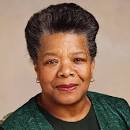
Born Marguerite Annie Johnson on April 4, 1928 in St. Lewis. Missouri Maya Angelou was not just a prolific, impressive writer but a remarkable human being who used her talents yo fight for the rights of oppressed people and being a voice for woman, children and minorities everywhere

She herself was a sexually abused child who was ultimately raped by her mother’s boyfriend at the age of eight leaving her deeply depressed and totally mute for a spsan of five years until she was mentored back to health by a caring teacher by the name of Bertha Flowers. It was then that Maya immersed herself in the writings of such greats as Charles Dickens, Shakespeare and Poe.

Angelou actually grew up with her paternal grandmother who was a prosperous general store merchant during the depression era, and her brother Bailey Jr. and disabled uncle in Stamps, Arkansas, with her biologically father only popping in occasionally and periodic visits to see her mother, And it was her brother who gave her the nick-name of Maya, short for mya sister,

As a child Angelou was deeply affected by the rank racism of the day and harbored a deep distrust of white people, and although she was a good student at the top of her junior high graduation class, she was deeply disappointed by racism when it was announced proudly by a town official that the white school of the town was receiving a grant for new science equipment while her school was only getting new sports equipment. She felt the real sting of racism then, and she felt pigeon-holed and stereotyped and a whole lot less than free,

She then left Stamps to attend high school and live with her mother in Oakland, California where she studied at the California Labor School and graduated to become the State’s first female, African American cable-car operators in San Francisco, breaking both racial and sexist barriers and realizing an early dream. This very colorful woman then went on to work at various and diverse jobs such as fry cook, sex worker and performer at the Purple Onion nightclub where she sang and danced the calypso, But it was in landing a role in the world renown opera “Porgy and Bess” that gave her her big break, And she went on to become a prolific memoirest and poet, writing a grand total of seven memoirs. along with numerous poetry books and essay,s and was by and large one of America’s most honored and accomplished writers of all time winning many achievement awards including the Presidential Medal of Freedom for her role as a Civil Rights activist, and 50 honorary college degrees and a nomination for the Pulitzer Prize, In her famous poem “Caged Bird” she speaks of what it is like not to be free and what it must feel like to actually be free.

Caged Bird

BY MAYA ANGELOU

A free bird leaps

on the back of the wind   

and floats downstream   

till the current ends

and dips his wing

in the orange sun rays

and dares to claim the sky.

But a bird that stalks

down his narrow cage

can seldom see through

his bars of rage

his wings are clipped and   

his feet are tied

so he opens his throat to sing.

The caged bird sings   

with a fearful trill   

of things unknown   

but longed for still   

and his tune is heard   

on the distant hill   

for the caged bird   

sings of freedom.

The free bird thinks of another breeze

and the trade winds soft through the sighing trees

and the fat worms waiting on a dawn bright lawn

and he names the sky his own

But a caged bird stands on the grave of dreams   

his shadow shouts on a nightmare scream   

his wings are clipped and his feet are tied   

so he opens his throat to sing.

The caged bird sings   

with a fearful trill   

of things unknown   

but longed for still   

and his tune is heard   

on the distant hill   

for the caged bird   

sings of freedom.

This poem reminds me that there are still children trapped by racism and abuse and that the vast majority of American people who reside in our prison system are African American and that the longing of the black race and children to be free is still a relevant feeling for people today as she gives us a visual image of a bird pacing in his cage and his feet being bound. This is a heart-wrenching poignant poem that beautifully illustrates the fact Angelo may have lost her voice as a child, but she sure did find it as a woman and as the minority people have also “come of age” so to speak, the woman and the children and the people of color have also found theirs

Angelou died on May 28, 2014 after a long period of declining health, but her songs will long be heard.

Sylvia Plath: A Study in Hopelessness

Sylvia Plath: A Study in Terminal Hopelessness

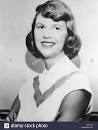
No wonder she was suicidal. On October 27, 1932 in Boston, Massachusetts Sylvia Plath was a born into a dark family situation in which her immigrant father was a former Nazi, the very definition of death and darkness, and Plath tasted the harsh sting of abandonment when her father died of diabetes complications when she was only at the tender age of eight. Also Plath herself was born with a strong biological tendency for severe depression and was finally diagnosed as an adult to be suffering from bipolar disorder which was probably triggered by the untimely death of her father,

Plath began to exhibit self destructive behaviors as a teenager when she cut her legs in order to test her own fears of death and suicide, thus she also suffered with suicidal tendencies for nearly a lifetime in addition to clinical depression and bipolar disorder. Then she went on to attempt suicide two more times as a young woman by taking an overdose of pills, once in her mother’s basement and once under the crawlspace under the family home and was finally treated as an inpatient for mental illness. She then unfortunately committed her completed suicide on February 11, 1963 at the age of 30 when she was the divorced mother of two children.

As a student she performed brilliantly, and her first poem was published at the age of eight and went on to sell her first poem to the Christian Science Monitor while in high school and went on to sell her first short story to Seventeen Magazine. She then graduated to attend Smith College where she won the Fulbright fellowship to attend Newnham College in Cambridge England. There she met and married her husband, Poet Ted Hughes, they later divorced over his alleged infidelity.

Plath wrote post-modern confessional poetry expressing her own strong emotions about her personal experiences, instead of masking herself through the voice of a third person character or a narrator, and confessional poetry is still a popular form of poetry of today. Plath was popular, yet she was also controversial because of the dark and violent imagery that she used. In her famous poem Daddy Daddy she angerly dismisses her father out of her life as if she were one his Jewish victims.

Daddy

BY SYLVIA PLATH

You do not do, you do not do   

Any more, black shoe

In which I have lived like a foot   

For thirty years, poor and white,   

Barely daring to breathe or Achoo.

Daddy, I have had to kill you.   

You died before I had time——

Marble-heavy, a bag full of God,   

Ghastly statue with one gray toe   

Big as a Frisco seal

And a head in the freakish Atlantic   

Where it pours bean green over blue   

In the waters off beautiful Nauset.   

I used to pray to recover you.

Ach, du.

In the German tongue, in the Polish town   

Scraped flat by the roller

Of wars, wars, wars.

But the name of the town is common.   

My Polack friend

Says there are a dozen or two.   

So I never could tell where you   

Put your foot, your root,

I never could talk to you.

The tongue stuck in my jaw.

It stuck in a barb wire snare.   

Ich, ich, ich, ich,

I could hardly speak.

I thought every German was you.   

And the language obscene

An engine, an engine

Chuffing me off like a Jew.

A Jew to Dachau, Auschwitz, Belsen.   

I began to talk like a Jew.

I think I may well be a Jew.

The snows of the Tyrol, the clear beer of Vienna   

Are not very pure or true.

With my gipsy ancestress and my weird luck   

And my Taroc pack and my Taroc pack

I may be a bit of a Jew.

I have always been scared of you,

With your Luftwaffe, your gobbledygoo.   

And your neat mustache

And your Aryan eye, bright blue.

Panzer-man, panzer-man, O You——

Not God but a swastika

So black no sky could squeak through.   

Every woman adores a Fascist,   

The boot in the face, the brute   

Brute heart of a brute like you.

You stand at the blackboard, daddy,   

In the picture I have of you,

A cleft in your chin instead of your foot   

But no less a devil for that, no not   

Any less the black man who

Bit my pretty red heart in two.

I was ten when they buried you.   

At twenty I tried to die

And get back, back, back to you.

I thought even the bones would do.

But they pulled me out of the sack,   

And they stuck me together with glue.   

And then I knew what to do.

I made a model of you,

A man in black with a Meinkampf look

And a love of the rack and the screw.   

And I said I do, I do.

So daddy, I’m finally through.

The black telephone’s off at the root,   

The voices just can’t worm through.

If I’ve killed one man, I’ve killed two——

The vampire who said he was you   

And drank my blood for a year,

Seven years, if you want to know.

Daddy, you can lie back now.

There’s a stake in your fat black heart   

And the villagers never liked you.

They are dancing and stamping on you.   

They always knew it was you.

Daddy, daddy, you bastard, I’m through

Plath’s anger and her victim mentally is self evident in this most compelling poem in which she compares the all encompassing black-hearted influence of a godlike father on her as a shoe that contains her and limits her and victimizes her as if she were one of his hated Jews and she basically “kills” him off out of her life by killing herself. This poem was written shortly before her suicide, thus she says goodbye to him shortly before her own death.

Plath was one of America’s greatest and most intense female poets of all time and was the first person to win the Pulitzer Prize posthumously, but I personally believe that it is important for poets to continue to write and live and for the readers who need us and not die. Sylvia Plath, on the other hand was a poet who lost all hope.

William Shakespeare: Part III His Poems

This is the last in my three part series on Shakespeare, but perhaps it should have been my first since Shakespeare started his expansive writing career as a poet before he became a playwright. And in the year of 1593 he published his first long narrative poem of 199 stanzas “Venus and Adonis” a poem about the Goddess of Love who kin the words of Shakespeare “She is Love, she loves and yet is not loved” by the object of her ardent affections the handsome hunter Adonis.

Shakespeare wrote five such lengthy narrative poems in all, all of which were met with critical acclaim by the literary scholars of the day including the story of the “Rape of Lucrece” a story of lust, rape and revenge. Thus Shakespeare was an apt and intense story teller from the beginning.

But where Shakespeare really shines is in his mastery of the sonnet, A sonnet is a highly structured poem of 0nly 14 lines with an ABAB rhyme scheme in the body of the poem in perfect iambic pentameter and ending in a couplet of two lines with a CC rhyme scheme, the last two lines rhyming with each other. This particular form of poetry had it’s beginnings in the country of Italy but was adopted by the poets of England sometime in the middle ages. And although the subject matter was always about a man’s love for a perfect woman, the form had evoled to be about various subjects by Shakespeare’s time. For example in Shakespeare’s famous sonnet number 18 he compares a young man’s beauty to the beauty of summer which, unlike the season of summer, he makes eternal in the classic lines of his ;poem.

Sonnet 18: Shall I compare thee to a summer’s day?
By William Shakespeare
Shall I compare thee to a summer’s day?
Thou art more lovely and more temperate:
Rough winds do shake the darling buds of May,
And summer’s lease hath all too short a date;
Sometime too hot the eye of heaven shines,
And often is his gold complexion dimm’d;
And every fair from fair sometime declines,
By chance or nature’s changing course untrimm’d;
But thy eternal summer shall not fade,
Nor lose possession of that fair thou ow’st;
Nor shall death brag thou wander’st in his shade,
When in eternal lines to time thou grow’st:
So long as men can breathe or eyes can see,
So long lives this, and this gives life to thee.

So Shakespeare, of course, brought this form of poetry to it’s highest level, and this particular poem had that Wow factor for me. No wonder Shakespeare was considered the national poet of England and was dubbed the “Bard of Avon.” He wrote 154 sonnets, 5 book length narrative poems and about 37 plays in all, and he is a must read for English speaking writers of today. He set the bar,

William Shakespeare: Part II His Plays

William Shakespeare Part II: His Plays

William Shakespeare was part owner of the world renown Globe Theater in London and the blockbuster actor and playwright of England’s Elizabethan era. And his language was so beautiful, and he had such an adept command of the English language that he went down in history as a great and is known simply as The Bard today. He wrote about 37 plays in all that crisscrossed all the major genres and forms of play writing. Shakespeare wrote great tragedies such as Hamlet and tragic romantic plays such as Romeo and Juliet, and he pretty much covered the whole gamut of human behavior and motivation by writing about motives such as revenge, envy, and love, and he often portrayed the worst of human condition of insanity since such strong motivations can drive one insane. He also wrote such famous comedies as The Taming of the Shrew and a host of history plays such as Henry IV, a kind of a coming of age story for a party-animal English prince and his drunken sidekick, Falstaff whom he eventually rejects once he becomes a full blown king.

One writing technique that was rather unique to Shakespeare was the “play within the play” which was expertly employed by Shakespeare in the Taming of the Shrew in which the preamble of the play in which a slick nobleman tricks a drunken commoner that he is really royalty in disguise and stages a play for him about the taming of a woman with a wild temper. The major plot or “the play within the play” involves a man by the name of Petruchio and his quest to find a rich wife. And unfortunately for him his lady love, Katharina is an aggressive and ill-tempered woman in her own right so Petruchio employs the clever strategy of verbally abusing the officiating priest at his wedding and the hired help to subdue his new bride. The audiences of the day went wild over the humor in this play, however, the underlying motivation here was a bit more serious, greed. The man married Katharina strictly for her money!

There is some speculation about where Shakespeare got his inspiration from for his numerous plays, but in my own undergraduate studies I stumbled upon a short story written during the earlier middle ages in the Spanish language with a similar plot in which a man abuses animals to subdue his ill tempered bride. So perhaps it was the legendary tales of the era of Lords and Ladies that was the source of much of his seminal inspiration for Shakespeare, but he himself was such a rich and diverse writer that he should indeed be a seminal influence of all of us who write today, and I for one would take the class again today

William Shakespeare: Part I, His Life

William Shakespeare: Part I, His Life

Shakespeare is too big of a literary figure so he will be covered in a three-part series about his life his plays and his poetry.

The exact day of his birth is not known, but William Shakespeare was in April 1564 in the little town of Stratford, a community of about 2000 people. Stratford was a farming community where the trade of wool and mutton were king And Shakespeare’s father prospered as a yeoman with a lucrative side-hustle in the illegal, unlicensed trade of wool. Eventually, he was elected to be a city alderman with the responsibility of approving and licensing traveling theater groups to perform in his town, until, of course, he was caught and convicted. And that’s when his family began to decline in its economic fortunes.

Thusly, was Shakespeare introduced to the acting profession early in his life. However, actors were not highly regarded and held in high esteem in the Elizabethan times in which Shakespeare lived as they are today but were counted as being among “the masterless men” who did not have “real jobs” but were chronically unemployed. And there were no actresses in existence in those days since acting was considered beneath woman so it was the younger teenage boys who dressed up in drag and played the female parts.

Not much is known about Shakespeare’s life outside of public records and scholarly conjecture, but according to the records Shakespeare attended grammar school, as was the manner of English boys, and was a good student who learned to translate the Latin classics into English. However, not much is known about his teenage and young adult years, but legend has it that he was joining himself to various traveling acting troops and “paying his dues” so to speak and that he married his wife Anne Hathaway from whom he conceived three children in his lifetime. But eventually he emerged in a popular theater group called Lord Chamberlain’s Men, but eventually, their name was changed to the King’s Men when King James became their patron and an important source of their financial support. They gave their performances at the prestigious Globe Theater in London. Shakespeare was primarily for his company but also supported his company by writing his vast body of plays and poems on the side.

Shakespeare, or The Bard” as he is now known, did have his critics and was denounced by one of his critics as “an upstart cow…that supposes he is able to bombaste out a blanke verse as the best of you…in his own conceit.” In other words, he was being accused of being full of himself,

In his later years, he was part owner of his company but died on April 23, 1616, at the age of 52 after a night out drinking ale with his friends, and it is thought that the cause of his death was a fever that he contracted from someone at the tavern.

Henry David Thoreau: Nature’s Friend

Henry David Thoreau: Nature’s Friend

Henry David Thoreau was born July 12, 1817, in Concord, Massachusetts where he spent most of his life and was educated at Harvard University. But he was no lover of town life and the mundane, more trivial things pertaining to man. He was a very deeply spiritual person who had a deep love for and a connection to nature, and he subscribed to Transcendentalist thought. Transcendentalist thought is a philosophy in which he believed that spirit is greater than matter and intuitive thought more insightful than mere reasoning. In short, this man had the mind of a poet, and the story has it that he bristled so much at the status-qua that he insisted on wearing a green jacket to chapel as a young student when the rules of the school called for black.

But no discussion of Thoreau is complete without touching on Thoreau’s close friendship with Ralph Waldo Emerson, one of the foremost writers and transcendentalists of the day. Emerson was a man who staunchly believed in the value of the individual over the group and the importance of the ability of man to live independently and free from having overmuch reliance on others. Thus Emerson became a close mentor to Thoreau and provided the parcel of land where Thoreau built his tiny cabin on Walden Pond to launch his own experiment in independent living by living off the land, connecting with nature, and to write his most famous book, Walden. So there on Walden pond, he lived alone for the span of two years,

Walden is a book about his adventure in the wilderness and is a vivid description of the natural world there throughout the four seasons and embodies the many-core Transcendentalist philosophies such as the importance of living a simple life, with few expenses, as the way to true independence and joy. He was a minimalist whose three most famous words “Simplify!” “Simplify!” “Simplify!” really resonate with my spirit today. Thoreau hated the technology that encroached upon nature especially the railroad and commercial farming, but always believed that nature would ultimately triumph as expressed in the following poem:

The moon now rises to her absolute rule

BY HENRY DAVID THOREAU

The moon now rises to her absolute rule, 

And the husbandman and hunter 

Acknowledge her for their mistress. 

Asters and golden reign in the fields 

And the life everlasting withers not. 

The fields are reaped and shorn of their pride 

But an inward verdure still crowns them; 

The thistle scatters its down on the pool 

And yellow leaves clothe the river— 

And nought disturbs the serious life of men. 

But behind the sheaves and under the sod 

There lurks a ripe fruit which the reapers have not gathered, 

The true harvest of the year—the boreal fruit 

Which it bears forever, 

With fondness annually watering and maturing it. 

But man never severs the stalk 

Which bears this palatable fruit.

He himself lived by hunting and foraging for fruits and vegetables in the wood and growing his own small patch of beans.

Thoreau was not commercially successful in his lifetime selling only 200 copies of his first self published book and his most famous book Walden only sold 2000 copies over the span of his lifetime, and it took 5 years.

As Thoreau grew older, he moved away from transcendentalism to become an anti-slavery political activist and wrote his most important essay, Civil Disobedience which was largely ignored until the civil rights movement and the anti-Vietnam war movements of the 1960s, He died on May 6, 1862, at age 44.