
THIS ARTICLE ENTITLED, “COGNITIVE DISSONANCE” IS BY DR. SHANNI DOVER
Hello again, Dear Reader. This week I will discuss cognitive dissonance. This concept has been around for many years. Today, cognitive dissonance is still relevant. We will look at the genesis of this term, as well as how it may be at work in our lives. Let’s take a closer look!
Cognitive Dissonance:
Cognitive dissonance is a term coined by Leon Festinger (1957). Eliot Aronson (1959) also researched the concept. The theory suggests that we as human beings prefer to be in harmony with others, therefore we seek to avoid disharmony, AKA dissonance. This concept is known as cognitive consistency. Thus, people tend to take steps to reduce this feeling of dissonance; something must be changed to reduce the feeling. The causes of this feeling are varied and represent the need for balance (homeostasis) in the individual.
Using politics as an example, cognitive dissonance can be manifest since voting itself is the act of making a decision. Therefore, when we vote we may tend to defend the actions of the person we voted for when we hear of their negative, even illegal actions. It is also noted that if the decision was close, the effects of cognitive dissonance will be greater.
Causes of Dissonance:
According to Festinger (1959), there are three causes of cognitive dissonance. Those are as follows.
1.) Forced compliance behavior – When someone is publicly forced to do something they would not do in private, dissonance is created. The behavior being in the past, nothing can be done to change it. Therefore to reduce dissonance, re-evaluation ensues and oftentimes people will modify their original beliefs.
2.) Decision making – Decisions generally arouse cognitive dissonance because once decisions are made, we must then live with the consequences of our actions, good or bad. When there are bad consequences, cognitive dissonance compels us to modify our ideas to reduce the discomfort. We do this through ‘mental maneuvers’ in which we increase the attractiveness of our choice by decreasing the attractiveness of other options. This is termed, ‘spreading apart the alternatives’.
3.) Effort – People often value more highly the goals that were difficult to achieve. If our goals turn out negatively, cognitive dissonance occurs; therefore, we may spend an inordinate amount of time convincing ourselves that the goal really wasn’t arduous to achieve, and that things turned out well. This is termed, ‘effort justification’. We redefine our experience.

Resolving Cognitive Dissonance:
Cognitive dissonance can be resolved in one of three ways: changing existing beliefs, adding new beliefs, or reducing the importance of our beliefs. First, by changing our beliefs to align with others, we reduce the discomfort. Next, we add credence to our beliefs by seeking to acquire new information to counteract the negative feelings. Finally, we may attempt to negate the importance of our beliefs by diminishing the value of a belief.
Aronson redefined the concept of cognitive dissonance in order to reduce he ambiguity of said term. Aronson’s definition is: the inconsistency between our self concept and the cognitive awareness of our behavioral actions.
Therefore, we attempt to reduce the feeling of cognitive dissonance by modifying our ideas. However, there are certainly cases in which dissonance can also help us to establish positive behaviors by usurping old ideas and replacing them with more positive habits. This being said, cognitive dissonance is most often the result of making decisions that conflict with our value system, thus leading us to compromise those values.
Preventing Cognitive Dissonance:
Moira Lawler (2018) determined that cognitive dissonance is by definition tension. She notes that being proactive may minimize this tension and reinstate a feeling of harmony.
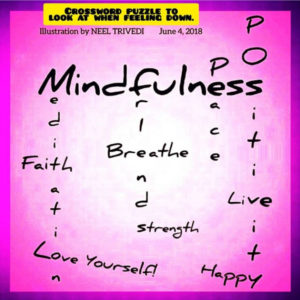
To counteract cognitive dissonance, we must practice being mindful (Noulas). In previous articles, we have discussed mindfulness as being in the present. By being in the present, we have more control over our immediate situation. Noulas reports that when we are mindful, we can take time to check our feelings when conflict or tension arises…and we do not act impulsively. Noulas suggested some actions we can take to achieve this state of equilibrium:
1.) Journaling – This tactic is widely regarded as beneficial to ameliorate stresses. As cognitive dissonance creates stress, the writers out there may find this to be helpful.
2.) Talking to a friend – For those who tend to be more verbal, talking it out can relieve the effects of stress we encounter in our lives and thus can reduce the discomfort of cognitive dissonance.
3.) Exercising- This tactic tends to be useful to many individuals to reduce the plethora of stresses with which we struggle daily.
4.) Meditation and/or Yoga – The benefits of delving into your spiritual side are numerous. If stress reduction is your aim, this may be for you.
5.) Therapy – This self-pampering tactic has worked for many, but not for others. Some research is required to find a good fit.
6.) Seek a spiritual advisor – Researching the options in this regard would be prudent if this choice seems to resonate with you.
Conclusions:
Cognitive dissonance (Festinger) is the stress created when we take actions that are inconsistent with our belief systems. Cognitive dissonance is caused because of forced compliance, decision making and effort. We see cognitive dissonance at work in all walks of life, from our political decisions to romantically-based choices. We can preemptively combat cognitive dissonance through the practice of mindfulness. Journaling, meditation, yoga, exercise, talking it out, therapy and seeking mentors can ameliorate the effects of cognitive dissonance.
As always, Dear Reader, please feel free to ask questions and/or leave comments below in ‘join the discussion’. I typically check back throughout the week for your thoughts. Until next time, stay safe and healthy!
THIS ARTICLE ENTITLED, “COGNITIVE DISSONANCE” IS BY DR. SHANNI DOVER