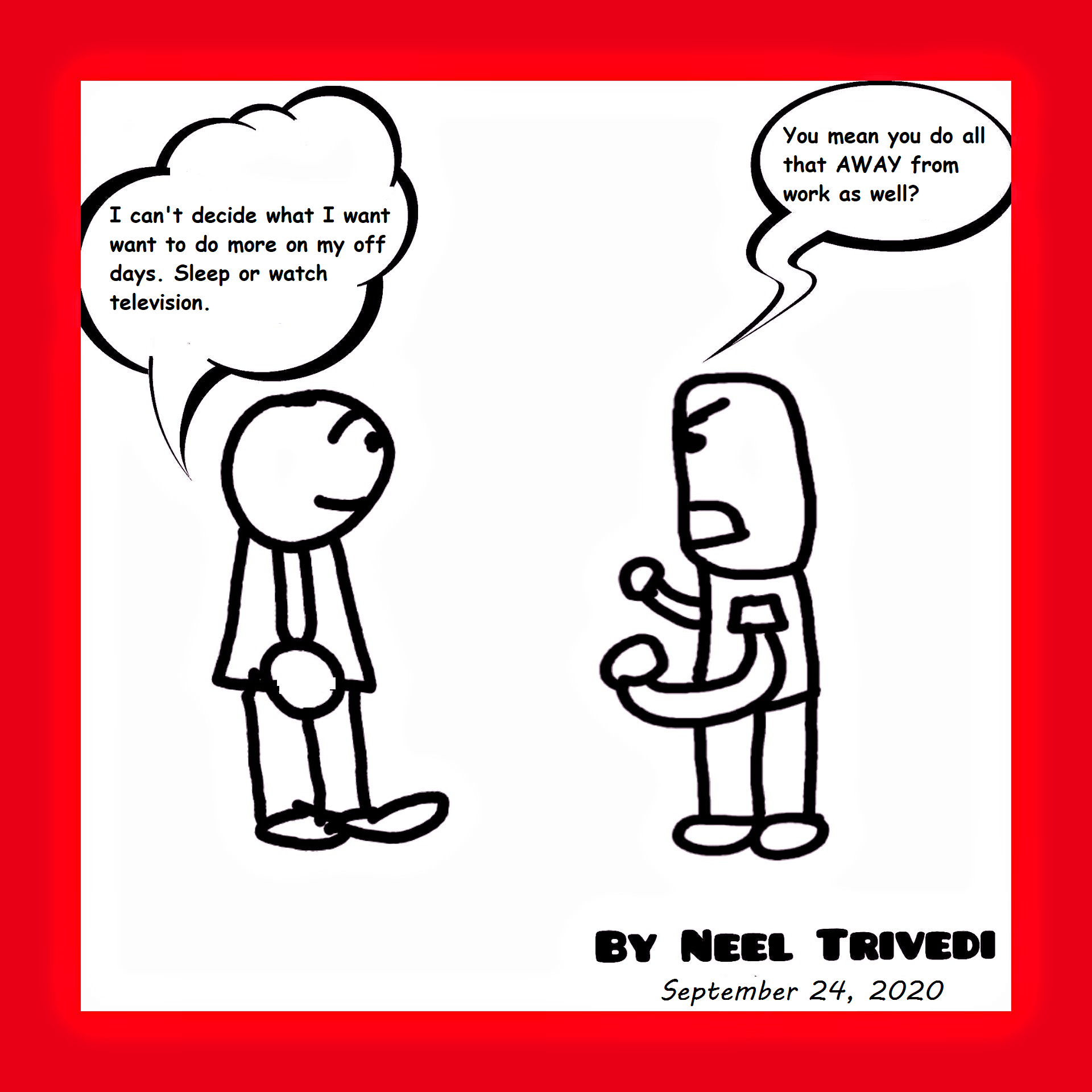
DECISION DILEMMAS

“The way to develop decisiveness is to start right where you are, with the very next question you face.”
-Napoleon Hill

We all have to make them several times a day. Some are made without a second’s hesitation. Others require a lot of calculations.

I’m talking about decisions.

Read more

Decision Making – Part 2: Strategies and Tactics


THIS ARTICLE ENTITLED, “DECISION MAKING – PART 2: STRATEGIES AND TACTICS” IS BY DR. SHANNI DOVER


Hello again, Dear Reader. Today I will continue to discuss last week’s topic, decision making. A cursory review of the literature and definitions were presented, along with the notion of uncertainty and how it effects decision making. Given that our choices effect our lives, our decision making skills are vital to our success as human beings. For this installment, strategies and tactics will be addressed with regards to the improvement of problem solving abilities. Let’s take a closer look.

Clearly many researchers have acknowledged the impact of ambiguity on decision making. Elucidation is derived from these studies and ultimately lead to other research questions. Scholars began to delve into the concept that strategies and tactics could be developed and learned that may facilitate decision making.

Snowman (1986,1987) discussed the components of learning and determined that certain strategies and tactics could be taught to improve one’s learning ability. At the cutting edge of this research, Snowman defined the differences between strategies and tactics. In doing so, he pioneered research that eventually lead to the development of learning strategies/tactics to accomplish goals delineated within these strategies.

Snowman defined a strategy as a broad plan that is structured, which may contain complex operational patterns and activities. Once a strategy is developed, tactics are the means to success in carrying out the plan. That is, tactics involve the specific actions required to ensure that objectives are accomplished.

Thus, one may develop a strategy to improve decision making via specific tactics relating to an overall strategic plan. We can systematically learn to construct strategies and tactics that can improve problem solving skills and learning potential. The tactics we use must be meaningful to us, and must be a part of a strategic plan to address solving a specific problem. Through this method, one can improve decision making skills.

Snowman warns that tactics should not be taught or learned in isolation. This approach does not lend itself to making real-life connections. Conversely, when tactics are taught/learned as components of a strategic plan, transfer of knowledge to other issues can more easily take place. Thus, when other similar problems arise, one might apply an already tried and true strategy thereby improving decision making.

Learning Strategies:

The components of an effective learning strategy consists of six variables designed to improve ones learning, and thus improving one’s decision making skills. The six components are as follows:

  • Metacognition – As discussed previously within these articles, metacognition is one’s self awareness pertaining to how we think, what kind of learner we are and how to approach problem solving. By learning how we think, we can learn to be better decision makers. Better decision makers are obviously better at solving complex problems and applying tactics to every day issues.
  • Analysis – As learners, we must analyze the problem at hand in order to glean key factors involved. By asking “Wh” questions, one can more easily identify the pertinent factors (what, when, where), subsequently understand the nature of a problem (why), identify personal learning attributes (who) and ultimately use tactics (how) to make better decisions.
  • Planning – Once items 1 and 2 are accomplished, one must develop a strategic plan by answering the following questions and forming hypotheticals:
  • What is the nature of the problem?
  • What do I already know about the problem?
  • What is the timeframe in which to solve the issue?
  • What are my strengths and weaknesses in facing the problem?
  • Implementation – Once a plan is devised, each component must be implemented skillfully and with fidelity. As Snowman warned, “A careful analysis and a well conceived plan will not work if tactics are carried out poorly.”
  • Monitor of progress – For strategic decision making, a learner must assess the success, or lack there of, of their chosen tactics. This can be accomplished through self questioning in terms of what is and isn’t working.
  • Modification – If we determine that our strategic plan is working, then no change is required. However, if decision making is unsuccessful, one must re-evaluate and modify, possibly both the strategic plan and the tactics implemented.


With the awareness that parameters change as our environment changes, and that new information supplants old notions, then it logically follows that our skills in decision making can change drastically through the course of a lifetime. Consequently, re-evaluation and revision of our life strategies and tactics are necessary. Snowman notes, “The true strategist,…exhibits a characteristic that is now commonly referred to as mindfulness (Alexander, Graham & Harris, 1998).”

As we have discussed previously in these articles, a mindful learner is aware of the need to be strategic and takes notes of elements effecting the decision to be made. Furthermore, a strategic thinker uses personal assets as a means to the best end/solution. This requires that strategies and tactics are tailored to fit each specific problem.


Conclusions:

Research indicates that the development of strategies and tactics when problem solving can improve decision making skills. Through the notion of metacognition, we can discover what kind of leaner we are, ie., how we learn best. We can then apply that knowledge to conceive of a strategic plan, as well as the necessary tactics to carry out that plan. By self questioning (“Wh” questions) we analyze the issue at hand and devise a problem solving strategy. Finally, by using a metacognitive approach, one may improve decision making abilities.

For next time, part 3 of this series on decision making, we will review steps to improve strategic decision making. Please feel free to leave comments and/or questions with regards to these concepts. Until then, Dear Reader…stay safe and healthy out there!


THIS ARTICLE ENTITLED, “DECISION MAKING – PART 2: STRATEGIES AND TACTICS” IS BY DR. SHANNI DOVER


Decisions

“The way to develop decisiveness is to start right where you are, with the very next question you face.”
-Napoleon Hill

We all have to make them several times a day. Some are made without a second’s hesitation. Others require a lot of calculations.

I’m talking about decisions. How do we go about making them? Do we sometimes think too much about some and not enough about others?

Sometimes the answers to those questions can be quite ambiguous depending on the context of the situation.

I’ve previously written about the philosophies of the heart and mind and how they can often be at opposite ends. I would like to believe that today’s quote by Napoleon Hill, the author of the bestselling book Think and Grow Rich, takes my belief a step further.

When faced in a conflict, you should ask yourself that if I do this now, what will be the next step? Will that next step be more difficult or easier if I take another route than the one I’m thinking off?

In a way, it can be termed as thinking about the long-run but perhaps that’s over simplifying it. It might be open to interpretation but personally, I think Hill’s quote is more than just about long-term planning. I feel it’s more about aligning your decision with more than one goal. In short, being able to spread that decision to as many aspects of life as possible.

For example, if I have to make a decision halfway through college about changing my major, I don’t just think about who my area of interest will serve me in the future. I also think about how it will affect other goals of mine. If I’m planning to move somewhere, I have to ask myself if my area of interest present enough opportunities where I want to move.

But sometimes, thinking so far ahead is not easy. And hence you have Hill’s quote, which doesn’t ask you to think that far ahead but rather, just the next step. If you’re planning to climb a mountain, Hill’s philosophy can help you climb the first few steps; push you in the right direction.

And that’s important because when it comes to making decisions, there can’t be just one method to the madness for everyone.

How do you feel about Hill’s quote and its basic application in life? Do your decision-making strategies vary depending on the situation? Or do you have just one strategy for all of them? Share your thoughts and experiences by commenting below.

Hindsight

“Sometimes you will never know the value of a moment until it becomes a memory.”
-Dr. Seuss

Is hindsight really 20/20? Very often, we tend to look back and see how much more significant certain moments were then they seemed at the time.

Sometimes, the feeling is completely logical. Nobody has seen the future nor can anyone predict it. Sure, we can certainly guess based on our actions but never know for sure.

That begs the question if there’s any way to combat this and be more in control of the future. Or at least be more prepared for it.

On an elementary level, it’s fairly easy.

If you drink and drive, the outcome has a high probability of being negative. If you choose not to study for a test, there are less chances of you passing. If you do anything illegal, chances of having a run in with law enforcement increase.

In all of these examples, avoiding trouble is not difficult, simply avoid the actions.

In more complex situations, however, making such snap decisions is much harder.

While researching this topic, I spoke to a couple of psychologists who are friends of my therapist.

Both said that while nothing is a guarantee, there are ways to be “safer” in future, even in making decisions where the pros and cons are equally balanced.

One way is to coax yourself to think about the long-term effects of any decision.

If you’re in the mood for partying, think about the morning after before you reach for that fifth or sixth drink.

If you’re thinking about playing the stock market, make a list of ways you can recover should you have a loss.

In many ways, it’s nothing but a little logical preparation and keeping the worst case scenario in mind.

Then simply ask yourself if you’ll have both the physical as well as mental stamina to handle the worst case scenario. If yes, proceed. If not, stop yourself.

Is it always easy? Not by a longshot. We’re all human beings and emotions will always accompany logic.

But even if you apply the aforementioned techniques to just a few more decisions then you did before, the probability of better results certainly increases.

How do you make big decisions? Do you go with your gut? Do you analyse them? Share your thoughts by commenting below.

CHOICES

What does it mean when we make a choice?  What are the consequences of that choice?  Let us first take a look at the meaning of choices in our Webster Dictionary.

Choices=1.  An act of selecting or making a decision when faced with two or more possibilities.  2.  The right of making or possibility of making sicj a selection  3.  a range of possibilities by which one or more may be selected

Daily Wisdom Word Definition of Choices-The decision we make when faced with a decision which has more than one outcome.

Why are our choices so important?  Choices have consequences so when we make these important decisions we must think ahead of what the direct and indirect consequences may be by making a choice.  Each choice has various outcomes with various endings and thinking through what those various outcomes are is crucial before making a choice about anything.

Some choices, wse think we may be aware of what ours would be if we had to make it ones requiring our belief system.  However, wse never know that we really would make that exact decision when actually faced with it in real life.  I am talking about choices like abortion, hurting someone back if it was done out of self-preservation.

When my daughter was much younger, her friend was faced with one of these decisions.  However, she was thirteen years old, and terrified to tell her parents she was pregnant.  You see, she didn’t up until this point, feel comfortable going to her mother with these types of decisions because she came from a very religious family and didn’t want to disappoint them that she had made a choice to be with the person she believed herself to be in love with.  Therefore, out of inexperience they made a choice and let their passion be the deciding factor and wound up pregnant.

She came to me as I was close to her, and asked me what to do.  I told her she would have to tell her parents.  Her parents, up until that point didn’t believe in abortion, but when faced with the real choice of their daughter having a baby at thirteen years old or carrying it to term, they knew the best choice for them when faced with this decision for their thirteen year old in reality was to go forward with abortion.

We must realize that however insignificant a choice may seem, they all have consequences.  It is important that we think through all of those before making the decision although the above story shows us that when faced with a given situation, when actually living it out, we may not make the choice we anticipated we would make.  Think long and hard about your choices in life, especially the big ones.

Thank you for reading about choices today.  When your finished, scroll down to the bottom of this post where it says, :join the discussion” and tell us about a difficult choice you had to make, or share a quote or poem about choices.  We would love to hear your opinion and open up the dialogue.

Thanks so much,

Samantha Leboeuf/DWW